Slum farming and superbugs—An ‘Urban Zoo’ science project tracks bacterial routes in complex environments

Susan MacMillan's avatarILRI Clippings

Animals-in-slums

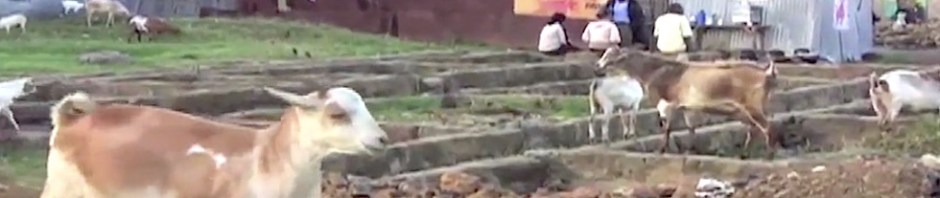
Animals in a Nairobi slum (via Africa Slum Journal).

‘The next superbug could emerge from the slums of the developing world, researchers warn.

‘Rapid, unplanned growth in many urban areas has people, livestock and wildlife living in close proximity and with inadequate sanitation. These are ideal conditions for microbes to evolve and spread.

‘So a major project is underway, designed to shed light on how microbes move through the slums of Nairobi and beyond.

‘It’s known as the Urban Zoo project. “Zoo” is short for zoonosis, the spread of diseases from animals to humans. From salmonella to swine flu, that’s how we get most of our diseases.

‘But “zoo” also suggests the menagerie of creatures found in Nairobi’s slums that could carry those diseases.

Fenced in by sheets of rusting corrugated metal in Nairobi’s Viwandani neighborhood, Joseph Mwai and his family share a couple thousand square feet with three cows…

View original post 623 more words

Unknown's avatar

About Dr. Bukar USMAN, mni

I started as a field Veterinary officer with Borno State Ministry of Agriculture and later joined College of Agric, Maiduguri as a lecture & a Researcher in the Department of Animal Health & Production. I was appointed the Provost of the College In 2003. In 2007 I was appointed Hon. Commissioner & Member Borno State Executive Council and later appointed Permanent Secretary with the Borno State Civil Service in 2009. I was the National Facilitator Animal Health, National Programme For Food Security of the Federal Ministry of Agric & Rural Development, Abuja. I was Director, Veterinary Medicine & Allied Products (VMAP) and now Director North East Zone NAFDAC. I’m a member of the National Institute’ (mni), Kuru SEC 40, 2018. I engaged myself in various aspects of the veterinary profession. I founded Sril Group Ltd, Nigeria. I’m now the Director General of Borno State Livestock Management Agency (BOLMA)
This entry was posted in Uncategorized. Bookmark the permalink.

Leave a comment