“Cattle produce more than just hamburgers for well-off consumers, and they typically do so by utilizing rain-fed forage growing on non-arable land.” – Susan MacMillan


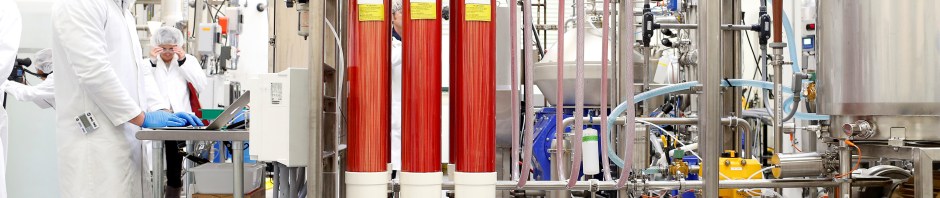
A small-scale production line of the leghemoglobin for a plant-based hamburger is displayed during a media tour of Impossible Foods labs and processing plant in Redwood City, California, US 6 Oct 2016 (photo credit: /Beck Diefenbach—S1BEUGSRCGAA).
By Alison Van Eenennaam, University of California, Davis
A battle royal is brewing over what to call animal cells grown in cell culture for food. Should it be in-vitro meat, cellular meat, cultured meat or fermented meat? What about animal-free meat, slaughter-free meat, artificial meat, synthetic meat, zombie meat, lab-grown meat, non-meat or artificial muscle proteins?
Then there is the polarizing ‘fake’ versus ‘clean’ meat framing that boils this complex topic down to a simple good versus bad dichotomy. The opposite of fake is of course the ambiguous but desirous ‘natural’. And modeled after ‘clean’ energy, ‘clean’ meat is by inference superior to its alternative, which must logically be ‘dirty’ meat.
The narrative…
View original post 1,293 more words


 Dr. Bukar Ali USMAN, mni