See on Scoop.it – Food Policy, Supply, Security & Safety
Global Food for Thought provides updated information, commentary, and analysis on breaking developments on international agriculture, food, and related issues.
See on Scoop.it – Food Policy, Supply, Security & Safety
Global Food for Thought provides updated information, commentary, and analysis on breaking developments on international agriculture, food, and related issues.
ILRI policies, instititions and livelihoods program
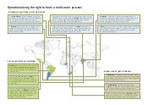
The Livestock and Fish Research Program formally adopted a gender strategy in May 2013 which adopts both Accommodative and Transformative approaches to design interventions that seek to facilitate movement around a more gender equal society. To achieve this, the strategy looks at an overall gender responsive outcome of the program’s research, which will be achieved through four key outputs:
Output 1 of the strategy focuses on capacity development, to increase gender capacity within CGIAR centres, partner organizations and value chain actors to diagnose and overcome gender-based constraints within value chains.
Making strides
In the year 2013, six workshops aimed at developing the capacity of gender experts and stakeholders in the program were conducted, in which 47% of the 232 participants were women.
The objective of the Ford Foundation workshop held in…
View original post 420 more words
See on Scoop.it – Food Policy, Supply, Security & Safety
I began a three-year term as associate editor over at Food Policy at the beginning of November, which means that I handle submissions in my areas of expertise, deciding which manuscripts get review…
See on marcfbellemare.com
See on Scoop.it – Food Policy, Supply, Security & Safety
That’s the conclusion of a study of livestock around the world and their greenhouse gas emissions.
See on www.npr.org
See on Scoop.it – Food Policy, Supply, Security & Safety
People fighting hunger in the developing world have noticed a troubling mystery: malnourished children sometimes fail to get healthier even when given a
“This whole concept of One Health is that sometimes helping the animals may be a way to help the people, sometimes helping the people may be a way to help the animals,” Rabinowitz said. “We’re looking for win-win solutions that ideally benefit both the humans and the animals, and the environment.”
See on www.kplu.org
See on Scoop.it – Food Policy, Supply, Security & Safety
The One Health Initiative, a movement to forge co-equal, all inclusive partnerships between physicians, veterinarians, and other scientific-health related disciplines, has been endorsed by various major medical organizations and health agencies,…
See on www.onehealthinitiative.com
See on Scoop.it – Food Policy, Supply, Security & Safety
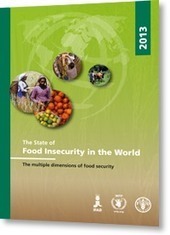
The 2013 report goes beyond measuring food deprivation. It presents a broader suite of indicators that aim to capture the multidimensional nature of food insecurity, its determinants and outcomes. This suite, compiled for every country, allows a more nuanced picture of their food security status, guiding policy-makers in the design and implementation of targeted and effective policy measures that can contribute to the eradication of hunger, food insecurity and malnutrition.- FAO
See on www.fao.org
See on Scoop.it – Food Policy, Supply, Security & Safety
PLOS ONE: an inclusive, peer-reviewed, open-access resource from the PUBLIC LIBRARY OF SCIENCE. Reports of well-performed scientific studies from all disciplines freely available to the whole world.
See on www.plosone.org
Michael Purugganan at the International Rice Research Institute (IRRI) explains why he believes in the genetically modified (GM, genetically engineered, GE) rice called Golden Rice. He says that Golden Rice is part of the ‘answers to global malnutrition’.
After dismissing ‘Myth 1: Golden Rice is “unnatural”’ and ‘Myth 2: GMOs are unsafe and risky’, Dr Purugganan tackles ‘Myth 3: Golden Rice is a big business’. I agree with him about the first two of those. But on what he calls ‘Myth 3’ he’s on shaky ground. He says, ‘IRRI is not selling Golden Rice, and no big biotech company will make money out of it.’ Here’s IRRI’s statement about private companies and Golden Rice.
Not everybody agrees on that point. In an article, ‘Golden Rice is no solution to malnutrition,’ the not-for-profit GRAIN says, ‘IRRI is hardly a public institution. Alongside from the funding it receives from governments…
View original post 124 more words
“Many young people don’t see farming as an interesting sector. Every year hundreds of young people leave the villages to settle in the city “, laments Michael Hailu, Director of the Technical Centre for Agricultural and Rural Cooperation (CTA).
A dead-end street or socially degrading path, here’s what agriculture represents for many young people in the African, Caribbean and Pacific (ACP). ICT can help to reverse this trend.
View original post 294 more words
One Billion Hungry: Can We Feed the World?
This week’s summary on the news stories, reports and blogs that have grabbed our attention. We welcome your thoughts and comments on these articles.
Walking the talk: Why and how African governments should transform their agriculture spending, Action Aid
AGRA Strengthens Efforts to Help Governments Attract Private Investment in Local Agribusinesses, AGRA
Climate Change and Agriculture in East Africa, IFPRI
WTO overcomes last minute hitch to reach its first global trade deal, Reuters
Amb. Quinn’s Remarks: Keynote at UN World Food Day Observance in New York, The World Food Prize
African Plant Breeding Academy launched, World Agroforestry Centre
The Guardian and Observer Christmas appeal 2013: Future Africa, The Guardian
Book links food security to political stability, Cornell Chronicle
View original post 80 more words
One Billion Hungry: Can We Feed the World?
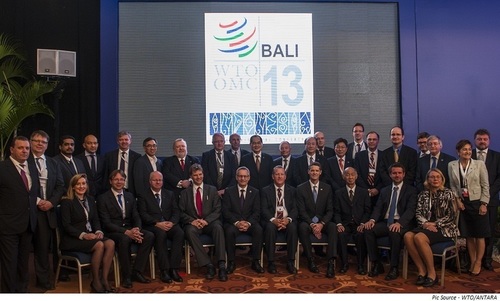
Chapter four of One Billion Hungry describes the Uruguay and, later, Doha rounds of international trade negotiations. At the time of publishing little headway had been made in reducing tariffs, trade barriers and protectionist measures in the agricultural sector (tariffs for agricultural products are an average 62% compared to 4% for industrial goods) and since the Doha round began in 2001, there has been a stubborn stalemate between developed and developing countries. Reducing the number of proposals to agree in 2011, including measures on intellectual property and trade in services, (and spurring the moniker “Doha Lite”), the World Trade Organisation were seeking agreement between the 159 member countries at a recent meeting in Bali, the success of which looked likely to determine the continuance of Doha altogether, and the value of the WTO itself as this would be the first ever deal agreed under the WTO since its inception…
View original post 613 more words
See on Scoop.it – Food Policy, Supply, Security & Safety
Professor Sir Gordon Conway and Katy Wilson highlight the need for innovative solutions to food insecurity Article originally appeared on The Economist Insights With global population expected to r…
"Technologies, ideas and processes must offer multiple benefits: strengthening resilience; increasing natural capital; increasing household productivity; reducing environmental impact; and minimising greenhouse gas emissions."
One Billion Hungry: Can We Feed the World?
Professor Sir Gordon Conway and Katy Wilson highlight the need for innovative solutions to food insecurity
Article originally appeared on The Economist Insights
With global population expected to reach 9.6 billion by 2050 the world faces unprecedented demands on its resources – not least water, biodiversity and land. Add to this the likely impact of climate change, and the challenge of feeding a world where some 870 million people are already chronically hungry appears a difficult one.
Governments, NGOs, academia and the private sector are searching for long-term sustainable solutions to global food insecurity and future resource scarcity. One solution, first proposed by Jules Pretty in the 1990s, and backed by the Montpellier Panel, a high-level group of European and African experts in the fields of agriculture, trade, policy, and global development, is sustainable intensification. At its heart sustainable intensification is about producing more food, more efficiently.
Achieving global…
View original post 640 more words
See on Scoop.it – Food Policy, Supply, Security & Safety
The research was met with a mixed reaction, as there is disagreement among scientists about whether omega-6 fatty acids are harmful.
See on www.nytimes.com
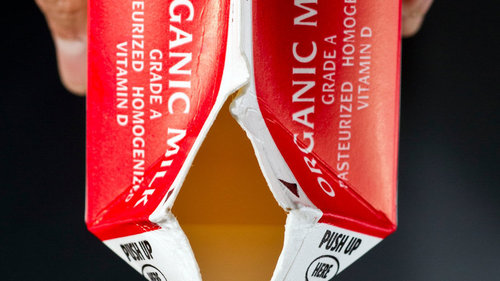
Many times, hailing the health benefits of organic foods, for example fruits and vegetables, has been criticized, and with good reason – while there may be less pesticide residues on the produce, the organic production method is mainly healthy for the planet, and there is little reason why an organic apple should have more vitamins than a conventional one. However, this same insight has been toppled for milk, as a new study finds that organic whole-fat milk has much higher levels of omega-3 fatty acids – those also found in seafood and flaxseed for example- and lower levels of omega-6 fatty acids – those normally associated with vegetable oils and fried foods – compared to conventional milk.
This can be explained by the fact that organic cows are required to spend at least part of their lives on pasture and eat grass, high in omega-3, whereas conventional cows are…
View original post 389 more words
See on Scoop.it – Food Policy, Supply, Security & Safety
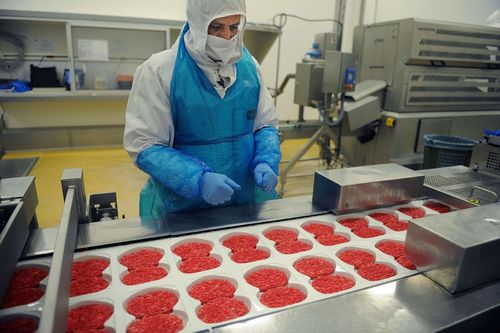
First phase of inquiry into ‘Horsegate’ found food industry is easy target for criminal gangs because there is a
See on www.mirror.co.uk
I was sitting in class before church services this past Sunday and the question came up, “What is a Disciple?” It’s someone who engages in learning more in-depth about a subject, a follower of certain teachings, or an apprentice of a trade. I think many of us are disciples in a sense, choosing to constantly learn more about subjects of our liking.
This won’t become a sermon on the blog, though I will include a number of reference verses at the bottom if you’d like to follow-up, but rather I was thinking how much this applies to the agriculture and food dialogues I engage in so frequently.
Learning is a process. What is the best way to learn? Everyone has their own approach. When are we most receptive to learning? Each has their own interests peaked in a different manner. Who engages us most in learning? We all respond to…
View original post 795 more words
See on Scoop.it – Food Policy, Supply, Security & Safety
The 159 member countries of the World Trade Organization (WTO) have almost finalized the “Bali Package” to reform global trade after last-minute negotiations ensured developing countries could continue various food programs and exporters agreed to…
See on oryza.com
See on Scoop.it – Food Policy, Supply, Security & Safety
From nutrition to gender issues, Michael Hoevel scans the best online resources relating to food security.
from hunger, livelihoods and nutrition to climate change, gender and market access.
See on m.scidev.net
A farmer in my family told me, ‘People want clean meat.’
Bovine tuberculosis (bTB) is an infectious disease of cattle (Bos primigenius) caused by the bacterium Mycobacterium bovis. Our UK Government wants rid of bTB, because then the European Union (EU) would call us Officially Tuberculosis Free (OTF) and that would be good for business.
Here in Britain, bTB is a notifiable disease because it can infect people. Fuelled by that possibility, our Department for Agriculture Food and Rural Affairs (DEFRA) aims to eradicate bTB in England within the next 25 years. Here’s the policy. Here’s TB Free England which, as its name suggests, is firmly in favour of the eradication policy.
But some people disagree. They think eradication is a daft idea. That we should learn to live with bTB which is no longer a real threat to the consumer (if it ever was) since…
View original post 407 more words
See on Scoop.it – Food Policy, Supply, Security & Safety
Supporting communities in building resilience through agro pastoral field schools”
See on www.cop-ppld.net
See on Scoop.it – Food Policy, Supply, Security & Safety
Each year Africa sustains post-harvest losses of fruit and vegetables worth US$48 billion, while half of the world’s undernourished people live on that continent. A majority of the post-harvest losses occur during crop transport, due to issues such as (unforeseen) delays and poor road conditions. Researchers from the Faculty of Geo-Information Science and Earth Observation (ITC) at the University of Twente have developed the smartphone app Cheetah in collaboration with the IT company Decos. This app helps reduce crop loss by providing food transporters, growers and traders with relevant (satellite) information. “If we are able to reduce post-harvest loss by just one percent in Africa by using the app, we will already have saved US$480 million annually”. Cheetah recently won the App Challenge of the European Space Agency (ESA).
See on www.utwente.nl
One Billion Hungry: Can We Feed the World?
This week’s summary on the news stories, reports and blogs that have grabbed our attention. We welcome your thoughts and comments on these articles.
Increasing cropping frequency offers opportunity to boost food supply, University of Minnesota
Climate-Smart Pearl Millet Variety May Be a Game Changer for Nutrition, Feed the Future
WTO chief says no chance of global trade deal, USA Today
Iowa in the Amazon, The New York Times
Science’s role in growing diverse, nutritious food, SciDev.Net
What have been the farm-level economic impacts of the global cultivation of GM crops?, Collaboration for Environmental Evidence Library
‘Total inaction’ at UN climate talks, Africa groups charge, Thomson Reuters Foundation
Eating Aliens, Jackson Landers
Crowdsourcing app fights food loss in Africa, University of Twente
Hunger Grains: Are EU policies undermining progress on development?, From Poverty to Power, Duncan Green
View original post 84 more words
“The private sector in #horticulture and #livestock: What #Ethiopia could learn from #Kenya” What #Nigeria could learn from these countries?

The traveling workshop to Kenya by the LIVES steering committee in early October brought many insights related to horticulture and livestock. These sectors are more advanced in Kenya than Ethiopia and steering committee members described the visit as an “eye opener”.
Committee members observed some striking differences between Ethiopia and Kenya. They visited Thika and Nyeri districts, which belong to high potential agro-ecological zones and are located close to Nairobi.The major difference is the predominance of the private sector in Kenya with the State limiting its role to developing and implementing regulations and economic interventions related to national interests, such as smart subsidies for maize growers. The group also visited highly intensive farming systems combining vegetables, fruit, maize, coffee, fodder and dairy on smallholder farms with a size ranging from 0.5 to 1.5 ha. The farm owners use manure to maintain soil fertility and crop production and made limited use…
View original post 104 more words
The Technical Centre for Agricultural and Rural Cooperation (CTA) recently convened a conference on ‘ict4ag – the digital springboard for inclusive agriculture.’ Held in Kigali, it brought together many innovations and experiences on the use of information and communication technologies (ICTs) to build trust and deliver targeted real time information in agriculture development. The LIVES knowledge management expert Fanos Mekonnen participated on behalf of the project.
Mobile applications (both for dumb and smart phones) are emerging as promising options to inform smallholder producers and provide market information and advisory services.Experiences such as iCow, esoko , Farmer line, and mkisan offer much to learn from.
Farmers use these applications to reach out to experts or to get market information, through SMS or voice mail. These tools and applications not only provide information; they develop capacity, create linkages and create inspiration to do and be more.
This event highlighted the…
View original post 435 more words
See on Scoop.it – Food Policy, Supply, Security & Safety
Advances the understanding of complex social-ecological systems with new insights into ecosystem management practices and long-term sustainability
See on www.stockholmresilience.org
Here in Britain, our Food and Environment Research Agency (FERA) coordinates PROteINSECT. This is about farming insects (entomoculture) as a source of protein for animal feed.
FERA is part of our Department for Environment Food and Rural Affairs (DEFRA). I’m glad that DEFRA is getting involved in the rise of entomoculture. We in Europe are out of step with other continents, says PROteINSECT. ‘With an increasing global population and a rise in per-capita meat consumption in developing countries, there is a need to investigate alternative sources of protein for use in animal feed. For generations, a variety of insects have been a valuable source of protein for both human consumption and animal feed across continents other than Europe.
‘As consumption habits shift to pork, chicken and fish, insects have the potential to be utilised more effectively as a natural ingredient in high-protein feed.’
Yes, we’re out of step…
View original post 422 more words
See on Scoop.it – Food Policy, Supply, Security & Safety
allAfrica: African news and information for a global audience
See on allafrica.com
Read at :
by Dan Allen
This is Part 1 of an essay in 2 parts. Part 1, below, outlines the issues. Part 2, offers ‘Ten Recommendations for Growing Food in the Anthropocene
Summary: As the toxic trappings of industrial civilization crumble around us, agriculture is set to regain its place at the forefront of our daily American lives. …And won’t we be surprised to find out that it barely works anymore! Worsening climate destabilization, combined with the legacy of industrial ecosystem degradation and the loss of crucial pre-industrial agricultural genetics and knowledge, will severely challenge our ability to feed ourselves in the decades ahead. So perhaps it’s time we re-think our modern food-acquisition strategies in the face of the massive changes bearing down on us. …And I mean REALLY re-think…
View original post 2 more words
See on Scoop.it – Food Policy, Supply, Security & Safety
Family farming can contribute to achieving the millennium development goal on hunger eradication. The African Regional Dialogue was aimed at enabling a discussion between the different stakeholders to increase understanding on the role and contributions of family farming in each sub-region, including the identification of challenges, opportunities for agricultural investment and policy priorities for achieving food security and eradicating hunger.”
See on www.fao.org
John Bare, Vice President of the Arthur M. Blank Family Foundation, published an interesting op-ed on the CNN website this morning, arguing that the food movement should banish the term “food desert” from its vocabulary. Bare contends that the emphasis on food deserts “focuses on diagnosis but not a cure” and that “The food desert diagnosis too easily turns into a cub used to beat families most in need. Being labeled a food desert makes a neighborhood undesirable, rather than a target of opportunity.” Instead, Bare argues that we should focus on the positives—construction of food oases—rather than on the negatives of food deserts.
In essence, Bare is presenting to key issues here. The first centers on what he sees as the excessive analysis of neighborhoods attempting to classify them as food deserts or not according to metrics established by the USDA. Bare’s solution here is a straightforward…
View original post 172 more words
Last week, I brought forward some Food For Thought on the issue of antibiotic use in livestock. The concerns surrounding an increase in antibiotic resistance seem to raise a lot of emotion and controversy around our food supply, just as the use of other feed additives, chemicals, herbicides, and countless other technologies and applications of science. I have addressed some of these subjects as they relate to beef cattle production in my Ask A Farmer series.
When I asked others involved in livestock production to share their experience with the use of antibiotics, I had a few replies. Andrew Goodrich was one of the first to respond with a lengthy answer, so I will share some of his responses. We haven’t agreed during more than a few conversations online, but I have to respect his experience in the field. Andrew has worked on several cattle feedlots in the…
View original post 1,219 more words
See on Scoop.it – Agriculture, Climate & Food security
As far as global feed company Cargill is concerned, there are three major areas in which the company can make a difference with regard to themes as sustainability and helping to feed the world, explained Todd B.
See on www.worldpoultry.net
See on Scoop.it – Agriculture, Climate & Food security
See on google-latlong.blogspot.be
One Billion Hungry: Can We Feed the World?
This week’s summary on the news stories, reports and blogs that have grabbed our attention. We welcome your thoughts and comments on these articles.
Global map of seeds, food and biodiversity launched, SciDev.Net
CAADP 10 Years Out: How Have Countries Fared in Agricultural Development?, IFPRI
Next generation of biofuels is still years away, CTV News
Empowering people and shaping policies for resilient agriculture and food systems, Wilton Park
Transformation of food systems needed for better nutrition, FAO
Changing the Global Food Narrative, Ensia
No-till farming is on the rise. That’s actually a big deal, The Washington Post
What does ‘big business’ say about Africa when it’s off the record?, From Poverty to Power, Duncan Green
Emissions of CO2 driving rapid oceans ‘acid trip’, BBC
Environmental pressures driven by EU consumption but faced by other countries, EC Science for Environment Policy
View original post 48 more words
One Billion Hungry: Can We Feed the World?
Ecosystem services, “the benefits that people derive from nature” (Millennium Ecosystem Assessment, 2005), are rarely taken into account in the valuation of agricultural commodities, despite the impacts (both positive and negative) agriculture can have on such services, for example the provision of food and nutrition, climate regulation, water quality and soil fertility. Ecosystem services themselves can increase agricultural productivity and resilience. For example in Costa Rican coffee plantations, birds such as the yellow warbler, can reduce infestations of the coffee borer beetle by around half.
Research on ecosystem services has increased exponentially, from Gretchen Daily’s book, Nature’s Services in 1997, to the Millennium Ecosystems Assessment in 2005 and The Economics of Ecosystems and Biodiversity (TEEB) in 2010. Andrew Balmford and colleagues in 2002 investigated the economic implications for conserving wild land versus converting it to agriculture by including economic values for ecosystem services, finding a benefit-cost ratio of 100:1…
View original post 630 more words
One Billion Hungry: Can We Feed the World?
Food demand is expected to rise by 70% to 2050. Urbanisation and increasing incomes per capita are shifting diets to those more demanding of meat and other animal products, which has serious implications for the use of natural resources to produce food. Today around 1 in 8 people are malnourished and 870 million people chronically hungry, indicating our current food systems cannot meet present demand let alone future. Modifying the world’s food production systems to produce more food and perhaps distribute it more evenly, is made harder by a growing recognition of the negative impacts agriculture can have on the environment. Conversion of land to agriculture is the biggest threat to biodiversity. Agriculture places large demands on scarce natural resources, the overuse of which not only threatens the wider global environment and human wellbeing, but the very processes agriculture relies on e.g. pest control, pollination and rainfall.
A new report…
View original post 629 more words
See on Scoop.it – Precision Agriculture
[Events] December 12, 2013 at the New York Academy of Sciences 7 WTC, 250 Greenwich Street, 40th Fl.- NY, NY 10007 Early bird registration until Nov. 27 – Use the code PROTEIN5 for $5 off reg…
See on www.egfar.org
See on Scoop.it – Precision Agriculture
Feeding a bird is more than just supplying day after day the same ration over a certain period of time. It will thrive and perform only at optimum level if the diet provided, is based on the birds’ physical and behavioural characteristics.
See on www.worldpoultry.net
Read at :
http://www.sciencedaily.com/releases/2013/11/131108102150.htm
Experimentation with whitefly-transmitted diseases provides a means of interfering with the plant-contamination process as well as the cultivation of plants that are altogether resistant to infection.
Nov. 8, 2013 — On November 8th, JoVE, the Journal of Visualized Experiments, will introduce a new technique to aid in the development of defenses against diseases threatening food crops worldwide. The method, published under the title Transmitting Plant Viruses Using Whiteflies, is applicable to such at-risk crops as tomatoes and common bean plants. The whitefly method provides a means of interfering with the plant-contamination process as well as the cultivation of plants that are altogether resistant to infection.
(continued)
See on Scoop.it – Food Policy, Supply, Security & Safety
Global Policy Forum is a policy watchdog that follows the work of the United Nations. We promote accountability and citizen participation in decisions on peace and security, social justice and international law.
See on www.globalpolicy.org
See on Scoop.it – Poverty, Hunger & Malnutrition
The World Bank sets goals to end extreme poverty and promote shared prosperity in the developing world.
See on www.worldbank.org
See on Scoop.it – Precision Agriculture
African farmers could create a trillion-dollar market for their goods by 2030, if they can access more capital, better infrastructure and land.
See on www.worldbank.org
See on Scoop.it – Food Policy, Supply, Security & Safety
Global Policy Forum is a policy watchdog that follows the work of the United Nations. We promote accountability and citizen participation in decisions on peace and security, social justice and international law.
See on www.globalpolicy.org
See on Scoop.it – Food Policy, Supply, Security & Safety
Global Policy Forum is a policy watchdog that follows the work of the United Nations. We promote accountability and citizen participation in decisions on peace and security, social justice and international law.
See on www.globalpolicy.org
“70% of the world’s population is involved in agriculture so investments in this sector in countries with a dominant agricultural workforce can have huge implications for the poor and hungry” studies
One Billion Hungry: Can We Feed the World?
The First International Conference on Global Food Security took place on the 29th September to the 2nd October in Noordwijkerhout, The Netherlands. The conference brought together scientists and experts across disciplines to discuss food security from many different aspects.
Louise Fresco, Professor at the University of Amsterdam, in her presentation, discussed what we know about food security and what the global situation is. Food security has various dimensions and many complexities that make it hard to generalise. Around 870 million people in the world are hungry in terms of basic calories and 2 billion people are undernourished, that is they lack adequate vitamins and minerals in their diet.
Hearing figures such as these it is hard to see where we are having any effect in tackling hunger but progress is being made. In the last 2 decades, 1 billion people’s nutrition has improved and the UN Millennium…
View original post 848 more words
See on Scoop.it – Sustainable Livestock development
See on www.ilri.org
See on Scoop.it – Food Policy, Supply, Security & Safety
“Lack of access to knowledge is a major bottleneck for many poor countries to develop their agricultural sector and ensure food security,” said FAO Director-General José Graziano da Silva celebrating AGORA’s 10th anniversary in Rome.
See on www.fao.org
See on Scoop.it – Food Policy, Supply, Security & Safety
World grain prices are increasing and the industry is facing challenges in producing good quality animal products with reasonable prices for consumers. Also, the poultry industry in Bangladesh is dealing with high grain prices.
See on www.worldpoultry.net
See on Scoop.it – Food Policy, Supply, Security & Safety
A new program that will identify genes crucial for breeding chickens that can tolerate hot climates and resist infectious diseases — specifically the devastating Newcastle disease — has been launched under the leadership of the University of…
See on www.worldpoultry.net
See on Scoop.it – Sustainable Livestock development
A new program that will identify genes crucial for breeding chickens that can tolerate hot climates and resist infectious diseases — specifically the devastating Newcastle disease — has been launched under the leadership of the University of…
See on www.worldpoultry.net
See on Scoop.it – Sustainable Livestock development
Researchers are investigation the potential of feeding poultry the proteins retrieved from the fermenters used and showing that poultry industry and biofuel industry can live side by side.
See on www.worldpoultry.net
See on Scoop.it – Sustainable Livestock development
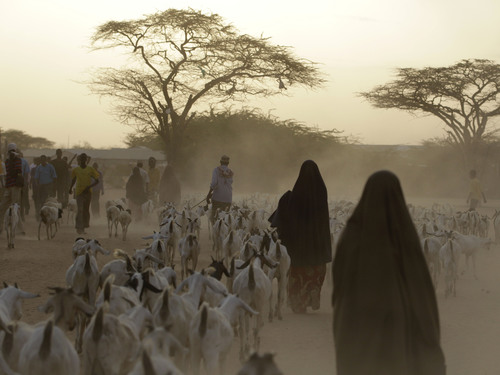
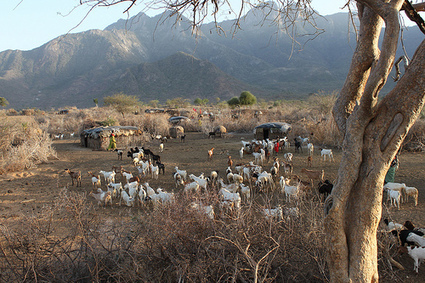
Goat herds return home at sunset in northern Kenya (photo credit: USAID/Donatella Lorch). ‘[Hussein] Ahmed, a pastoralist in Marsabit district in arid and semi-arid northern Kenya, lost all his ani…
“[The insurance] aims to compensate clients in the event of a loss but unlike traditional insurance, which makes payouts based on case-by-case assessments of individual clients’ loss realisations, this livestock insurance pays policy holders based on an external indicator, such as the availability of pasture,” Andrew Mude, who is in charge of the livestock insurance project at ILRI, tells IPS.
See on clippings.ilri.org
‘[Hussein] Ahmed, a pastoralist in Marsabit district in arid and semi-arid northern Kenya, lost all his animals in 2011 during one of the worst droughts in the region for over 60 years. . . . “Before that [I lost my animals] to cattle rustlers trying to replace what they had lost to drought,” Ahmed tells IPS. . . .
‘But a clansman, who had signed up for a pilot livestock insurance product, gave Ahmed five goats and a cow and a chance to start over.
‘Life is different now. Ahmed has restored his herd and has security, even in the face of drought and continued cattle rustling.
‘A year ago he signed up for the same pilot livestock insurance product that his clansman has – the first ever cover for pastoralists in Kenya, which is being offered by [the]…
View original post 319 more words