See on Scoop.it – Sustainable Livestock development
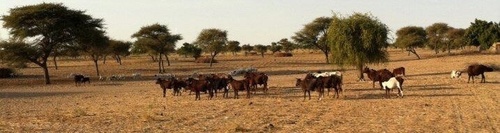
Basically, the livestock sector needs to produce more, from less, and with benefits to all.
– ILRI
See on www.ilri.org

See on Scoop.it – Sustainable Livestock development
Basically, the livestock sector needs to produce more, from less, and with benefits to all.
– ILRI
See on www.ilri.org
See on Scoop.it – Sustainable Livestock development
add your insight…
See on www.ilri.org
See on Scoop.it – Food Policy, Supply, Security & Safety
Lagos State Chapter members of the Poultry Association of Nigeria (PAN), have vowed to recall any contaminated eggs found in the local market.
See on www.worldpoultry.net
 A draft Intergovernmental Panel on Climate Change report leaked last week concludes that climate change poses dramatic risks for the global food supply. Unlike previous reports, the draft report concludes that while rising mean global temperatures could have some beneficial effects on crops, overall global production will likely decline by as much as 2 percent per decade for the rest of the century as a result of climate change. Meanwhile, global demand is expected to increase by as much as 14 percent per decade over the same period as global population grows to an estimated 9.6 billion people by 2050.
The draft report is not expected to be published until March, and IPCC spokesperson Jonathan Lynn told the New York Times that the report is “a work in progress” and declined further comment, noting that “We don’t have anything to say about the contents. It’s likely to change.”
Regardless…
View original post 89 more words
In the United States, the Agriculture Secretary is Tom Vilsack. He’s offering money to develop commercial-scale biorefineries or retrofit existing facilities with appropriate technology to develop advanced biofuels.
‘Advanced biofuels’ means that these fuels are to come from non-food sources. Sources such as algae and waste food. You could scroll down the article I’ve linked to here, for a success story about each of those. It’s not made clear what is used as feed for the algae, and it’s not made clear whether the waste food could have been conserved in some other way. But I’m not jumping to conclusions. Surely these advanced biofuels are better for the land than clearing forest to grow palms and maize that will go straight to biofuel.

staking my tomatoes
ICTs and indeed Social media has come to stay, over a billion subscribers are active on Facebook alone! There is a strong need therefore to engage the youth and spark up their interest in various forms of Agriculture with Social media tools as they are always on these platforms.
View original post 230 more words

 The UN Food and Agriculture Organisation recently released a new publication, Biotechnologies at Work for Smallholders: Case Studies from Developing Countries in Crops, Livestock and Fish, which details how biotechnologies can help smallholders improve their livelihoods and food security. The report urges governments and stakeholders to take greater steps to bring agricultural biotechnologies to smallholder producers in developing countries.
Through 19 case studies in crops, livestock and fisheries, authors explore real experiences of smallholders using biotechnology in the production of a variety of crops, for example, bananas, cassava, rice, livestock and shrimp. The cases also cover a range of biotechnologies such as artificial insemination, fermentation and more sophisticated DNA-based methodologies, although not genetic modification.
The case studies have been selected from India, China, Argentina, Bangladesh, Brazil, Cameroon, Colombia, Cuba, Ghana, Nigeria, South Africa, Sri Lanka, Tanzania and Thailand. In India, as an example, DNA markers have been used to…
View original post 503 more words
See on Scoop.it – Food Policy, Supply, Security & Safety
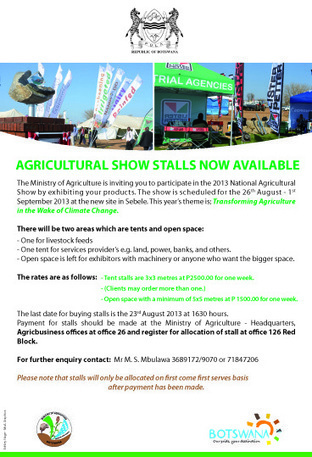
An agribusiness development database for Botswana.
See on www.agribotswana.com
See on Scoop.it – Food Policy, Supply, Security & Safety
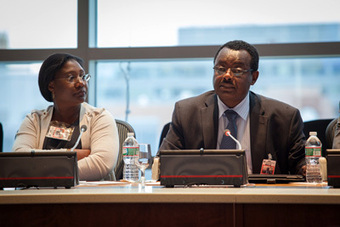
Brussels, Belgium, October 2, 2013 – At the Brussels Development Briefing in Belgium, attended by over 150 delegates, the fundamental question on what transformation has taken place in African agriculture ten years after adopting the Comprehensive Africa Agriculture Development Programme (CAADP), was brought to the fore.
The sharing happened within the context of a reflection on the achievements and lessons from ten years of CAADP implementation with the objective to highlight lessons including issues and key drivers for transformation of African agriculture.
Mr Martin Bwalya, the NEPAD Head of CAADP said that, “Agriculture is back on the development agenda and the way to keep it there is by demonstrating results.” Mr Bwalya outlined some of the positive strides in transforming African agriculture during the last ten years as including the evident improved planning at national level; aligning public financing; coherent common vision and agenda on agriculture as well as strengthening of the policy design processes and growing attention to institutional and human capital development. He noted the compelling need for a transformational shift towards an “agriculture” which first-and-fore-most is motivated and driven by the urged to expand agricultural value in the creation of jobs and wealth into the national economy. Local leadership informed and engaged public, sound regional trade and market strategies are imperative components in the winning formula for agriculture transformation.
Also speaking in the same panel, Mr Kalilou Sylla, Executive Secretary of the Network of Farmers and Agriculture Producers Organisations of West Africa, stressed that ten years is not enough time to quantify the changes brought on since the Maputo endorsement of CAADP, but CAADP nonetheless provides a clear mechanism for strategic planning in agriculture.
In his opening remarks, Mr Michael Hailu, Technical Centre for Agricultural and Rural Cooperation (CTA) Director, also reiterated the fact that by adopting CAADP ten years ago, African Heads of State put agriculture at the centre of the development agenda. Mr Hailu also emphasised that CTA and NEPAD’s collaboration in a number of areas that include support for smallholder farmers, will lead to positive results in growing agriculture as a key driver for broad-based social and economic growth.
The thirty third Brussels Briefing, organised by CTA, the European Commission, the African, Carribean and Pacific Group of States Secretariat and Concord in partnership with NEPAD, consisted of policy deliberations that also brought out proven successes and best practices in African agriculture.
Mr Steve Wiggins from the Overseas Development Institute maintained that food production in Africa is not as bad as it is made out to be. Mr Wiggins highlighted the example of agricultural growth in West Africa, at an average of 4 per cent a year in the last thirty years as surpassing a number of regions in the world, including some parts of Asia and South America.
Mr Ousmane Badiane, Director for Africa at the International Food Policy Research Institute, concluded his presentation by maintaining that, “Agricultural growth is not just growth in the sector alone, but also results in economic growth.” Some of the other conclusions of the Briefing in Brussels included the need to create an enabling environment for investment and innovation; and investing in rural public goods, amongst others.
Ten years on, forty three African countries are now focussing on investment for growth in agriculture through the CAADP process. “The next coming years will therefore see the positioning of ‘wealth creation’ as the primary driver for transformation in Africa,” Mr Bwalya said.
— END—
See on Scoop.it – Agriculture, Climate & Food security
World Bank Group Increasing Public Investment in Africa’s Agriculture World Bank Group WASHINGTON, October 13, 2013—How can Africa boost agricultural productivity and increase public investments in a sector that employs as much as 70% of the…
See on www.worldbank.org
See on Scoop.it – Food Policy, Supply, Security & Safety
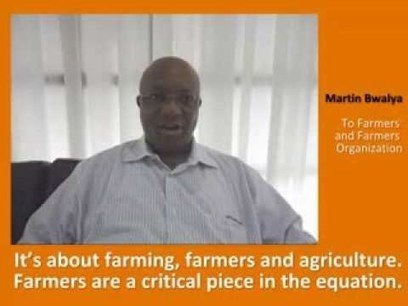
This is a message for Farmers and Farmers Organizations from the Head of CAADP/NEPAD The interview was recorded in October 2013 during the 33rd Brussels Briefing attended by most communication…
See on www.youtube.com
See on Scoop.it – Food Policy, Supply, Security & Safety
By Dr. Margaret Zeigler Dr. Margaret Zeigler is executive director of the Global Harvest Initiative.
See on globalfoodforthought.typepad.com

 In November 2012, ILRI scientist Derek Baker with Froukje Kruijssen (WorldFish) organized a session at the CTA conference ‘Making the Connection.’ The session examined livestock and fish value chains and drew out lessons from participants’ experience of interventions and the reasons contributing to the success or failure of these interventions (the session notes here are also online)
Three panel members set the scene for the discussion in which the entire audience was actively involved:
View original post 1,006 more words
 The African Smallholder Farmers Group, a network of international organisations that share a common commitment to working with and learning from smallholder farmers in Africa, has recently developed a framework that sets out the range of “policies, laws, regulations and practices that can support Africa’s smallholder farmers in becoming market ready and help them sustain their market participation”. Given that smallholder farmers comprise the “backbone of economic activity” in Africa, understanding the policies and practices that enable the development of their farms and links to markets can help guide policymakers and practitioners in their work.
Smallholder farmers produce up to 80% of the food consumed around the world and yet they face a myriad of challenges not least limited access to markets, land, financial services, infrastructure and extension. Given their size, smallholder farmers may find it difficult to compete in changing and increasingly global markets, particularly when faced with the…
View original post 245 more words
The African Smallholder Farmers Group, a network of international organisations that share a common commitment to working with and learning from smallholder farmers in Africa, has recently developed a framework that sets out the range of “policies, laws, regulations and practices that can support Africa’s smallholder farmers in becoming market ready and help them sustain their market participation”. Given that smallholder farmers comprise the “backbone of economic activity” in Africa, understanding the policies and practices that enable the development of their farms and links to markets can help guide policymakers and practitioners in their work.
Smallholder farmers produce up to 80% of the food consumed around the world and yet they face a myriad of challenges not least limited access to markets, land, financial services, infrastructure and extension. Given their size, smallholder farmers may find it difficult to compete in changing and increasingly global markets, particularly when faced with the…
View original post 245 more words
 On the 14th October 2013, the latest Global Hunger Index report was launched. Produced by the International Food Policy Research Institute, Welhungerhilfe and Concern Worldwide, this annual report details the progress the world has made in tackling hunger. The index itself is “a multidimensional measure of national, regional, and global hunger” that combines measures of child underweight, child mortality and undernourishment (discussed in chapter 2 of One Billion Hungry). This year’s figures reflect hunger during the period 2008-2012 and show global hunger has fallen by a third since 1990.
While the world has made some progress in reducing hunger since 1990, we still have far to go. Global hunger remains “serious,” and 19 countries suffer from levels of hunger that are either “alarming” or “extremely alarming.” 23 countries, however, have reduced their GHI scores by 50% or more. The top ten so-called success countries in terms of…
View original post 593 more words
 Livestock development in poor countries will face increasingly stiff regulations for operating in a carbon-constrained economy.
The United Nations Food and Agriculture Organization estimated in 2006 that global livestock contributes up to 18% of global greenhouse gas emissions, mainly from land use change (carbon dioxide), enteric fermentation from ruminants (methane) and manure management (nitrous oxide).
To help the world’s 600 million livestock keepers not only increase their livestock production but do so efficiently and sustainability will require continuing advances in the three traditional pillars of livestock development: breeding, feeding and health.
And much more.
A 4-degree warmer world could plausibly be reached by 2070 or even 2060. This will mean average temperature rises of a massive 15ºC in the Arctic, and 3–8ºC in the world’s most populated areas.
Agriculture is highly sensitive even to a 2-degree scenario; a 4-degree world is beyond our knowledge and experience.
Livestock and agricultural researchers foresee profound…
View original post 206 more words
See on Scoop.it – Sustainable Livestock development
The Minister for Agriculture and Rural Development, Dr Akinwumi Adesina, on Tuesday flagged off the input redemption of the Beef Value Chain (BVC) under the Growth Enhancement Scheme (GES) in Dafara, Kuje Area Council of the Federal Capital…
See on dailytrust.info
See on Scoop.it – Food Policy, Supply, Security & Safety
By Charlotte Broyd and Francis Peel Partnership for Child Development, Imperial College London Each year on 16 October World Food Day aims to increase understanding of problems and solutions in the drive to end hunger, malnutrition and poverty.
See on globalfoodforthought.typepad.com
See on Scoop.it – Food Policy, Supply, Security & Safety
By Mpule K. Kwelagobe Mpule K. Kwelagobe is the CEO of the Institute for Endogenous Development, Executive Director of Africa Youth ARISE for youth in agriculture, rural innovation and social entrepreneurship, and Managing Director of the Pula…
See on globalfoodforthought.typepad.com
See on Scoop.it – Food Policy, Supply, Security & Safety
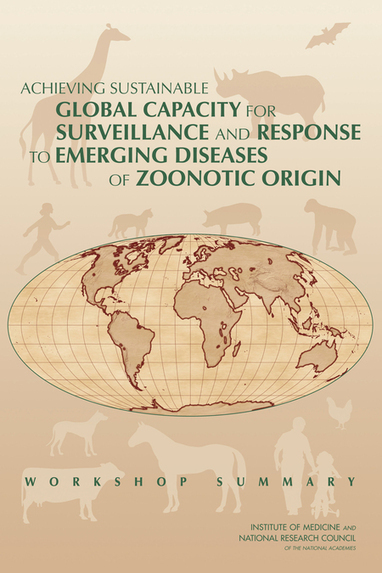
One of the biggest threats today is the uncertainty surrounding the emergence of a novel pathogen or the re-emergence of a known infectious disease that might result in disease outbreaks with great losses of human life and immense global economic…
See on books.nap.edu
EFSA is the European Food Safety Authority. EFSA tells us that today, World Food Day 2013, the theme is Sustainable Food Systems for Food Security and Nutrition. Food security, not just a simple belief that all food gets eaten. Nutrition, not just a simple count of how much energy is in the food people eat.
Here’s more about what EFSA does. It’s about people’s food but that’s not all. ‘EFSA’s remit covers food and feed safety, nutrition, animal health and welfare, plant protection and plant health. In carrying out its work, EFSA also considers the possible impact of the food chain on the biodiversity of plant and animal habitats. The Authority performs environmental risk assessments of genetically modified crops, pesticides, feed additives, and plant pests. In all these fields, EFSA’s most critical commitment is to provide objective and independent science-based advice and clear communication grounded in the most…
View original post 5 more words
CIDSE has just published a new brief on Agribusiness and Human Rights.
In this briefing CIDSE asks
what global business & human rights standards should be applied to agricultural investment in order to reach the ultimate objectives of achieving the right to food, alleviating poverty, enhancing sustainable food production and creating decent employment conditions for agricultural workers. Our aim is to outline the obligations of States and the responsibilities of business with regard to agricultural investment, by highlighting how these are defined within existing international mechanisms. The briefing is aimed at civil society organisations, particularly social movements that are affected by the impacts of business investment in their communities. As smallholder food producers bear the highest risks from these investments, the briefing seeks to provide tools to hold governments to account for their duty to protect these rights holders. It is intended to provide an overview of existing business &…
View original post 44 more words
 Last month the Alliance for a Green Revolution in Africa launched their first annual report detailing the state of African agriculture, entitled The Africa Agriculture Status Report.
Focusing on staple crops, the report synthesises data from 16 African countries as well as international institutions such as the World Bank and UN Food and Agriculture Organisation. The report highlights some key priority areas for policy makers on the continent:
View original post 116 more words
Supporting smallholder irrigation through finance and technical assistance could significantly improve productivity and incomes
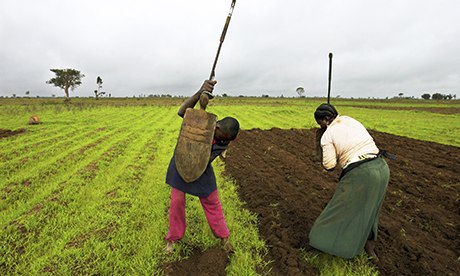
The recent discovery of a large aquifer in Kenya is a reminder that far from being dry, Africa has abundant water resources. The problem for farmers is access: only around 6% of cultivated land is equipped for irrigation, leaving millions dependent on rain-fed agriculture. How might more of them be helped to access water that could raise their productivity?
Large-scale, government-funded irrigation systems have long attempted to address this, with varying degrees of success. Those systems have a place, but research by the International Water Management Institute (IWMI) has found that many smallholders are themselves taking the lead and investing in…
View original post 977 more words
Our expert panel offers insights on how farming in developing countries could be improved through irrigation and how water resources could, in turn, be managed more effectively

If you want productivity and efficiency, put irrigation systems in the hands of farmers: Generally speaking big dam and irrigation systems in developing countries are less productive. When the control and management of such systems is not in the hand of farmers – the water users – it makes water reliability more vulnerable and less useful to farmers to intensify their cropping systems and adopt new technologies.
View original post 954 more words
Aligning agribusiness and development means taking a holistic approach

Engage smallholders fairly: There are well known mechanisms to link smallholder farmers to agribusiness firms in fair and sustainable ways, such as contract farming (CF). Farmers can benefit from CF by having a guaranteed market outlet, access to technology and the possibility of pre-financing of farming inputs, among others. Firms also benefit by reducing the uncertainties related to procurement in agrifood markets. To help achieve positive outcomes for all engaged in CF systems, FAO created the contract farming resource centre and recently issued a publication outlining a number of guiding principles for responsible contract farming operations.
View original post 1,134 more words
Agro inputs company Amiran Kenya has launched a low cost irrigation kit in a bid to entice more youths and farmers who cannot afford the more pricey kits at a time when changes in weather pattern is seeing farmers move to new age farming methods to ensure year round supply of their produce.
Dubbed Amiran Foundation Kit, the innovation is aimed at small scale farmers and beginners in agribusiness with limited land, water and finance to test and appreciate smart farming and therefore graduate to large scale agribusiness with larger farm inputs.
The kit is aimed at bridging the wide gap of affordability with most modern greenhouse kits costing over ten times compared to the foundation kit which is retailing at about Sh14,500. The higher prices for modern farming kits like green houses have barred many small…
View original post 570 more words
See on Scoop.it – Food Policy, Supply, Security & Safety
Read at : Google Alerts – desertification http://www.newera.com.na/2013/10/14/fight-desertification-land-degradation-major-global-challenges/ The fight against desertification and land degradation is major global challenges By Dr Moses Amweelo DESERTIFICATION,…
See on desertification.wordpress.com
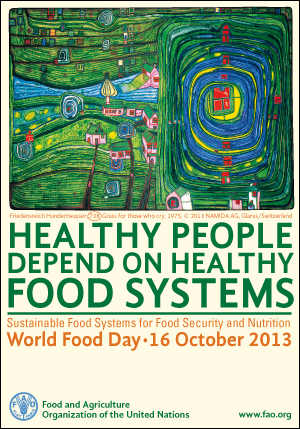 Today is World Food Day, the day that marks the founding of the UN Food and Agriculture Organisation (FAO), and this year the focus is on sustainable food systems for food security and nutrition. The FAO have produced a brief highlighting the key changes we need to make to our food systems to ensure everyone has access to enough nutritious food.
This year the FAO is emphasizing the ineffectiveness of our current food systems to tackle malnutrition. One in four children under the age of five in the world are stunted due to malnutrition, which when occurring early in childhood can limit physical and mental development for the rest of the child’s life. In total around two million people are not getting sufficient levels of essential vitamins and minerals in their diets, while at the same time some 1.4 billion people are overweight. These different types of malnutrition can…
View original post 537 more words

On October 16th, World Food Day will call attention to the crucial role that small-scale family farmers play in creating a more sustainable global food system – and it couldn’t come at a more opportune time. As the global population approaches nine billion by the year 2050, nourishing the world and preserving diminishing environmental resources presents a daunting challenge. Over the coming week, Food Tank will highlight the many ways in which small-scale farmers – both urban and rural – are growing healthy, nutritious food for their communities while protecting the planet.
View original post 857 more words
See on Scoop.it – Poverty, Hunger & Malnutrition
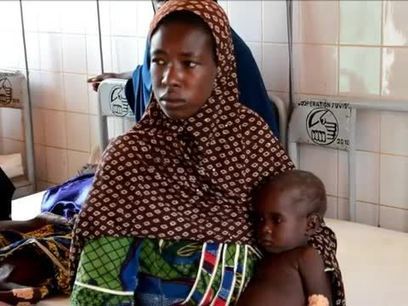
Over 350 Children Die From Malnutrition This Year in Niger: UN WFMY News 2 Some 362 Nigerian children under five have died of malnutrition between January and September this year in the Zinder region of Niger, where the situation is now endemic,…
See on www.digtriad.com
See on Scoop.it – Poverty, Hunger & Malnutrition
How Poverty Impairs Mental Functioning And Promotes Risky Decison-Making PlanetSave.com Researchers who study poverty have long-recognized that those who live in poverty frequently behave in less capable ways and engage in risky behaviors that both…
See on planetsave.com
See on Scoop.it – Poverty, Hunger & Malnutrition
Press TV Malnutrition kills 362 children across Niger: UN Press TV “According to the last epidemiological report on the situation in Zinder, there were 79,087 cases of acute severe malnutrition in children under the age of five, of which 362 had…
See on www.presstv.ir
See on Scoop.it – Poverty, Hunger & Malnutrition
Thousands dying from malnutrition in Somalia
Tehran Times
Tens of thousands of Somalians are dying from malnutrition as the worst drought in 60 years causes massive food shortages and famine in some parts of the country.
See on www.tehrantimes.com
 The 2013 UN Food and Agriculture Organisation’s report, The State of Food Insecurity in the World, was launched recently, which summarises the number and location of people suffering chronic hunger. As an evaluation of progress made towards reaching the first Millennium Development Goal, the report caveats achievements made with the need for significant additional effort in ending world hunger.
The estimate for the number of chronically hungry people in the world for the period 2011-2013 is 842 million (12% of the global population), a reduction on the figure of 868 million for the 2010-2012 period. Since 1990-1992 the number of undernourished people in the world is estimated to have fallen by 17%.
827 million people of the total number live in developing countries, where progress in tackling hunger has been mixed. Sub-Saharan Africa, which has the highest prevalence of undernourishment, has seen modest progress; Western Asia has…
View original post 210 more words
Biofuels industry strong arms governments at UN food security conference
Press release
11 October 2013
ROME, Italy – Today Civil Society movements blamed Governments negotiating on biofuels at the Committee on World Food security for defending the interests of the biofuels industry rather than the interests of people pushed into hunger by biofuel policies. They refused to endorse the recommendations on biofuels as any references to Human Rights, links with food price spikes and land grabbing have been systematically refused.
Governments acknowledged that biofuels crops compete with food crops and influence food prices but did not have the courage to recommend any action to stop this. The domination of pro biofuel countries in talks has resulted in decisions heavily favorable for biofuels expansion. Governments who spoke expressing strong misgivings have largely been ignored.
“Small scale food producers have spoken powerfully here about the reality they are confronted with every day:…
View original post 340 more words
See on Scoop.it – Poverty, Hunger & Malnutrition
Indigenous investors who have made fortunes in other sectors of the economy are now increasingly investing in agriculture under the new dispensation of Agricultural Transformation Agenda (ATA).
See on dailytrust.info
See on Scoop.it – Poverty, Hunger & Malnutrition
The World Bank Group and the French Development Agency are supporting the development of rural communities and modernization of agriculture in Adamawa, Enugu, Osun and Niger states with US$230 million (N37.4 billion).
See on dailytrust.info
See on Scoop.it – Agriculture, Climate & Food security
New York and D.C. will hit the climate change tipping point in 2047 – just 34 years from now.
See on www.washingtonpost.com
See on Scoop.it – Agriculture, Climate & Food security
Wednesday’s post from Professor Joern Fischer provided some background on agricultural intensification, benefits and pitfalls, and a movement toward “sustainability.” In particular, he noted how landscape scale adds complexity to intensifying practices, but also helps build resilience.
See on blog.ecoagriculture.org
See on Scoop.it – Food supply & food safety
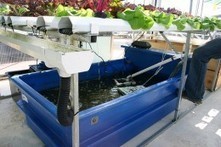
“Aquaponics – A farming method that is somewhat unorthodox and relatively uncommon in today’s shifting conditions, but at the same time symbolises a great deal of significance and represents a very intriguing prospect.” (more)
See on blueandgreentomorrow.com
See on Scoop.it – Precision Agriculture
In the lead up to the 2013 Borlaug Dialogue, the Skoll World Forum is featuring several keynote speakers writing at the nexus of three subjects central to the global challenges we face in the 21st century: biotechnology, sustainability, and climate…
See on www.forbes.com
See on Scoop.it – Precision Agriculture
Abaji town is located on the outskirts of Nigeria’s capital city. It is in the southern part of Abuja, a few kilometers from Gwagwalada town. It is a suburban settlement whose many inhabitants are farmers, middle and low income earners.
See on dailytrust.info
See on Scoop.it – Food supply & food safety
Nigeria without the National Veterinary Institute (NVRI), Vom, would have been a country with crops but virtually no animals, the Executive Director of the institute, Dr Muhammed Sani Ahmed has asserted.
See on dailytrust.info
 Professor David Little of the University of Stirling, recently reflected on ways that aquaculture can produce a greater amount of animal product for the same energy inputs.
Writing on the Global Food Security blog, he explains that producing, distributing and consuming food accounts for 20-25% of energy consumption in developed countries. The largest energy investments are made to produce protein-rich produce such as meat and fish.
He argues that ‘aquaculture can produce a greater amount of animal product for the same energy inputs than other forms of animal-sourced food.’
However, to do so, the aquaculture industry must ensure that it ‘remains sustainable and that energy input compared to output is kept low.’
‘Learning from the innovations of the producers themselves and combining this knowledge with that of scientists and business is likely to produce the highest gains.’
‘Considering aquaculture from a value chain perspective is critical to assessing energy efficiency…
View original post 19 more words
 The new State of Food Insecurity in the World 2013 report, jointly published by the Food and Agriculture Organization (FAO), the World Food Program (WPF), and the International Fund for Agricultural Development (IFAD) was issued last week. The report concluded that one in eight people around the world—some 842 million people—are chronically undernourished. While this represents an improvement from the peak in the early 1990s, the FAO warns that the world will fall short of meeting the Millennium Development Goal of halving the prevalence of global hunger by 2015. The report also concluded that landlocked countries and countries that had experienced conflict during the past two decades faced higher levels of hunger, while those that combined social policies and other measures to increase the income of the poor had lower levels of hunger. Higher remittance levels were also positively correlated with lower levels of hunger. Geographically, Asia remains home…
View original post 25 more words
Research into developing country livestock systems is primarily micro-economic and sectoral with limited interaction with formal multi-market and macro-economic models. This results in analysis and advocacy that are frequently not linked to broader formal policy models nor to the workings of public policy and the international trading environment.
On 5 and 6 November 2013, the International Livestock Research Institute convenes a conference in Accra Ghana to discuss ‘mainstreaming livestock value chains.’ It will look at experiences and approaches to bridge research gaps between household analysis and policy modeling.
The conference aims to:
Participants from research or development agencies with an interest in the empirical specification of agricultural policy are encouraged to…
View original post 257 more words

This September 2013 issue of ‘Livestock Matter(s)’ presents a round-up of livestock development news, publications, presentations, images and upcoming events from ILRI and its partners. Download a print version – or sign up to get Livestock Matter(s) in your mailbox each month.
Sustainable intensification of agriculture in Africa: The case for mixed crop-livestock farming
On 19 September 2013, Shirley Tarawali, ILRI’s director of institutional planning and partnerships made the case for continued close integration of crop farming and livestock raising in Africa at the 22nd International Grasslands Congress, in Sydney Australia. In a presentation, ‘Integrated crop livestock systems: A key to sustainable intensification in Africa’, Tarawali said integrated farming systems are key to helping small-scale food producers intensify their production levels while conserving their natural resources and protecting their environments.
Jimmy Smith on why the world’s small-scale livestock farms matter
On 16 September 2013, Jimmy Smith, director general of the…
View original post 1,696 more words
People in tropical countries fear diseases called sleeping sickness, and other names, caused by tiny parasites called trypanosomes (Trypanosoma spp.) also known as tryps. Now there’s new science suggesting a way to reduce Animal African Trypanosomiasis in cattle (Bos primigenius) by selective breeding.
In sub-Saharan Africa, tryps which kill cattle are hugely important to people’s livelihoods and, therefore, to development away from poverty. African tryps are carried by tsetse flies (Glossina spp.) You can scroll down for maps. The flies don’t get ill from the tryps, but they carry them between people and between cattle. That is, these insects are disease vectors.
One of the most promising ways to reduce tryp disease is to breed cattle which resist it. Where tryps are endemic (always present) it’s no surprise that some of the local cattle have that disease resistance. For example West African dwarf cattle, the
View original post 201 more words

The Global Development Symposium 2014 takes place on 4–7 May 2014 at the University of Guelph, Ontario, Canada. Underscoring the critical links between human and animal health, the symposium will explore interdisciplinary approaches to improving public health and food security while empowering communities for lasting change.
Participants are expected to include social, environmental, medical and veterinary scientists as well as policymakers, students and community members who have an interest in positive global development.
The organizers of the symposium have issued a call for oral, poster and pitch for progress abstracts to be submitted up to 13 January 2014.
The organizers will also support the travel costs of up to 15 delegates through the International Connections Scholarship supported by Aeroplan. Both professionals and students are encouraged to apply for these awards based on the following criteria:
View original post 163 more words

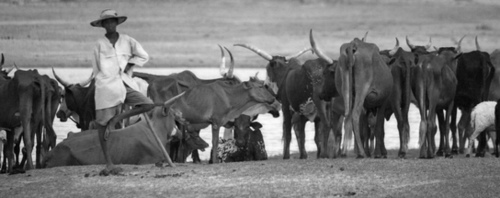



















 Dr. Bukar Ali USMAN, mni