Improving Crop Yields

See on Scoop.itPoverty, Hunger & Malnutrition

There’s long been a debate over the impact of genetic modification on crop yields. While agricultural biotechnology’s proponents argue that genetically modified crops demonstrate higher yields, its…

Bukar Usman (D.V.M., M.V.S.c)‘s insight:

"These results suggest that yield benefits (or limitations) over time are due to breeding and not GM, as reported by others, because W. Europe has benefitted from the same, or marginally greater, yield increases without GM. Furthermore, the difference between the estimated yield potential and actual yield or ‘yield-gap’ appears to be uniformly smaller in W. Europe than in the US Midwest. Biotechnology choices in the form of breeding stock and/or management techniques used in Europe are as effective at maintaining yield as are germplasm/management combinations in the United States." Report

See on globalfoodpolitics.wordpress.com

Posted in Uncategorized | Leave a comment

Agriculture vs Oil: Nigeria seeks farming revival to break oil curse

See on Scoop.itPoverty, Hunger & Malnutrition

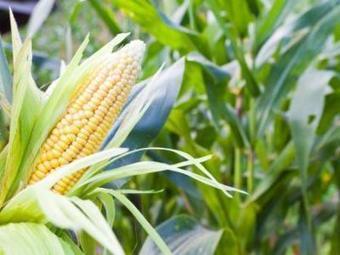
SAULAWA, Nigeria (Reuters) – Down a winding dirt track in this sleepy village in northern Nigeria lies a corn farm which looks much like the dozens that surround it.

Bukar Usman (D.V.M., M.V.S.c)‘s insight:

"The country is the second largest grower of citrus fruit in the world after China and yet it spends $200 million a year on imported fruit juice while its own produce rots, Adesina said.

It also produces 1.5 million metric tons (1 metric ton = 1.1023 tons) of tomatoes annually of which 45 percent perish, while consumers spend $360 million on tomato paste imported from countries such as Italy and China." Nigerian Agric Minister

See on www.reuters.com

Posted in Uncategorized | Leave a comment

Africa Getting Hungrier; Food Aid ‘Swimming Against Tide’ – AFKInsider

See on Scoop.itPoverty, Hunger & Malnutrition

Obama aid won’t keep up with hunger in Africa. By 2023, about 34 percent of sub-Saharan Africa will face food insecurity compared to 29 percent today.

Bukar Usman (D.V.M., M.V.S.c)‘s insight:

"By 2023, about 34 percent of sub-Saharan Africa will face food insecurity, compared to 29 percent today," says a new U.S. Department of Agriculture report.


– See more at: http://afkinsider.com/10346/report-africa-getting-hungrier/#sthash.0piDDZwr.dpuf

See on afkinsider.com

Posted in Uncategorized | Leave a comment

Making Your Own Job As A Farmer In Africa – AFKInsider

See on Scoop.itAgriculture, Climate & Food security

Farming is not viewed as a “job” by many young Africans who reserve the term for employment that requires a desk and clean clothes, according to a report.

Bukar Usman (D.V.M., M.V.S.c)‘s insight:

"The report offers a how-to guide for young people looking to make their own jobs farming in Africa:

Some tips include a list of commercially viable plants such as teak, oil palm, cocoa, jatropha, moringa, cashew or pineapple. Food crops include cassava, yam, cocoyam, sweet potato, corn millet, soy and  groundnuts.

Another tip is for prospective farmers to consider raising animals which can be farmed all year round such as quails, turkeys, guinea fowl and 6-week-old chicks.

– See more at: http://afkinsider.com/10231/making-your-own-job-in-african-agriculture/#sthash.qQnKvZdH.dpuf: – AFK INSIDER

See on afkinsider.com

Posted in Uncategorized | Leave a comment

Insight: Nigeria seeks farming revival to break oil curse

See on Scoop.itAgriculture, Climate & Food security

SAULAWA, Nigeria (Reuters) – Down a winding dirt track in this sleepy village in northern Nigeria lies a corn farm which looks much like the dozens that surround it.

See on www.reuters.com

Posted in Uncategorized | Leave a comment

A Paradigm Shift for Agriculture: The Case for SRI

canwefeedtheworld's avatarOne Billion Hungry: Can We Feed the World?

cubanrootPerhaps the greatest change in mindset in human history was from the belief in a Ptolemaic or geocentric view of the universe (Earth at the orbital centre of all celestial bodies) to a Copernican or heliocentric (the sun at the centre).

Today the world is facing many threats not least the need to feed an ever increasing population amid severe resource constraints. World food production per capita peaked in 1984 and if we are to achieve global food security we require, according to Norman Uphoff, political scientist at Cornell University and lead of the SRI-Rice group, a similar paradigm shift.

Presenting his case for the use and adoption of Systems of Rice Intensification at the International Institute for Environment and Development on 4th July, Uphoff explained the dire need for a change in mindset in agriculture: from an egocentric view, placing humans as the producers of food and manipulators…

View original post 957 more words

Posted in Uncategorized | Leave a comment

Is the Power of Agriculture Waning in US Politics?

See on Scoop.itAgriculture, Climate & Food security

There was an interesting article in the New York Times two days ago about how the defeat of the farm bill signals that agriculture is not as powerful as it used to be in American politics. Whereas …

See on foodpolicyforthought.wordpress.com

Posted in Uncategorized | Leave a comment

OECD Events – Restricted RPCA meeting, OECD headquarters, 8-9 April 2013

See on Scoop.itPoverty, Hunger & Malnutrition

Bukar Usman (D.V.M., M.V.S.c)‘s insight:

Members of the Food Crisis Prevention Network (RPCA) discussed the final results of the 2012/13 agricultural campaign and made recommendations to protect the most vulnerable populations. The Senior Experts’ Group examined the Regional Roadmap of the Global Alliance for Resilience (AGIR) which was then approved by all stakeholders-OECD

See on www.oecd.org

Posted in Uncategorized | Leave a comment

RPCA – Organisation for Economic Co-operation and Development

See on Scoop.itAgriculture, Climate & Food security

Bukar Usman (D.V.M., M.V.S.c)‘s insight:

At the restricted RPCA meeting, held on 8-9 April 2013 at the OECD headquarters, network members discussed the final results of the 2012/13 agricultural campaign and made recommendations to protect the most vulnerable populations. The Senior Experts Group examined and approved a revised version of the regional roadmap of the Global Alliance for Resilience Initiative (AGIR). Development partners decided to establish a Co-ordinating Platform of Technical and Financial Partners (PTFP/AGIR) to support the implementation of the Alliance and facilitate the co-ordination of their actions in the area of resilience within the 17 member countries of ECOWAS, UEMOA and CILSS. The PTFP will soon elaborate an inventory of partners’ current resilience-building interventions in order to improve the co-ordination and effectiveness of actions at all levels

See on www.oecd.org

Posted in Uncategorized | Leave a comment

Publications – Organisation for Economic Co-operation and Development

See on Scoop.itAgriculture, Climate & Food security

See on www.oecd.org

Posted in Uncategorized | Leave a comment

Food and Agriculture Organization of the United Nations: Sahelian and West African governments avoid surprises thanks to seasonal monitoring

See on Scoop.itAgriculture, Climate & Food security

See on www.fao.org

Posted in Uncategorized | Leave a comment

Food and Agriculture Organization of the United Nations: South-South Cooperation successfully links Nigeria, China and FAO

See on Scoop.itFood supply & food safety

See on www.fao.org

Posted in Uncategorized | Leave a comment

New Studies Confirm: Raw Milk A Low-Risk Food

See on Scoop.itPoverty, Hunger & Malnutrition

(GLOBE NEWSWIRE) — Three quantitative microbial risk assessments (QMRAs) recently published in the Journal of Food Protection have demonstrated that unpasteurized milk is a low-risk food, contrary …

See on saccsivdotcom.wordpress.com

Posted in Uncategorized | 3 Comments

Finish Your Plate – Or Should You?

See on Scoop.itPoverty, Hunger & Malnutrition

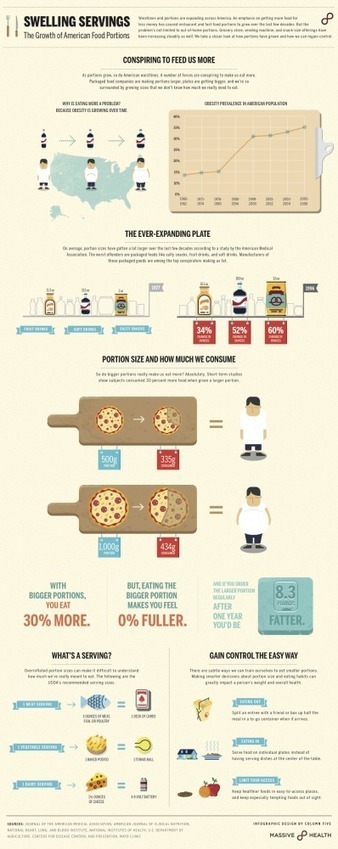
I found this great infographic at the Massive Health blog and thought I’d share it. When I did diabetes-prevention research last summer, I read a ton of articles on how portion size increases have …

See on foodpolicyforthought.wordpress.com

Posted in Uncategorized | Leave a comment

Obama’s Plan To End Hunger In Africa Is Really A Plan To Industrialize Agriculture

See on Scoop.itPoverty, Hunger & Malnutrition

By Magda Fahsi Last week, while touring Dakar, Senegal’s capital, President Obama touted his vision to reduce hunger in Africa. He emphasized food security, saying that far too many people on the c…

See on allanapotashblog.org

Posted in Uncategorized | Leave a comment

FAO: Africa can end hunger by 2025

See on Scoop.itPoverty, Hunger & Malnutrition

From Inter Press Services: Sub-Saharan Africa may be home to six of the world’s 10-fastest growing economies, but it also has a majority of the countries that are suffering from a food crisis. In f…

See on aasw6.wordpress.com

Posted in Uncategorized | Leave a comment

Developing Country Farmers Bridge the ‘Biotechnology Divide’ – Harvard – Belfer Center for Science and International Affairs

See on Scoop.itAgriculture, Climate & Food security

“Farmers in developing countries, however, are bridging the ‘biotechnology divide.’ According to a new report by Clive James of the International Service for the Acquisition of Agri-Biotech Applications (ISAAA), ‘For the first time, developing countries…

See on belfercenter.ksg.harvard.edu

Posted in Uncategorized | Leave a comment

Developing Country Farmers Bridge the ‘Biotechnology Divide’ – Harvard – Belfer Center for Science and International Affairs

See on Scoop.itAgriculture, Climate & Food security

“Farmers in developing countries, however, are bridging the ‘biotechnology divide.’ According to a new report by Clive James of the International Service for the Acquisition of Agri-Biotech Applications (ISAAA), ‘For the first time, developing countries…

See on belfercenter.ksg.harvard.edu

Posted in Uncategorized | Leave a comment

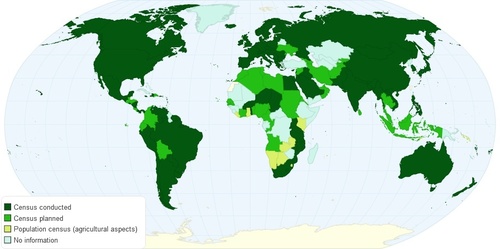
ESS Website ESS : World census of agriculture

See on Scoop.itAgriculture, Climate & Food security

See on www.fao.org

Posted in Uncategorized | Leave a comment

Genetically modified failures

Posted in Uncategorized | Leave a comment

‘At the Desert’s Edge’ (NewSecurityBeat)

Willem Van Cotthem's avatarDESERTIFICATION

VIDEO : Google Alerts – desertification

http://www.newsecuritybeat.org/2013/06/at-deserts-edge-glimpse-chinas-massive-desertification-challenge/#.Uc6GA-sgBn4

Choke Point / Eye On:

http://vimeo.com/27031806#at=0

‘At the Desert’s Edge’ Gives a Glimpse of China’s Massive Desertification Challenge

By Luan “Jonathan” Dong

In may not be surprising that China, home to so many other superlatives, also faces desertification on a grand scale. According to China’s State Forestry Administration, over 27 percent of the country now suffers from desertification – more than 1,000,000 square miles, or about one-third of the continental United States – impacting the lives of more than 400 million people.

At the Desert’s Edge, a new short documentary from the Asia Society and filmmaker Jonah Kessel, explains these challenges and efforts to combat it in Kulun Qi, a dry area in northeastern Inner Mongolia.

The film focuses on the perspectives of small, local units of families and farmers. “When my mother was young,” Ma Enqi, a shopkeeper…

View original post 65 more words

Posted in Uncategorized | Leave a comment

It’s not the desert on the move but farming land that is slowly disappearing (Google / Swissinfo.ch)

Willem Van Cotthem's avatarDESERTIFICATION

Read at :

http://www.swissinfo.ch/eng/science_technology/The_creeping_disease_that_threatens_populations.html?cid=36153724

Turning to dust

The creeping disease that threatens populations

by Luigi Jorio, swissinfo.ch

For the past 20 years, more and more countries have been affected by desertification – and not just because of climate change. Experts say that some agricultural practices have also had disastrous effects.

It’s not the desert on the move but farming land that is slowly disappearing, contrary to what most people believe.

“The mental picture we have is one of a sandy desert and dunes swallowing up villages and fields,” Gudrun Schwilch, a researcher at the University of Bern’s Centre for Development and Environment, told swissinfo.ch. “But in most cases, it’s just not like that.”

According to the United Nations Convention to Combat Desertification (UNCCD), desertification is “the degradation of land in arid, semi-arid and dry sub-humid areas. It is caused primarily by human activities and climatic variations”. Altogether, these regions represent 40…

View original post 49 more words

Posted in Uncategorized | Leave a comment

Transformation of smallholder farming : an important part of the solution to providing food security (Practical Action)

Willem Van Cotthem's avatarDESERTIFICATION

Read at :

http://practicalaction.org/blog/news/now-is-the-time-for-smallholder-farmers/

NOW is the time for Smallholder farmers

Chris Henderson

I am really pleased to see the UK Government and G8 focus on food and agriculture and to be invited by DFID to consult on the initiative. This focus is needed to strengthen the resilience and productivity of all farmers to meet the food and nutrition needs of themselves and the growing population.

I am anxious about what the DFID event (Promoting African Agriculture – The New Alliance for Security and Nutrition) will bring.

  • Will it motivate investment in sustainable agriculture at all levels – smallholder farmers to large-scale agri-business?
  • Will it enable smallholders to invest and grow their agricultural livelihoods, or will it just benefit the multinationals and big business?

Smallholders are key to success
You may ask, why the preoccupation with smallholder farmers? Simple:

  • They produce food where it is needed.
  • They depend on the…

View original post 92 more words

Posted in Uncategorized | Leave a comment

“Innovation Key to Unlocking Africa’s Horticultural Potential”

youngfamersfoundation's avatarFoundation for Young Farmers

“Innovation Key to Unlocking Africa’s Horticultural Potential”

African agriculture is at the crossroads. Persistent food shortages are now being compounded by new threats arising from climate change. But Africa faces three major opportunities that can help transform its agriculture to be a force for economic growth.

First, advances in science, technology, and engineering worldwide offer Africa new tools needed to promote sustainable agriculture.

Second, efforts to create regional markets will provide new incentives for agricultural production and trade.

Third, a new generation of African leaders is helping the continent to focus on long-term economic transformation. Agriculture needs to be viewed as a knowledge-based entrepreneurial activity.

Economic collaboration

The emergence of Africa’s Regional Economic Communities (RECs) provides a unique opportunity to promote innovation in African agriculture in a more systematic and coordinated way.

The launching of the East African Common Market in July 2010 represented a significant milestone in the steady…

View original post 736 more words

Posted in Uncategorized | Leave a comment

How Africa Can Feed the World – Harvard – Belfer Center for Science and International Affairs

See on Scoop.itAgriculture, Climate & Food security

“Neglect of agriculture has been a defining feature of Africa’s economic policy over the last four decades. The future is more promising.

See on belfercenter.ksg.harvard.edu

Posted in Uncategorized | Leave a comment

Seeding New African Agricultural Universities

youngfamersfoundation's avatarFoundation for Young Farmers

“Seeding New African Agricultural Universities”

Op-Ed, NAI Forum

March 6, 2012

Author: Calestous Juma, Professor of the Practice of International Development; Director, Science, Technology, and Globalization Project; Principal Investigator, Agricultural Innovation in Africa

Belfer Center Programs or Projects: Agricultural Innovation in Africa; Science, Technology, and Globalization; Science, Technology, and Public Policy

Policy attention across Africa is shifting to fostering agricultural innovation through enhanced research support and entrepreneurship. This will require radical transformation of the system of higher agricultural education. The current separation between research in national institutes and education in universities is a major obstacle to innovation.

This article proposes an alternative approach involving the creation of agricultural universities under the relevant line ministries. The seed for such universities already exist in the form of national agricultural, livestock and fisheries institutes which can be upgraded to combine research, teaching, extension and commercialization under one roof.

Unlike…

View original post 1,318 more words

Posted in Uncategorized | Leave a comment

Africa Strives to Move from Reducing to Eradicating Hunger

cambodine's avatarECO-opia


Monday, 01 July 2013 – NewBusinessEthiopia.com


African Ministers and other senior officials meeting at the African Union in Addis Ababa agreed to achieve development and eradicate hunger.


The ministers met in the framework of the High Level Meeting of African and international leaders to end hunger in the continent. The meeting is conducted ahead of the meeting of African Union Heads of State and Government tomorrow, under the theme “New, unified approaches to end hunger in Africa”.

The will to promote food security in Africa motivated the African Union, FAO and the Lula Institute to partner for a unified approach to end hunger in Africa by 2025 within the Comprehensive Africa Agriculture Development Programme (CAADP) framework. About 15 Heads of State and Government positively responded to the invitation from the AU, FAO and Lula Institute to participate in the event and add value to CAADP by…

View original post 653 more words

Posted in Uncategorized | Leave a comment

CGIAR: Social Media and Agricultural Research for Development

AASW editor's avatarThe FARA Social Reporters Blog

Three weeks to go before the launch of the 6th Africa Agriculture Science Week, and the energy among the ranks of social reporters is palpable. A very active community will support the efforts of those communicating from the event and its overall importance to African agriculture – and many of the members of this community have yet not even met! They are the virtual supporters of the social media efforts for AASW6 supported by CTA, GFAR, YPARD and the CGIAR Consortium.

The energy is palpable and contagious, the numbers speak for themselves. Three weeks to go and an army of over 140 social reportersfrom all walks of life and all corners of the world are already researching, preparing, writing… Some of them will travel to Accra and participate in person, others will be behind the scenes hard at work to ensure those not be…

View original post 469 more words

Posted in Uncategorized | Leave a comment

Framing Hunger: constructive criticism and accurate data

Codrin PO's avatarThe FARA Social Reporters Blog

At the beginning of 2013, a group of 17 high ranking individuals and 7 organizations deeply rooted in agriculture and food security have sent a ‘Communication for Discussion‘ to the FAO Director General, Mr. Graziano da Silva.

Under the title Framing Hunger. A response to The State of Food Insecurity in the World 2012‘, scientists, civil society representatives and policy makers alike raised concerns about the essential questions on food security.

View original post 563 more words

Posted in Uncategorized | Leave a comment

ICTs and Youth in Agriculture Innovative Systems

ngouambe's avatarThe FARA Social Reporters Blog

Agricultural development depends on innovation. Innovation is a major source of improved productivity, competitiveness, and economic growth throughout advanced and emerging economies, and plays an important role in creating jobs, generating income, alleviating poverty, and driving social development. If farmers, agribusinesses, and even nations are to cope, compete, and thrive in the midst of changes in agriculture and economy, they must innovate continuously.

– The World Bank on Agriculture Innovation Systems (AIS)

Agriculture Innovation Systems (AIS) aim to improve farmers’ productivity.  Besides classical approaches like training and regular/systematic visits, there are several others like Farmers Field Schools (FFS), market access or market oriented approaches…

These new approaches also use several tools. Studies have proven that, using Information and Communication Technologies (ICTs) as rural development tools can lead to good results: How can we uses mobile phones, internet, community radio and others in AIS? Here are my experiences in Cameroon.

View original post 508 more words

Posted in Uncategorized | Leave a comment

Fisheries in Africa: a gloomy situation?

AASW editor's avatarThe FARA Social Reporters Blog

For some 200 million Africans fish is the main source of animal protein. This is one third of the continent’s population.  10 million Africans, many of them artisans, are directly depended on fisheries for their livelihoods. On top of this, fish is one of Africa’s prime export products, contributing significantly to some of the national economies.

These facts alone should make evident that fisheries have a significant social and economic value. So, it is the more surprising, that scant attention is paid to how fisheries can push Africa’s agricultural development.

“But why is that?” That is the question I asked Msekiwa Matsimbe, Aquaculture and Fisheries Scientist, working with the NEPAD Regional Fish Node in Malawi. NEPAD is the New Partnership for Africa’s Development, a body of the African Union aimed to eradicate poverty and create economic growth.

View original post 559 more words

Posted in Uncategorized | Leave a comment

Rebels without a cause: ‘Marching against Monsanto’ | Andy Vance

See on Scoop.itAgriculture, Climate & Food security

Bukar Usman (D.V.M., M.V.S.c)‘s insight:

"..I have no interest in being a Monsanto, or even a GMO “apologist.” What irks me to no end, however, is the pervading mindset among a subset of elites in western culture that anything new is bad, that we must harken back to a food system that barely fed 4 or 5 billion global inhabitants at a time when most of us are concerned about feeding 9 billion over the next 30 or 40 years.

Then again, it’s times like this when I have to take my own advice and forget about the radical fringes of our society and instead focus on the >98% of the consuming public who don’t buy into these crazy conspiracy theories. Unfortunately, the 2% who might buy in, may actually be moving the needle in their efforts to gum up the regulatory works."  – Andy Vance

See on andyvance.com

Posted in Uncategorized | Leave a comment

Rebels without a cause: ‘Marching against Monsanto’ | Andy Vance

See on Scoop.itFood supply & food safety

See on andyvance.com

Posted in Uncategorized | Leave a comment

Characteristics of a Farmer – The Farmer’s Creed

Ryan Goodman's avatarBeef Runner

Earlier this month we reflected on Paul Harvey’s “So God Made a Farmer” from 1978. Those values and characteristics of a farmer hold true today, just as they did when they were first recited at the National FFA Convention. Folks can pick them apart and ridicule, saying the modern farmer has changed, but I believe those characteristics are things we still strive to be more like. Have you ever heard of the Farmer’s Creed?

Farmer's Creed poem old barn door

Looking back at the Farmer poem, reminded me of a portrait in the basement of a house I once lived in. On the back wall next to the cattle trophies and plaques from historical stock shows was a picture frame with a simple poem of 12 lines that describe the author’s belief in the capabilities of farming.

The Farmer’s Creed

I believe a man’s greatest possession is his dignity and that no calling bestows this…

View original post 552 more words

Posted in Uncategorized | Leave a comment

How to deal with negativity in food conversations

Ryan Goodman's avatarBeef Runner

“A man with a conviction is a hard man to change. Tell him you disagree and he turns away. Show him facts or figures and he questions your sources. Appeal to logic and he fails to see your point.” Leon Festinger

I’ve had many great opportunities in the past few years to speak with farmers and ranchers across the country, encouraging them to share their agriculture story and become involved in conversations about food production with their friends and neighbors. One recurring question I receive revolves around negativity in response to farming methods.

The quote above gives a brief insight to the frustrations we deal with when trying to engage consumers in food dialogues. Some folks are simply convicted in their stances, often based upon their first impressions. Farmers, ranchers, and those involved in food conversations from the agriculture point of view face an ever-growing, up-hill battle of preconceived notions. We’ve…

View original post 659 more words

Posted in Uncategorized | Leave a comment

Saving the world’s genetic wealth: Scientists in Kenya propose plans for first livestock genebank

Susan MacMillan's avatarILRI Clippings

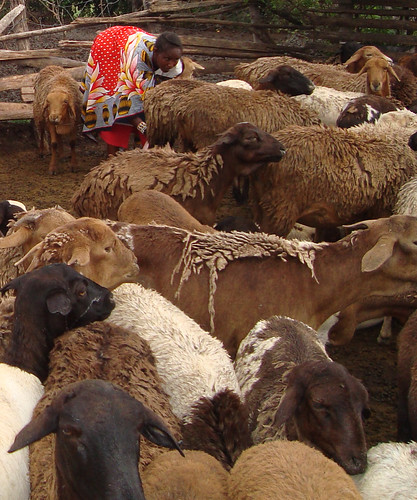
The worm-resistant red Maasai sheep of East Africa

The indigenous, worm-resistant (and non-wool-producing) red Maasai sheep of East Africa (photo credit: ILRI).

SciDevNet reports on a ‘livestock genebank’ that’s needed to help conserve breeds and populations of farm animals, especially the wealth of diversity remaining in Africa and other developing regions, that are fast being eroded through cross-breeding and importations of exotic stock.

‘Speed read

  • The genetic diversity of livestock is decreasing but there are no genebanks for it
  • Hurdles to setting up a genebank to preserve the diversity include legislation and infrastructure
  • The preliminary project needs more funding, but has the expertise

‘Researchers in Kenya are working towards setting up the world’s first genebank for livestock.

‘The genebank could help protect the biodiversity of threatened breeds and be a useful research tool, says the team, based at the International Livestock Research Institute (ILRI) in Nairobi, Kenya.

‘Collecting genetic samples of species into genebanks is not new―it has…

View original post 139 more words

Posted in Uncategorized | Leave a comment

Molecular study makes a difference to guinea pig producers in eastern Congo

Peter Ballantyne (ILRI)'s avatarILRI Clippings

Domestic cavies (or guinea pigs) provide a high-quality meat source with high levels of protein in similar quantity as chicken meat. Here, Brigitte Maass explains how an innovation platform linking cavy producers and other organizations is helping to bridge molecular science with livestock production.

An Africa Biosciences Challenge Fund (ACBF) project (led by the BecA-ILRI Hub, the International Center for Tropical Agriculture, the University of Dschang, and the Université Evangélique en Afrique) is looking at ways to improve alternative and rapid access to food and income in Cameroon and the eastern Democratic Republic of the Congo (DRC) by improving cavy production.

In a recent meeting of the Regional Cavy Innovation Platform in the Democratic Republic of the Congo (DRC), Bertin Bisimwa, a former BecA-ILRI Hub ABCF fellow, explained to farmers and other participants the consequences his molecular studies of cavies in the province should have for their keeping of this…

View original post 408 more words

Posted in Uncategorized | Leave a comment

Experts set minimum standards for gender equity in agricultural research for development

Susan MacMillan's avatarILRI Clippings

agrosalud12

Photo credit: CIAT/Neil Palmer.

Last week, while leaders of CGIAR research program were meeting with donors and partners in Montpellier, France, to discuss progress and directions for their programs, gender specialists in agricultural research for development were also meeting in this Mediterranean coastal city. The gender experts came from the CGIAR Consortium, centres and programs, the UK Department for International Development (DFID), the World Bank and universities. They described their successes and challenges in setting a tighter focus on gender equity, shared useful methods and proposed minimum standards for high-quality research in gender and agriculture.

Among the achievements the assembled gender experts described are:

  • including women’s preferences for rice varieties and traits in breeding trials leading to the production of new rice varieties in the Philippines
    by the International Rice Research Institute (IRRI)
  • mainstreaming gender in collaborative forest management to give women and other marginalized groups opportunities to drive change in Uganda
    by…

View original post 602 more words

Posted in Uncategorized | Leave a comment

The World Bank’s plan to help end ‘absolute poverty’

See on Scoop.itPoverty, Hunger & Malnutrition

The World Bank is promising the poor will not always be with us. “We will join forces to end absolute poverty by 2030,” World Bank president Jim Yong…

See on www.catholicregister.org

Posted in Uncategorized | Leave a comment

The Homeless Hub – Hunger and Nutrition

See on Scoop.itPoverty, Hunger & Malnutrition

Child #poverty is directly tied to the level of household #income http://t.co/gCvBsiaq99

See on ht.ly

Posted in Uncategorized | 1 Comment

WAYS NIGERIA UNIVERSITIES CAN OPTIMIZE THE STUDENT INDUSTRIAL WORKING EXPERIENCE SCHEME (SIWES) PROGRAM TO BOOST AGRICULTURAL RESEARCH AND DEVELOPMENT (ARD).

Lawaleojo's avatarOJO Olawale

Today, I watched as students in their fourth year in my university (Federal University of Technology Akure, Nigeria) picked up their log books for the six month SIWES program. This is generated some thoughts in my head as it relates to the development and sustainability of agriculture among young people especially those studying courses related to agriculture.

The Student Industrial Working Experience Scheme (SIWES) was established by the Industrial Training Fund (ITF) in 1973 to solve the problem of adequate practical skill, preparatory for employment in industries by Nigerian Undergraduate and Diploma students of tertiary institutions. The scheme was designed for duration of six months for university undergraduates. During this period, every student is expected to acquire all necessary practical skill and orientation, as well as technical knowledge needed to adequately develop national man-power and human resources.

Based on these facts, I proffer the following suggestion to boost Agricultural Research…

View original post 391 more words

Posted in Uncategorized | Leave a comment

Food security dependent on smallholder farmers – Yara – Vibe Ghana

See on Scoop.itAgriculture, Climate & Food security

Food security dependent on smallholder farmers – Yara Vibe Ghana Food security in Ghana is largely dependent on the contribution of smallholder farmers predominantly engaged in crop and cash production, Mr Medhi Saint-Andre, Managing Director of…

See on vibeghana.com

Posted in Uncategorized | Leave a comment

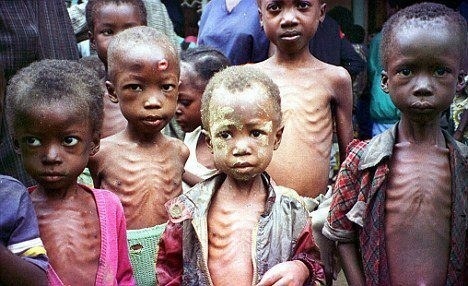
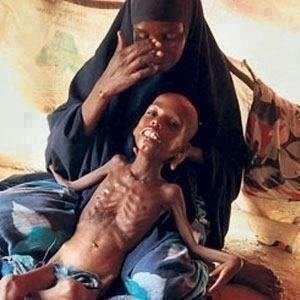
Malnutrition Still Killing Three Million Children Under Five

See on Scoop.itPoverty, Hunger & Malnutrition

Kevin’s Carter’s disturbing picture of the 1993 famine in Sudan won him a Pulitzer Prize.

See on www.nationofchange.org

Posted in Uncategorized | Leave a comment

Urban Agriculture: Better Food & Food For Thought – Vertical Food Blog

See on Scoop.itFood supply & food safety

City farmers and advocates for sustainable food systems champion urban agriculture as a source of better food. How urban agriculture offers better produce

See on verticalfoodblog.com

Posted in Uncategorized | Leave a comment

Malnutrition ought to take political centre-stage: Experts – New York Daily News

See on Scoop.itPoverty, Hunger & Malnutrition

Malnutrition ought to take political centre-stage: Experts New York Daily News New Delhi, June 28 — India needs to bring the malnutrition debate on the political centre-stage, experts noted Friday at the India launch of the Lancet 2013 series on…

See on india.nydailynews.com

Posted in Uncategorized | Leave a comment

Malnutrition threatening child survival in sub-Saharan Africa – Plan

See on Scoop.itPoverty, Hunger & Malnutrition

Widespread malnutrition in sub-Saharan Africa is threatening the survival of millions of children, Plan has warned. (#Malnutrition is threatening child survival in sub-Saharan #Africa.

See on plan-international.org

Posted in Uncategorized | Leave a comment

World Bank chief faces challenges on poverty, climate change

See on Scoop.itPoverty, Hunger & Malnutrition

In his first year as president of the World Bank, Jim Yong Kim has tried to refocus the institution on fighting poverty and climate change — but challenges lie ahead (World Bank chief faces challenges on poverty, climate change – FRANCE 24: World…

See on www.france24.com

Posted in Uncategorized | Leave a comment

World Bank chief faces challenges on poverty, climate change

See on Scoop.itAgriculture, Climate & Food security

In his first year as president of the World Bank, Jim Yong Kim has tried to refocus the institution on fighting poverty and climate change — but challenges lie ahead (World Bank chief faces challenges on poverty, climate change – FRANCE 24: World…

See on www.france24.com

Posted in Uncategorized | Leave a comment

ILRI news

See on Scoop.itPoverty, Hunger & Malnutrition

See on www.ilri.org

Posted in Uncategorized | Leave a comment

Malnutrition threatening child survival in sub-Saharan Africa – Plan – Reuters AlertNet

See on Scoop.itPoverty, Hunger & Malnutrition

Malnutrition threatening child survival in sub-Saharan Africa – Plan Reuters AlertNet Addis Ababa, ETHIOPIA: Widespread malnutrition in sub-Saharan Africa is threatening the survival of millions of children, child rights organisation Plan…

See on www.trust.org

Posted in Uncategorized | Leave a comment

Solving a continent’s food crisis |Cover Story |chinadaily.com.cn

See on Scoop.itAgriculture, Climate & Food security

China’s pioneering efforts are helping African nations develop their agricultural sectors (Solving Africa’s food crisis: http://t.co/lh26sOMCaF #foodcrisis #malnutrition #Africa)…

See on africa.chinadaily.com.cn

Posted in Uncategorized | 2 Comments

‎www.ipcinfo.org/fileadmin/user_upload/ipcinfo/docs/IPC-Factsheet.pdf

‎www.ipcinfo.org/fileadmin/user_upload/ipcinfo/docs/IPC-Factsheet.pdf.

Posted in Agriciltural Policy, AR&D, Food safety & supply, Hunger & Malnutrition, Poverty, small holder | Leave a comment

UNSC sees poverty key to Africa’s conflicts – Xinhua | English.news.cn

See on Scoop.itPoverty, Hunger & Malnutrition

See on news.xinhuanet.com

Posted in Uncategorized | Leave a comment

Tata Group To Invest In East Africa’s Agriculture Sector

See on Scoop.itAgriculture, Climate & Food security

See on www.ventures-africa.com

Posted in Uncategorized | Leave a comment

China developing sustainable solutions to hunger in Africa: WFP – Xinhua | English.news.cn

See on Scoop.itPoverty, Hunger & Malnutrition

See on news.xinhuanet.com

Posted in Uncategorized | Leave a comment

China major player in fighting hunger: UNWFP – Xinhua | English.news.cn

See on Scoop.itAgriculture, Climate & Food security

China major player in fighting hunger: UNWFP—A top official from the United Nations World Food Program (WFP) said Wednesday that China is capable of playing a major role in the global fight against hunger.

See on news.xinhuanet.com

Posted in Uncategorized | Leave a comment

Livestock present Africa with huge – ‘right now!’ – opportunities for food, prosperity, environment » ILRI news

See on Scoop.itAgriculture, Climate & Food security

See on www.ilri.org

Posted in Uncategorized | Leave a comment

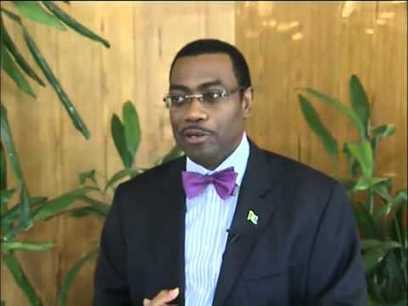
Outlook for Nigeria’s Agri Sector with Minister Akinwunmi Adesina

See on Scoop.itFood supply & food safety

On the side lines of the annual Nigerian Economic Summit in the capital Abuja, ABN’s Wole Famurewa caught up with Nigeria’s Minister of Agriculture Akinwunmi…

See on www.youtube.com

Posted in Uncategorized | Leave a comment

UN food agency officials call for hunger elimination by 2025 – Xinhua | English.news.cn

See on Scoop.itPoverty, Hunger & Malnutrition

Officials of United Nations food agencies on Saturday called for food security and nutrition to be placed at the center of the international agenda for African development, and hunger to be eliminated by 2025.

See on news.xinhuanet.com

Posted in Uncategorized | Leave a comment

Is Sustainability Still Possible?

canwefeedtheworld's avatarOne Billion Hungry: Can We Feed the World?

Sustainability

Every year the Worldwatch Institute releases their annual State of the World report covering such previous topics as consumerism, climate change and food security.  In 2013, State of the World turns its attention to a popular topic, the concept of sustainability.

The report looks at the definition and use of the word sustainability, whether the concept has outlasted its usefulness and, if not, how we can measure sustainability? Practical approaches and policies for achieving sustainability, including geoengineering and corporate transformation, are investigated along with ways of coping with drastic environmental change and resource depletion, should we fail.

The term “Sustainability” is used frequently in our language today and with a myriad of different meanings, something the President of the Worldwatch Institute, Robert Engelman, calls “Sustainababble”. Its definition, in its original form is “capable of being maintained in existence without interruption or dimunition,” but since the release of the Brundtland Commission’s…

View original post 355 more words

Posted in Uncategorized | Leave a comment