How Innovation Is Stimulating Agriculture In Africa

cambodine's avatarECO-opia

Source link:  http://www.ventures-africa.com/2013/04/innovation-agriculture-africa/

Agriculture

Editor’s Note: This article was feature in Ventures Africa magazine February/March edition

Posted on April 29, 2013

VENTURES AFRICA – Agriculture in Africa currently stands at the crossroads of persistent food shortages compounded by climate change threats. Communities in several African countries are battling food security, as many are not producing enough crops and grain to feed themselves, let alone to sell as surplus. Analysts believe that the effects of unemployment and the resulting increased crime rates can be halted by innovative agricultural solutions that include commercialising crop and livestock production.

The New Harvest: Agricultural Innovation in Africa, written by Calestous Juma, examines these topics. The book suggests that Africa currently faces three major opportunities that can transform agriculture on the continent into a force for economic growth. These are: advances in science and technology; the creation of regional markets; and the emergence of a new…

View original post 1,172 more words

Posted in Uncategorized | Leave a comment

Beyond the farm: promoting agribusiness as a way out of poverty

youngfamersfoundation's avatarFoundation for Young Farmers

Beyond the farm: promoting agribusiness as a way out of poverty

Just improving farm yield is not enough to lift families and communities out of poverty – we also need to change the systems in which smallholders operate
If we’re serious about ending poverty and feeding a growing planet, it’s imperative that we focus on the 2 billion people who live and work on small farms in the developing world. Often, the best way to support these smallholders has less to do with things they can do to improve their farms and more to do with the systems in which they operate.

What happens at the farm level is important, and farmers need access to knowledge that enhance productivity inputs and tools. But to create sustainable growth in agricultural industries, that can provide opportunities for increasing economic benefits for farmers now and in the future, we need to take a…

View original post 757 more words

Posted in Uncategorized | Leave a comment

World’s 2.5 billion smallholder farmers are key to global food security and sustainability

Susan MacMillan's avatarILRI Clippings

Ezekial Rop_Moiben

Ezekial Rop, a smallholder farmer in Moiben, Kenya (photo credit: Jeff Haskins).

Supporting smallholder farmers to play a greater role in food production and natural resource stewardship is one of the quickest ways to lift over one billion people out of poverty and sustainably nourish a growing world population, a new United Nations report released today said.

Most of the 1.4 billion people living on under US$1.25 a day live in rural areas and depend largely on agriculture for their livelihoods, while an estimated 2.5 billion people are involved in full- or part-time smallholder agriculture.

These smallholders manage approximately 500 million small farms and provide over 80 per cent of the food consumed in large parts of the developing world, particularly Southern Asia and sub-Saharan Africa, thus contributing to food security and poverty reduction.

‘A previous study showed that a one-per-cent increase in agricultural per-capita Gross Domestic Product (GDP)…

View original post 501 more words

Posted in Uncategorized | Leave a comment

Making visible the ‘invisible benefits’ of African pastoralism will spur national and pastoral economies both

Paul Karaimu's avatarILRI Clippings

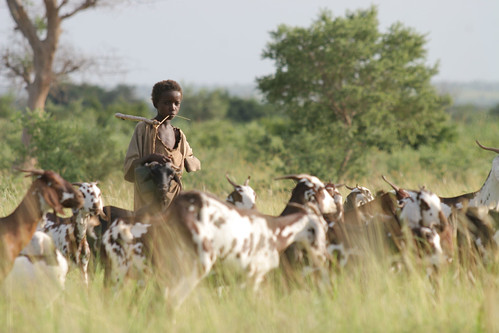
Fulani boy in Niger herds his family's animals

Pastoral areas of Africa are experiencing a booming livestock export trade and inflow of investment that can be harnessed to grow national economies (photo credit: ILRI/Stevie Mann).

A comprehensive economic evaluation of pastoral livestock’s often invisible livelihood benefits in Africa’s drylands could be key in maintaining and harnessing the increasing economic benefits for poor herders and communities living in the continent’s marginal lands.

An article published by IRIN last month (16 May 2013) cites findings from a book published last year by the Future Agricultures Consortium, to which researchers from the International Livestock Research Institute (ILRI) contributed.

Polly Ericksen, who leads a CGIAR Research Program on Drylands Systems in East and Southern Africa and is based at ILRI, is one of the book’s authors. In a chapter on Climate change in sub-Saharan Africa: What consequences for pastoralism? Ericksen says ‘insights from pastoral systems are critical for generating wider lessons on…

View original post 519 more words

Posted in Uncategorized | Leave a comment

Watch “African agricultural R&D and productivity growth in a global setting” on YouTube

Posted in Africa, Agriciltural Policy, AR&D, Farmer, Food safety & supply, Food security, Hunger & Malnutrition | Leave a comment

Watch “Improving Food Security in the 21st Century: What are the roles for firms and foundations?” on YouTube

Posted in Africa, Agriciltural Policy, Agriculture, Farmer, Food security, Poverty, small holder, Women | Leave a comment

Watch “Water and Agriculture in a Changing Africa: What might be done?” on YouTube

Posted in Uncategorized | Leave a comment

Refocusing on youth and agriculture for Africa’s ‘lost generation’

Majority (probably upto 75%) of Africa’s population leaves below poverty and about the same % depend on Agriculture for their livelihood. Youth constitute greater % of this population. Giving adequate attention to Agriculture invariably means facing the major challenges of lives faced by the entire population!

youngfamersfoundation's avatarFoundation for Young Farmers

Agriculture policies in many African countries are failing to recognise the true needs and priorities of their young people, say authors of new research published today by the Institute of Development Studies. Unemployment among young people in Africa is increasingly recognised as a first order development challenge. There is widespread economic growth in many parts of the African continent– but ‘jobless’ economic growth combined with the world’s youngest population threatens progress in many African countries. Given that the majority of Africans live in rural areas, the continuing importance of the agricultural sector to most African economies, and the very slow emergence of employment opportunities in the formal sector, it is not surprising that policy and development practitioners frequently look to agriculture as a key source of opportunity for young people. Yet the way they approach the ‘problem of young people and agriculture’ may be flawed, say authors of the new…

View original post 317 more words

Posted in Uncategorized | Leave a comment

Farming could be key to solving youth unemployment in Africa

youngfamersfoundation's avatarFoundation for Young Farmers

Farming on the Katine project
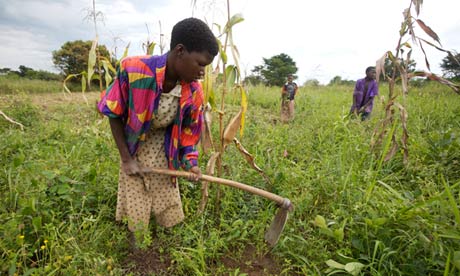
Farming by machete and hoe does not appeal to young Africans – or policymakers. Photograph: Dan Chung for the Guardian

Agriculture employs most of Africa‘s young people and is likely to continue to do so in the future. But to meet the aspirations of millions who want rewarding work, the continents’s agricultural sector will have to change markedly. Today’s farming by machete and hand hoe does not appeal to young Africans or to policymakers. Farming is not even viewed as a “job” by many young Africans, who instead reserve the term for employment that requires clean clothes and a desk. Yet for a generation of young people entering adulthood, agriculture offers the best opportunity to move out of poverty and build satisfying lives.

Markets for food are booming globally and in Africa. Recent trends in income growth, urbanisation and diet have created a sharp rise in demand for food…

View original post 839 more words

Posted in Uncategorized | Leave a comment

Youth are the future. Invest in them!

youngfamersfoundation's avatarFoundation for Young Farmers

Youth are the future. Invest in them!.

Youth are the future. Invest in them!

 “Education is crucial, enabling young people to live up to their potential”

With more than 200 million people aged between 15 and 24 years (comprising over 20% of the population and 70% of the population being under 30 years old), Africa’s future seems bright. Young people usually bring new skills and abilities to the table, and tend to be highly competitive into sectors that use innovative technologies (such as ICT, social media or even agriculture).

But presently this is not the case in Africa. According to the Food, Agriculture and Natural Resources Policy Analysis Network (FANRPAN) Youth Policy Case Studies, while approximately 70% of youth live in rural areas and represent almost 65% of the workforce there.
On average, 74% of the youth population in Africa lives on less than…

View original post 445 more words

Posted in Uncategorized | Leave a comment

Breeding Season coming to a close

Ryan Goodman's avatarBeef Runner

Earlier this week, I was busy in the barn at one of our farms despite the humidity and rain. We were working cattle and pulling bulls from the cow herds.

The calves were receiving their first round of vaccinations (2 shots – one to protect against 7 different Clostridiums and Pinkeye, another for Respiratory diseases), new ear tags with insecticide to deter flies and ticks, and the males were castrated if not already done at birth and received a Ralgro implant. (Be sure to click the links for more information about why these products are given.)

The cows and calves had their weight recorded. Many of the calves are already getting close to 600 lbs. After we were finished, everyone was turned out to the pasture; less than an hour in the pens for each herd of cows.

The bulls have been out with the…

View original post 254 more words

Posted in Uncategorized | Leave a comment

Why Castrate Cattle?

Is castration really a management matter?

Ryan Goodman's avatarBeef Runner

Why do farmers and ranchers castrate cattle? There can be many welfare and management reasons behind the use of castration in cattle. Castration also comes to mind when I think of the neighbors’ traveling bulls. When it comes down to it, farmers and ranchers use this as a tool for management. Why would you castrate your dog?

When I asked for a blog post topic via Twitter, I received a couple of questions about castration and why we have to do it. Well, we do not have to castrate our cattle, but like many other management decisions in raising beef, it is a decision in response to consumer demand. Consumers want a consistent palatable, flavorful product. So, producers respond with the tools we know can help to accomplish that.

castrate cattle bull calf

I castrate my male calves a few hours after birth using a band method. Some producers choose to not castrate…

View original post 516 more words

Posted in Uncategorized | Leave a comment

Ask A Farmer: Does feeding corn harm cattle?

Ryan Goodman's avatarBeef Runner

What is a Factory Farm? Does feeding cattle corn harm them? Why are cattle finished in feedlots? These are a few of the questions I often receive when discussing the beef we eat and how cattle are raised.

Do cattle eat grass or grain?

Most all beef cattle are born and raised on pastures where their diet consists primarily of grasses, legumes, and other forages. These feeds are high in fiber and lower in the digestibility of nutrients. The stomach of cattle is made of different compartments and is able to digest these fibrous materials.

When cattle on pasture need more energy than can be obtained from forages, the farmers may feed them supplemental feeds that come from a number of sources, including concentrates that will be explained below.

Does feeding cattle corn harm them? Ask a Farmer

Do farmers feed cattle corn?

After cattle are weaned (approximately 7-8 months of age, shortly before puberty), most continue to…

View original post 957 more words

Posted in Uncategorized | Leave a comment

FAO – News Article: Progress is proof that hunger can be eliminated

See on Scoop.itPoverty, Hunger & Malnutrition

16 June 2013, Rome – FAO Director-General José Graziano da Silva formally recognized 38 countries for reducing hunger by half well ahead of international targets for the year 2015. During a high-level ceremony attended by several heads …

See on www.fao.org

Posted in Uncategorized | Leave a comment

FAO – News Article: FAO urges end of malnutrition as priority

See on Scoop.itPoverty, Hunger & Malnutrition

4 June 2013, Rome – Denouncing the huge social and economic costs of malnutrition, FAO Director-General José Graziano da Silva today called for resolute efforts to eradicate malnutrition as well as hunger from around the world.

See on www.fao.org

Posted in Uncategorized | Leave a comment

Food for All: Tackling Hunger and Malnutrition | Commentary – Roll Call

See on Scoop.itPoverty, Hunger & Malnutrition

Food for All: Tackling Hunger and Malnutrition | Commentary
Roll Call
There has never been a greater need for a comprehensive and sustainable approach to tackling hunger and malnutrition.

See on news.google.com

Posted in Uncategorized | Leave a comment

We Must Confront Climate Change to End Poverty – Huffington Post

See on Scoop.itPoverty, Hunger & Malnutrition

Environment News Service We Must Confront Climate Change to End Poverty Huffington Post To help our clients prepare for the risks of a warming planet, we asked the scientists at the Potsdam Institute for Climate Impact Research and Climate Analytic…

See on www.huffingtonpost.com

Posted in Uncategorized | Leave a comment

FAO urges end of malnutrition priority / Socio-economic costs of global malnutrition unacceptable

See on Scoop.itPoverty, Hunger & Malnutrition

  FAO urges end of malnutrition as priority / Social and economic costs of global malnutrition unacceptable   ROME, Italy, June 4, 2013/African Press Organization (APO)/ – Denouncing the huge social and economic costs of malnutrition, FAO…

See on appablog.wordpress.com

Posted in Uncategorized | Leave a comment

Small Scale Farming: Simple, Successful, Sustainable

See on Scoop.itFood supply & food safety

On a recent visit to Japan, I was struck by the remarkable success of smallholder farming. I left the country convinced that subsistence farming can eradicate Africa’s hunger crisis.
I wade into the paddy fields, nestled in the gentle mountains, hugged by the forests, along with Seiji Sugeno-san and his family. Rice occupies a historical place in Japanese history, society, and political economy. But for me it was my first experience of planting. The earth feels warm and the soft clay soils wrap around the feet in a tender clasp.

Sugeno-san is the president of the Fukushima Organic Farmers’ network. His rugged frame advertises his dedication, hard work and love of the land. He embraces me like an old friend. I am from the country of Mandela, who is an icon in his community, admired for his integrity, sacrifice and compassion for the oppressed of the world.

We are barely 50 kilometers from the epicentre of the Fukushima meltdown. I am here to pay my respects to a community that has suffered the traumatic hardships of nuclear conflagration. Across the region, farmers dumped millions of gallons of milk and tons of ripe vegetables, unable to sell their products legally on the open market. Fukushima’s 70,000 commercial farmers lost billions of dollars in income.

But Sugeno-san does not dwell on the past. He talks matter-of-factly about how the community is pulling itself up.

Yet all around us is the evidence of the radiation threat. A Geiger meter to measure radioactive levels is an ever-present companion. He waves it around ceaselessly. The levels fluctuate wildly as we encounter ‘hotspots’ higher up in the mountains and forests that surround this region, where they are more concentrated.

Sugeno-san is a philosopher. His love affair with the land is poetry. “These trees are planted by our ancestors. These ‘tambos’ — the orderly descending terraces of rice paddy fields — are blessings from our communal mountains and forests. We smallholder farmers are the guardians of this Earth. It is our ancestral connection with their spirits. We pay our respects by respecting the land.” I realise that this deep and profound link between our planet and our humanity is being shattered by our human greed and ever-rising consumption.

Here, even in these mountainous areas, his fields are organized and more productive than any agro-industrial farm I have seen. His four hectares gives the highest yields, and all of it is based on a sustainable organic farming model. A motley bunch of urban students and activists have arrived to help him. I am not sure whether we are a hindrance or help, but his humour is infectious. I think he knows that he is educating us on what is important in life. He is a born teacher.

It feels so good to connect back to nature. The waters are abuzz with life, insects and sparkling green fluorescent frogs. The government has recommended that farming be suspended. But Sugeno-san is a farmer, the land is his canvas and planting his paintbrush that brings life. I sense he would die if he did not touch the earth with his hands each day. “The farmer is the bridge between humankind and nature. Disrupt that bond and the balance of our world is destroyed,” he reflects quietly, almost to himself.

As we spread through the paddy fields I see a box with technical measurement devices connected to the ground. “What is this?” I ask.

“It is a university experiment that measures the levels of radioactivity in the water and eventually in the food. We can be contaminated through the air or the food we eat or water we drink. But we must fix our soils: only working it will help it to heal,” he says.

I see why smallholder farmers like him are the true guardians of our planet. They breathe and feel the land. They are the extension of nature. But they have perfected productivity. A simple, inexpensive mechanical machine plants a hectare of rice seedlings in a few hours. He teaches me to use it in a few minutes. I wonder why we have not prioritised linking farmers with his expertise to farmers in Africa. Unlike a consultant or expert, he has learnt his skills in the fields, not a classroom.

Seeing my interest, he herds us into his farm truck and we go to the local organic composting facility.

“We do not use chemical fertilisers here. We have aggregated cattle-rearing in our community and use the cow dung as the base of our organic fertilisers. Linking to local businesses, they collect natural vegetable waste and produce several tons a day. It helps the soils recover their strength, and we build social solidarity as the foundation of our community.”

I visit a local co-operative centre the community has established, and witness the social solidarity they have built at a grassroots level. I recognise the human values that Nelson Mandela represents in their actions. I wonder why we have not done more to build human dignity. No-one is left behind. I reflect on the influence Mandela had on my life, when he powerfully said, “Fighting poverty is not an act of charity. It is an act of justice.”

Why have our leaders forgotten this most profound wisdom? Why have we not planted the seeds of social solidarity, human dignity and compassion that are the legacy of Nelson Mandela?

That evening we gather to hear the tales of a village elder recounting cultural stories of the ancestors. It reminds me of my time spent with Mandela – the simplicity of village life in India and Africa. The stories are expressive and traditional, but with the underlying morality we have forgotten.

As we share a supper, I understand how deeply entrenched nutrition is in Japan. I did not see a single obese person around the table or in my journey here. The meal has an astonishing variety of delicious vegetable dishes that have been planted locally, with the appropriate carbohydrate mix, usually rice, and fish or animal protein. Culture has developed a tradition of balanced nutritious diets that has ensured that Japan has largely resisted the western junk food invasion.

I think about what we need back home. We need farmers like Sugeno-san to connect to farmers in Africa. He demonstrates that organic farming can be done at scale and be productive. Smallholder farmers, especially women, who produce 80 percent of our food, do not need charity. They need legal land ownership, the support to build their own seed banks and finance for power, irrigation and water in the first few years. Smallholder farmers are the most valuable part of the market, of the entrepreneurial value chain.

Yet they are largely excluded. They are the unrecognized foundation of the market system. Many have said to me, “Help us improve their productivity through provision of extension support, and ensure that we are able to connect to the market and keep the major part of the value — then we will feed Africa and the world.”

The next day in a GAIN-hosted workshop on agriculture and nutrition, President Jakaya Mrisho Kikwete of Tanzania says in his keynote speech:

I know that my ancestors who lie in the ground will not allow me to take the land that belongs to my people and give it away. We need smart partnerships that ensure that value goes to the smallholder farmer also. We also need to change our eating habits, even if it goes against what our tradition teaches us. Science has shown us that it is not just the amount of food we eat but the quality of the food that is important. Our mothers and children must get the right nutrients to be healthy and productive.

Professor Ruth Obiang, speaking on a panel, remarks,

You look good, Mr. President, because your mother and your wife feed you. Talk to your counterparts in Africa that nutrition and food security are two sides of one coin. Make them understand that women smallholder farmers are the centre of the agriculture value chain. If they go on strike, Africa will starve.

I return from Japan convinced that we can make malnutrition history. As Obiang said, “I hate to see an African child starving on our TV screens. African children are beautiful when they have the right nutrition. Let us work together to eradicate stunting as the poster child of Africa.”

I completely concur.

See on www.huffingtonpost.com

Posted in Uncategorized | Leave a comment

Responsible Agriculture

See on Scoop.itAgriculture, Climate & Food security


THIS is the third in the series on healthy and responsible living. Today I would like to share my experiences about the several farming practices that not only seek to provide us with nutritious foods, but also sustain the soil and the surroundings.

I am not a hands-on gardener and don’t usually get my hands dirty. I am very much an office (or clinic) guy, but I do have some interesting farming stories to tell.

Organic farming

I have always been in favour of organic farming and organic products. While the official scientific position is that organic products are not superior to ordinary products in terms of the nutritional content, there is safety in the knowledge that organic farming does not use pesticides that can harm us and the environment too.

But what scientists do not know is that organic products have much more vital and healing life force than the non-organic variety. Those of us who know about qi (life force) are not surprised with this fact, because eating fresh raw foods certainly give better, healthier outcomes than eating the same foods cooked (and Malaysians tend to overcook).

My best experience with organic farming was during my short stay in the small town of Tangchi, in Lujiang county, China. I had gone there to study Confucianism and see how it transformed the people into a loving, respectful and harmonious society. For the full story, please read Love in Lujiang (Fit4life, Nov 2, 2008).

The same principles of love, respect and sharing were also applied by a group of young teachers (of the Lujiang Chinese Cultural Education Centre, CCEC) when they miraculously transformed a “dead” piece of land into a thriving and lively organic farm. For the benefit of those who missed the story, here are some excerpts (for the full story, see Living with gratitude, Fit4life, Nov 16, 2008).

The harmonious farm

Realising that a harmonious life can come true only if we also live in harmony with nature, the CCEC teachers embarked on an experiment to do organic farming while applying the traditional loving and caring values that they have imbued themselves with.

Armed only with good hearts, dedication and a firm belief that if you do things right and well – especially with love and sincerity – then nature will respond favourably, they set out to establish the “Peace & Abundance Experimental Organic Farm” with their partners – the insects, the caterpillars, the birds, the bees, the butterflies and the animals in the area.

Imagine a group of young men and women with no prior farming experience trying to turn a barren, abandoned garbage dump site into an organic farm. The soil was bad and hardened, and absolutely nothing could grow on it. All the farmers laughed at their “silly” project.

But with confidence and determination, they toiled on the land, using traditional farming methods, avoiding artificial fertilisers, insecticides and modern machinery.

A buffalo was rented and the teachers took turns working on the farm. Soon, they proved their detractors wrong by growing a wide variety of vegetables and some fruits. Theirs were healthier and tasted much better than those produced by others.

Gratitude to nature

From the outset, it was decided that they would share the produce with the insects and animals that contribute to the success of the farm; and with their neighbours. Special plots are dedicated to the insects and animals, with signboards saying “Restaurant” prominently posted so that the insects and animals know these are especially for them.

Amazingly, these plots are more frequently visited by insects and animals compared to the plots meant for harvesting! Birds also prefer to build their nests on this farm, and they are most welcomed.

Although the farm is now thriving, all the produce is for their own consumption, and for distribution to the residents staying around the farm. It is an experiment to show that it is possible to have a farm totally in harmony with nature. And nature rewards them abundantly.

In previous articles I wrote about biodynamic farming and permaculture. This harmonious farming concept has also proven to be able to rehabilitate barren and polluted land and turn it into a productive farm. It is another agricultural practice that can help save our earth from poisoning, wastage and destruction.

Biodynamic farming

Before going to Lujiang, I had gone for a qigong, spiritual and biodynamic retreat at Tanjung Sutera Resort which is situated at the edge of Sedili, a small fishing town on the east coast of Johor.

I had shared my experience in this column. Here are some excerpts from Healing the earth (Fit4life, Sep 21, 2008).

Apart from hiking, qigong, and a walk-about in the quiet town, we spent a lot of time sharing our spiritual experiences, having fun making silly animal noises and drawing mandalas, and learning about biodynamic agriculture from (my spiritual sister) Betty Lau, who is a champion of the method, and who helped make the Tanjung Sutera Resort a pioneer of this Earth-healing agricultural practice.

Since it was a spiritual retreat, it was most appropriate that we also learned about biodynamic agriculture.

Biodynamic agriculture is a method of organic farming that goes further in that it includes a spiritual philosophy and practice of love and respect for the Earth and the environment. It is based on the anthroposophical teachings of Rudolf Steiner (1862-1925).

Anthroposophy aims to understand the spiritual world with the same certainty and clarity as the scientific understanding of the physical world. In Steiner’s own words: “Anthroposophy is a path of knowledge, to guide the spiritual in the human being to the spiritual in the universe… Anthroposophists are those who experience, as an essential need of life, certain questions on the nature of the human being and the universe, just as one experiences hunger and thirst.”

Biodynamic farming is a holistic ecological farming system, wherein the farm and everything that is involved in its existence is considered as one unified organism.

The aim is to correctly harness the interrelationships of the soil, earthworms, soil bacteria, plants, animals as well as the farmer, as a closed, self-supporting system. It relies on manure and composts, and excludes the use of artificial chemicals.

It also uses “homeopathic medicines” for the soil, in the form of fermented herbal and mineral preparations as additives and field sprays. Although its effectiveness is controversial, I support anything that is holistic in approach.

I don’t have green fingers, and I don’t usually get my feet soiled, but watching the inspiring documentary One Man, One Cow, One Planet, which was about how New Zealander Peter Proctor helped rehabilitate large farms in India into productive, efficient biodynamic farms using the abundant cow dung, convinced me that I should at least help spread the message.

This is one effective way to help heal planet Earth.

We spent one afternoon getting dirty stirring the cow dung-based special remedial solution to help invigorate the soil at the resort. We planted several trees to start the biodynamic revolution there.

The Starseed Solar Village

It has been five years since then, and Kak Betty wants to establish a proper eco-village based on biodynamic principles, and involving the community in the area. The Starseed Solar Village is about returning to living in harmony with nature, based on a profound understanding that we are one with nature.

This adik of hers has been recruited into this wonderful altruistic project too.

The homes, structures and infra-structures within the eco-village will be designed based on natural principles incorporating maximum use of natural materials and resources, energy-efficient designs, and sustainable food production, utilisation and disposal.

Solar energy will be tapped, while the bio-diversity of local plants and farm animals will be preserved and nurtured.

The villagers will be invited to work on the farms, to learn and produce traditional items and foodstuff through cottage industry initiatives, and also to learn and practise the eco-sustainable principles in their own homes. Vegetarianism will be promoted (or healthy semi-vegetarian diets), especially the revival of ulam and local veggies.

All the food will be natural, unprocessed and chemical-free. People from the cities can come over for detox, de-stress and rejuvenation retreats amidst the natural, cooling and calming environment.

This eco-village is envisaged to become an example of a sustainable community with fresh air, pure water and fertile earth that can maximally and sustainably harness human potential and available resources.

Once the eco-village is thriving, then we can even start helping other villages become eco-friendly and sustainable, and also initiate re-forestation efforts of the surrounding areas, together with other like-minded people and organisations.

In the next installment, I will share my experiences with Permaculture, Homa agriculture and related practices. In the meantime, I leave you with this quote that embodies the eco-warriors’ battle cry:

“Our goal is a delightfully diverse, safe, healthy and just world, with clean air, water, soil and power – economically, equitably, ecologically and elegantly enjoyed.” – Bill McDonough.

Dr Amir Farid Isahak is a medical specialist who practises holistic, aesthetic and anti-ageing medicine. He is a qigong master and founder of SuperQigong. For further information, e-mail starhealth@thestar.com.my. The views expressed are those of the writer and readers are advised to always consult expert advice before undertaking any changes to their lifestyles. The Star does not give any warranty on accuracy, completeness, functionality, usefulness or other assurances as to the content appearing in this column. The Star disclaims all responsibility for any losses, damage to property or personal injury suffered directly or indirectly from reliance on such information.


10+ GB of storage, less spam, and mobile access. Gmail is email that’s intuitive, efficient, and useful. And maybe even fun.

See on accounts.google.com

Posted in Uncategorized | Leave a comment

Our Collective Failure To Address Malnutrition Is a Glaring Scandal …

See on Scoop.itAgriculture, Climate & Food security

Our Collective Failure To Address Malnutrition Is a Glaring Scandal of the 21st Century. Published on 11 June 2013. share +. June 8 – As we gather in London this weekend for the Nutrition for Growth Summit, we should remind ourselves that …

Bukar Usman‘s insight:

#Sahel Crisis: Collective efforts…matter of necessasity to save millions of lives desvasted by crisis."… Chad Basin: 19,000 farmers sacked by Insurgents – Dr. Iliya http://nnd.es/3WyDzv "

See on www.wfp.org

Posted in Uncategorized | Leave a comment

A Global Imperative: Ending Child Malnutrition | Impatient Optimists

See on Scoop.itAgriculture, Climate & Food security

New research published this week in the respected medical journal, The Lancet, underscores one area – undernutrition in young children – where there is a lot more work to do. According to the latest studies, undernutrition is …

See on www.impatientoptimists.org

Posted in Uncategorized | Leave a comment

Dr. Steve Meyer – Grains and Livestock Economic Outlook

See on Scoop.itFood supply & food safety

Dr. Steve Meyer, Paragon Economics, says key issues in coming months will be input and production costs; demand; output levels for 2013 and 2014; and prices and margins.


YouTube: http://agtoday.us/14bOYrG


He reminded people that in 2012 he said if it rains we have $4 corn and if it doesn’t we have $8 corn – and that everyone heard the first part and nobody heard the second part. In summary Dr. Meyer says that corn belt rains have been good, now we need some warm dry days.

See on www.swinecast.com

Posted in Uncategorized | Leave a comment

Could Agriculture Bloom in the Desert? Qatar Works to Invent an Innovative Oasis – PBS NewsHour

See on Scoop.itAgriculture, Climate & Food security

Could Agriculture Bloom in the Desert? Qatar Works to Invent an Innovative Oasis
PBS NewsHour
But it will likely be fueled by renewable resources, like ingenuity, imagination, and perseverance.

See on www.pbs.org

Posted in Uncategorized | Leave a comment

Putting the Culture Back in Agriculture: Reviving Native Food and Farming Traditions

See on Scoop.itAgriculture, Climate & Food security

Toward Freedom, a progressive perspective on world events

See on www.towardfreedom.com

Posted in Uncategorized | Leave a comment

Cost of hungry children revealed

See on Scoop.itAgriculture, Climate & Food security

Children not eating well costs Uganda more than 5% of its national income, the first large-scale survey of the economic impact of malnutrition shows.

See on www.bbc.co.uk

Posted in Uncategorized | Leave a comment

Africa’s dryland agricultural systems research: When East meets West (and when it doesn’t)

See on Scoop.itFood supply & food safety

I have been working for nine months as an agricultural economist at the International Livestock Research Institute (ILRI) headquarters, in Nairobi, Kenya. I have come to realize that there are not …

See on clippings.ilri.org

Posted in Uncategorized | Leave a comment

‘Adapt to climate shifts now’ – New research report advice to Africa’s farmers and policymakers

Paul Karaimu's avatarILRI Clippings

NP Ghana 64 copy

A failed maize crop in Ghana. A report by CCAFS is advising Africa’s farmers and policymakers to adapt to climate shifts now to ensure communities are protected from climate change devastations (photo credit: Neil Palmer/CIAT).

The many adverse impacts of climate change on agriculture—from increasing droughts and floods, to more unpredictable and extreme weather patterns, to shorter growing seasons—threaten the livelihoods of hundreds of millions of smallholder farmers in Africa today.

For many African countries, dealing with climate change, which has shifted from the realm of academic discussion to that of high-profile policymaking, is now driving greater engagement in the global climate change debate.

That’s a good sign. An article this week (17 Jun 2013) in Kenya’s Daily Nation newspaper reports that African countries are now arguing that climate change agreements, such as those under discussion in Bonn last week, should include ways of protecting and boosting agriculture. That’s to…

View original post 421 more words

Posted in Uncategorized | Leave a comment

Prioritise smallholder agriculture development; farmers tell gov’t – Myjoyonline.com

See on Scoop.itFood supply & food safety

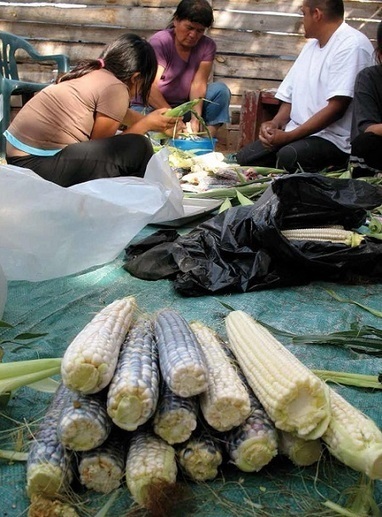
Myjoyonline.com Prioritise smallholder agriculture development; farmers tell gov’t Myjoyonline.com At a SEND-Ghana sponsored forum at Dodowa in the Shai-Osudoku district, the farmers bemoaned the lack of sustained efforts to assist them in their…

See on edition.myjoyonline.com

Posted in Uncategorized | Leave a comment

Malnutrition biggest killer of African children – Africa Review

See on Scoop.itFood supply & food safety

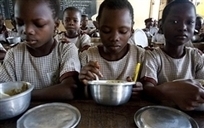
Malnutrition biggest killer of African children Africa Review Speaking to the Africa Review in a telephone interview after the rally, Mr Gates said malnutrition is a huge problem because if a child does not get enough to eat, its chances of dying…
See on www.africareview.com

Posted in Uncategorized | Leave a comment

Bill Marler’s Food Safety Today

See on Scoop.itFood supply & food safety

Bill Marler’s Food Safety Today, by Bill Marler: updated automatically with a curated selection of articles, blog posts, videos and photos. (RT @bmarler: Bill Marler’s Food Safety Today is out!

See on paper.li

Posted in Uncategorized | Leave a comment

Can videos, songs and drama be used to promote agricultural innovations?

Can videos, songs and drama be used to promote agricultural innovations?.

Posted in Africa, Agriciltural Policy, AR&D, Farmer, Food safety & supply, Hunger & Malnutrition | Leave a comment

Agriculture-asociated diseases: Can we control them? Stop them? Prevent them? It’s back to the farm (and market) » ILRI news

Agriculture-asociated diseases: Can we control them? Stop them? Prevent them? It’s back to the farm (and market) » ILRI news.


Posted in Africa, Agriciltural Policy, Animal health for human health, AR&D, Food safety & supply, Hunger & Malnutrition | Leave a comment

14 ways to reduce your food waste

canwefeedtheworld's avatarOne Billion Hungry: Can We Feed the World?

Reduce food wasteWorld Environment Day, the theme being food loss and food waste, got us thinking about practical ways we can reduce the amount of food we throw away. In developing countries the majority of food losses occur at the farm level, particularly during storage, where food is often ‘lost’ after it has been harvested. In the developed world, however, food is most often ‘wasted’ when it is thrown away by retailers and consumers.

The UN Food and Agriculture Organisation estimated that some 32% of all food produced in the world in 2009 was lost or wasted. The World Resources Institute converted this figure from food weight to food calories and found that some 24% of food is lost or wasted, that’s 1 in 4 food calories that are never consumed. As the Institute points out it is not just a loss of food but a loss of money and a waste…

View original post 1,053 more words

Posted in Uncategorized | Leave a comment

A World Without Bees

GlobalFoodPolitics's avatarGlobal Food Politics

Honeybees

The world’s bee populations have been under stress in recent years, fueling concerns over the future of agriculture.  The combination of colony collapse disorder—the cause of which remains disputed—and expanded use of certain classes of pesticides have fuelled sharp die-offs in bee populations in Europe and the United States. In response, the European Union imposed a temporary ban on neonicotinoid pesticides believed to be harmful to bee populations, and researchers at Washington State University of proposed a bee sperm bank  to attempt to preserve the genetic line of bee populations. In the meantime, bee populations continue to fall.

What many people don’t realize is how dependent we are on bees for agriculture. In an effort to illustrate the scope of the problem posed by the loss of bee populations, the University Heights (Rhode Island) Whole Foods Market store temporarily removed produce dependent on bees for pollination services. In…

View original post 199 more words

Posted in Uncategorized | Leave a comment

Agriculture is the largest contributor to Africa’s future economic growth

cambodine's avatarECO-opia

By Warren Nyamugasira

Recently, our leaders have been commemorating, on our behalf, 50 years since the formation of the Organisation of African Unity (OAU) now African Union (AU). Despite the twists and turns over the past five decades, African people have a lot to celebrate. A look at selected poverty indices quickly shows that Africa has made incredible progress in the fight against extreme poverty in the last decade alone.
According to credible statistics, between 1999 and 2008, the proportion of people living on less than $1.25 a day in Sub-Saharan Africa decreased from 56.5% to 47.5% (UNDP 2012). In Uganda, it has come down to below 30%.The number of people on Anti-Retroviral treatment in sub-Saharan Africa increased from 50,000 in 2002 to whooping 6.2 million in 2011 (UNAIDS 2012) and between 2000 and 2010, deaths attributed to malaria fell by 33% (WHO 2012).
On access to improved…

View original post 977 more words

Posted in Uncategorized | Leave a comment

Small ruminants contribute to food security and nutrition in Zimbabwe

Peter Ballantyne (ILRI)'s avatarILRI Clippings

“In addition to providing high-quality food products (meat and milk), livestock is the most important source of on-farm income and insurance in the low-input farming systems of semi-arid southern Africa.”

ILRI’s sister center the International Crops Research Institute for the Semi-Arid Tropics (ICRISAT) is a long term partner where crops and livestock intersect in southern Africa.

In recent years, André van Rooyen and colleagues in the ICRISAT Zimbabwe office have been paying particular attention to small stock – goats mainly – as mechanisms to improve food security and rural livelihoods.

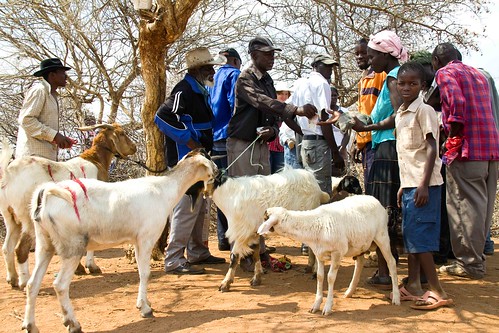
Their latest brief argues that investing in goat production, reducing animal mortality rates, commercializing the goat sector and developing more efficient functional markets will generate cash for rural households.

Earlier briefs consider the important role of informal goat markets, ways to improve the functioning of rural markets (facilities, information, organization and transport), and strategies to overcome health…

View original post 50 more words

Posted in Uncategorized | Leave a comment

It’s not just pests: Pesticides damage biodiversity

argylesock's avatarScience on the Land

Yesterday Sharon Oosthoek at Nature told us about some new science, showing that pesticides spark broad biodiversity loss. It’s easy to spray pesticides within legal limits. But many pesticides accumulate in soil and water. Many organisms can be affected, going far beyond pest control.

This kind of thinking doesn’t have to lead to extremism. It can lead to Integrated Pest Management.

View original post

Posted in Uncategorized | Leave a comment

Taiwan eyeing African markets to boost exports

cambodine's avatarECO-opia

African markets are relatively small and new to Taiwan, but their strong economic growth could turn them into drivers of the country’s exports, Taiwan’s main trade promotion body said Tuesday.

Africa, along with other emerging markets, has great business potential and remains among the fastest growing markets in the world despite the global economic slowdown, the Taiwan External Trade Development Council (TAITRA) said.

Citing a report by the World Bank published in April, TAITRA said economic growth in sub-Saharan Africa is likely to average more than 5 percent from 2013 to 2015 as a result of high commodity prices worldwide and strong consumer spending on the continent.

In 2012, about a quarter of African countries grew 7 percent or more, and several of them, notably Sierra Leone, Niger, Cote d’Ivoire, Liberia, Ethiopia, Burkina Faso and Rwanda, were among the fastest growing economies in the world…

View original post 138 more words

Posted in Uncategorized | Leave a comment

Summer Learnin’: Sustainability of Food Systems

Janina's avatarFood (Policy) For Thought

I am a huge learning addict. Case in point – this blog, which gives me a good reason to go and do hours (sometimes) of research on things such as flood prevention or in vitro meat. Another favorite tool of mine to add to my knowledge and understanding of the world around me are MOOCs. The acronym stands for Massive Open Online Courses, and revolves around a simple concept: free online courses that you take with thousands of other students, exchanging your views in online forums, and getting inspired by readings and links to get further involved. Sounds like even more school? Yup. But the best kind of school.

View original post 494 more words

Posted in Uncategorized | Leave a comment

Keeping camels, and their keepers, free of disease in Kenya, where ‘raw’ camel milk is becoming popular

Susan MacMillan's avatarILRI Clippings

Northeastern Kenya 17

Camels cover dozens of kilometres in search of water; average distances to watering points in the outskirts of Marsabit and Moyale, in the upper east corner of Kenya, run into dozens of kilometres (photo by Ann Weru/IRIN www.irinnews.org).

‘Camels are known for their ability to travel long distances across the desert without water.

‘But they’re also becoming an increasingly important source of milk for people in drought-prone regions. That includes East African countries like Kenya, where camel numbers have skyrocketed over the past few decades.

‘But introducing camels—or any species—to a new region, could mean bringing in new diseases.

‘The St. Louis Zoo has been studying camel diseases in Kenya to help assess their risks.’

A couple of years ago, Margaret Kinnaird, the executive director of the Mpala Research Centre in central Kenya ‘began a project on camel health with wildlife veterinarian Sharon Deem, who directs the Institute for Conservation Medicine…

View original post 331 more words

Posted in Uncategorized | Leave a comment

Heritage breed chickens: America’s new ‘gateway livestock’–Plus film on chicken boom in poor countries

Susan MacMillan's avatarILRI Clippings

New 5-minute ILRI film, New approaches to chicken farming reduce poverty without adding to disease risks

‘. . . Before he got into chickens, Bradshaw had raised pork and cattle on Greenfire Farms, his plot of land 12 miles west of Tallahassee, FL. Now Bradshaw has stopped farming cattle and pork entirely, fully dedicating his operations to the heritage breed chicken business. . . .

‘The 19 breeds he raises, which range from the American Bresse to the Tolbent Polish, are sold throughout the U.S. and Canada and often come with waiting lists. Some are so rare that they verged on extinction before Bradshaw began importing them; two years ago, there were fewer than 60 Olandtz Dwarfs – a tiny, cold-hardy bird native to Sweden – left in the world. Today, Bradshaw estimates their numbers to be in the hundreds to thousands.

‘Bradshaw credits the boom in business to…

View original post 440 more words

Posted in Uncategorized | Leave a comment

Asia Pacific Participatory Epidemiology Network Holds First Training Workshop

Jeff Mariner's avatarPENAPH

IMG_0558

The Asia Pacific Participatory Epidemiology Network (APPEN) based at Chiang Mai University is holding its first Introductory Training for PE Practitioners. The course is divided into two 5-day sessions. The first session was held at Khon Kaen University from June 8 to 12. The course included 22 veterinary and public health participants from Thailand, Vietnam, Cambodia, Laos, Indonesia and China. Participants were sponsored by the RESPOND Project and by CIRAD though the SEA-PREID Network. The first session included 2 days of field work on the epidemiology and control of Opisthorchis liver fluke disease in man associated with the consumption of raw fish. The second session will be heldat Chiang Mai University from July 8 to 12, 2013. PENAPH and ILRI are providing trainers to led the program.

IMG_0199

View original post

Posted in Uncategorized | Leave a comment

Developing impact pathways for the Livestock and Fish Tanzania dairy value chain

Evelyn Katingi's avatarCGIAR Research Program on Livestock and Fish

Tanzania dairy value chain impact pathways workshopA 2 day Tanzania dairy value chain impact pathways workshop was held on 7-8 May 2013 to communicate and validate the program’s intervention logic in the Tanzania dairy value chain, question and clarify the program’s potential to achieve impact in the Tanzania dairy value chain, and to develop an initial framework for program monitoring and evaluation/impact assessment.

Workshop participants were drawn from a wide range of stakeholders: program implementers in the value chain, various scientists involved in the dairy value chain, representatives of the Tanzania dairy regulatory board, farmer forums, implementing partner organizations, national agricultural research institutions, government and the private sector.

Among the biggest challenges of the Tanzania dairy value chain identified by participants were production related challenges such as subsistence production, low production resulting to low per capita consumption of milk, poor feeds and technology practices resulting to low outputs and the inability to access good practice information.

View original post 263 more words

Posted in Uncategorized | Leave a comment

The Evolution of Insect Resistance to Bt Crops

Posted in Uncategorized | Leave a comment

Vital statistics

Posted in Uncategorized | Leave a comment

Is the Land Grab Problem Over-Hyped?

GlobalFoodPolitics's avatarGlobal Food Politics

The BBC yesterday reported on a new database covering global land acquisitions by governments and private investors and arrived at the conclusion that the level of land grabs is exaggerated. The Land Matrix, which bills itself as “a global and independent land monitoring initiative that promotes transparency and accountability in decisions over land and investment,” concluded that there is considerable hype in the global land market, driven predominately by investment companies trying to influence the market and by concerns over the growing role of China.

But in its latest study, Land Matrix concludes that about 46 million hectares of land has changed hands in 756 verified land deals. About half of all transactions have taken place in Africa, with the bulk of those taking place in Ethiopia and Mozambique. Land deals that are occurring are generally equally divided between production of food and fuel crops.

Frequently, reports of massive…

View original post 168 more words

Posted in Uncategorized | Leave a comment

The History of How Food Shaped Cities

Janina's avatarFood (Policy) For Thought

Have you ever wondered how cities today, and in the past, are provided with the immense amounts of food they need to feed their inhabitants? Carolyn Steel gives a fascinating overview on the interrelations of food and urbanity and the possibility of creating a proper ‘sitopia‘, a food place.

I particularly like the last quote she used:

If the city looks after the country, the country will look after the city.

View original post

Posted in Uncategorized | 2 Comments

The Limits of the Diet Industry: A Short Review of Hungry for Change

GlobalFoodPolitics's avatarGlobal Food Politics

hungry-for-change-oct-2Now that summer is here and I have a bit of time away from the classroom, I’ve been spending a fair bit of time in my garden. I’ve also been catching up on some food films I’ve been meaning to review for a while. The first is Hungry for Change, released last year. Look for more over the next few weeks.

Hungry for Change offers a powerful critique of the diet industry, observing that most diets call on dieters to remove one component of a well-rounded diet. A better approach, they argue, is to consume a more natural diet. It’s a fairly straightforward argument rooted in biological and evolutionary human history. For millions of years, the film observers, our bodies have been programmed to consume and store as much fat and sugar as possible. But our diets were defined by low calorie, high nutrient content. In the developed world today…

View original post 354 more words

Posted in Uncategorized | Leave a comment

Floods in Central Europe – Caused by Human Activities?

Janina's avatarFood (Policy) For Thought

These past days, dramatic scenes have unfolded all over Germany and Central Europe in general: after unrelenting rainfalls had overburdened the natural absorption capacity of soils and riverbeds, massive floods spread throughout Central European lowlands and threatened the lives and livelihoods of thousands of persons. People had to be evacuated, some even died, and many have to come to terms with the fact that the second ‘flood of the century’ comes a mere 10 years after the 2002 catastrophe and will again swallow all their belongings. Having followed the news quite extensively these past days, I began to wonder – in which way did human activities contribute to or exacerbate the crisis?

View original post 919 more words

Posted in Uncategorized | Leave a comment

IF … Policymakers Would Listen to Civil Society?

Janina's avatarFood (Policy) For Thought

This weekend, David Cameron hosted the G8 “Hunger Summit” in Northern Ireland, resulting in promises, pledges, praise – and a lot of backlash from African civil society, who this summit was supposed to help. What was the problem?

(the IF campaign actually had a really good promotion video.)

Prior to the summit, Cameron announced his goals – trade, taxes, and transparency – and stressed the continued importance of the G8, since “as eight countries making up around half of the world’s entire GDP, the standards we set, the commitments we make, and the steps we take can help solve vital global issues, fire up economies and drive prosperity all over the world.” He promised that this G8 would be different, though – “Too often, development at the G8 has been about rich countries doing things to poor countries. But at Lough Erne, we in the developed world…

View original post 1,063 more words

Posted in Uncategorized | Leave a comment

What we’ve been reading this week

Posted in Uncategorized | Leave a comment

OECD-FAO Agricultural Outlook 2013-2022

canwefeedtheworld's avatarOne Billion Hungry: Can We Feed the World?

logooecd_enThe 19th OECD-FAO Agricultural Outlook 2013-2022 was recently released, which is an annual report on projections for 15 agricultural products over a ten year period. It covers OECD countries as well as India, China, Brazil and Russia as well as Argentina, South Africa and other developing countries. The report specifically analyses the impact of economic developments and government policies on world commodity market trends.

In this latest report the main headlines are:

  • Productivity growth is projected at 1.5% for the next decade, a reduction on the 2.1% productivity growth seen for the period 2003-2012.
  • We can expect food prices to remain higher than historical averages given increasing demand and stagnating productivity.  Price volatility and trade disruption are expected to continue to be a risk as food stocks, important as buffers against shocks to the food production system, remain low. As the report states, “a wide-spread drought such as the one…

View original post 212 more words

Posted in Uncategorized | Leave a comment

Call for contributions: conference on improving tools for livestock and fish value chains in East Africa

Peter Ballantyne (ILRI)'s avatarCGIAR Research Program on Livestock and Fish

From 9-11 September 2013, the CGIAR research programs on ‘policies, institutions and markets’ and ‘livestock and fish’ will organize a first AgriFood Chain Toolkit conference in Kampala.

The AgriFood chain toolkit of the CGIAR Research program on Policies, institutions and markets was launched in January 2013. This online platform on agrifood value chains is designed to help overcome the information gaps between researchers analyzing value chains and practitioners developing value chains. Both often lack access to the latest information and tools on value chains. There is still need for greater rigour in analysis and better peer feedback. Finally, tool designers need to engage purposefully with tool users.

To help crystallize the potential of the online network into real-world activities, the AgriFood chain toolkit will organize regular real-world conferences designed to collate, synthesize and share good practices of value chain tool users, practitioners and researchers.

The objective of the conference is…

View original post 335 more words

Posted in Uncategorized | Leave a comment

Update on fieldwork in the chicken health for development project

Yetnayet Mamo's avatarCH4D

Back row:   Yordanos Mekonnen, Eshetu Zerihun, Said Mohammed, Michael Temesgen, Gelane Kumssa , Judy Bettridge,  Camilla Brena, Alemayehu Guteta, Jibril Yusuf
Front row:  Zelalem Gutu, Marisol Collins

All fieldwork has now been completed. The eight villages selected to take part in the study have now been visited a total of 4 times each over the last two years. Eighty households in each village have been interviewed, and had two of their chickens examined. This gives us a grand total of 640 households, and 1280 chickens sampled!

In addition, 520 of those households selected to take part were revisited 6 months after they were initially recruited to the study. This enabled us to find out what happened to the chickens we sampled, and will allow us to look for factors which may predict which chickens are more likely to survive.

Chicken health team member at work in EthiopiaChicken in Horro Woreda, EthiopiaSmallholder poultry production

View original post

Posted in Uncategorized | Leave a comment

The Root Causes of the Sahel Drought

GlobalFoodPolitics's avatarGlobal Food Politics

A new study exploring the root causes of the two-decade drought that ravaged the African Sahel from the 1970s to the 1990s arrives at an interesting conclusion. Historically it had been maintained that the drought—which resulted in the deaths of hundreds of thousands of people and sparked Bob Geldoff’s Band Aid and We Are the World—was rooted in environmental degradation caused by poor land management practices (particularly overgrazing) in the region.

But according to a new study conducted by Yen-Ting Hwang, Dargan Frierson (both of University of Washington), and Sarah Kang (at Ulsan National Institute of Science and Technology in South Korea) and published in Geophysical Research Letters, shifting rainfall patters that facilitated the drought were likely the result of increased aerosols in the Northern Hemisphere.

The paper argues that the widespread use of aerosols led to a slight cooling of the Northern Hemisphere, which caused the tropical rainfall…

View original post 124 more words

Posted in Uncategorized | Leave a comment

Blogging Food Politics

GlobalFoodPolitics's avatarGlobal Food Politics

Danielle Nierenberg and Ellen Gustafson at Food Tank posted a list of “15 Websites Saving the Environment by Changing the Food System.” As usual, they’ve done their research and have a pretty good list that includes everything from fairly mainstream sources like Beth Hoffman’s blog on Forbes, CNN’s Eatocracy, The Guardian’s Sustainable Development, and NPR’s The Salt, to the Civil Eats metablog, to more radical sites like Eat Drink Politics, Food and Water Watch, Tom Philpott’s Food for Thought at Mother Jones,  and The Grist.

I was surprised that they missed Food First, which I regard as one of the best resources on global food politics, and Marion Nestle’s classic Food Politics blog.  I might have also liked to see Food (Policy) For Thought,  Science on the Land,  GRAIN, and Triple Crisis on their list.

What…

View original post 14 more words

Posted in Uncategorized | Leave a comment

Where are the Political and Social Solutions to Undernutrition?

GlobalFoodPolitics's avatarGlobal Food Politics

A report in the medical journal The Lancet last week argued  that undernutrition is responsible for approximately 45 percent of all under-five child deaths around the world. Some 3.1 million children die each year from undernutrition; half from wasting or severe acute undernutrition, and the other half from other causes to which undernutrition contributed. Undernutrition is, in other words, is the single-greatest threat to child survival.

In conjunction with The Lancet’s publication, the British and Brazilian governments are co-hosting a conference this weekend to address the undernutrition crisis. Dubbed “Nutrition for Growth,” the conference will “bring together business leaders, scientists, governments and civil society to make the ambitious financial and political commitments needed to reach millions more pregnant women and infants with the right nutrition at the right time, and reduce cases of stunting and deaths from severe acute malnutrition.” The conference follows on a similar summit…

View original post 462 more words

Posted in Uncategorized | Leave a comment

Pastoralism’s economic contributions are significant but overlooked

Posted in Uncategorized | Leave a comment

Who talks to whom in African agricultural research information networks? | International Food Policy Research Institute (IFPRI)

Who talks to whom in African agricultural research information networks? | International Food Policy Research Institute (IFPRI).

Posted in Africa, Agriciltural Policy, AR&D, Farmer, Food safety & supply | Leave a comment