Monsanto vs. Organics

GlobalFoodPolitics's avatarGlobal Food Politics

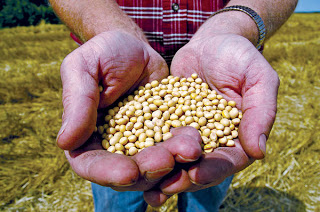
seedThe US Circuit Court of Appeals this morning issued a victory to Monsanto, affirming the decision of a lower court that found organic growers could not seek to block Monsanto from suing for contamination of crops by patented varieties. The more than fifty organic farmers who had joined the suit worried that they could be sued by Monsanto if their organic varieties were contaminated by Monsanto’s patented varieties.

In making its ruling, the Court deferred to Monsanto’s assurances on its website that it would not do so. In its opinion, the Court wrote that “Monsanto’s binding representations remove any risk of suit against the appellants as users or sellers of trace amounts (less than 1 percent) of modified seed. The appellants have alleged no concrete plans or activities to use or sell greater than trace amounts of modified seed, and accordingly fail to show any risk of suit on that…

View original post 385 more words

Posted in Uncategorized | 2 Comments

Who Calls for Action Against Malnutrition – AllAfrica.com

See on Scoop.itFood supply & food safety

Who Calls for Action Against Malnutrition
AllAfrica.com
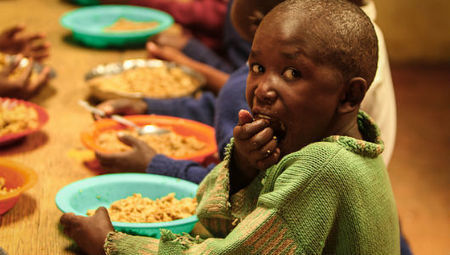
Governments should take serious action against malnutrition to reduce the rate at which the vice is claiming lives of children, the World Health Organisation (WHO) has warned.

See on news.google.com

Posted in Uncategorized | Leave a comment

Nigeria Joins G8 New Alliance for Food Security and Nutrition …

See on Scoop.itFood supply & food safety

LONDON, United-Kingdom, June 10, 2013/African Press Organization (APO)/ — Nigeria’s Minister for Agriculture and Rural Development Dr. Akinwumi Adesina attended G8 Food Security and Nutrition events this weekend …

See on www.africanews.it

Posted in Uncategorized | Leave a comment

Strange chicken disease kills over 200,000 birds | Editor’s picks

Strange chicken disease kills over 200,000 birds | Editor’s picks.

Strange Chicken disease kills over 200,000 birds;

Over 215,000 chickens from poultry farms in the Federal Capital Territory (FCT) and Kogi state are said to have died as a result of a strange disease that makes the birds to bleed through the nose, the legs and through the chest, poultry farmers in the two areas have said.

The disease, said to have emanated from a particular brand of brown layers bought from a farm in Kwara state, is said to be killing chickens daily as efforts by the poultry managements through their veterinary doctors have so far defied solution.

When Daily Trust visited Macks Farm in Osara, along Lokoja/Okene road in Kogi State, the manager was said to have gone to Lokoja. However, one of the customers of the farm, Alhaji Musa Adaye, said of the 72,000 layers they bought from a farm in Kwara state, less than 6,000 birds are still remaining.

“They bought 72,000 layers from Yammfy Farms Nigeria Limited, formerly Zarm farm owned by Oba Muftau Gbadamosi. They bought the 72,000 day-old-chickens (DOC) in batches. We started noticing the disease when the chickens were 18 weeks old. As I am talking to you now, over 45 chickens die here every day.

“I am aware that some of the infected chickens were taken to a laboratory where it was discovered that about 80 percent of them were Avian Locus’s positive. I followed them to the laboratory and we were told that the disease only affect chickens. It does no harm to human beings. We also noticed that it only affect the brown specie and no other type of chicken,” he said.

At Sanfam Poultry, the Production Manager, Mr. Umar Abdulsalam, said all the 60,000 DOC they bought from Yammfy Farm died of the same disease, adding, “ours will start bleeding through the nose then through the legs. They will become weak and tired. They could not even stand on their feet. When you lift them up, you also see blood coming from their chest. That means they will not last 3 hours. A veterinary doctor said it was blood- anemia,” he said.

In the FCT, the General Manager of Ajima Farms, a major poultry farm in Abuja, Alhaji Adama Yusuf Musa, said when he noticed the disease among his chicken, he sold all of them out and his farm is not producing eggs now, adding, “sometimes we do have a glut. But as you can see I had a problem along the line. I don’t even have the laying birds. We normally bring them in succession. There is supposed to be another set laying eggs now with the hope that these nine weeks olds will replace them. But unfortunately, the farm where I bought the other ones at Ilemona in Kwara state has disease that affected my own.

“I am not the only one that is affected. Somebody here in Kuje is also affected. I had to sell off my 5,000 birds just like that. By the time they came into  production, what they were producing could not even feed them. And then the cost of trying to upgrade them to produce, the cost of drugs and vitamins for them is more than what they are giving me.

“So, there is no need keeping them. I had to sell those ones off. That’s why I don’t have laying birds now. A lot of farms in Kuje area that are buying their birds from that Yammfy Farm in Kwara State are affected. From the source, the birds have disease. Dan Sarki Farm also had the same experience. And the disease is very deadly. It is blood anemia,” he said.

When Daily Trust visited Yammfy Farm in Ilemona, the farm’s doctors, Abubakar Kayode said Macks Farm has written to complain about the infected birds but he could not confirm or deny if the infection emanated from their farm. He said livestock business is very delicate as problems could come from anywhere.

“Companies that have complaints with their birds have written to us and we have written back and we are in the process of resolving the issues amicably based on their merit. Poultry is a risky business as there is no single poultry in the world that is disease-free as there are thousands of diseases that birds can contract.

“So, where there are identified cases, we try to resolve them amicably so as not to jeopardize our business relationship with the companies. No sane company will sell or buy products that would draw back its business. As a company, no matter how good you are, there could be problems and we are always honest to admit there could be problem. It is a normal phenomenon in poultry. We are talking about livestock. As a company with very good corporate records, we don’t turn our back at complaints”, he added.

Kwara State government said it is building the capacity of poultry farmers in the state through the provision of technical support and regular training to prevent infections so that they would not run at loss.

The Director of Livestock in Kwara State Ministry of Agriculture and Natural Resources, Mr. Simon Opowoye, said the state government is building the capacity of poultry farmers through the provision of technical support and regular training to prevent diseases  and infections, adding that the practice of good hygiene and observance of the stipulated vaccination procedure should be the guiding principles.

“We are also trying to control the environment of the feed mills in this state because we realized that the feed mills usually are major source of infection. If you go to most of the feed mills here, they make their feed on the floor where people walk up and down.

“Also of importance is the environment. The poultry should be adequately ventilated and lighted. You know we are living in hot and humid tropics and generally birds do not really tolerate much of heat. So, if there is any serious heat threat it would reduce their productivity and bring about diseases. We teach them the use of disinfectant to prevent diseases. Usually, if you want to enter a poultry farm, you deep your leg in disinfectant solution,” he said.

Link: http://www.dailytrust.com.ng/index.php/editor-s-picks/52059-strange-chicken-disease-kills-over-200-000-birds-2

Posted in Africa, Animal health for human health, Farmer, Food safety & supply, Food security, Nutritional Security, Poverty, small holder, Sustainable Development | Leave a comment

Malnutrition stunts millions of children worldwide | MNN – Mother …

See on Scoop.itFood supply & food safety

Roughly 165 million children worldwide will have poor health, lower IQ, and decreased earning potential due to malnutrition.

See on www.mnn.com

Posted in Uncategorized | Leave a comment

1100 units of Target-Mins Iron supplement bottles … – US Food Safety

See on Scoop.itFood supply & food safety

Award winning food safety blog. … USFoodSafety.com. Click Here for the US Food Safety website. ECO Bags · Bioni Coating Solutions for Food Processing Facilities · Mediterranean Diet Cookbook …

See on blog.usfoodsafety.com

Posted in Uncategorized | Leave a comment

Update on laboratory work in the chicken health for development project

Yetnayet Mamo's avatarCH4D

Preparing samples for ELISA testingChickens have had a variety of samples taken; blood will allow us to look for different diseases which may be circulating in the population, and also allows us to look at the genetics of the local chicken population. We take faeces to look for internal parasites, such as worms and the protozoan parasite Eimeria, which is the cause of coccidiosis. Birds have also been screened for external parasites, and a large collection of lice and mites taken from the chickens has been brought back to the UK for identification.

Serum collected from chickens during the fieldwork has now been tested for antibodies to five different diseases: Newcastle disease virus, Infectious bursal disease virus (Gumboro), Mareks disease virus, Pasteurella multocida, and Salmonella enterica O9 serotypes. The examination of the faeces has also been completed. The work on the genotyping and parasite identification is well under way, and producing some interesting early…

View original post 1 more word

Posted in Uncategorized | Leave a comment

New Scientist’s Fred Pearce reports on ‘How African herders rid the planet of a disease’

Susan MacMillan's avatarILRI Clippings

Community animal health worker vaccinating animals against rinderpest in Karamajong, Uganda

Tom Olaka, a community animal health worker in Karamajong, northern Uganda, was part of a vaccination campaign in remote areas of the Horn of Africa that drove the cattle plague rinderpest to extinction in 2010 (photo credit: Christine Jost).

Fred Pearce writes in New Scientist about How African herders rid the planet of a disease, citing a veterinary epidemiologist named Jeffrey Mariner, who works in the Nairobi animal health laboratories of the International Livestock Research Institute (ILRI) (13 Sep 2012).

‘Out in the bush, scientists should be humble and bow to the greater knowledge of locals. A paper out today tells the story of how rinderpest—a cattle plague that brought down empires and caused some of Africa’s worst famines—was finally eradicated, in May last year.

‘According to Jeffrey Mariner of Tufts University in North Grafton, Maryland [and now at ILRI]—one of the key players in the eradication—it was achieved by…

View original post 359 more words

Posted in Uncategorized | Leave a comment

Meat, milk and fish are critical to the poor both as food and income – Video introduces Livestock Fish research program

Peter Ballantyne (ILRI)'s avatarCGIAR Research Program on Livestock and Fish

This video, narrated by Livestock and Fish director Tom Randolph explains why meat, milk and fish are critical to the poor both as food and income and how the CGIAR Research Program on Livestock and Fish works.

While research has hugely increased farm production in rich countries, we haven’t managed yet to help the millions of family farms in developing nations to raise their production very much. Getting food on the tables of the people who need it most is still a struggle for the world’s vast numbers of small-scale farmers and business people.

To change this, we’re experimenting with a new approach. The focus of research in the past was on research products. Now we’re making ourselves accountable for getting research into use. This is what a new program called ‘More meat, milk and fish by and for the poor’ is all about.

So what’s different about this program?

View original post 220 more words

Posted in Uncategorized | Leave a comment

Agricultural innovation systems in Africa: reflections on an international workshop

Peter Ballantyne (ILRI)'s avatarILRI Clippings

From 25-31 May, Nairobi was host to a ‘Week on Agricultural Innovation in Africa.’ Here ILRI’s Jo Cadilhon reflects on the International workshop on agricultural innovation systems in Africa held as part of the week. The meeting was co-organized by FARA, ILRI, CCAFS, KARI, JOLISAA, the Kenyan Ministry of Agriculture, Wageningen University, Prolinnova, the World Bank, Australian Aid and CIRAD.

The first lesson I have learned from my participation in this meeting: we are not alone! Since I’ve joined ILRI nine months ago, I have been hearing a somewhat defensive discourse from colleagues involved in innovation platforms. The refrain goes something like this: ILRI has been at the forefront of promoting the use of innovation platforms to integrate complex social systems into agricultural research for development; if ILRI stops working on innovation platforms, it is a science beacon…

View original post 397 more words

Posted in Uncategorized | Leave a comment

Neville Clarke, former ILRI board chair, honoured for advancing international agriculture and rural development

Susan MacMillan's avatarILRI Clippings

Texas A & M University has announced (10 Jun 2013) that Neville Clarke, former chair of the board of trustees of the International Livestock Research Institute (ILRI) (1995–2001), has been honoured with an award for his nearly four decades of exemplary service to international agricultural and rural development, helping to reduce world poverty and food insecurity.

Dr. Neville Clarke received the 2013 Special Service Award from the Association for International Agriculture and Rural Development recently at the Future Leader’s Forum in Washington, D.C.

‘Clarke, special assistant for program development for the vice chancellor of agriculture at Texas A&M University, was recognized for his “outstanding contributions towards poverty alleviation and food security in the developing countries” and for his commitment to the association’s mission.

‘The citation noted that since 1954, “Clarke has served our country in several capacities both in uniform and in the civil society.” It was upon his…

View original post 196 more words

Posted in Uncategorized | Leave a comment

Investment opportunities for ruminant livestock feeding in developing countries

Peter Ballantyne (ILRI)'s avatarFeeding innovation

The World Bank just released a new report that “assesses where the demand for feed [for ruminants in developing countries] is likely to change the most, and where investments in feed are most likely to increase animal productivity and improve the livelihoods of those who raise livestock. It covers policy, institutions, knowledge and innovation as well as technical issues – all in the context of rapidly changing demand for livestock products in developing countries.”

Based on growth and market opportunities, number of poor and pro-poor potential and supply constraints the study identifies first Sub-Saharan Africa and South Asia as priority areas, and then, within these areas, it identifies three commodity value chains in five regions of particularly great potential to benefit poor producers and consumers. They are:

  • Dairy in East Africa and South Asia;
  • Beef in West Africa;
  • Small ruminant meat in West Africa and Southern Africa.

In terms of…

View original post 408 more words

Posted in Uncategorized | Leave a comment

Prioritizing animal feeding interventions – TechFit tool takes shape

Peter Ballantyne (ILRI)'s avatarFeeding innovation

From 23-24 May this year, a group of feed specialists from ILRI, CIAT, ICARDA and partner institutes got together in Addis Ababa to further elaborate the TechFit tool. This followed from a March 2013 meeting that took stock of progress since the original November 2011 workshop in India. The meeting especially drew on experiences in using TechFit in Ethiopia last year as part of the Ethiopia Livestock Feeds and Africa RISING projects. These showed that the tool is a good start but needs quite a lot of further refinement to really help people set priorities for feed interventions.

How does TechFit work?

TechFit is designed to be used alongside FEAST – a ‘feed assessment tool’ to answer three main challenges holding back animal feed interventions:

  • Placing feed in broader livelihood context
  • Engaging farmer knowledge in design and ownership
  • Neglecting how interventions fit local contexts, particularly land, labour, cash and…

View original post 714 more words

Posted in Uncategorized | Leave a comment

Drylands of the developing world: New livestock and crop research program launched

Susan MacMillan's avatarILRI Clippings

Samburu livestock

A herd of sheep and goats in northern Kenya (photo on Flickr by gordontour).

The dry areas of the developing world occupy over 40% of the earth’s surface and are home to some 2.5 billion people. Many in these regions struggle to provide sufficient food for their growing populations and face a series of daunting physical and demographic challenges: high poverty levels and unemployment, rapid urbanization, severe water scarcity, and land degradation. Many of these problems and constraints are expected to worsen as a result of climate change.

An ambitious new science program launched in Jordan in mid-May 2013—the CGIAR Research Program on Dryland Systems—aims to raise agricultural productivity and strengthen food security in the driest areas of the developing world. This USD120 million initiative, covering an initial three years, is the latest ‘research for development’ initiative of CGIAR, the world’s leading agricultural research partnership.

The Dryland Systems program is…

View original post 519 more words

Posted in Uncategorized | 1 Comment

Drylands of the developing world: New livestock and crop research program launched

Susan MacMillan's avatarILRI Clippings

Samburu livestock

A herd of sheep and goats in northern Kenya (photo on Flickr by gordontour).

The dry areas of the developing world occupy over 40% of the earth’s surface and are home to some 2.5 billion people. Many in these regions struggle to provide sufficient food for their growing populations and face a series of daunting physical and demographic challenges: high poverty levels and unemployment, rapid urbanization, severe water scarcity, and land degradation. Many of these problems and constraints are expected to worsen as a result of climate change.

An ambitious new science program launched in Jordan in mid-May 2013—the CGIAR Research Program on Dryland Systems—aims to raise agricultural productivity and strengthen food security in the driest areas of the developing world. This USD120 million initiative, covering an initial three years, is the latest ‘research for development’ initiative of CGIAR, the world’s leading agricultural research partnership.

The Dryland Systems program is…

View original post 519 more words

Posted in Uncategorized | Leave a comment

Putting the culture back in agriculture: Reviving native food and farming traditions

Posted in Uncategorized | Leave a comment

All you need is aid

Posted in Uncategorized | Leave a comment

Helping the most vulnerable farmers adapt to climate change – lessons from a Farm Africa project

Posted in Uncategorized | Leave a comment

Wasting Food, Wasting Water

GlobalFoodPolitics's avatarGlobal Food Politics

I’ve written previously about the problem of food waste and freeganism as a political movement to address that waste. Now, Pope Francis has entered the fray, denouncing the “culture of waste” of modern economies and likening wasting food to “stealing from the table of those who are poor and hungry.” And blogging at NPR’s The Salt, Eliza Barclay notes that food waste is directly connected to global climate change.

Now, the World Resources Institute has issued a study  making the connection between wasting food and wasting water. While the connection seems obvious, the scale of the waste is mindboggling. According to WRI, inside the estimated 1.3 billion tons of food wasted every year is some 45 trillion gallons of water—representing over one-sixth of all water used globally in a year. That is, almost eighteen percent of all water used globally in a year is used to produce…

View original post 136 more words

Posted in Uncategorized | Leave a comment

Transhumant Pastoralist and Insecurity in Nigeria-The way out. Part II.

“North Estern Nigeria may experience the Worst ever food & nutritional crisis…”

Pastoralist1's avatarMohammed Bello Tukur

TRANSHUMANT PASTORALISTS AND INSECURITY IN NIGERIA – PART II. by Mohammed Bello Tukur Esq. Ag. Secretary General of Confederation of Traditional Herder Organizations in Africa (CORET) – Nigeria.

As indicated in the first part of this article the conflict between Transhumant Pastoralists, particularly the Fulbe and sedentary/host groups in Nigeria had assumed a very wide and dangerous dimension. This is due to the movement of pastoralist southwards in search of pasture, farming and occupation of traditional grazing areas and stock routes (burtali), pastoralist fleeing one conflict zone into another without prior notice.

The intensity of the conflicts could be attributed inappropriate government agricultural policies tending to favour crop producers above livestock breeders particularly pastoralist, cultural clashes, inflow of religious, political and ethnic issues into natural resource use conflicts, land becoming a political tool for ascension to power (indigene/settler questions), the marginalization of traditional community leaders in dispute resolution and conflict…

View original post 1,147 more words

Posted in Uncategorized | Leave a comment

Africa Has Strongest Growth in Sovereign Funds, JPMorgan Says

cambodine's avatarECO-opia


By Klaus Wille – Jun 9, 2013

Africa is experiencing the strongest growth in new sovereign wealth funds in the world as the continent’s nations are amassing commodity revenues and foreign-exchange reserves, according to JPMorgan Asset Management Inc.

During the past two years, 15 state funds have been set up or are being considered in Africa, Patrick Thomson, the global head of sovereigns at JPMorgan Asset said. The region will see more starting in the coming years, he added.

With commodity prices rising, African countries are putting their surpluses into government-owned funds designed to manage a country’s wealth for future generations. Angola set up its $5 billion state fund in October, Uganda said in April it plans to create a sovereign fund, and Nigeria, Africa’s biggest oil producer, inaugurated its $1 billion fund eight months ago.

“We expect the number in Africa to grow further over the coming…

View original post 566 more words

Posted in Uncategorized | Leave a comment

How Farm Shop is modernising the agro dealership experience

cambodine's avatarECO-opia


Social enterpriseFarm Shop is building a franchise network of agro dealers located in rural, underserved areas of Kenya. Farm Shop says its retail shops are clean, modern, and professionally managed. The business wants to increase the earnings and productivity of Kenyan farmers by providing them with high quality products, services and information. Madison Ayer and Farouk Jiwa, founders of Farm Shop, told How we made it in Africa’s Dinfin Mulupi about how they want to transform smallholder farming in Kenya.

Customers inside a Farm Shop outlet.

Describe your business model.

Ayer: At the core of Farm Shop is a supply chain. We have a franchise model. The benefit is that we can apply standard methodologies but leverage the local community knowledge. We currently have six Farm Shops and we plan to have 25 by the end of the year.

Jiwa: There are amazing entrepreneurs in…

View original post 864 more words

Posted in Uncategorized | Leave a comment

Investigating the root causes of the global health crisis: Paul Farmer on the TED Book “The Upstream Doctors”

Posted in Uncategorized | Leave a comment

New Commitments to Combat Malnutrition

New Commitments to Combat Malnutrition.

Posted in Africa, Agriciltural Policy, Food safety & supply, Hunger & Malnutrition | Leave a comment

Pastoralism’s economic contributions are significant but overlooked

cambodine's avatarECO-opia

Experts say a ‘total economic valuation’ is needed to fully appreciate pastoralists’ contribution to national economies

NAIROBI, 16 May 2013 (IRIN) – Pastoralism is often regarded as an antiquated practice ill-suited to the modern economy, yet trade between pastoral communities in Africa – much of it informal and illegal – generates an estimated US$1 billion each year, according to a new book published by the Futures Agriculture Consortium. “If we shift our gaze from the capital cities, where the development and policy elite congregate, to the regional centers and their hinterlands where pastoralists live, then a very different perspective emerges. Here we see the growth of a booming livestock export trade, the flourishing of the private sector, the expansion of towns with the inflow of investment, and the emergence of a class of entrepreneurs commanding a profitable market, and generating employment and other business opportunities; and all of…

View original post 865 more words

Posted in Uncategorized | Leave a comment

Africa’s food imports on the rise

cambodine's avatarECO-opia


By Adam Green   – 16 May 2013  

Agricultural imports are on the rise, as African economies struggle to meet growing demand

A rising middle class, expanding population and stagnant local agricultural production are driving up Africa’s food imports. Bad luck is partly to blame. Weather-related damage has hit rice crops in Benin, Burkina Faso, Cameroon, Niger and Madagascar. Foot and mouth disease has hurt Egypt’s bovine sector, and cassava – one of Africa’s major offerings to world agricultural trade – is now being felled by a fast-spreading virus. Policy volatility is also at fault. Nigeria – Africa’s largest rice importer – announced a heightening of import taxes last year which prompted a sudden rise in purchases. And across Africa, weak infrastructure hinders agri-markets.

Rising imports are also a consequence of wealth and one of its quickest effects: a taste for protein. Poultry import growth last year was around…

View original post 582 more words

Posted in Uncategorized | Leave a comment

Gum Arabic: The Next Conflict Resource?

GlobalFoodPolitics's avatarGlobal Food Politics

According to a report by the BBC, ongoing fighting in the Darfur region of South Sudan is being fuelled in part by demand for gum arabic. The BBC notes that more than 60 people have died in fighting for control of an arid region of Darfur between two groups seeking to control an area of pasture and acacia trees from whose sap the gum is made.

Gum arabic is a popular stabilizer used in many soda drinks, gumdrops, marshmallows, M&Ms. It has other non-food uses as well, including in show polish, lickable adhesives on stamps or envelopes, and in various printing processes. Sudan is the world’s leading producers of gum Arabic, accounting for approximately 80 percent of global output. An estimated 5 million Sudanese farmers depend on gum Arabic for their livelihoods.

Interestingly, Sudan’s control of the world’s gum arabic supplies has given it a degree of…

View original post 190 more words

Posted in Uncategorized | Leave a comment

Are GMOs Used to Make Organic Cheese?

Posted in Uncategorized | Leave a comment

No Go on GMO (and this is why)

Posted in Uncategorized | Leave a comment

Connecticut Requires Labeling of GM Products

GlobalFoodPolitics's avatarGlobal Food Politics

non-GMO imageThe state legislature in Connecticut passed a bill last week that it would make it the first state in the county to mandate labeling of products produced with genetically engineered ingredients. Surprisingly, the bill, which had already passed the state Senate, passed the state House by an overwhelming 134 to 3 vote in favor. The bill punts on implementation, only going into effect when four other states “enact a mandatory labeling law for genetically-engineered foods that is consistent with the provisions of this subsection, provided one such state borders Connecticut; [and] the aggregate population of such states located in the northeast region of the United States that have enacted a mandatory labeling law for genetically-engineered foods that is consistent with this subsection exceed twenty million based on 2010 census figures. Still, the bill is being seen as a victory for labeling proponents.

More than 25 other states, including Maine…

View original post 134 more words

Posted in Uncategorized | Leave a comment

(@drbausman): Urban Agriculture

“@GlobalMilling: New Agriculturist: Focus on… Urban agriculture | @scoopit via @Srilgroup http://t.co/Yk7Kb7NjRf”
(https://twitter.com/drbausman/status/343527638247297026)

Get the official Twitter app at https://twitter.com/download

Posted in Uncategorized | Leave a comment

Unusual antibodies in cows suggest new ways to make medicines for people

Unusual antibodies in cows suggest new ways to make medicines for people.

“These antibodies’ structure and their mechanism for creating diversity haven’t been seen before in other animals’ antibodies,” said Vaughn V. Smider, assistant professor of cell and molecular biology at TSRI and principal investigator for the study, which appears as the cover story in the June 6, 2013 issue of the journalCell.

Posted in Africa, Animal health for human health, Sustainable Development | Leave a comment

How can tree stumps improve agricultural productivity? | Global Development Professionals Network | Guardian Professional

How can tree stumps improve agricultural productivity? | Global Development Professionals Network | Guardian Professional.

Posted in Africa, Agriculture, Farmer, Hunger & Malnutrition, Poverty, Sustainable Development | Leave a comment

Sustainability science: an integrated approach for health-programme planning : The Lancet

Sustainability science: an integrated approach for health-programme planning : The Lancet

The Lancet, Volume 372, Issue 9649, Pages 1579 – 1589, 1 November 2008

doi:10.1016/S0140-6736(08)61659-1Cite or Link Using DOI
This article can be found in the following collection: Public Health

Sustainability science: an integrated approach for health-programme planning

Dr Russell L Gruen PhD a Corresponding AuthorEmail AddressJulian H Elliott MBBS bMonica L Nolan MBBS cPaul D Lawton MBBS dAnne Parkhill MBIT e,Cameron J McLaren BSc fJohn N Lavis MD g

Summary

Planning for programme sustainability is a key contributor to health and development, especially in low-income and middle-income countries. A consensus evidence-based operational framework would facilitate policy and research advances in understanding, measuring, and improving programme sustainability. We did a systematic review of both conceptual frameworks and empirical studies about health-programme sustainability. On the basis of the review, we propose that sustainable health programmes are regarded as complex systems that encompass programmes, health problems targeted by programmes, and programmes’ drivers or key stakeholders, all of which interact dynamically within any given context. We show the usefulness of this approach with case studies drawn from the authors’ experience.
a Department of Surgery, the Royal Melbourne Hospital and University of Melbourne, Melbourne, VIC, Australia
b Infectious Diseases Unit, Alfred Hospital, and Macfarlane Burnet Institute for Medical Research and Public Health, Melbourne, VIC, Australia
c Mothers2mothers, Cape Town, South Africa
d Northern Territory Renal Services, Royal Darwin Hospital, Darwin, NT, Australia
e Aptly Information Design, Melbourne, VIC, Australia
f Faculty of Medicine, University of New South Wales, Sydney, NSW, Australia
g Department of Clinical Epidemiology and Biostatistics, Department of Political Science, and Centre for Health Economics and Policy Analysis, McMaster University, Hamilton, ON, Canada
Corresponding Author Information Correspondence to: Dr Russell Gruen, Department of Surgery, University of Melbourne, Centre for Medical Research Building, Royal Melbourne Hospital, Parkville, VIC 3050, Australia
Posted in Africa, Agriciltural Policy, Farmer, Food safety & supply, Food Security, Hunger & Malnutrition, Malnutrition, Nutritional Security, Poverty, Sustainable Development | Leave a comment

What we’ve been reading this week

Posted in Uncategorized | Leave a comment

Hidden Hunger: Tackling micronutrient deficiencies

canwefeedtheworld's avatarOne Billion Hungry: Can We Feed the World?

HGAs we wait to hear from global policy leaders meeting at the Nutrition for Growth summit in London tomorrow, we have been thinking about all the different ways that malnutrition can be tackled, in particular agricultural measures than can be taken to boost nutrition.

In a new video story, Alina Paul of the International Crops Research Institute for the Semi-Arid Tropics (ICRISAT) outlines the extent of micronutrient deficiency (termed hidden hunger) in India. Looking in particular at iron-deficiency, over 70% of children under the age of 3 and half of women in India suffer from anaemia, often linked to iron deficiency. Such deficiencies affect their development and survival.

In order to combat widespread deficiencies in iron, India is taking steps to promote iron-rich crops such as pearl millet, which is high in vitamin B, calcium, iron, potassium, magnesium and zinc as well as being well adapted to drought, poor…

View original post 453 more words

Posted in Uncategorized | Leave a comment

Food supply and food safety issues in China : The Lancet

Food supply and food safety issues in China : The Lancet.

Posted in Agriciltural Policy, Food safety & supply, Food security, Hunger & Malnutrition, Malnutrition, Nutritional Security, Poverty, Sustainable Development | Tagged | Leave a comment

Identifying scalable livestock and aquaculture agricultural technologies

Peter Ballantyne (ILRI)'s avatarCGIAR Research Program on Livestock and Fish

USAID, USDA, CGIAR and other partners are developing ‘inventories’ to help drive widespread adaptation, dissemination, and adoption of critical agricultural technologies.

The inventories will provide a technical evidence base to help scale up appropriate technologies to greater numbers of smallholder farmers.

One of the seven inventory topics is Livestock and Aquaculture. The inventory compilers “welcome additional technologies with broad scalability as well as fine-tuning of existing entries.” Feedback and technical contributions can be provided via the comment facility on the web page (login is required).

The inventory is very much a work in progress and is intended provide examples of technologies that may be good candidates for widespread adaptation and adoption, but it is not intended to be comprehensive.

More on this inventory effort.

View original post

Posted in Uncategorized | Leave a comment

Got milk? (or meat or eggs)? The missing ingredients in global nutritional security

Susan MacMillan's avatarILRI Clippings

Hidden Hunger from Bob Caputo on Vimeo.

Watch this handsomely made film (with superb writing as well as videography), produced in 2010 by National Geographic‘s Bob Caputo (run-time: 26 minutes).

‘Malnutrition does not make headlines the way famine does. But it is far more widespread and deadly.
Globally, it affects more than a billion people. It is the cause of more than one third of childhood deaths.

‘By combining microfinance with education about child nutrition, the ENAM Project has given Ghanaian women the means and knowledge to fight malnutrition.

‘This is the story of the ENAM Project and some of those women.’
— Bob Caputo

The New Agriculturist online magazine has shared some of the expert views on how to end malnutrition that were made at a Feeding the World conference organized by The Economist and held in Amsterdam in Jan 2013.

‘With millions suffering from malnutrition in both the developed and developing world, how can people be…

View original post 984 more words

Posted in Uncategorized | Leave a comment

Want to green the world’s deserts? Do the unthinkable: Put livestock back on them — Allan Savory

Susan MacMillan's avatarILRI Clippings

Watch this new provocative 22-minute TedTalk by Allan Savory on ‘How to green the world’s deserts and reverse climate change’.

Alan Savory, a Zimbabwean-born biologist/ecologist and rangelands specialist, gives environmentalists pause in a recent TedTalk, published 4 Mar 2013, on the ‘cancer’ of desertification of the world’s drylands, which make up some two-thirds of the Earth’s surface.

‘Desertification is a fancy word for land that is turning to desert’, Savory begins in this quietly powerful talk. Savory has devoted his life to stopping it. He now believes he has evidence that a surprising factor can protect grasslands and even reclaim degraded land that was once desert.

The factor is your old-fashioned cattle, sheep and goat herds — the very animals vilified by generations of range ecologists arguing that domesticated animals cause, not stop, desertification.

‘We know that desertification is caused by livestock’, Savory begins, ‘mostly by cattle, sheep and…

View original post 626 more words

Posted in Uncategorized | Leave a comment

Livestock Matter(s): ILRI news ’roundup’, May 2013

Peter Ballantyne (ILRI)'s avatarILRI Clippings

Livestock matter(s): ILRI News Round-up banner

The May issue of ‘Livestock Matter(s), explores around-up of livestock development news, publications, presentations, images and upcoming events from ILRI and its partners. Download a print version – or sign up to get Livestock Matter(s) in your mailbox each month.


Corporate news

Wherefore ILRI - Presentation by Jimmy Smith

ILRI’s global livestock research agenda: A strategy for ‘better lives through livestock’
Jimmy Smith, director general of the International Livestock Research Institute (ILRI), opened ILRI’s Annual Program Meeting on (15 May 2013) with a review of where the institute has come from, where it is now and where it’s going.

Celebrating achievement: Julie Ojango and Tadelle Dessie promoted
Two researchers in the Animal Sciences for Sustainable Productivity team – Julie Ojango and Tadelle Dessie – have been promoted to the position of Scientist. The appointments were made at the beginning of April 2013. Both Julie and Tadesse joined ILRI in 2006.

ILRI’s Azage Tegegne becomes Australia Awards African Alumni…

View original post 1,274 more words

Posted in Uncategorized | Leave a comment

ILRI’s 2013 annual meeting — Reflections on process and outcomes

Peter Ballantyne (ILRI)'s avatarILRI Clippings

Most years, ILRI brings together a wide mix of staff in an ‘annual program meeting’ (APM). This year’s event was held in Addis Ababa, Ethiopia, 15–17 May 2013, and focused on ILRI’s 2013–2022 strategy.

Jo Cadilhon was one of the organizers of this year’s APM. Here he reflects on the event and how it went.

La mayonnaise a pris!

That’s French for ‘the mayonnaise has gelled’. It is a direct analogy to the delicate process of transforming one egg yolk, a teaspoon of mustard and a worryingly large volume of vegetable oil into delicious mayonnaise. We use this phrase in France to picture how a complex process requiring the collaboration of many different viewpoints and personalities has somehow magically turned into an outcome everybody will appreciate and endorse.

That is what happened at ILRI’s annual program meeting two weeks ago in Addis Ababa. Although confident the process would work…

View original post 537 more words

Posted in Uncategorized | Leave a comment

India dairy value chain situation analysis: Call for short-term consultant services

Peter Ballantyne (ILRI)'s avatarCGIAR Research Program on Livestock and Fish

The CGIAR Livestock and Fish research program, led by the International Livestock Research Institute (ILRI), aims to increase the productivity of small-scale livestock and fish systems in sustainable ways, making meat, milk and fish more available and affordable to poor consumers across the developing world. The program works in several countries on developing livestock and fish value chains. India is one of the important implementation sites of the program where it plans to work in selected Indian states to strengthen smallholder dairy value chains.

Assignment

ILRI seeks to recruit a consultant to deliver “a situational analysis report of the smallholder dairy value chains for India and for two Indian states (Bihar and Assam)”, as per the general guidelines at this web address.

The report will be in three main parts, with the first part providing the requested information at a national level for India overall while the other two…

View original post 202 more words

Posted in Uncategorized | Leave a comment

The digital future of infectious disease maps

Posted in Uncategorized | Leave a comment

More than just bees

Posted in Uncategorized | Leave a comment

Industrial Livestock Production Key Threat to World’s Forests and Biodiversity

argylesock's avatarScience on the Land

The Global Forest Coalition (GFC) is an international coalition of Non-Governmental Organisations and Indigenous Peoples’ Organisations defending social justice and the rights of forest peoples in forest policies.

People at GFC are concerned about the impacts of ‘modern-day industrial livestock farming’.

View original post

Posted in Uncategorized | Leave a comment

Let a Hundred Flowers Bloom: Promoting a New Era of Innovation for Agricultural Development

Posted in Uncategorized | Leave a comment

Africa’s livestock sector — good for business, good for the poor — held back by dearth of data

Susan MacMillan's avatarILRI Clippings

Livestock herding in Niger

Livestock herding in Niger (photo credit: ILRI/Stevie Mann).

The African livestock sector should be booming. Demand for animal-source foods is rising exponentially here. By mid-century, meat and milk consumption on the continent are expected to increase by a whopping 145% and 155%, respectively, over 2005/07 levels. As demand for livestock foods rises, so do the opportunities for Africa’s businesses, governments and many poor livestock farmers and sellers. What’s holding back the sector, says senior World Bank economist Nancy Morgan, is simply a dearth of data on livestock.

Without the data, it’s difficult to invest. If you can’t measure it, you can’t manage it.

In an interview by CNBC/ABN Digital, Morgan makes the case for collecting the data needed by investors to grab the economic opportunities livestock offer Africa. She says, for example, that while Ethiopia has the largest inventories of animals in Africa, without livestock data, investors don’t know where to…

View original post 148 more words

Posted in Uncategorized | 1 Comment

Launch of Two New Reports: “Leaping And Learning” and “8 Views for the G8”

Posted in Uncategorized | Leave a comment

European Launch of the 2013 Montpellier panel Report

Posted in Uncategorized | Leave a comment

Agricultural Innovation: The United States in a Changing Global Reality

Posted in Uncategorized | Leave a comment

What we know and what we need to know in order to increase Agricultural resilience in developing countries.

Posted in Uncategorized | Leave a comment

Conscious carnivores: Bill Gates says the meat market is ripe for reinvention in the form of ‘meat analogues’

Susan MacMillan's avatarILRI Clippings

Michael Pollan - Pop!Tech 2009 - Camden, ME

American food writer and activist Michael Pollan (photo on Flickr by PopTech).

The meat market, says Bill Gates, is ripe for reinvention. The market is growing fast to meet rising demands for animal-source foods throughout much of the developing world, particularly China and India and other countries with fast-growing economies.

Food scientists are creating healthful plant-based alternatives that taste just like eggs, chicken, and other sources of protein.

Most of Gates’ fancy slide presentation cum video gallery addresses concerns about overconsumption of meat by the relatively rich, not under-nourished communities of the poor. Thus, while mock meat is not to be mocked, it is still more expensive, and less tasty, than real meat, and, until that changes, is unlikely to be a solution for many of the world’s poor who remain starved of protein. The same will probably also be true for some time to come for ‘lab-grown’ (or ‘in…

View original post 213 more words

Posted in Uncategorized | Leave a comment

Ethiopia: Exciting Innovations in Agriculture and Health

Lessons to learn by other African countries!

cambodine's avatarECO-opia

May 08, 2012 | by Bill Gates

I’ve made many trips to Africa, but my recent visit to Ethiopia was definitely one of the most exciting. With effective governance and coordinated support from our foundation and other donors, the advances I saw in health and agriculture may be the key to unleashing Ethiopia’s potential and that of other African countries.

Ethiopia is one of the poorest countries in the world and has faced enormous challenges feeding its people and providing critical health services to mothers and their children. Yet, I returned from a recent visit excited about advances the country is making in agriculture and health.

If these innovations—which are a top priority for our foundation—succeed, they can be replicated in other African countries that also face big challenges in health and agriculture.

One factor in Ethiopia’s progress is Prime Minister Meles Zenawi and his leadership team, who have played…

View original post 769 more words

Posted in Uncategorized | Leave a comment

Take a bow Ethiopia, you’re the African star on MDG’s!

cambodine's avatarECO-opia

The 2013 DATA Report: Financing the Fight for Africa’s Transformation

The Millennium Development Goals (MDGs) deadline is now less than 1,000 days away. The world has officially entered the final leg of its 15-year journey to halve extreme poverty and reduce child mortality by two-thirds, reverse the tide against HIV/AIDS and malaria, and ensure that more people have access to basic services, such as primary education and safe drinking water.

Despite a challenging global economic environment, many poor and middle-incomecountries are making dramatic progress towards the highly ambitious MDG targets. On the other hand, the performance of a number of large laggard countries is holding back some regions’ rate of progress, particularly in sub-Saharan Africa. To help ensure that the world sprints to the 2015 finish line, ONE’s 2013 DATA Report examines the recent progress of individual countries against eight MDG targets, focusing particular attention…

View original post 79 more words

Posted in Uncategorized | Leave a comment

Biodiversity and the Future of Farming

GlobalFoodPolitics's avatarGlobal Food Politics

A story carried by the Huffington Post yesterday suggested that the pace of biodiversity loss was increasing as a result of economic forces and global climate change, threatening the future of farming and ranching.

It’s widely acknowledged that our dietary preferences are becoming increasingly narrow. Of the estimated 30,000 edible plants, just 30 account for 95 percent of human consumption, and just three (rice, wheat, and maize) account for 60 percent of human calories and protein derived from plants. At the same time, many traditional breeds of cows, sheep, and goats have fallen out of favor as new, higher yielding breeds are developed. But in the process, the genetic diversity of the species declines, making future generations more susceptible to disease.

Similarly, we know that the genetic diversity of agriculture has been in sharp decline over the past century. Indeed, according to the Food and Agriculture Organization, some 75…

View original post 324 more words

Posted in Uncategorized | Leave a comment

Counting Calories

Counting Calories.

Posted in Agriculture, Hunger & Malnutrition, Nutritional Security | 2 Comments

Counting Calories

GlobalFoodPolitics's avatarGlobal Food Politics

The provision of the Obamacare Act requiring restaurants with more than 20 stores post calorie counts for their menu items was supposed to be in place already. Restaurants were also required to supply other nutritional information, including levels of sodium, carbohydrates, and saturated fats, in writing upon customer request. But the Food and Drug Administration has yet to draft the specific rules governing the postings, and even once in place, restaurants would have six months to comply with the requirement.

While there are several issues at stake, the major sticking point appears to be whether grocers selling supermarket-made meals would be required to post calorie counts. Many fast-food restaurants have already complied with the requirements, particularly in states like New York and California which had previously mandated such information be posted. But grocers and convenience stores are lobbying to stop the requirement, which they claim could cost as much…

View original post 255 more words

Posted in Uncategorized | Leave a comment

Living with livestock, and livestock livings, in the city

Susan MacMillan's avatarILRI Clippings

Goat in Kibera

Goat in Nairobi slum (photo on Flickr by The Advocacy Project).

‘. . . [L]et’s consider what it means to raise urban livestock in the developing world, where people are poorer and hungrier, and cities are much more densely populated. It’s a starkly different picture of people and animals living together, and the question of how it’s done has major implications for improving food security and preventing public health disasters.

‘While humans have been raising food animals in their homes for thousands of years, what’s different now is that they’re doing it with so many other humans crammed next to them.

And they’re not just feeding their families: They’re feeding their neighbors, too. Worldwide, 34 percent of meat and nearly 70 percent of eggs are produced in urban areas, according to a 2008 report by the World Bank and the Food and Agriculture Organization. In Maputo, Mozambique, for example, a…

View original post 424 more words

Posted in Uncategorized | Leave a comment

Livestock data collected in Niger, Tanzania and Uganda to measure — and improve — livestock development

Susan MacMillan's avatarILRI Clippings

Charging Bull, Wall Street

Charging Bull (sometimes called the Wall Street Bull), a 3,200 kg bronze sculpture by Arturo Di Modica, near Wall Street in New York City (photo on Flickr by Randy Lemoine).

‘Africa still suffers from a lack of good quality data on livestock that could be used to measure and improve progress as well as inform policymaking processes, scientists have said.

‘Good data are crucial for identifying effective public and private sector investment opportunities, and in helping to improve the livelihoods of smallholder livestock producers in Africa, according to ‘Livestock Data Innovation in Africa‘ initiative.

‘The initiative is jointly run by UN Food and Agriculture Organization (FAO), the International Livestock Research Institute, the African Union (AU) and the World Bank with the support from Bill and Melinda Gates Foundation.

‘At a media briefing on the progress of the initiative, earlier this month (3 May), Ibrahim Gashash Ahmed, manager at the…

View original post 165 more words

Posted in Uncategorized | Leave a comment