Integrate science and society — Zimbabwean food policy expert at Chicago Council symposium

Susan MacMillan's avatarILRI Clippings

Lindiwe Majele Sibanda, appointed chair of ILRI's board of trustees in November 2012

Lindiwe Majele Sibanda, CEO and head of mission of the Food, Agriculture and Natural Resources Policy Analysis Network (FANRPAN), based in South Africa, is chair of ILRI’s board of trustees (photo credit: Lindiwe Majele Sibanda).

At the ongoing Chicago Council Global Food Security Symposium, ‘there is renewed focus across public, private, and international organizations towards ending global food insecurity. . . . [S]peakers stressed that the complex challenge of hunger requires a unique collaboration between different sectors, experts, and communities. . . .

Dr. Lindiwe Majele Sibanda, Chief Executive Officer and Head of Mission of the Food, Agriculture and Natural Resources Policy Analysis Network, and Ren Wang, Assistant Director General of the U.N. Food and Agriculture Organization (FAO), both advocated for an increase in long-term, stable support and investment. Dr. Sibanda stated that investors need the confidence to make the long-term investments necessary to allow countries and organizations…

View original post 97 more words

Posted in Uncategorized | Leave a comment

From ‘urban cowboy’ to urban cow ban? That would be a mistake — raw vegetables can be more dangerous

Susan MacMillan's avatarILRI Clippings

Global Agenda Visit to Ol Kalou: Dairy cow

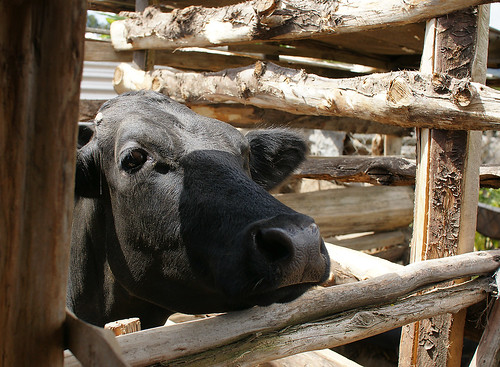
A dairy cow on a smallholder farm in Ol Kalou, near Nairobi, Kenya (photo credit: ILRI/Paul Karaimu).

Should farm animals share our cityscapes with us? While policies are often based on the prejudice that urban livestock keeping is unsafe, scientific evidence shows that poor people continue to benefit more than be harmed by raising livestock in cities. Still, the whole story is complex, and while urban livestock keepers would help themselves, and their customers, by adopting a few basic safety precautions, the benefits to very poor people of keeping livestock even in crowded slums often appear to outweigh the harms, such as the diseases such ‘city cows’ can transmit to people.

. . . Farming has been increasing in many African cities . . . . Dairy cattle are not the most obvious domestic animals to share small and crowded city compounds, but the rewards—including improved food security, nutrition and…

View original post 540 more words

Posted in Uncategorized | Leave a comment

Africa’s soil diversity mapped for the first time

argylesock's avatarScience on the Land

The first Soil Atlas of Africa became available last month. Bernard Appiah at the Guardian tells us why this atlas is big news.

Living in the British Isles as I do, it’s almost unthinkable for soils to be a mystery. But across the world there’s often a lack of soil knowledge. This African atlas is groundbreaking (pun intentional) and I hope policymakers will use it well.

[Edit] My fellow blogger Henricus Peters at Learn from Nature tells us more about the new atlas.

View original post

Posted in Uncategorized | Leave a comment

Repealing the Monsanto Protection Act

GlobalFoodPolitics's avatarGlobal Food Politics

Food policy advocates have begun a campaign around repeal of the Monsanto Protection Act. The act was actually part of the Consolidated and Further Continuing Appropriations Act of 2013, which was passed to prevent (another) government shutdown. Buried in the fine print—Section 933—was the Farmer Assurance Provision, dubbed the Monsanto Protection Act by its critics. The act effectively barred US courts from being able to halt the sale or planting of genetically modified seed. The provision was actually drafted by Monsanto before being introduced to the provision through the House Appropriations Committee.

Not surprisingly, the provision has come under fire from critics, who see the act as a major concession to the biotech giant. In response, the NGO Food Democracy Now organized a petition calling on President Obama to issue an executive order requiring the mandatory labeling of GMOs. That petition has already garnered more than 300,000 signatures.

In…

View original post 278 more words

Posted in Uncategorized | Leave a comment

Agriculture, Livestock, and Climate Change

GlobalFoodPolitics's avatarGlobal Food Politics

agriculture-impact-climate-change-photoClimate scientists observed last week that the world crossed an important milestone. For the first time in 3 million years, the concentration of CO2 in the atmosphere exceeded 400 parts per million. The last time we were at this point, the world looked very different. It was the Pliocene Epoch, and global temperatures were 2 to 3 degrees Celsius warmer. Alligators and tapirs lived on islands off the coast of Greenland, and much of the world was covered by grasslands that looked a lot like the modern African savanna.

I’ve previously discussed the impact that climate change will likely have on the world’s agriculture in general and on California’s wine industry in particular.

But, as Laura Reynolds notes at Nourishing the Planet, agriculture will not just be affected by climate change; it is also an important contributor. Reynolds observes that,

In 2010, global greenhouse gas emissions from the agricultural…

View original post 332 more words

Posted in Uncategorized | Leave a comment

Global Fisheries and Climate Change

GlobalFoodPolitics's avatarGlobal Food Politics

fishing boatA story by Tom Zeller at Huffington Post this week highlighted the intersection between climate change and global fisheries.  I blogged a couple of weeks ago about the potential impact of climate change on agriculture and livestock production as the world crossed the 400 ppm CO2 barrier. Zeller explores a similar question in the context of fisheries.

The central challenge stems from the fact that the world’s oceans are getting warmer. As a result fish stocks, which had already been under stress from dramatic expansion in fishing (see graphic below) are increasingly under risk of collapse. But, as Zeller points out, scientists are still struggling to get a handle on the exact impact of climate change, which a national conference on fisheries management called “the single greatest challenge facing fisheries managers.” As John Shepherd put it,  “Managing fisheries is hard: it’s like managing a forest…

View original post 156 more words

Posted in Uncategorized | 1 Comment

New study links the rise of zoonotic diseases to intensive farming and environmental changes

Tezira Lore's avatarAgHealth

Modern farming practices, such as intensified livestock production, as well as environmental and biodiversity changes can be linked to the new wave of zoonotic diseases, according to a new study published in the 21 May 2013 edition of the Proceedings of the National Academy of Sciences (PNAS).

Human population growth and the expansion of agriculture to meet the ever-rising demand for food have been identified as the key drivers of recent outbreaks of emerging and re-emerging zoonotic diseases.

These human behavioural changes have led to encroachment of wildlife habitats, resulting in greater interactions between people, livestock and wildlife and increased chances of spillover of potential pathogens from wildlife to livestock and, consequently, people.

“Intensive livestock farming, especially of pigs and poultry, increases the risk of disease transmission due to increased population size and density,” the study reveals.

Environmental changes arising from settlement and agriculture, including land fragmentation, deforestation and…

View original post 252 more words

Posted in Uncategorized | Leave a comment

Antibiotic resistance – the impact of intensive farming on human health

Posted in Uncategorized | Leave a comment

Opposing Food Stamps While Accepting Farm Subsidies

GlobalFoodPolitics's avatarGlobal Food Politics

In what has to be one of the most egregious examples of tone deafness, Rep. Stephen Fincher (R-Tennessee) condemned poor Americans who relied on the government’s Supplemental Nutrition Assistance Program (SNAP)—more commonly known as food stamps—as stealing “other people’s money” at the same time he was receiving tens of thousands of dollars in agricultural subsidies.

The Environmental Working Group observed that Fincher is the second most heavily subsidized farmer in Congress and one of the largest subsidy recipients in Tennessee history. In commends made as a member of the House Agriculture Committee responsible for drafting the Farm Bill, Fincher argued that, “We are all here on this committee making decisions about other people’s money. We have to remember there is not a big printing press in Washington that continually prints money over and over.  This is other people’s money that Washington is appropriating and spending.”

According to USDA data…

View original post 95 more words

Posted in Uncategorized | Leave a comment

The Future of Food?

GlobalFoodPolitics's avatarGlobal Food Politics

It’s not quite replicator technology from Star Trek, but NASA today awarded a 6 month grant to a company to develop the world’s first food printer. The technology, still in very early stages, would use proteins, carbohydrates and sugars to “print” edible food. The company is currently working on a prototype for a “3-D pizza printer,” which it believes will be easier because of the layered nature of pizza. As Anjan Contractor, the mechanical engineer working on the project described it, will print “a layer of dough, which is baked at the same time it’s printed, by a heated plate at the bottom of the printer. Then it lays down a tomato base, ‘which is also stored in a powdered form, and then mixed with water and oil.” Last comes the “protein layer.”

From NASA’s perspective, the technology will enable long-distance space travel. If you can simply transport…

View original post 175 more words

Posted in Uncategorized | Leave a comment

Africa’s food market could reach trillion dollars by 2030–World Bank

Susan MacMillan's avatarILRI Clippings

The Butcher Shop by Fernand Leger, 1921 (via WikiPaintings).

The Butcher Shop by Ferdnand Leger, 1921 (via WikiPaintings).

‘A World Bank report launched last week has suggested that Africa’s farmers and agribusinesses could create a trillion-dollar food market by 2030.

‘However, the pre-condition for such a development would be for agri-business SMEs to expand their access to more capital, electricity, better technology and irrigated land to grow high-value nutritious foods as well if African governments can work more closely with agribusinesses to feed the region’s fast-growing urban population.

‘The Report titled as “Growing Africa: Unlocking the Potential of Agribusiness” argues that Africa’s food systems, currently valued at US$313 billion a year from agriculture, could triple if governments and business leaders radically rethought their policies and support to agriculture, farmers, and agribusinesses, which together account for nearly 50 percent of Africa’s economic activity.

‘Makhtar Diop, World Bank Vice President for Africa Region believes the time has come for making African…

View original post 288 more words

Posted in Uncategorized | Leave a comment

Kenya ban on the import of GM food illegal, not backed by law–Romano Kiome

Susan MacMillan's avatarILRI Clippings

WatotoWeeding4A-74

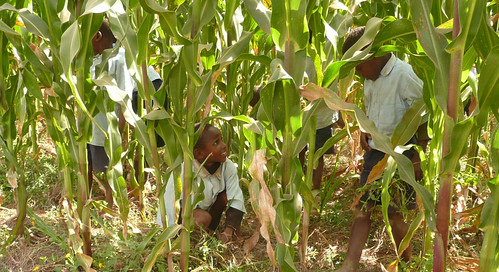
Kenyan children weed a maize plot (photo on Flickr by Care of Creation).

‘A senior Kenyan government official has dismissed last year’s ban on the import of genetically modified organisms (GMOs) into the country—calling it ill-advised and lacking the backing of law.

‘Romano Kiome, permanent secretary in the Ministry of Agriculture, says the ban cannot be enforced because it was imposed by the cabinet, which has no authority in law to do so.

‘Although a “political stand” could hold sway for a time it is no substitute for a considered professional judgement, Kiome told a journalist roundtable at the International Livestock Research Institute in Nairobi on 1 May.

‘The ban came into effect in November 2012 after a cabinet meeting, chaired by Kenya’s former president, Mwai Kibaki, directed the then public health minister, Beth Mugo, to ban GM food imports until the country is able to certify that they have…

View original post 253 more words

Posted in Uncategorized | Leave a comment

Forests and insects for food security

canwefeedtheworld's avatarOne Billion Hungry: Can We Feed the World?

ID-10035951-1The United Nations Food and Agriculture Organisation has recently brought attention to two neglected areas of food security: forests and insects.

On the 13th to 15th May 2013 the FAO hosted an International Conference on Forests for Food Security and Nutrition which aimed to increase understanding of the role that forests, trees and agroforestry systems can play in improving the food security and nutrition of rural people. 1985 was designated the year of forests and food security but since then it has disappeared off the international agenda.

Forests, trees and agroforestry are often forgotten in national food security strategies and yet 1.6 billion people rely on forests and other natural systems for food and their livelihoods. Forests and trees are important in a number of ways:

  • They provide affordable sources of food, nutrients, fibre and fuelwood as well as sources of income
  • They help deliver clean water to agricultural lands…

View original post 296 more words

Posted in Uncategorized | Leave a comment

What we’ve been reading this week

Posted in Uncategorized | Leave a comment

What does empowerment to young farmers mean?

youngfamersfoundation's avatarFoundation for Young Farmers

How do you empower young farmers?

It is widely acknowledged that empowerment means knowledge. You can’t have one without the other. Empowering youth means providing them with the necessary skills and knowledge about farming.

We all agree that knowledge is not a one-way communication; it cannot be captured by a statement, compressed into a leaflet and distributed to the youth. It must start at the ground, not end at the ground. Trainers must learn before they can teach. They must learn about traditional farming techniques, about social customs that might present either barriers or opportunities for implementation, about the needs of villagers, and about existing or missing political and social structures. Only then can they design relevant solutions, and only relevant solutions will be successful.

There is a persistent myth and one we need to bust.  The days are long gone when you learned everything you needed to know about…

View original post 305 more words

Posted in Uncategorized | Leave a comment

New era of fisheries policy needed to secure nutrition for millions | WorldFish

New era of fisheries policy needed to secure nutrition for millions | WorldFish.

Posted in Agriciltural Policy, Aquaculture, Food security, Hunger & Malnutrition, Nutritional Security, Poverty, Sustainable Development, Women | Leave a comment

Reframing the pastoral narrative: Ancient mobile herding strategies to make a comeback in a hotter world

Susan MacMillan's avatarILRI Clippings

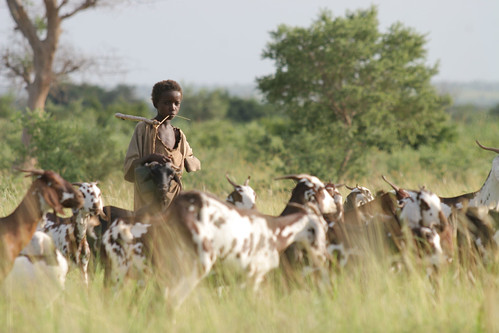
Fulani boy in Niger herds his family's animals

Fulani boy in Niger herds his family’s animals (photo credit: ILRI/Stevie Mann).

Mobility to unlock scattered food, feed, water and other scarce and scattered essential resources is a human strategy as old as humankind itself—and one that remains key for pastoral livestock herders the world over. As the world warms and its natural resources become ever scarcer, it would profit all of us to take a long hard look at how livestock herders track those resources over time and space, and how their movement and that of their animal herds helps them stay resilient in the face of some of the earth’s most unforgiving, and now increasingly unpredictable and extreme, climates.

It appears the rest of us are going to need to adopt strategies for resilience sooner rather than later. Last Thursday, reports Polly Ericksen, scientist at the International Livestock Research Institute (ILRI), was a red letter day. On that day, 9 May 2013, the…

View original post 1,154 more words

Posted in Uncategorized | Leave a comment

Is there really money in Agriculture?

youngfamersfoundation's avatarFoundation for Young Farmers

Some youth’s have asked me this question: Is there money in Agriculture? This shows that their attitude towards agriculture is as a result of lack of information or misinformation, information and enlightenment is indeed Power. A lot of youths should know that one of the thriving areas in any economy in this world is Agriculture because people whether rich or poor, employed or unemployed, white, black or green will ALWAYS have an urge to eat and that is where Agribusiness comes in!

Today, I will be sharing unique and innovative ideas on how to start an agric business with little or no capital and how youths can indeed benefit from this, however you will only tap from this ideas if:

  • You are a patient and perseverance individual who have a passion for a change in the Agric sector.
  • You have always wondered whether there is money in…

View original post 408 more words

Posted in Uncategorized | Leave a comment

Travels of a Global T-Shirt

Global Economy: “Traveled from a Texas cotton field to a Chinese factory to a used clothing market in Africa”

GlobalFoodPolitics's avatarGlobal Food Politics

In 2005, economist Pietra Rivoli published The Travels of a T-Shirt in the Global Economy. The book, which quickly became a classic, traces process of globalization by following a single t-shirt, from the cotton fields of Texas, to the Chinese factory where the raw cotton was turned into a t-shirt, to the retailer in the United States, and finally to a used clothing market in Africa. Along the way, readers are exposed to a wide variety of topics, including international trade rules and the politics of subsidies and protectionism. It’s an engaging read and a powerful way to get students to reflect on the ways in which they participate in the global economy through their daily activities.

After using Riovoli’s book in my class, I developed an assignment to encourage students to think more deeply about that connection. I ask them to identify the clothing they wear for a…

View original post 133 more words

Posted in Uncategorized | Leave a comment

The Politics of Fair Trade: Textiles vs. Food

GlobalFoodPolitics's avatarGlobal Food Politics

Blogging at Foreign Policy and prompted by the death toll in the collapse of the Rana Plaza textile factory in Bangladesh, Marya Hannun yesterday asked, “When it comes to ethics, why do consumers care more about coffee than clothes?”  While careful to note the limits of consumer choice (in particular, that consumers generally prefer fair trade only when price differences are marginal), Hannun observes that consumer preference is leading to change in coffee markets without a parallel movement in clothing. She notes that while Starbucks has committed to sourcing all of its coffee from fair trade sources by 2015, it’s almost impossible to imagine Wal-Mart making a similar commitment with respect to its clothing.

It’s an interesting paradox, but not one without precedent. With respect to biotechnology, consumers have generally embraced medical applications while frequently rejecting food and agricultural applications. But there’s a slightly different dynamic playing…

View original post 310 more words

Posted in Uncategorized | Leave a comment

Using the Food Stamp Challenge to Teach About Food Justice

GlobalFoodPolitics's avatarGlobal Food Politics

food-stamp-challengeMost—but certainly not all—of my students are comfortably middle class. This means that they have never really had to think about where their next meal might come from. That’s what makes the food stamp challenge such an interesting exercise for a course in food politics.

The food stamp challenge was started by NGOs to draw attention to the difficulty of surviving on the Supplemental Nutrition Assistance Program (SNAP). While SNAP is an important component of food security for millions of Americans, the benefits are often too low to allow families to purchase a wide array of health and fresh foods. But most of the discourse around “welfare” in the United States focuses on welfare abuse—“welfare queens”—rather than on the millions hardworking Americans who, after paying for housing, electricity, transportation, and other basic expenses, have little money left to spend on food.

The Food Stamp Challenge gives students an opportunity to…

View original post 275 more words

Posted in Uncategorized | Leave a comment

World Donkey Day (May 8)

Posted in Uncategorized | Leave a comment

Greening our meat: A vegan conservationist speaks out, and considerately, on controversial food issues

“Why doesn’t The Nature Conservancy make changing people’s diets one of its strategies? Wouldn’t changes in diet lead to better environmental outcomes? And what about GMOs?” –

Susan MacMillan's avatarILRI Clippings

Vegan and conservationist Mark Tercek, president and CEO of The Nature Conservancy, the largest environmental non-profit organization in the Americas, had an interesting response this week to a question about eating meat and genetically modified foods—two of the most durable of the hot ‘foodie’ topics of the North, with vegetarian and carnivore consumers, organic and high-tech farmers, passionately entrenched in diametrically opposing views.

‘This week, I was asked an interesting question as part of the Q&A session following a talk I gave . . . .

‘To paraphrase journalist Marc Gunther, who moderated the evening: “You are a vegan. You also lead the world’s largest conservation organization. Why doesn’t The Nature Conservancy make changing people’s diets one of its strategies? Wouldn’t changes in diet lead to better environmental outcomes? And what about GMOs?”

‘Indeed, I have been a vegetarian for a long time, and I recently became a vegan. …

View original post 465 more words

Posted in Uncategorized | Leave a comment

‘Nothing improves an economy as efficiently as agriculture’–Bill Gates to US Senate

Susan MacMillan's avatarILRI Clippings

Bill Gates Visits EADD Project

Bill Gates visits a site of the East African Dairy Development project, which is funded by his foundation; researchers based in Nairobi at the International Livestock Research Institute (ILRI), a CGIAR centre, provide technical and other backstopping to this project, which is led by Heifer International (USA) (photo on Flickr by EADD).

‘Investing in agriculture is essential if the fight against world poverty is to succeed, according to Microsoft founder Bill Gates, who spoke at an International Agriculture and Food Security Briefing sponsored by Farmers Feeding the World, a Farm Journal Foundation Initiative, and the Senate Hunger Caucus.

‘”It’s been proven that of all the interventions to reduce poverty, improving agricultural productivity is the best. All the other different economic activity—yes it trickles down. But nothing as efficiently as in agriculture,” Gates said to a packed conference room in the U.S. Senate office building. . . .

‘”I want to…

View original post 825 more words

Posted in Uncategorized | Leave a comment

Help Africa’s small-scale livestock producers tap growing markets for animal proteins—FAO livestock economists

Susan MacMillan's avatarILRI Clippings

Saulosi Tchinga

Saulosi Tchinga is a potato, maize, soya, sheep and chicken farmer in central Malawi (photo credit: ILRI/Stevie Mann).

‘The UN Food and Agriculture Organization (FAO) on Friday called on African governments to implement policies that will help the continent’s small livestock producers to tap the growing demand for animal proteins.

‘FAO Livestock Economist Uga Pica-Ciamarra told journalists in Nairobi that due to a number of constraints the region is now a net importer of livestock products.

‘“The small scale farmers holders should therefore be positioned to benefit from the huge market for milk, meat and eggs that will come out of Africa in the next decades,” Pica-Ciamarra said.

‘He called on governments to develop a private sector model for the small industry players that is sustainable enough in order to avoid the heavy reliance on livestock imports which is a reflection of surging demand.

This comes even as African countries are yet…

View original post 313 more words

Posted in Uncategorized | Leave a comment

Huge scope for livestock sector to reduce world poverty–New research brief from Asia commission

Susan MacMillan's avatarILRI Clippings

Distribution of poor livestock keepers, 2010

Distribution (density) of poor livestock keepers based on the international US$2.00/day poverty line in 2010 (published in a research brief by J Otte and R Leslie, Animal Health and Production Commission for Asia and the Pacific [APHCA], Jan 2013).

‘. . . [A]mong largely agrarian economies, which are home to the majority of the world’s poor, livestock are an integral part of smallholder crop-livestock farming systems. There is thus much greater scope for investment in livestock sector development for poverty reduction than generally realized, particularly in development that enables smallholders to take advantage of the growing demand for livestock products by more affluent members of society. . . .

‘Nearly three-quarters of the extremely poor—that is around 1 billion people—live in rural areas and, despite growing urbanization, more than half of the “dollar-poor” will reside in rural areas until approximately 2035. Most rural households depend on agriculture as part of…

View original post 570 more words

Posted in Uncategorized | Leave a comment

Huge scope for livestock sector to reduce world poverty–New research brief from Asia commission

Susan MacMillan's avatarILRI Clippings

Distribution of poor livestock keepers, 2010

Distribution (density) of poor livestock keepers based on the international US$2.00/day poverty line in 2010 (published in a research brief by J Otte and R Leslie, Animal Health and Production Commission for Asia and the Pacific [APHCA], Jan 2013).

‘. . . [A]mong largely agrarian economies, which are home to the majority of the world’s poor, livestock are an integral part of smallholder crop-livestock farming systems. There is thus much greater scope for investment in livestock sector development for poverty reduction than generally realized, particularly in development that enables smallholders to take advantage of the growing demand for livestock products by more affluent members of society. . . .

‘Nearly three-quarters of the extremely poor—that is around 1 billion people—live in rural areas and, despite growing urbanization, more than half of the “dollar-poor” will reside in rural areas until approximately 2035. Most rural households depend on agriculture as part of…

View original post 570 more words

Posted in Uncategorized | Leave a comment

Kenya ministry asked to allocate greater resources to the livestock sector, particularly in arid areas

Susan MacMillan's avatarILRI Clippings

Samburu livestock

Sheep and goats in northern Kenya (photo on Flickr by gordontour).

‘The Inter-African Bureau for Animal Resources (IBAR) is asking the [Kenya] Ministry of Agriculture, Livestock and Fisheries (MALF) to reserve at least five per cent of the estimated funds its set to receive from the Treasury for the Department of Livestock.

‘These figures translate to Sh1.95 billion out of the estimated Sh38.9 billion the Treasury has allocated to the ministry for the 2013/14 fiscal year.

‘The lobby, comprising 57 Member States of the African Union (AU), said the country should direct significant funds to the sector to boost livestock production.

‘“Last year IBAR held a conference involving participants from the Ministry of Agriculture across Africa where we agreed to push for at least five per cent share for livestock,” the Union’s Information System manager, Ibrahim Gashash said.

‘Speaking at an event to mark Livestock Data Innovation in Africa, Dr…

View original post 154 more words

Posted in Uncategorized | Leave a comment

Teaching Food Politics

GlobalFoodPolitics's avatarGlobal Food Politics

ClassroomThe explosion of materials on food politics, and the increasing popularity of food as an area of social science research, makes teaching a course on the politics of food both increasingly interesting and increasingly difficult. When I first started teaching my food politics course about ten years ago, there were shockingly few resources available. Most of the materials were either published in academic journals like Food Policy or Agriculture and Human Values, which were often cast at too high a level for the average undergraduate, or were popular books that lacked the rigor and research background of the academic literature.

I’m happy to say that this is no longer a problem. A growing number of books—both popular and academic—journal articles, films, blogs, etc. have been published over the past decade, starting most notably with Marion Nestle’s Food Politics (which celebrated its 10th anniversary with a new edition)…

View original post 148 more words

Posted in Uncategorized | Leave a comment

Antiobiotic use on organic apples and pears

canwefeedtheworld's avatarOne Billion Hungry: Can We Feed the World?

ID-1005279 (2)Think organic farming doesn’t use harmful compounds, think again. As the expiry date for the use of the antibiotics, Streptomycin and Oxytetracycline, on organic apple and pear farming in the US approaches, much debate has arisen over the standards for organic farming and food labelling.

Apples and pears are subject to an infection called Fire Blight, which can devastate entire orchards For that reason organic farmers have received an exemption allowing them to spray certain antibiotics to tackle this disease. In 2002 when the US Department of Agriculture’s national organic labelling standards went into effect the two antibiotics were included in a list of ‘allowed’ compounds subject to periodic review. This exemption is set to expire in October 2014, which supposedly allowed time to develop new, non-antibiotic, methods of control. But as 2014 approaches and a viable alternative is still lacking, some groups are battling for an extension on this…

View original post 237 more words

Posted in Uncategorized | Leave a comment

Kenya is working towards disease-free livestock zones to improve its livestock trade

Susan MacMillan's avatarILRI Clippings

herding cattle

Herding cattle in Kenya (photo on Flickr by davida3 [Davida De La Harpe]).

‘The [Kenya] government has unveiled a plan to improve trade in livestock by vaccinating 61 million livestock in the next financial year.

‘According to budget estimates released on Thursday, the animals will be vaccinated against foot and mouth disease and other trade-sensitive diseases.

‘Measures will also be put in place to strengthen disease surveillance and introduce an advanced reporting system using Digital Pen Technology.

‘Kenya has in recent years been trading in live animals, which are exported mostly to the Middle-East.

‘It has also been striving to create disease-free zones to improve on the marketability of its meat and meat products in Europe which has a stringent regime for products that are allowed into that market.

‘So far, parts of Coast region have been classified as disease-free zones and are used as holding grounds for cattle. . …

View original post 406 more words

Posted in Uncategorized | Leave a comment

Science fund opens new agricultural research frontiers in Africa

Paul Karaimu's avatarILRI Clippings

Biosciences eastern and central Africa hub platform

Ethel Makila writes in New Agriculturalist about an African fund that is leading to breakthroughs and opening new frontiers in the continent’s biosciences research (photo: ILRI/David White).

This month (Mar 2013), New Agriculturalist features an article on the Africa Biosciences Challenge Fund. This is a fund that is managed by a state-of-the-art biosciences initiative located in Nairobi, Kenya that is supporting African scientists in addressing key agricultural needs in the continent. This initiative is the Biosciences eastern and central Africa-International Livestock Research Institute Hub, better known as the BecA-ILRI Hub.

‘… [O]n average, only 0.3 per cent of GDP in African countries is dedicated to research and development, seven times less than the investment made in industrialized countries. . . . [S]ub-Saharan Africa (excluding South Africa) contributes only 0.6 per cent of the world’s researchers, a dismal representation from nearly 11 per cent of the global population.

‘Through this program…

View original post 259 more words

Posted in Uncategorized | Leave a comment

As livestock farming intensifies in poor countries, so can livestock–and livestock-to-human–diseases

Susan MacMillan's avatarILRI Clippings

A woman tethers her goats in a farm field in Busia, Kenya

The health of people and their farm animals in Kenya and other developing countries are closely linked (photo credit: ILRI/Charlie Pye-Smith).

‘While livestock contribute about 40 per cent of the value of agriculture and forms a crucial part of household wealth [in Kenya and many other developing countries], experts now say keeping animals is spreading disease and polluting the environment like never before.

‘They say that as smallholder agriculture intensifies—driven by increasing population, urbanisation and climate changes—livestock keeping is exhibiting its good and bad sides, impinging on the environment, poverty, food security and human health.

A recent study by the International Livestock Research Institute (ILRI) says that zoonotic diseases (those transmitted to people from animals) that have recently emerged from animals make up to one-quarter of the infectious disease burden in low-income countries. Animal diseases that threaten people’s health directly include food-borne illnesses such as diarrhoea. . . .

‘“A…

View original post 259 more words

Posted in Uncategorized | Leave a comment

The Humble Apple and the Challenge of Sustainability

GlobalFoodPolitics's avatarGlobal Food Politics

Mother Jones this week published a fascinating article on the humble apple. The apple tells the classic story of industrialized agriculture. There were once thousands of varieties of apples grown across the United States, each grown with unique traits and suited for specific purposes. Some were grown for pies and canning, others for eating fresh, others for storage into winter, still others for making cider.

Today, though, just five varieties dominate U.S. apple production: the Red Delicious, Gala, Golden Delicious, Granny Smith, and Fuji. While others are grown in smaller quantities, thousands of varieties have been lost over time. The Atlantic tells the story of one man’s quest to bring them back. That man, John Bunker of Fedco Trees, has restored between 80 and 100 formerly lost varieties over the past thirty years.

The nature of apple production presents particular challenges and makes John Bunker’s quest even more…

View original post 338 more words

Posted in Uncategorized | Leave a comment

Africa’s Share Of Global FDI Increased Over The Last 5 Years – Ernst & Young

” Africa’s share of global foreign direct investment has grown to 5.6 percent from 3.2 percent over the past five years; highlighting growing interest from foreign investors, according to Ernst & Young’s third Africa Attractiveness Survey.”

cambodine's avatarECO-opia

Posted on May 6, 2013 02:45 pm under Investing, Investors, Markets

Investing in Africa

VENTURES AFRICA – Africa’s share of global foreign direct investment has grown to 5.6 percent from 3.2 percent over the past five years; highlighting growing interest from foreign investors, according to Ernst & Young’s third Africa Attractiveness Survey.

According to the report, the size of the African economy has more than tripled since 2000, led by sub-Saharan Africa, which saw its output quadrupled.

Ernst & Young Africa Managing Partner Ajen Sita said: “The Africa growth story is real and projected over the next 10-20 years as even bigger.”

The company’s Africa Attractiveness survey depicts that in 2011, Africa ranked ahead of two other regions for investment, while in 2012 it ranked ahead of five — the former Soviet States, Eastern Europe, Western Europe, the Middle East and Central America.

The report also highlighted the…

View original post 471 more words

Posted in Uncategorized | Leave a comment

Leadership Gap in Agriculture Makes Disaggregation Essential

cambodine's avatarECO-opia


When convening at the lakeside city of Bahir Dar, last week, the ruling EPRDFites were high-spirited and ready to brainstorm on the major dealings of the state they are entrusted to lead until 2015. They had all their baggage of policy stances with them from the meetings of their individual member parties, which were held a week before the general convention.

All eyes were on them as the outcomes of their conventions often have wide reaching impacts. It seems that they rightly understand the impulse. The guest list of their convention partly shows their understanding of the magnitude and direction of the whim.

Indicating their ideological devotion, they invited all sorts of ‘developmental’ ruling political parties from nations as varying as China and South Africa. Locally, their focus was to be as comprehensive as possible in their invitation.

Beyond procedures, including solidarity speeches by the representatives…

View original post 1,097 more words

Posted in Uncategorized | Leave a comment

Food on Film

GlobalFoodPolitics's avatarGlobal Food Politics

Food Tank (The Food Think Tank) published its list of 10 Moves about the Food Movements Worth Watching today. The ten include some good items, most of which are available through Netflix. Their top 10 are:

  1. Food, Inc.
  2. Forks Over Knives
  3. Dive! The Film
  4. The Garden
  5. FRESH, the Movie
  6. King Corn
  7. Food Fight
  8. Our Daily Bread
  9. Dirt: the Movie
  10. The Price of Sugar

There’s some good films there, but the list only scratches the surface of food-centered movies that have come out in recent years. Others worth seeing include:

220px-Super_Size_Me_PosterSupersize Me. This film was one of the first food documentaries. In it, Morgan Spurlock traces the health effects of eating nothing but McDonald’s for a month.

Farmageddon. Explores the struggles faced by small family farmers in the United States.

Beer Wars. The story of craft beer and its relationship with the large brewers in the United States.

The Harvest. Examines…

View original post 132 more words

Posted in Uncategorized | Leave a comment

Moving Beyond Techno-Fixes: Climate Change, Hunger, and Malnutrition

GlobalFoodPolitics's avatarGlobal Food Politics

As part of its presidency of the European Union, the government of Ireland hosted a conference earlier this month to explore the intersection of hunger, nutrition, and climate justice. The conference documents are all available online.  The website lays out in stark terms the challenges faced:

“The world’s population is set to reach 9 billion by 2050, which will require a 60% increase in agricultural production if everyone is to be fed. Over the same period climate change, water scarcity and land degradation could reduce food production by one quarter, leading to further increases in the number of people suffering from hunger.

It is those who are already poor and vulnerable who will be worst affected, despite having contributed least to the causes of climate change. The global challenges of hunger, nutrition and climate justice are linked.  To be credible, the global response must be based on a…

View original post 167 more words
Posted in Uncategorized | Leave a comment

The Stalling Debate Over Food Aid Reform

GlobalFoodPolitics's avatarGlobal Food Politics

President Obama’s proposal to reform the US food aid system was widely celebrated by critics of the current system. But his proposals appear to have run into strong opposition in Congress.

According to the New York Times, members of both the House and Senate agriculture subcommittees have already voiced opposition to proposal to shift responsibility for food aid programming from the Department of Agriculture to the US Agency for International Development and the Department of State. And in a rare sign of bipartisan cooperation in Washington DC, subcommittee Republicans and Democrats are hesitant.

Robert Aderholt (R-AL), House agriculture committee chair, expressed concern that shifting the food aid budget from the Department of Agriculture to the Department of State would “hurt American farmers.” Sam Farr (D-CA), ranking Democrat on the subcommittee, raised similar concerns, noting that, “I’m not endorsing the transfer — the realignment — until there are assurances that…

View original post 163 more words

Posted in Uncategorized | Leave a comment

The Stalling Debate Over Food Aid Reform

The Stalling Debate Over Food Aid Reform.

Posted in Agriciltural Policy, Farmer, Food security, Hunger & Malnutrition, Nutritional Security, Poverty, Sustainable Development | Leave a comment

Famines, Malnutrition, and Food Aid

GlobalFoodPolitics's avatarGlobal Food Politics

A report by the UN Food and Agriculture Organization issued earlier this week concluded than some 258,000 people died a result of the Somali famine between 2010 and 2012. Half of those killed were children under the age of five. This would make the 2010-12 Somali famines one of the worst famines of the post-World War II era.

The report notes that the Somali famine represented a complex emergency, resulting from a combination of natural, political, and social factors. In the case of Somalia, the impact of a severe drought was intensified by the collapse of the Somali government and the ongoing conflict between rival militias fighting for control of the country.

The report also notes that the famine was intensified as a result of the slow reaction of the international community. In an interview with the BBC, Rudi Van Aaken, the deputy head of the FAO operation for…

View original post 444 more words

Posted in Uncategorized | Leave a comment

Musings of a young Farmer

kalusam's avatarKalu Samuel's Blog

Image

The Pineapple plantation.

For several years I have been involved in one way or the other in farming. Once I started learning my right from left, I could always remember my parents taking me to the farm on the weekends,

View original post 180 more words

Posted in Uncategorized | Leave a comment

Is there really money in Agriculture?

kalusam's avatarKalu Samuel's Blog

Feeding my snails

Feeding my snails

Early this morning while some dudes were busy sleeping, I went out to bring food (Water leaf) for my little babies (my Snails). Been a very long time I blogged, actually a lot of things have happened: first my laptop hard disk crashed and I lost all my important files (including my articles and online researches) 😦

Would have published this article before now but for those hitches, however I would not be writing extensively about my new small snail farm, I will be writing about a very important issue that concerns everyone in the Agric sector that is: Attitude of youths towards agriculture!

Some youth’s have asked me this question: Is there money in Agriculture? This shows that their attitude towards agriculture is as a result of lack of information or misinformation, information and enlightenment is indeed Power. A lot of youths should know that one…

View original post 514 more words

Posted in Uncategorized | Leave a comment

Should we stop eating meat?

argylesock's avatarScience on the Land

Would it solve the world’s food crisis if we all went vegetarian or vegan?

Priyamvada Gopal at the Guardian says no, inequality is a bigger factor in food shortages. I think that food wastage, especially in the rich world, is another huge factor as I wrote here.

We’ve heard fearsome tales of how wasteful it is to produce meat. Prof John Quiggin at the University of Queensland tells us that meat consumption contributes to global poverty. But he concludes, ‘Using current technology and with no additional diversion of food grain, the world could produce enough meat to give everyone an intake comparable to that of the average person in the Netherlands.’

Does it really take huge amounts of land to produce a portion of meat? Where’s the science behind such claims? Simon Fairlie at Global Food Security says that good science is sometimes misreported to serve…

View original post 114 more words

Posted in Uncategorized | Leave a comment

Agriculture and health experts develop plan of action for aflatoxin control in Africa

Tezira Lore's avatarAgHealth

Regional and international experts in agriculture, health, research and trade have drawn up a plan of action for the control of aflatoxins in Africa, following a strategy development workshop organized by the Partnership for Aflatoxin Control in Africa held on 10-12 April 2013 in Dar es Salaam, Tanzania.

“Control of aflatoxins is needed to achieve greater agricultural development, food security and improve health, particularly in Africa where contamination is widespread and often acute,” said Yemi Akinbamijo, head of the Agriculture and Food Security Division of the African Union Commission.

The workshop participants identified five priority strategic thematic areas for action:

  • Research and technology for control of aflatoxins
  • Legislation, policies and standards in the management of aflatoxin in Africa
  • Growing commerce and trade while protecting lives from aflatoxins
  • Enhancing capacity building on aflatoxin management, control and regulatory processes to ensure reduced exposure
  • Public awareness, advocacy and communication

Aflatoxins are highly toxic…

View original post 397 more words

Posted in Uncategorized | 1 Comment

Africa Leading the Way

cambodine's avatarECO-opia

Sam Dryden  –  May 02, 2013

Events leading up to the G8 Summit in Northern Ireland this June will focus, in part, on the intersection of hunger, food, nutrition, and the need to transform the agricultural development sector in Africa in order to lift families out of poverty. As our global leaders draft agendas and assemble working groups, however, it is critical that they also seek out and listen to the voices of those who know what it will take to succeed in this effort—farmers and community leaders on the ground in Africa and in the labs, marketplaces, and government offices throughout the continent.

African leaders are making their voices heard—earlier this week, African civil society groups and farmers organizations together sent a letter to Prime Minister David Cameron, calling upon the G8 to align their investments in agriculture with the priorities of African governments and their smallholder farmers…

View original post 412 more words

Posted in Uncategorized | Leave a comment

Campaigning to make poverty history

Posted in Uncategorized | Leave a comment

Camel Milk Project to Support 50,000 Somali pastoralists

Posted in Uncategorized | Leave a comment

The Financialization of Food

GlobalFoodPolitics's avatarGlobal Food Politics

I had a great conversation with the folks at the Financial Humanity Project Network yesterday. If you’ve not seen their work, it’s definitely worth a browse, particularly for folks interested in financial speculation in food commodities futures. Importantly, they are also pushing for a rethinking of the (failed) Dodd-Frank regulations that were intended to stem some of the speculative behavior in food commodity markets.

View original post

Posted in Uncategorized | Leave a comment

Our Invisible Farmworkers

GlobalFoodPolitics's avatarGlobal Food Politics

Despite the recent focus on immigration reform at the highest levels of government, surprisingly little attention is usually paid to the plight of farmworkers in the United States. This despite the fact that an estimated 80 percent of all U.S. field workers are undocumented. And despite the growing consciousness around food, the food movement remains largely disconnected from the farm workers movement.

As Andrea Reusing observes in her TEDx talk, we’re often more comfortable talking about how our food is grown than we are talking about who grows it. Farm workers are largely invisible. The 13 minute talk is focused on North Carolina, but the themes she raises carry broader implications.

View original post

Posted in Uncategorized | Leave a comment

Taking action on malnutrition

canwefeedtheworld's avatarOne Billion Hungry: Can We Feed the World?

ID-10031262 (2)A lack of sufficient nutrients in the diet is responsible for around 2.6 million deaths of children per year, the largest killer of children in the world. Those children that do survive will be stunted in their physical growth and mental development, which can not only cause health problems but will detrimentally impact their education and earning potential for the rest of their lives. This is a risk faced by some 165 million children across the world.

This year, high-level decision makers will come together on 8th June for a Hunger summit, hosted by David Cameron, ahead of this year’s G8, and nutrition will likely be on the agenda. But what action can leaders, donors and people on the ground take to tackle undernutrition?

The Montpellier Panel, in their 2011 briefing paper on Scaling Up Nutrition, outlined the urgent need for children to receive adequate nutrition in…

View original post 676 more words

Posted in Uncategorized | Leave a comment

Food for fuel

Sub-Saharan Africa: Food for fuel projects may be the major cause of food insecurity & sources of enhanced poverty- Report

canwefeedtheworld's avatarOne Billion Hungry: Can We Feed the World?

ID-100136340 (2)A new report produced by ActionAid calls attention to the impacts that growing food for biofuels can have on poverty and hunger. The amount of food crops produced and used for fuel by G8 countries per year could have fed over 441 million people. This is around half the number of people, estimated by the UN Food and Agriculture Organisation, to be chronically hungry in the world.

There are other implications of growing food for fuel beyond directly removing food sources.  Land availability and food prices, are affected which can further impact on poverty, particularly for those who are net buyers of food and who rely on local natural resources for their livelihoods.

In sub-Saharan Africa some 98 European biofuel projects covering 6 million hectares of land have begun since 2009, when the European Union introduced the Renewable Energy Directive, subsequently driving up biofuel demand in Europe. 30 of…

View original post 366 more words
Posted in Uncategorized | Leave a comment

What we’ve been reading this week

Posted in Uncategorized | Leave a comment

6 WAYS TO A RIGHT START IN AGRIBUSINESS

youngfamersfoundation's avatarFoundation for Young Farmers

09 Jan 2013 by Olawale

As we step into the year 2013, a lot of indications of earlier activities of the last quarter of 2012 show that serious attention would be drawn to agriculture, with a business unusual dimension for the sector. What this means is that agriculture would no longer be seen as mere farming- a laborious venture with lot of waiting period for benefits to be gotten but rather as a business, a source of employment for the youths, a source of livelihood and most importantly (especially to me) a sector that young people would begin to find desirous,attractive and lucrative.

To succeed as young people and agric entrepreneurs, it is important that we are armed with not only the relevant information, right and appropriate skills to thrive but have a strong desire and see the attractive but BIG picture in Agriculture, Food Supply Chain, Food Safety etc…

View original post 680 more words

Posted in Uncategorized | Leave a comment

“Why Kenya Has to Adopt Biotechnology in Farming”

youngfamersfoundation's avatarFoundation for Young Farmers

Author: Calestous Juma, Professor of the Practice of International Development; Director, Science, Technology, and Globalization Project; Principal Investigator, Agricultural Innovation in Africa

Belfer Center Programs or Projects: Agricultural Innovation in Africa; Information and Communications Technology and Public Policy; Science, Technology, and Globalization; Science, Technology, and Public Policy

I am very proud to receive an honorary degree from Jomo Kenyatta University of Agriculture and Technology (JKUAT). Being my first degree from a Kenyan university ever, I would like to dedicate the degree to my parents who seemed to have prepared me for JKUAT even though the university did not exist. My parents instilled in me at an early age the values of excellence, hard work, creativity and openness to new years. My late father, John Juma Kwada, introduced cassava in my community in the early 1960s. From him I learned about the value of adding something new…

View original post 1,354 more words

Posted in Uncategorized | Leave a comment

More meat, milk and fish by and for the poor – Livestock Fish program reports on its first year

Peter Ballantyne (ILRI)'s avatarCGIAR Research Program on Livestock and Fish

After a period of engagement and design, the CGIAR Research Program on Livestock and Fish began in January 2012. It’s first annual report was just published giving insights into progress, achievements and challenges.

The program’s model to enhance the relevance, urgency and impact of its research is designed to bring together collective CGIAR capacity CGIAR to demonstrate how research can develop appropriate solutions as integrated interventions for pro-poor transformation of selected value chains and work towards their implementation at scale by development partners. Through a focus on transforming selected value chains, the program is committed to stimulating large development interventions that will translate research into impact at scale.

This is a new way of working for CGIAR centres that requires reoriented capacities, resource mobilization, and the establishment of new types of partnerships.

The first year was devoted to establishing the institutional and scientific frameworks within which this reorientation…

View original post 496 more words

Posted in Uncategorized | Leave a comment

‘Nature’ takes a hard look at the ‘messy middle ground’ — the ‘difficult adolescence’ — of GM crops

Susan MacMillan's avatarILRI Clippings

Nature special issue on GMOs

Cover of a special issue of ‘Nature’ on GMOs, 2 May 2013.

The leading British science journal Nature has published a special issue on GM crops: Promise and reality  (2 May 2013). This hub of updated science-based information on GM crops includes feature news stories, commentaries, a podcast and more.

‘Foreign genes were successfully introduced into plants for the first time 30 years ago . . . .  Ever since, genetically modified (GM) crops have promised to deliver a second green revolution: a wealth of enhanced foods, fuels and fibres that would feed the starving, deliver profits to farmers and promote a greener environment. In many ways, that revolution has arrived. Crops engineered to carry useful traits now grow on 170 million hectares in at least 28 countries . . . .

‘But to many, GM crops have been a failure. The market is dominated by just a few insect-resistant…

View original post 1,633 more words

Posted in Uncategorized | Leave a comment

Drip Technology inspires farming in arid areas

youngfamersfoundation's avatarFoundation for Young Farmers

A modern drip irrigation technology is allowing farmers in arid and semi arid areas triple their yield by planting three seasons a year. The innovation has allowed farmers to break reliance on rain-fed agriculture that has spelt doom for many, at a time when realities of climate change hits home.

The one-acre irrigation system dubbed Amiran Acre Kit and being marketed by agribusiness firm Amiran Kenya, was designed by Netafim, a drip irrigation giant from Israel. The Kit caters for the rising need for food in the country. It is easy to use and comes with gravity fed drip irrigation system serving upto 4,000 square metres, the equivalence of one acre, filters and valves, a 5,000 litre water tank, seeds, fertilizers, agro-chemicals, knapsack and personal protective gear. Installation and guide on basic operation is done for free.

“The new kit is ideal for farmers in arid and semi-arid regions where…

View original post 171 more words

Posted in Uncategorized | Leave a comment

Farmers to get advice on inputs via phone

youngfamersfoundation's avatarFoundation for Young Farmers

Farmers will soon receive information on availability of fertiliser and seeds as well as improved farming techniques through their mobile phones.

The ministry of Agriculture will equip agricultural extension officers with laptops and cell phones to provide the information.

The move is also aimed at attracting the youth into farming.

Speaking during the launch of a Sh50 million project dubbed “E-Extension”, Agriculture permanent secretary Romano Kiome said the ministry had acquired 624 extension kits and had instructed agricultural officers to set up desks at the local market centres.

“Application of the E-extension has the potential to increase the output of Kenyan farmers, most of who are small-scale,” the PS said at the function at the Kenya Agricultural Research Institute headquarters in Nairobi last week.

It is estimated that 65 per cent of Kenyan farmers use mobile phones, Dr Kiome said, adding that this had guided the ministry’s decision to use…

View original post 217 more words

Posted in Uncategorized | Leave a comment

Pathways to deliver impact: Working on the Livestock and Fish program’s theory of change

Evelyn Katingi's avatarCGIAR Research Program on Livestock and Fish

Among the fundamentals of a good research program is the ability to demonstrate how the program will deliver the promise of creating positive change to the target population. Theory of Change defines the pathways through which a program will deliver these promises, highlighting the key assumptions and likely risks the program faces.  The Theory of Change is an important tool for program planning, management, and measuring the program’s progress towards achieving impact on its target population.

A 2 days workshop to refine the Livestock and Fish CGIAR Research Program Theory of Change was held in January 2013 in Nairobi. The objectives of the workshop were to:

  1. Develop a common understanding of the program design and the envisaged pathways to outcomes and impact
  2. Review and refine the Livestock and Fish program impact evaluation strategy
  3. Clarify program monitoring & evaluation and impact assessment related activities including evaluation, impact assessment, learning, logic frameworks…

View original post 472 more words

Posted in Uncategorized | Leave a comment