See on Scoop.it – Poverty, Hunger & Malnutrition
(GLOBE NEWSWIRE) — Three quantitative microbial risk assessments (QMRAs) recently published in the Journal of Food Protection have demonstrated that unpasteurized milk is a low-risk food, contrary …
See on saccsivdotcom.wordpress.com

About Dr. Bukar USMAN, mni
I started as a field Veterinary officer with Borno State Ministry of Agriculture and later joined College of Agric, Maiduguri as a lecture & a Researcher in the Department of Animal Health & Production. I was appointed the Provost of the College In 2003. In 2007 I was appointed Hon. Commissioner & Member Borno State Executive Council and later appointed Permanent Secretary with the Borno State Civil Service in 2009. I was the National Facilitator Animal Health, National Programme For Food Security of the Federal Ministry of Agric & Rural Development, Abuja. I was Director, Veterinary Medicine & Allied Products (VMAP) and now Director North East Zone NAFDAC. I’m a member of the National Institute’ (mni), Kuru SEC 40, 2018. I engaged myself in various aspects of the veterinary profession. I founded Sril Group Ltd, Nigeria. I’m now the Director General of Borno State Livestock Management Agency (BOLMA) I’m a strong advocate of keying into the Global Halal Food System


 Dr. Bukar Ali USMAN, mni
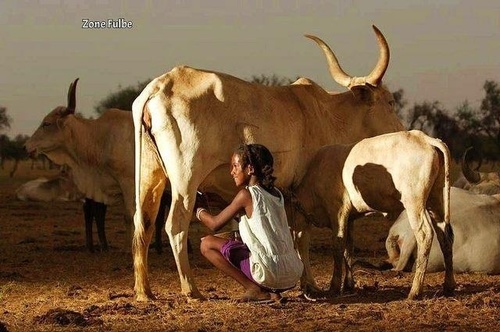
I believe that the data analysed by Ms Ijaz were collected in Canada and/or other western countries. The findings will be very accurate as they apply to those countries. I would be more confident of the findings if it (the report) included data from developing countries. In the UK and other western countries, the SCC is a significant measure of milk quality. I expect (data needed to confirm hypothesis) that most milk marketed in Kenya and other African countries would have such a high SCC that it would be considered unsuitable for processing in the West. Data is needed comparing milk obtained using machine milking and hand milking. In places where hand milking is the norm, milking hygiene, storage and transportation is very different from that in the West. Water is scarce and chemicals for disinfection hardly ever used. In some instances, the first jets of milk are used to lubricate teats at milking!
LikeLike
Good comment. Yes, I think this study was about rich countries whose dairy hygiene is tightly regulated.
I’ll add that the study doesn’t mention Mycobacterium tuberculosis or its close relative M. bovis, the causative agents of human tuberbulosis (TB). People can get TB by drinking raw milk. Hence the law requiring pasteurisation in Britain (where I live) and, I think, in other rich countries too.
LikeLike
Pingback: New Studies Confirm: Raw Milk A Low-Risk Food | Science on the Land