Source: www.thechicagocouncil.org
See on Scoop.it – Agriculture, Climate & Food security

Source: www.thechicagocouncil.org
See on Scoop.it – Agriculture, Climate & Food security

The ‘Advancing agri-practice: Adding value for women’ workshop was held at the Kenya Agricultural Research Institute (KARI) headquarters in Nairobi, Kenya on 23-24 May, 2011. Cosponsored by the International Center for Research on Women (ICRW) and the International Livestock Research Institute (ILRI), this event provided a unique forum for practitioners and researchers working on agricultural value chains to share information on gender-related research and gender-responsive practices in agriculture development.
The purpose of the two-day workshop was to (1) demonstrate the importance of gender analysis as a means of improving agriculture program effectiveness and outcomes for women, (2) facilitate the identification of common ground regarding demand for and supply of data on gender and agriculture, and (3) define ways forward to improve the quantity, quality, availability and accessibility of gender and agriculture data.
The workshop was attended by thirty-three practitioners and researchers working in Kenya, Uganda, Tanzania…
View original post 505 more words

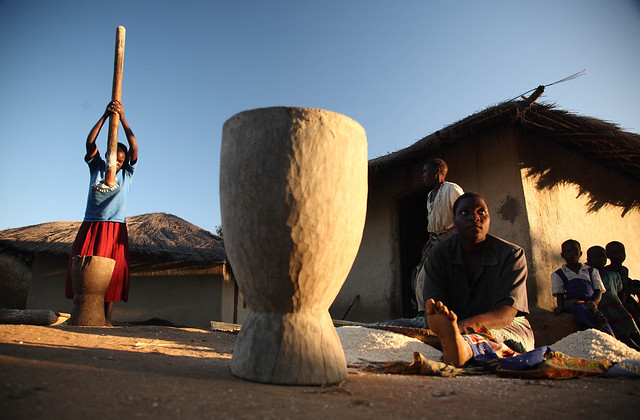 Women pounding grain for the evening meal in Khulungira Village, in central Malawi (photo credit: ILRI/Stevie Mann)
By Jo Cadilhon The fifteen research centres collaborating in the global CGIAR partnership have all embraced gender as a cross-cutting theme for research. Understanding the differentiated social roles of men and women, and the challenges men and women face in accessing resources is key in reducing rural poverty, improving food security, nutrition and health, and sustainably managing natural resources. However, to achieve more gender-equitable goals, our development partners also need to be aware of how undertaking gender-sensitive actions could lead to a more equitable society. Policymakers are key partners in this process as they can orient government programs and donor projects towards more gender-equitable objectives. Yet, how can we make sure that policymakers become interested gender-equity and recognize its importance? Established in 2006 under the Comprehensive Africa Agriculture Development Programme (CAADP), the Regional…
View original post 701 more words
Three Myths About Food & Farming.

Before I went off to the hospital to have my baby, I showed off to my mother the stock of frozen vegetables in the freezer: peas, beans, greens, this would last us a while. She, more used to picking out what she wanted from the fresh arrivals in her neighborhood market everyday, looked doubtful. By the end of her stay though, she was a convert! With deft handling, those frozen vegetables can make a meal in minutes. So who thought this one up? Clarence Birdseye was the man who made it all possible and this new book by Mark Kurlansky , relates his fascinating story.He traveled the world, sampling different types of food and then found a way to bring them all to the table. And no, frozen is not inferior to fresh from the nutritional perspective because the produce is frozen at its peak. I am looking forward to…
View original post 35 more words

There is a new buzzword in the investing world and it is “ag-tech”; funds are pouring in to bring the latest technology into the farm sector and transform food production. From farming apps to robots that trim lettuce and software that calculates the grass required for grazing cattle.
To the farmer it means the ability to do more and be more accurate with inputs now that sensors on on farm machinery, GPS data from satellites and a host of other applications. Like any other technological development, there are questions about how best to incorporate the new technology but it seems certain to play a huge role in the way food is grown in the future.

Bill Gates reviews the book “Should We Eat Meat?” by his favorite author Vaclav Smil.
Source: www.gatesnotes.com
See on Scoop.it – Agriculture, Climate & Food security

This gallery contains 4 photos.
Originally posted on ILRI Clippings:
Pork joints in Uganda (photo credit: ILRI/Martin Heilmann, Freie Universitaet Berlin). The following excerpts are taken from a guest commentary, Healthy foods must be nutritious, safe and fair, published on the Global Food for Thought…
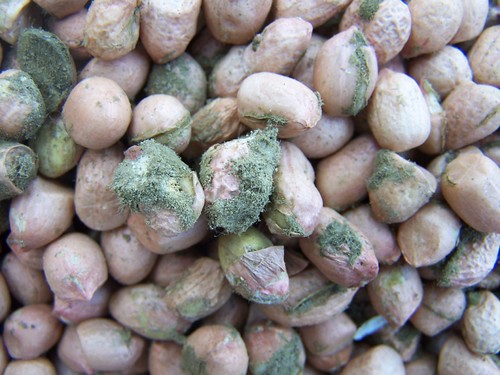 Aflatoxin-contaminated groundnut kernels from Mozambique (photo credit: IITA).
Among the many research projects carried out by the Food Safety and Zoonoses program of the International Livestock Research Institute (ILRI) is one that aims to reduce the risk of mycotoxins in the feed-dairy value chain in Kenya so as to improve food safety and safeguard the health of consumers of maize and dairy products.
The project is developing cost-effective and incentive-based mycotoxin control strategies and solutions for use by poor farmers and other actors within the feed-dairy chain.
Mycotoxins are poisonous metabolites produced by various species of moulds. Aflatoxins are cancer-causing mycotoxins produced by the mould Aspergillus flavus.
Aspergillus can grow in a wide range of foods and feed and thrives under favourable growth conditions of high temperature and moisture content.
The main activities of the project are:
View original post 301 more words
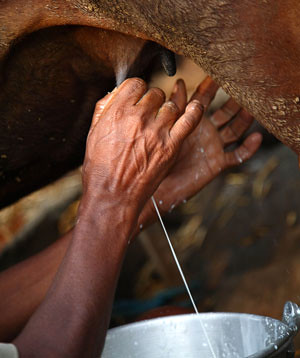
Demand for milk and meat continues to rise in developing countries (photo credit: ILRI/Stevie Mann).
The New Agriculturist recently reported on a Safe Food, Fair Food Project led by scientists at the International Livestock Research Institute (ILRI).
‘Rising demand for livestock products is providing opportunities to improve the livelihoods of smallscale livestock farmers across Africa. However, with generally low levels of hygiene throughout the value chain, this new market opportunity for farmers could come at a high price in terms of food-borne disease. In response, the International Livestock Research Institute (ILRI) is implementing a ‘Safe food, fair food’ programme, to improve the safety of livestock products, maximise market access for livestock keepers and minimise the risk of food-borne disease.
Safer food can generate both health and wealth for the poor, but attaining safe food in developing countries requires a radical change in food safety assessment, management and communication,’ explains Delia…
View original post 218 more words

Woman feeds her milk cow in Embu, Kenya (photo credit: ILRI/Stevie Mann).
Developing-country livestock keepers need more and better drugs to keep their animals alive and productive, and there are increasing numbers of livestock in the South, where there is increasing use of antimicrobial drugs, and poor livestock keepers will be hurt the most by development in pathogens of antimicrobial resistance.
So what’s needed to avoid ‘super bugs’ arising? A new paper by scientists from Princeton University, the International Livestock Research Institute (ILRI), and other institutions, published last week in the Proceedings of the National Academy of Sciences and the first to asses global use of antimicrobials in the world’s food animals, has this to say.
‘Developing countries are pumping livestock full of antibiotics at such a startling rate that they are dramatically increasing the risk of creating drug-resistant “super bugs”, scientists warned on Monday.
Antibiotic use in animals…
View original post 692 more words

Around the Budongo forest, expanding sugarcane production, the establishment of tree plantations and forest loss have altered the landscape. In this rural area where nearly all households have a ho…
Source: canwefeedtheworld.wordpress.com
See on Scoop.it – Agriculture, Climate & Food security
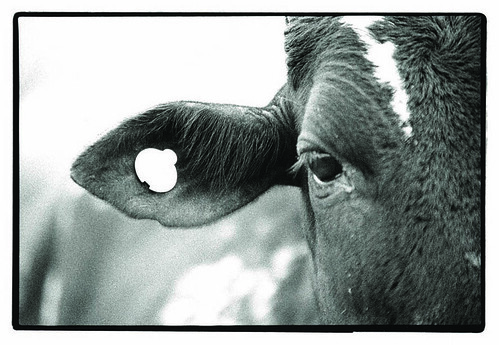
An animal vaccinated against East Coast fever, as shown by its ear tag (photo credit: ILRI/Stevie Mann).
Herds of African cattle may hold the secret to new ways of fighting parasitic diseases like malaria, which kills some 600,000 people a year, scientists said on Friday.
‘The researchers from the University of Edinburgh found that cows are protected from a parasite that causes a deadly disease called East Coast Fever if they have previously been infected with a closely-related but milder species of the parasite.
This discovery, they said, suggests that ‘fighting fire with fire; is a strategy that might work against a range of parasitic diseases, including severe malarial infection in people.
‘”Our results suggest seeking a simple vaccine that could protect cows from East Coast fever by inoculating them with a related but far less harmful parasite,” said Mark Woolhouse, who led the study with a team from…
View original post 503 more words

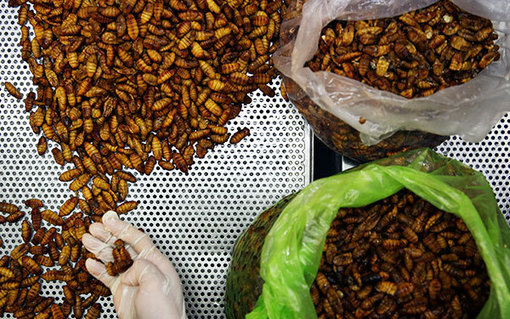
Over 70% of consumers would eat fish, chicken or pork from animals fed on a diet containing insect protein, earlier studies revealed. The EU funded project PROteINSECT is now asking EU consumers again if they are accepting animal products that ate insect protein.
Source: www.worldpoultry.net
See on Scoop.it – Precision Agriculture

A new article (ungated version here) in World Development crystallized a few of the thoughts I have been mulling over regarding contract farming and the participation of smallholders in agricultural value chains in developing countries–an area where I have done a bunch of work, and wherein I am
Source: marcfbellemare.com
See on Scoop.it – Food Policy, Supply, Security & Safety

 In his recently released annual letter, Bill Gates has made a series of “big bets” for development. One of these bets, that Africa will be able to feed itself by 2030, is a view I also share. But I don’t think we need a big bet to make it happen. Rather, I have a “modest proposal” that I believe can guide Africa towards a hunger and poverty-free future. I call this a modest proposal, as the ingredients that will achieve food security in Africa are already known to us, and we already have parts of them working. Currently, average cereal yields in Africa are a little over over one tonne per hectare. In China, they are three and a half tonnes. Here in the UK it can be up to eight tonnes. Africa has places where European-level yields could be achieved. That is not the issue. It can be…
View original post 16 more words


Capacity development and public private partnership are hailed as global policy priorities in the draft sustainable development goals outcome document and the UN secretary general’s synthesis report provides guidance on what sustainable development should look like and what world leaders must do over the next 15 years to achieve it. After two years of crafting the ‘what’, the year ahead must focus on how to get it done.
Feeding the world’s growing population in a sustainable and inclusive way with good quality food is one of the main goals of the value chains approach-based CGIAR Research Program on Livestock and Fish.
Malnutrition affects one in two people globally including 162 million children under the age of five who are stunted (i.e. have low height for age) and two billion people who are deficient in one or more micronutrients. The task of securing food and nutrition worldwide is multidisciplinary…
View original post 1,160 more words

For the past year or so, I have been working on a paper with my colleague Rob King which I am hoping to debut sometime soon in which we look at the relationship between farmers markets and food-borne illness. I have presented that paper twice so far–once at Ohio State, and once at Oklahoma State.
Source: marcfbellemare.com
See on Scoop.it – Food Policy, Supply, Security & Safety
 Recently the UK passed a bill which enshrines in law their commitment to spend 0.7% of gross national income (GNI) on aid every year, a target first reached by the UK last year. The UN established the target in 1970 but only five other countries – Sweden, Norway, Luxembourg, Denmark and the United Arab Emirates – have met the target to date. The UK is the first G7 country to meet the target, spending £11.3 billion in 2014 on international aid. Alongside the financial commitment, the International Development bill, expected to come into force on 1st June 2015, also calls for independent evaluation and monitoring of money spent on aid.
Although the 0.7% spending target was part of each major political parties’ manifesto in 2010, the bill, proposed by Liberal Democrat ex-cabinet minister Michael Moore, sought to transform the pledge to a legal requirement. In December 2014
View original post 386 more words

The camel milk is finding its way in the new world (from sand dunes of Arabia to the western world) because of its hidden treasures of health promising ingredients. Traditionally used for complex and diverse diseases in its habitat, camel milk is now praising in the Western world both by modern families and the Scientists. New small and medium enterprises in USA (Oasis Camel Dairy) and EU (Holland) with the production of camel milk is emerging. The demand is very high and the owners (personal communication) received emails and phone calls from different places to ensure availability of this precious milk for their kids with Autism.
The major demand is for the treatment of diseases, especially Autism and Diabetes. Camel milk is a hope for autistic patients and their mothers are struggling to have camel milk. Social media, especially Facebook is widely use for searching camel milk and knowing the…
View original post 187 more words
Traditionally camel milk had been using for the treatment of many complex and diverse ailments of the pastoral communities of Baloch Pashtun tribes. These camel pastoralists camel pastoralists use camel milk for the different complicated diseses like hepatitis, joint problems, obesity, acities, weaker eye sight, bodyaches etc. This natural pharmacy (camel milk) is successfully use for the treatment of hepatitis in traditional societies. Not only Traditional Knowledge but the religious sayings also supported such use of camel milk. According to a Hadeeth, Prophet Muhammad (PBUH) advised camel milk for the treatment of waterbelly (acities) in Madina. There is very famous Hadeeth regarding the use of camel milk for the treatment of hepatitis.

Modern science and medical research also proved the importance of camel milk in human health. Famous US physician Dr. Hinkle has been very pleased with the results she is seeing with hepatitis on the camel milk. She has…
View original post 191 more words
Camel is integral part of the deserted ecosystems and blessed with special traits/characteristics which give strange potential to this unique animal. In Quran camel is called as strange animal. Here are some strange potential of camels in the ensuing lines.
Protected from Sand
The wide, flat, sponge like cushioned and hoof-less feet can walk across the sand without sinking in.
The long double layered eyelashes protect its eyes from blowing sand and dust. The tear glands continually rinse the eye surface and a thin translucent inner eyelid can be closed to protect their eyes while allowing them to see even in the sand storm.
They can close off their nostrils completely in addition to the thick hairs in the nostrils that help filter the air. Their small ears are also covered with hair inside and out to filter blowing sand and dust.

Desert Ecosystem is Hot and Camel is Heat Protected
View original post 338 more words
I am Raziq belong to the remote and the poorly infra-structured area of Pakistan named as the Balochistan province. I completed my PhD dissertation on the local livestock especially camel and pastoralism. I worked in the north-eastern part of Balochsitan known as the Suleiman Mountainous Region. Actually two areas of the north-eastern Balochsitan i.e. Suleiman region and the Kakar Khurasan are the cradle of the livestock breeds and rich in organic agriculture. The people of the area rarely use synthetic means to cure their animals and to increase the fertility of the lands.
I would like and wish to write in detail about the practices the local farmers use to produce organic food and to explain their efforts to save the friendly environment, which might not be possible in one email. I would like to write on each topic in detail on by one. Please find below a brief of…
View original post 1,280 more words
Small-scale livestock production is based on subsistence foundations. Such livestock keepers keep mostly their indigenous livestock breeds, as local breeds are well adapted to the ambient ecosystems (harsh and hostile). Local livestock breeds are resistant to many diseases and pests, like ticks and flies etc. Indigenous livestock breeds (ILB) need very low inputs or even zero inputs for their production and survival. In many cases small-scale livestock keepers are landless farmers. They rely on marginal lands for grazing of their livestock; such lands have no other use. The small holding agriculture farmers are also holding small-scale livestock for food production, agricultural operations and soil fertility.
Small-scale agricultural systems are more resilient to climate change and ensure biodiversity. Their production system is quite sociable and in concord with the biodiversity. In most of the cases, small-scale production is organic in nature and health friendly. Traditional and indigenous cultures may be sources…
View original post 743 more words
Camel has adapted mechanisms that allow it to withstand prolonged water deprivation, high temperature, especially in the absence of readily available water, and survive when feed resources are scarce or of poor quality. Heat tolerance is in part due to its’ ability to minimize water loss. The camel retort to hot arid conditions by reducing urine production, absorbed urine, sweating economically, by an increase body temperature and by the ‘storage’ of CO2 and glucose in the muscles. Camels can survive up to 14 days without water and can tolerate water losses of up to 30%. A camel may drink more than a third of its body weight as it rehydrates.
View original post 389 more words
Camel is a cool, happy and calm animal. Opposite to common believing as dangerous, this unique creature has a soul with love and remembrance. Camel realize the feelings of a person or animal approaching camel. Camels’ reaction is always the same in response.
Love camel and get love. Sometimes an angry camel (may be by some one else) can make trouble if you approaching but it is very uncommon. Once an already angry camel cow tried to have a bite from my shoulder but I was smart enough and escaped. She was very loving camel in nature. I astonished.

Then after an hour, when I met her again in the milking parlor, she put her head on my shoulder as an excuse. I inquired and knew that she was angry on a handler as he treated her harshly.
Love camel to keep calm and loving. Caring camel soul…
View original post 6 more words
The atrocities of climate change are emerging with multi-dimensional outcomes in different parts of the world with different intensities and level of losses. The historical Bactria region1 (Also, Arya) is one of the worst affected ecosystem.  This region is the historical home place of some very precious livestock species and cradle of domestication2. The region is the birth place of Bactrain camel, Yak, sheep, goat and horses. The regions is well known for its sheep and cattle culture mainly depending on grasses. In the due course of speedy climate change, the rangelands of the the region lost many grass varieties and quantity produced per unit of land. Low rain falls, erratic rains, rains beyond proper timing are the main drivers of the climate change and hot spells are catalysts in this regards.
The sheep and cattle industry of the indigenous breeds is under threat. The drought cycles hit…
View original post 118 more words
The ComAcross Project is supporting a training initiative in Participatory Epidemiology (PE) in South East Asia to contribute to skills development useful in for the implementation of One Health approaches in the region. PE takes a trans-disciplinary approach that compliments One Health and EcoHealth approaches. It utilizes the methods of participatory rural appraisal and participatory learning and action to find solutions to epidemiological challenges.
ComAcross has asked Participatory Epidemiology Network for Animal and Public Health (PENAPH) and two regional sub-networks for Asia and the Pacific (APPEN) and South East Asia (SEA-PREID) to provide the technical training expertise on PE. In 2014, GREASE research network supported a “Training of Trainers” Workshop that accredited PE practitioners from several Southeast Asian institutions to conduct practitioner training workshops on PE. From this initiative, a training team from Kasetsart, Khon Kaen and Chiang Mai Universities emerged in the framework of GREASE network, supported by on-site…
View original post 477 more words
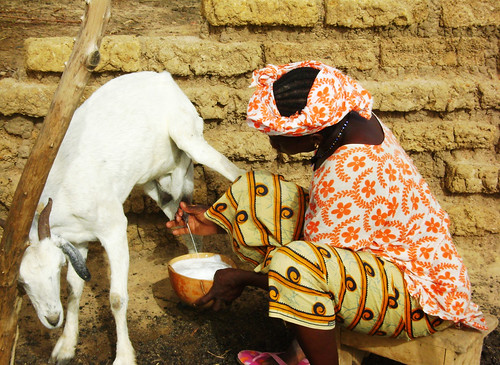 A woman milks one of her goats in Ségou District, Mali (photo credit: ILRI/Valentin Bognan Koné).
Almost two-thirds of the world’s 925 million poor livestock keepers are rural women, and women often predominate in urban agriculture. In Africa, most livestock products are sold in traditional or informal markets which offer livelihood opportunities as well as affordable, convenient and nutritious food to millions of people.
Women and men often play different roles in animal production and in the processing, sale and preparation of animal food products. Women are more often involved in keeping poultry and small ruminants while men tend to have greater involvement in rearing of cattle. Almost everywhere in rural Africa, women are responsible for preparing and cooking food for home consumption.
Animal slaughter is also often differentiated by gender, with women being responsible for killing poultry, typically inside the homestead, but most slaughter of larger animals outside the…
View original post 499 more words
 Farmers and development agents getting a practical training on apple tree management and scion selection in Holeta (photo credit: ILRILIVES).
The Livestock and Irrigation Value Chains for Ethiopian Smallholders (LIVES) project is testing different training approaches and methods such as couples training, mixed-participant training, coaching and mentoring, direct training and training of trainers (ToT). This blog story shares preliminary observations on potential advantages and disadvantages of a mixed-participant training approach used in LIVES.
Traditionally, specific-participant training offers targeted information to specialists such as development agents and farmers separately on the ground that they have different training needs and levels of knowledge and skills. In such contexts, mixing participants who have different training needs and levels of knowledge and skills is not the best way of providing effective task-oriented training. However, specific-participant training programs limit interaction, cross-learning and joint action among farmers, subject matter specialists and development agents.
To address this limitation, the LIVES project is experimenting with mixed-participant training where farmers…
View original post 437 more words
 The Budongo Forest Landscape, in western Uganda, has, in the recent past, seen a marked change in the land cover, predominantly from forest to sugarcane. The expansion of sugarcane has resulted in large areas of forest and bushland being converted to agriculture in the last 10 to 15 years, decreasing connectivity between forest patches. Kinyara Sugar Works Ltd (KSWL), established in the 1960s and rehabilitated in the 1980s, has grown rapidly in the past couple of decades – sugarcane fields now covering some 28,500ha. Until now their growth strategy appears to have been expansion at all costs, largely through the development of their outgrowers scheme. Today there are about 6,000 outgrowers who provide 60% of the company’s capacity. At present they are no longer taking on new outgrowers, due to capacity having been reached at the mill and their future growth plans focus far more on intensification and outgrower…
View original post 959 more words
The International Women’s day is commemorated worldwide on 8 March each year. ‘Make it happen’ is the 2015 theme. Towards this day, this blog will feature stories of partners collaborating with the International Livestock Research Institute (ILRI) in gender research. This first article features Pratyusha Basu, an associate professor of geography in the Department of Sociology and Anthropology at the University of Texas at El Paso, USA.
The trajectory of development is influenced by gender differences because development does not occur in a vacuum. It takes place in a social and economic context that is shaped by gender differences and understanding and challenging these differences is important in enabling development. ~ Pratyusha Basu
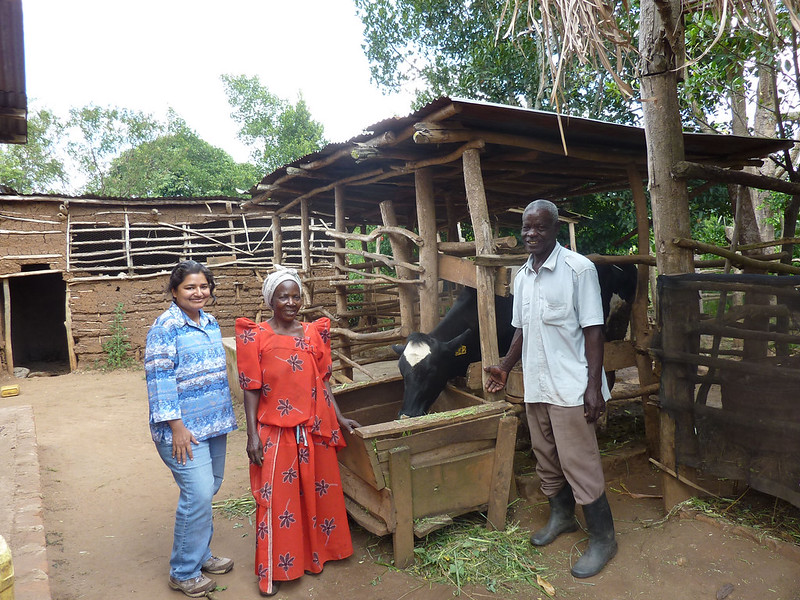 Pratyusha Basu (left) with dairy farmers in Uganda during a study of the EADD hub (photo credit: ILRI)
What inspired you to venture into gender science and research?
My interests in gender and development have been cultivated through both personal experiences and my research endeavours. I…
View original post 660 more words

“Healthy Food for a Healthy World,” aims to build awareness about the important role food can play in promoting health and alleviating malnutrition. We will publish one blog post each week exploring these issues, and the series will culminate in the release of a new Chicago Council report at the Global Food Security Symposium 2015 on April 16. Look for a new post each Wednesday, join the discussion using #globalag, and tune in to the Symposium live steam on April 16.
Source: www.thechicagocouncil.org
See on Scoop.it – Food Policy, Supply, Security & Safety
Read at : UNNews
New York, Sep 18 2009 10:05AM
Investing in agriculture alone will not solve the food crisis, a United Nations independent expert said today, calling for stepped-up political will to address structural flaws in global food production, which is at the crux of the current emergency.
“The right to food is not the right to be fed,” Olivier De Schutter told reporters today in Geneva after briefing the Human Rights Council. “It is the right to access the means to produce food or to obtain an income that enables the purchase of adequate food.”
World leaders pledged $20 billion in agriculture in poor countries in July at the meeting of the Group of 20 (G20) industrialized countries in L’Aquila, Italy, but he called for a more ambitious policy.
View original post 278 more words
New York, May 7 2009 1:00PM
An independent United Nations expert warned today that ramping up food production on its own would not alleviate the suffering of the hundreds of millions going hungry around the world.
Increased investment in agriculture, particularly in Africa, is necessary, but it must benefit those who are food insecure, stressed the UN Special Rapporteur on the right to food, Olivier De Schutter.
View original post 247 more words

==============
Read at :
http://www.africanagricultureblog.com/2011/03/un-report-reveals-overwhelming-benefits.html
by Brigid Darragh
The latest report out from the United Nations reveals farmers in developing nations can double food production in ten years’ time by simply transitioning from the use of chemical fertilizers and pesticides to ecological agriculture.
The report points to the success in eco-farming projects in 57 nations, where adopting natural methods for soil enrichment and protection against pests has resulted in an average of 80% in crop yield.
Olivier De Schutter is the UN Special Rapporteur on the right to food and author of the report, Agro-ecology and the Right to Food.
View original post 215 more words
 Kelifa is one of the farmers from Jimma who joined the training and study tour to learn about improved vegetable production techniques in Holeta and Meki (photo credit: ILRIGemeda Duguma.
Tomato is one of the most important irrigated vegetables in Seka Chekorsa District of Jimma zone, Oromia. According to an April 2013 report by the Livestock and Irrigation Value chains for Ethiopian Smallholders (LIVES) project, tomato is the third largest irrigated vegetable in the district, preceded only by potato and cabbage. Land under potato production is about 1375ha while that of cabbage and potato are 2438ha & 5277ha, respectively. Most tomato farming in Seka Chekorsa relies on use of local cultivars and traditional production practices.
Tomato staking is one of the practices that, if improved, could help smallholder farmers in Jimma improve the crop’s production. Staking is the process of supporting tomato plants with a wooden or metallic rods or mesh wire so that they take up less space…
View original post 494 more words
You can see it on the Triple Crisis Blog (which is worth a read if you are not familiar with it).
—
Last year international food markets suffered their third price spike in five years. The trigger was a terrible drought in the United States—a major agricultural producer and exporter. An unstable climate met low levels of international grain reserves, while U.S. ethanol gobbled up maize supplies. The resulting high and volatile prices struck yet another blow at the world’s already fragile food systems.
This is exactly the scenario we warned of a year ago when we published “Resolving the Food…
View original post 803 more words
“It is expected that in the long run large scale land acquisitions (LSLAs) for commercial farming will bring the technology required to close the existing crops yield gaps… We show how up to 300–550 million people could be fed by crops grown in the acquired land, should these investments in agriculture improve crop production and close the yield gap” – Authors
Recently, a paper was published that supports land grabbing for food security. The paper suggests that the land in question is ‘marginally utilised’ and landgrabbing will lead to more food being produced.
In the article, the authors argue,
It is expected that in the long run large scale land acquisitions (LSLAs) for commercial farming will bring the technology required to close the existing crops yield gaps… We show how up to 300–550 million people could be fed by crops grown in the acquired land, should these investments in agriculture improve crop production and close the yield gap.
The article is: Maria Cristina Rulli & Paolo D’Odorico (2014) “Food appropriation through large scale land acquisitions” Environmental Research Letters. 9: 064030 doi:10.1088/1748-9326/9/6/06403
http://iopscience.iop.org/1748-9326/9/6/064030/pdf/1748-9326_9_6_064030.pdf
Timothy Wise has posted a reply on the tripple crisis blog: “Land grabs” and Responsible Agricultural Investment in Africa
Here are some snippets:
In this case, these seemingly well-intentioned Italian economists came up…
View original post 354 more words
A new FAO report – Trends and Impacts of Foreign Investment in Developing Country Agriculture – Evidence from case studies – has just been released.
The report presents an analysis of the foreign investment in developing countries and as such, responds to concerns around the rapid increase in large-scale land acquisitions and other forms of investment in agriculture by foreign corporate actors. The report advances inclusive business models as the way forward, noting the need for continued growth in investment in agriculture, especially of food crops.
Case studies, which analysed the drivers and the main actors in each country, as well as the institutional process and national governance context of decision-making around investment and land allocation, include:
While the 2007-8 food price crisis drew attention to a 30 year fall in agricultural investment, it also raised concerns about who should…
View original post 1,769 more words
The delegation of La Via Campesina, gathered in Rome for the 41st session of the Committee on World Food Security (CFS), recognizes the CFS as the major international forum for debate and decision making on agricultural and food issues. LVC urges governments to take urgent action in favor of peasant and indigenous agriculture, which is the only model capable of feeding the world. On the occasion of World Food Day, we restate our commitment to struggle for Food Sovereignty as a solution to the multiple crises affecting our societies. We reaffirm our commitment to the recognition and enforcement of peasant rights.
The celebration of the 10th anniversary of the Guidelines on the Right to Food has shown a huge gap between rights and their priority, respect, and application in reality. In this sense, LVC expressed deep disappointment with the lack of…
View original post 407 more words
YAY! ADOPTED!
The Global Strategic Framework (available here: GSF 1st Version) has been endorsed by the Committee on World Food Security at its 39th Session.
103.J which is in brackets has been deleted.
The Committee:
i) expressed its gratitude to the Chair of the OEWG on the GSF, its Members and Participants, as well as the Secretariat, for the successful conclusion of the negotiations which have been conducted in an inclusive, transparent and participatory manner while recognizing the diversity of views on issues and policy gaps as referenced in chapter 6.
I am back in Rome, attending the three day consultation on the second draft of the Global Strategic Framework for Food Security and Nutrition (GSF) for the Committee on World Food Security.I will do my best to keep you updated through the blog as consultations (CFS inter-governmental working group meeting) proceed. In the mean time, here are the basics: At the 36th Session of CFS in 2010 a process was launched to create a Global Strategic Framework for Food Security and Nutrition (GSF). The purpose of the GSF is to improve coordination and guide synchronized action by a wide range of stakeholders in support of global, regional and country‐led actions to prevent future food crises, eliminate hunger and ensure food security and nutrition for all human beings. The GSF is designed to be a dynamic document to be updated by the CFS Plenary on the basis of regular CFS processes… |
View original post 152 more words
The Rights to Food are now the basis for the Food Security Framework Policy
Press release – La Via Campesina
(Rome, 18 October 2012) La Via Campesina welcomes the adoption on October 17, 2012, of the first version of the Global Strategic Framework for Food Security and Nutrition (GSF) of the Committee on World Food Security (CFS). The international farmers movement has participated intensively in its elaboration together with other organisations of the Civil Society Mechanism.
View original post 376 more words
 Artificial insemination (AI) activity in progress in Jimma zone (photo credit: ILRIGemeda Duguma).
In the past 50 years, little success has been registered in dairy cattle genetic improvement through artificial insemination (AI) in Ethiopia. A weak AI delivery system, absence of targeted technological interventions (such as synchronizing hormones, sex fixers, etc.) and weak extension services are some of the major bottlenecks hindering dairy cattle genetic improvement through AI.
In Jimma zone, Oromia region, in addition to the above bottlenecks, there is an assumption that cultural and religious issues influence the expansion of AI, but the Livestock and Irrigation Value chains for Ethiopian Smallholders (LIVES) project team in Jimma had doubts about this. The project team set out to investigate whether cultural and religious issues are really hindering the expansion of AI in the zone. A team of LIVES project staff, livestock development, health and administration officials from Dedo, Kersa and Seka Chekorsa districts and zone administrators designed…
View original post 349 more words
Hello from the beautiful Hohenheim University in Stuttgart, Germany.
I am lucky to be here to talk to the class on “Gender, Nutrition and the Right to Food” in the Faculty of Agriculture, Hohenheim University, Department for Gender and Nutrition.
The title of the lecture is: Voluntary Guidelines on the Responsible Governance of Tenure of Land, Fisheries and Forests in the Context of National Food Security (VGGT): A Case Study in the effectiveness of the Reformed Committee on World Food Security
Abstract: The Committee on World Food Security (CFS) was established upon the recommendation of the World Food Conference of 1974 as an intergovernmental body to serve as a forum for review and follow up of food security policies. In 2009 the Committee underwent a reform to become the most inclusive international and intergovernmental platform for all stakeholders to work together in a coordinated way to ensure…
View original post 268 more words
New paper out written by Dr. David Barling (Centre for Food Policy, City University) and me.
Unfortunately not open source but can be accessed here if your library has access: http://link.springer.com/article/10.1007/s12571-015-0429-x
This paper identifies the governance dynamics and the international policy architecture that frame contemporary policy actions in relation to the food supply and elaborates on key governance tensions that policy makers need to address to feed the world’s growing population by the mid-21st century. Two main dimensions of governance are examined: the international policy space, composed of nation states collaborating through international regimes with other international actors; and the private corporate led governance of the food supply. At the international levels, policy discontinuities and gaps are identified, for example between international environmental regimes and food security institutions. The so-called Washington Consensus has…
View original post 145 more words
Camel has itself all the capabilities, which are scattered in all the other known and useful animals. Every product of camel is useful. Even urine and faeces are valuable. Camel urine is used for medicinal purposes, otitis (ear infection), ascities (water belly) etc, and faeces is used as organic manure and fuel. The long bones of camel are used by jewelers in some Arab and African countries. The camel rearing communities have very firm links with camel culture, e.g. camel racing and dancing are very common.

Some of the many known and unknown qualities and significances of camel are presented in the ensuing lines.
View original post 2,398 more words
It’s a paradox: most American citizens have no idea that the US administration is revising its dietary guidelines. In fact, they might not even be familiar with the current recommendations – and even if they are, they’d be hard-pressed to change their eating habits due to these publications.
 The visualization of the current (2010) dietary guidelines – which I actually didn’t find all that bad!
This reality however does not prevent industry organizations and lobbying groups from keeping an eagle eye on the current revision process, and being up in arms about the Scientific Report of the 2015 Dietary Guidelines Advisory Committee that was recently published.
The 571-page tome‘s major message:
The dietary patterns of the American public are suboptimal and are causally related to poor individual and population health and higher chronic disease rate. Unfortunately, few improvements in consumers’ food choices have occurred in recent decades. On average, the U.S. diet is low in vegetables, fruit…
View original post 808 more words
So… I have a really exciting announcement for you – Food (Policy) For Thought is growing! We [now I can say “we”! Woot!] have a new guest contributor, Helena! I’ll let her introduce herself in person, so without further ado – welcome on board, Helena!
Hey everyone. I’m Helena from Stockholm and I will from now on be contributing on occasion to Janina’s fantastic blog. As a student of agriculture food and environmental policy analysis (AFEPA) myself, currently domesticated in the small but eventful city of Bonn in Germany, I share a passion for sustainable food systems with Janina. I’m especially geeky when it comes to policy, international solidarity and environmental sustainability so you will see much of those topics coming from me and I hope you will find some of it interesting. Please feel free to comment on any topic, as most of the content will be my own thoughts and…
View original post 573 more words
“What we are still mostly seeing is a model of production that cannot prevent the degradation of soils and the loss of biodiversity – both of which are essential goods, especially for future generations. This model must be reviewed. We need a paradigm shift,” – FAO
Photo credit: UN News Centre
Agriculture workers collect carrots on a farm in Chimaltenango, Guatemala. Photo: World Bank/Maria Fleischmann
The model of agricultural production that predominates today is not suitable for the new food security challenges of the 21st century and the need to be more sustainable, inclusive and resilient, the head of the United Nations Food and Agriculture Organization (FAO) said today.
“Since food production is not a sufficient condition for food security, it means that the way we are producing is no longer acceptable,” FAO Director-General José Graziano da Silva told ministers, scientists, farmers, and members of civil society at the France-hosted International Forum on Agriculture and Climate Change held in Paris.
“What we are still mostly seeing is a model of production that cannot prevent the degradation of soils and the loss of…
View original post 120 more words
Precision feeding key to sustainable livestock production, says UN body
The compound feed industry needs to get behind initiatives that foster precision feeding on small farms in developing markets to help optimize use of on-farm ingredients backed by commercial feed mixes to plug nutritional gaps, says the FAO.
Harinder Makkar, livestock production officer at the UN’s Food and Agriculture Organization (FAO), told FeedNavigator that more balanced rations will ensure “more sustainable livestock production globally as such feeding has been shown to promote methane and nitrogen excretion reduction and boost profits for small scale farmers due to increased animal productivity.”
Imbalanced nutrition is one of the major factors responsible for low livestock productivity, poor reproduction efficiency, high cost of production and high emission of greenhouse gases per unit of milk in developing countries, said the FAO officer.
Promising animal nutrition projects
In that context, the FAO’s animal production and health division recently ran a video competition in a bid to find promising animal nutrition technologies or interventions with the potential for replication and upscaling in small scale livestock farms in those regions.
The winners, announced last month , were chosen on the capacity of their project to increase livestock productivity and income of farmers.
One of the initiatives selected by a four member panel comprising of communication and technology transfer, media and subject specialists is a project run by the National Dairy Development Board (NDDB) of India.
That Board has developed a program in which milk producers are advised to balance the ration of their lactating animals in a cost effective manner, using locally available feed resources and area-specific mineral mixtures.
“Feeding a balanced ration not only improved animal productivity but also led to reduction in methane emission per liter of milk by 10 to 15%. There was also reduction in nitrogen excretion in manure,” said Makkar.
He said the NDDB initiative, which is facilitated by farm extension workers throughout India, is hoping to include 1.8 million farmers by 2017.
“This kind of project shows where international compound feed producers could play a role in education and provision in terms of how to address protein and mineral deficiencies in rations, and enhance milk production yields of developing countries,” said Makkar.
He said the quality of videos received was generally very high, both in terms of content and presentation, with most focused on the area of ruminant nutrition. “Our end goal was the promotion of research focusing on the needs of smallholder farmers along with enabling knowledge exchange and transfer,” he added.
Analysis of nutritional quality of feed
Another one of the initiatives selected by the jury involves the use of near infrared spectroscopy (NIRS) portable devices to enable in situanalysis of nutritional quality of feed resources and thus a real-time adjustment of the animal ration.
“Such analysis allows farmers optimal management of pastures and fodder stocks. In many developing countries, a major constraint faced by farmers is the feeding of their livestock.
The knowledge about the quality of the feed is crucial to improve diet formulation and to increase the animal productivity. But, farmers rarely send feed ingredients, especially forages, to laboratories for analysis because the analyses are very expensive and usually take a long time,” said the FAO representative.
NIRS is an analytical method based on the principle of electromagnetic radiation absorption by the matter. “The cost of such NIRS portable devices will evidently drop to a more affordable level as you get wider take-up but they would still be too costly for single small farmholder to use. However, they could be managed at extension body level,” said Makkar.
Mulberry meal for pigs
The work being done by the Cuba’s Research Station of Pastures and Forages Indio Hatuey, in close collaboration with livestock producers, was also lauded by the FAO.
The station identified major constraints faced by small scale pig farmers including the lack of local concentrates and poor manure nutrient management.
The video shows how mulberry leaf derived meal can be high nutrient containing feed for pigs. “Colombia and Cuba, out of necessity, have been at the forefront of research into unconventional feed resources,”said Makkar.
The project also highlights the efficient use of pig manure for generation of biogas and the conversion of the residues of biogas production into fertilizer for food and feed crops.
Precision feeding key to sustainable livestock production, says UN body.
Chesney McOmber has joined the International Livestock Research Institute (ILRI) as a graduate fellow for the next four months under the Livelihoods, gender and impact (LGI) program. She is a doctoral student at the University of Florida in the field of political science. Her research interests within this field of study are gender equity, social capital, and empowerment- particularly within Africa. Chesney’s dissertation research will focus on the impacts of male absence, largely caused by migration, on rural women’s empowerment. While her final dissertation will explore this question in Morocco as well as Kenya, her fieldwork will be based in Laikipia and Nyando during her time with ILRI. Of central interest to Chesney’s project is the use of qualitative participatory tools to understand local conceptualizations of empowerment as they are constructed in various contexts. It is in this methodological aspect that she will be most closely collaborating with the LGI…
View original post 7 more words
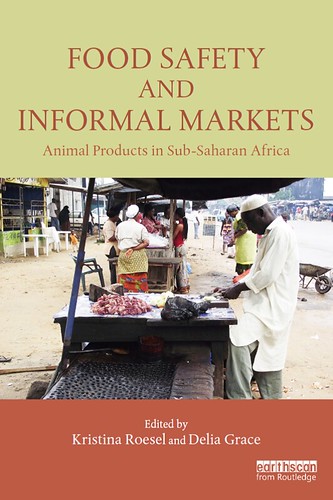
Animal products – meat, milk, eggs and fish – are vital components of the diets and livelihoods of people across sub-Saharan Africa. However, these nutritious food products are also the most risky. Most food-borne disease is caused by perishable foods: meat, milk, fish, eggs, fruits and vegetables.
Food borne-disease can be serious. In a minority of cases, it can cause epilepsy, paralysis, kidney failure and death. In addition, the global economic burden of food-borne disease is significant. Annually, food-borne disease is estimated to cost US$78 billion in the United States of America, US$14 billion in China and US$3 in Nigeria.
Over 80% of the meat, milk, eggs and fish produced in developing countries is sold in traditional or informal markets. These markets are accessible, sell affordable food and provide market access to small-scale farmers. However, informal markets often lack adequate refrigeration, inspection and control of food-borne disease.
For over a…
View original post 293 more words
Development of regulations, guidelines, application forms protocols and review of Dossier format
View original post 277 more words
Read at :
http://seattletimes.nwsource.com/html/nationworld/2017322825_apusfoodandfarmgates.html
Associated Press
KIRKLAND, Wash. —
Bill Gates has a terse response to criticism that the high-tech solutions he advocates for world hunger are too expensive or bad for the environment: Countries can embrace modern seed technology and genetic modification or their citizens will starve.
When he was in high school in the 1960s, people worried there wouldn’t be enough food to feed the world, Gates recalled in his fourth annual letter, which was published online Tuesday. But the “green revolution,” which transformed agriculture with high-yield crop varieties and other innovations, warded off famine.
Gates is among those who believe another, similar revolution is needed now. The Bill & Melinda Gates Foundation has spent about $2 billion in the past five years to fight poverty and hunger in Africa and Asia, and much of that money has…
View original post 88 more words


 Dr. Bukar Ali USMAN, mni
