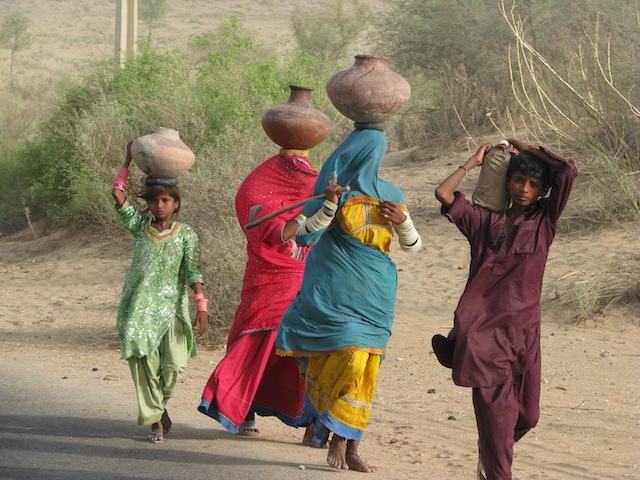
Women farmers are key to a food-secure Africa (AfricaFiles / IPS)

Willem Van Cotthem's avatarDESERTIFICATION

Read at :

http://www.africafiles.org/article.asp?ID=26404

Summary & Comment: Africa still struggles with cultural and social barriers that block women’s quest for success, but small strides are being made. It also makes sense that the leadership of Africa’s biggest agriculture organisation is now a woman. M. Makoni

Author: Busani Bafana, Bulawayo
Date Written: 11 May 2012
Primary Category: Food and Land
Document Origin: Inter Press Service
Secondary Category: Gender
Source URL: http://www.ips.org/africa/

————–

http://www.ips.org/africa/2012/05/q-and-a-women-farmers-are-key-to-a-food-secure-africa/

While women constitute the majority of food producers, processors and marketers in Africa, their role in the agricultural sector still remains a minor one because of cultural and social barriers. According to the Food and Agriculture Organization of the United Nations (FAO), women are the majority of the world’s agricultural producers, supplying more than 50 percent of the food that is grown globally. And in sub-Saharan Africa the number is higher, as women grow 80 to 90 percent…

View original post 51 more words

Posted in Uncategorized | Leave a comment

Women’s critical role as food producers, consumers and family carers (Eldis)

Willem Van Cotthem's avatarDESERTIFICATION

Read at :

http://www.eldis.org/go/display&type=Document&id=59402?utm_source=feedburner&utm_medium=feed&utm_campaign=Feed%3A+eldis-agriculture+%28Eldis+Agriculture%29

Innovative approaches to gender and food security: insights, issue 82

Food security and gender insights

Authors: S. Turrall (ed)
Publisher: Knowledge Services, IDS, 2012

This issue of insights shows how development policy and practice can potentially improve food security while supporting women’s  empowerment. They can focus on women’s critical role as food producers, consumers and family carers, while transforming gender norms and inequalities within households and communities. There is no one size fits all approach to achieving these outcomes, but it is vital to ensure that food security interventions:

  • are informed by both women and men at the local level in their design and implementation
  • are tailored to specific contexts, given the often vast disparities in experience, needs and gender roles within countries and regions
  • take into account and respect women’s instrumental role in food production
  • involve women and men equally in decision-making around food production…

View original post 4 more words

Posted in Uncategorized | Leave a comment

Gender and food security: how to bolster food production ?

“Providing women with equal access to productive resources and opportunities may be the key to bolstering the struggling global agricultural sector”

Willem Van Cotthem's avatarDESERTIFICATION

Photo credit: Google

Providing women with equal access to productive resources and opportunities may be the key to bolstering the struggling global agricultural sector

Africa: Towards Gender – Just Food and Nutrition Security

Institute of Development Studies (Brighton)

EXCERPT

BLOG

This week sees the launch of a new resource on Gender and Food Security from the IDS-based BRIDGE team. The Gender and Food Security Cutting Edge Pack makes the case for a new, gender-aware understanding of food security, arguing that partial, apolitical and gender-blind diagnoses of the problem of food and nutrition insecurity are leading to insufficient policy responses and the failure to realise the right to food for all people.

Achieving Gender Equality in Agriculture - http://www.usaid.gov/sites/default/files/nodeimage/5842085889_620656d5fe_b_0.jpg Achieving Gender Equality in Agriculture – http://www.usaid.gov/sites/default/files/nodeimage/5842085889_620656d5fe_b_0.jpg

How can we better achieve nourishing food for all?

The pack identifies examples of practices, policies and programmes at the regional, national and local levels which use strategies that are often simple, yet innovative, to address food…

View original post 97 more words

Posted in Uncategorized | Leave a comment

agri4africa

“We firmly believe that the economic development and prospering of the African continent, also as economic and trading bloc, is inextricably linked to its ability to unlock the economic potential and value of its rich agricultural resources, and that commercial farming and agribusiness is essential for this to happen.

Source: www.agri4africa.com

See on Scoop.itFood Policy, Supply, Security & Safety

Posted in Uncategorized | Leave a comment

LIVES tests ‘learning logs’ and ‘action planning’ for participatory learning and knowledge transfer

Fanos Mekonnen's avatarLIVES-Ethiopia

Knowledge center use and management training

Knowledge centre management and use training workshop in Dessie, Jun 14-15 2014 (photo credit: LIVES).

Training is one of the most widely used capacity development approaches to develop knowledge, skills and attitudes of individuals. Many organizations invest resources and train their employees to improve organizational performance. However, research shows that only about 10% of training programs by organizations transfer knowledge to improved performance in the workplace.

A number of factors affect transfer of knowledge and skills including trainee characteristics, training design, delivery methods and processes as well as work environment. To address these transfer problems, a number of strategies can be embedded in the design and delivery of training programs.

This story describes two knowledge transfer strategies ‘learning logs’ and ‘action planning’  which are being tested and used in the Livestock and Irrigation Value Chains for Ethiopian Smallholders (LIVES) project to facilitate application of knowledge and skills from training events to the work environment.

Learning…

View original post 334 more words

Posted in Uncategorized | Leave a comment

Conflict & Food Security: Two sides of the same coin?

canwefeedtheworld's avatarOne Billion Hungry: Can We Feed the World?

By Stephanie Brittain

Food insecurity and malnutrition can be ended sustainably within a generation, it is said. However, with one in eight people in the world today still undernourished and approximately two billion suffering from micronutrient deficiencies, the challenge is immense.

Further, the world’s population is expected to reach 9 billion by 2050 and at the current rate of development, the number of people at risk of hunger in the developing world will grow from 881 million in 2005 to more than a billion people by 2050.

78 percent of the world’s poor live in rural areas, and agriculture remains fundamental for their economic growth and for food security for our expanding global population. Further, agricultural development is found to be about two to four times more effective in raising incomes among the poorest than growth in other sectors.

Conflict impedes agricultural development

Credit: UN/Tobin Jones 2013 Credit: UN/Tobin Jones…

View original post 724 more words

Posted in Uncategorized | Leave a comment

Poorly Hen, Egg Yolk Peritonitis and Other Problems

Posted in Uncategorized | Leave a comment

Position paper by ILRI highlights the role of livestock in food and nutrition security

Tezira Lore's avatarAgHealth

Typical mixed crop-livestock farming in western Kenya Typical mixed crop-livestock farming in western Kenya. Mixed crop-livestock farming systems currently produce most of the world’s meat, milk and staple crops (photo credit: ILRI/Pye-Smith).

The January 2013 issue of Animal Frontiers, the world’s premier review magazine in animal agriculture, features a series of articles on the contribution of animal agriculture to global food security.

The International Livestock Research Institute (ILRI) has contributed to this series with a position paper that highlights the direct and indirect effects of livestock on food and nutrition security. The paper also considers the future prospects of mixed crop-livestock farming systems that produce most of the world’s milk, meat and staple crops.

The paper by ILRI director general Jimmy Smith and colleagues begins with a brief overview of the global challenge of food and nutrition security and the net impact of livestock on global food supply. This is followed by a review…

View original post 587 more words

Posted in Uncategorized | Leave a comment

Need for technology to help harness water more efficiently, particularly in agriculture

“Unfortunately, the world has not really woken up to the reality of what we are going to face in terms of the crises as far as water is concerned,” IPCC Chair Rajendra Pachauri told participants at a conference on water security.

Willem Van Cotthem's avatarDESERTIFICATION

Photo credit: Pixabay

Drought

Africa: World Has Not Woken Up to Water Crisis Caused By Climate Change – IPCC Head

Thomson Reuters Foundation

New Delhi — Water scarcity could lead to conflict between communities and nations as the world is still not fully aware of the water crisis many countries face as a result of climate change, the head of the U.N. panel of climate scientists warned on Tuesday.

The latest report from the U.N. Intergovernmental Panel on Climate Change (IPCC) predicts a rise in global temperature of between 0.3 and 4.8 degrees Celsius (0.5 to 8.6 Fahrenheit) by the late 21st century.

Countries such as India are likely to be hit hard by global warming, which will bring more freak weather such as droughts that will lead to serious water shortages and affect agricultural output and food security.

“Unfortunately, the world has not really woken up…

View original post 109 more words

Posted in Uncategorized | Leave a comment

“Nobody Wants to Rule a Hungry People” – Or Do They?

Janina's avatarFood (Policy) For Thought

During my agricultural history class, we talked about the reason why agriculture is often seen as a “special” economic sector worthy of disproportionate governmental support (just ask the EU), and agreed that it was because it’s a matter of survival that your agricultural sector works properly – any society is literally dependent on the fact that enough food is produced for everybody to not starve, and even more so, any ruler is dependent on the fact that his people don’t go hungry enough to stage an uprising; as has happened repeatedly during history. Yet, the blanket statement “Nobody wants to rule a hungry people” irked me, since there have been several instances in history where famines were purposefully initiated to subdue a particular part of a society, or at least where nothing was done to ease the suffering though it would have been politically feasible. And with that, I present to…

View original post 1,443 more words

Posted in Uncategorized | Leave a comment

World War II – Was It All About The Food?

Janina's avatarFood (Policy) For Thought

Hey hey! Just checking in after my first day of work – it’s going to be an exciting time for sure! I am sure to learn loads about climate change and sustainable development policies, and share it all with you – as well as some of my thoughts on my last placement! For now, though, let me share something I watched over dinner:

This is a really brilliant take on World War II history, breaking it down over a war for resources – namely, the possibility of achieving food independence. It also takes on a long-ignored issue, namely that of starvation in the colonies (I already once mentioned this in my post on famines). And shines a thoughtful light onto the possibility of future conflict, especially as we are heading into a time of resource scarcity and calls for ‘food independence’ and ‘autarky’ are appearing again in the speeches…

View original post 19 more words

Posted in Uncategorized | Leave a comment

Global Food Security Governance: Civil society engagement in the reformed Committee on World Food Security

FoodGovernance's avatarFood Governance

I am most excited that my book Global Food Security Governance: Civil society engagement in the reformed Committee on World Food Security is now available for pre-order!

It is part of the  Routledge Studies in Food, Society and the Environment

It is not exactly priced for accessibility so I encourage you to request your library to order it instead. That way you can access it for free!

You can do that at this using this link and click on “Recommend to Librarian”.

Large Image

Some reviews:

“In Global Food Security Governance, Jessica Duncan provides a timely and thoughtful analysis of the recent reform of the Committee on World Food Security and its evolving role in international policy-making on issues of hunger and nutrition. Both empirically rich and theoretically grounded, the book highlights the central role of civil society in reshaping food security governance and assesses the challenges…

View original post 306 more words

Posted in Uncategorized | Leave a comment

Next Brussels Briefing – Data: the next revolution for agriculture in ACP countries?

ctabrussels's avatarBrussels Development Briefings

The next Brussels Development Briefing n.40 on the subject of “Data: the next revolution for agriculture in ACP countries?” will be held in Brussels on the  morning of 18th February 2015 at the ACP Secretariat (451 Avenue Georges Henri, 1200 Bruxelles, Room C).
The explosion of digital data offers new technological opportunities for enhancing agricultural development; it has also become a key asset for all economies in the world. By looking at significant trends, approaches and experiences in using open data for food and nutrition security, this Briefing shall shed light on the impacts of the global data revolution for agriculture.

The increasing volume of real-time data represents both a challenge and an opportunity for developing countries, and in particular, Africa, the Caribbean and the Pacific (ACP).  Harnessing the opportunities offered by this new digital landscape of open data systems shall be crucial: to meet acute data gaps throughout the value chain; to…

View original post 82 more words

Posted in Uncategorized | Leave a comment

Local vendors, not supermarkets, are key to Africa’s food security

Susan MacMillan's avatarILRI Clippings

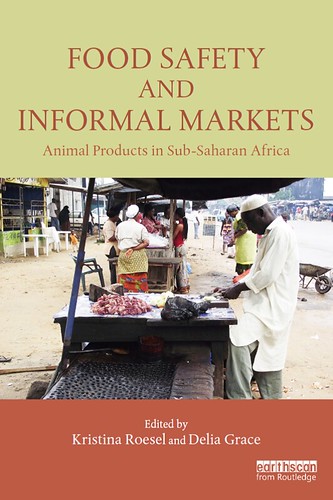
Food Safety book cover

A book launched in Nairobi, Kenya, yesterday has lots to say to nutritionists and policymakers and government officials in Africa inclined to view the continent’s many ‘informal’ food markets with dismay. They’re not going away anytime soon, and they’re safer than they look. And they can be made even safer with the right support, the book reports. 

‘Traditional markets sell more than 85 percent of the food consumed in sub-Saharan Africa, and rather than replacing them with Western-style supermarkets, governments should train local vendors to improve food safety, researchers say.

‘Contrary to popular conceptions, open-air local markets often have safer milk and meat than supermarkets in much of Africa, according to a book released on Tuesday by the International Livestock Research Institute (ILRI).

‘Local vendors offer fresher products to several hundred million low-income consumers, and many supermarkets still do not have well-regulated supply chains or stable refrigeration systems to…

View original post 380 more words

Posted in Uncategorized | Leave a comment

Setting international livestock research priorities: Some challenges suggested during ILRI@40 events

Peter Ballantyne (ILRI)'s avatarILRI Clippings

In 2014, to mark four decades of international livestock research, the International Livestock Research Institute (ILRI) held a series of events on the ways in which livestock research advances food and nutritional security, economic well-being and healthy lives.

At each event, we asked participants to comment on two questions: Looking to 2054, what are THE two most critical livestock-related challenges we must answer through research? What is THE most promising ‘best bet’ opportunity we should invest in to achieve better lives though livestock in 2054.

The powerpoint below gives a summary of the responses provided by participants:

View original post

Posted in Uncategorized | Leave a comment

First help the local people to decent food

Willem Van Cotthem's avatarDESERTIFICATION

Photo credit: WVC 1997

Photo taken at the start of the community garden photographed 12 years later by Willemien (see photo of 2009-02 in Niou). At the first training session, the local women learn how to apply the soil conditioner TerraCottem.

Do hungry people need trees or a garden?

by Prof. Dr. Willem Van Cotthem – University of Ghent (Belgium)

Four years ago, a friend has sent a message, in which a short paragraph got my special attention:

The …………………… (name) Movement started a project in the Senegal many years ago. I participated in the information campaign. The field workers planted about 20.000 Acacia trees. Visiting the project one year later they saw that all the little trees dried out.  The local people answered that they had not enough water for the trees; they used it for their cows and goats.  But how could we plant 20.000 trees with…

View original post 432 more words

Posted in Uncategorized | Leave a comment

Africa Biosciences Challenge Fund (ABCF) – Call for applications 2015

Liya Dejene's avatarILRI Clippings

The Biosciences eastern and central Africa-International Livestock Research Institute (BecA-ILRI) Hub capacity building program, which is also known as the Africa Biosciences Challenge Fund (ABCF), is seeking applications for short- to medium-term research projects that can be undertaken at the BecA-ILRI Hub in Nairobi, Kenya.

The ABCF operates in the critically important intersection between agricultural research and development (ARD), food security, and individual and institutional capacity building. The program is delivered through i) a visiting scientist program (the ABCF fellowship) targeting scientists and graduate students from African national agricultural research organizations and universities to undertake biosciences research-for-development projects at the BecA-ILRI Hub and ii) annual training workshops to support the acquisition of practical skills in molecular biology, genomics, bioinformatics, laboratory management, laboratory safety, equipment maintenance and scientific writing.

The purpose of the ABCF fellowship program is to develop capacity for agricultural biosciences research in Africa, to support research projects…

View original post 160 more words

Posted in Uncategorized | Leave a comment

What is the role for citizen science in a Big Data Revolution?

canwefeedtheworld's avatarOne Billion Hungry: Can We Feed the World?

By Katrin Glatzel

One of the recommendations of the new Montpellier Panel report ‘No Ordinary Matter: Conserving, restoring and enhancing Africa’s soils’ suggests that a Big Data Revolution is needed to fill the huge gaps in data availability, especially in Africa. Regularly updated data on soil types, locations, qualities and degradation ought to be significantly enhanced and the information made available in a timely manner to allow for the targeted and selective use of inputs. Getting this data, however, is not an easy task and would require scores of researchers and public sector funding – and time. The use of advanced remote-sensing systems, dense networks of local weather information and citizen science can help to provide this information.

Citizen science, defined by the Oxford English Dictionary (2014) as the “scientific work undertaken by members of the general public, often in collaboration with or under the direction of professional scientists…

View original post 705 more words

Posted in Uncategorized | Leave a comment

Malnutrition, food aid and corruption

Willem Van Cotthem's avatarDESERTIFICATION

Photo credit: IPS

Children Starving to Death in Pakistan’s Drought-Struck Tharparkar District

By Irfan Ahmed

EXCERPT

Recurring drought meets bad management

The tragedy did not unfold overnight. According to Amar Guriro, a Sindh-based journalist who has reported extensively on the region, inhabitants of this district that borders the Indian states of Rajastan and Gujarat are facing a drought for the third consecutive year.

Despite ample evidence that additional food stocks are needed between the months of July and September, typically the monsoon season, in the event of inadequate rainfall, the Pakistan People’s Party (PPP)-led Sindh government failed to develop and execute contingency plans for the vulnerable residents.

“The poor government response multiplied the intensity of the disaster. Underfed children are dying in large numbers, and so are the cattle, due to unavailability of fodder,” Amar told IPS.

Anything below 200-300 mm of rainfall during the monsoon months signals a “bad…

View original post 90 more words

Posted in Uncategorized | Leave a comment

Why the tsetse fly might be the cause of Africa’s under-development

Posted in Uncategorized | Leave a comment

Nigeria: Applicants Wanted for Agriculture Youth Empowerment Scheme (Agric YES), Lagos

Posted in Uncategorized | Leave a comment

Short ‘Livestock and Fish’ animated video on what ‘capacity development’ is, what it does, why and with whom

Susan MacMillan's avatarILRI Clippings

Pirosmani_FarmerWithABull-1916.

What is the CGIAR Research Program on Livestock and Fish doing to develop capacity to enhance smallholder agricultural value chains in Asia, Africa and Latin America?

Niko Pirosmani, Farmer with a Bull, 1916 (via Wikiart).

Take a look at this wonderfully animated 6-minute video to find out.

As you’ll learn from the video, the CGIAR Livestock and Fish Research Program is being implemented by four CGIAR centres:

  1. International Livestock Research Institute (ILRI), the lead centre, is based in Kenya
  2. WorldFish, in Malaysia
  3. International Center for Tropical Agriculture (CIAT), in Colombia
  4. International Centre for Agricultural Research in the Dry Areas (ICARDA), formerly in Syria, now moved to Jordan and elsewhere due to the ongoing conflicts in Syria

The program is helping small-scale livestock and fish producers to intensify and commercialize their production, processing and marketing activities.

The Livestock and Fish program is working largely…

View original post 141 more words
Posted in Uncategorized | Leave a comment

WECA: Creating Wealth through Agribusiness in Ondo State, Nigeria

Posted in Uncategorized | Leave a comment

Yes, the hungry can feed themselves !

Willem Van Cotthem's avatarDESERTIFICATION

Photo credit WVC 2011-09 – Bottle towers for growing vegetables and herbs in a minimal space, anywhere on earth.

Container gardening against hunger and child malnutrition

Author: Willem Van Cotthem

EXCERPT

No one can deny that container gardening is “an easier ballgame” than growing plants in the ground, particularly in the drylands. There are many advantages in avoiding plant growth in a poor dryland soil by using a better substrate in containers (improved soil without any pests, bigger water retention capacity by limiting evaporation, less weeds, more oxygen, etc). Most people are not aware of the fact that plants can do with limited ground space, even grown in competition with other species in a container.

Not only “savvy families” are beginning to combine container gardening and cultivating fresh food. It is more and more recognized that this type of gardening is a key for combating hunger and child malnutrition. Indeed…

View original post 124 more words

Posted in Uncategorized | Leave a comment

New Horizons: The 2015 Food Policy Agenda

Janina's avatarFood (Policy) For Thought

Happy New Year! I hope you had a great party and/or a relaxing night to celebrate the new year, whichever you prefer. Although it does seem like an arbitrary cut in time, the New Year always gives a great opportunity to reflect on the past and focus on the future. Without further ado, here is what I see on the 2015 food policy agenda so far. Please comment with additions if you know of more large-scale issues that will come up!

Bonus: Check out my 2014 edition to see what was true, what was missing, and what is still on the table 🙂

IMG_9119

USA: The new political balance of power between Democrats and Republicans bodes ominous changes in American food and nutrition policy.

According to Politico, the new Republican congress is preparing a number of initiatives to undo the strides taken by the Obama administration in the past year…

View original post 895 more words

Posted in Uncategorized | Leave a comment

Slum livestock agriculture

“Slums are unplanned squatter human settlements in peri-urban and urban areas where more than 800 million people live. These densely populated areas lack basic public services. Livestock raised in these conditions compete with humans for space and water, and pose a risk to human and animal health” – ILRI

Susan MacMillan's avatarILRI Clippings

TraylorBill_Composite1

TraylorBill_Composite2All artwork on this page by Bill Traylor.

Maria Teresa Correa, an epidemiologist and public health professor at North Carolina State University, and Delia Grace, a veterinary epidemiologist and food safety scientist at the International Livestock Research Institute (ILRI), have an interesting chapter on an interesting subject — Slum livestock agriculture — published in the Encyclopedia of Agriculture and Food Systems (2014).

Chapter abstract
‘Slums are unplanned squatter human settlements in peri-urban and urban areas where more than 800 million people live. These densely populated areas lack basic public services. Livestock raised in these conditions compete with humans for space and water, and pose a risk to human and animal health. Notwithstanding the risk of disease transmission, slum livestock agriculture plays an essential role in the livelihoods of people and deserves consideration in urban planning and policy making.’

TraylorBill_BrownGoat

Below are some of the arresting facts and figures authors Correa and…

View original post 413 more words

Posted in Uncategorized | Leave a comment

Farming must feed more people more sustainably

Willem Van Cotthem's avatarDESERTIFICATION

Agriculture in the Sahara desert (Smara, S.W. Algeria) – Production of vegetables applying the soil conditioner TerraCottem – UNICEF project (Photo credit Eng. Taleb BRAHIM 2009-04)

Sustainable food production: Facts and figures

Speed read:

  • Soil damage, climate change, water and energy availability are all challenges for farming
  • S&T have made key contributions to increasing food production, but new strategies are needed
  • Sustainable agriculture can benefit from ‘system’ approaches and farmers’ participation

EXCERPT

Advances in agricultural science and technology (S&T) have contributed to remarkable increases in food production since the mid-twentieth century. Global agriculture has grown 2.5–3 times over the last 50 years. [1] This has let food production keep pace with human population growth so that, overall, there are enough calories produced per capita. However, progress toward reducing hunger is variable across the world.

Hunger and malnutrition affect every aspect of human development and persist for various reasons including unequal…

View original post 71 more words

Posted in Uncategorized | Leave a comment

Register for the Global Forum for Innovations in Agriculture (GFIA 2015)

kalusam's avatarKalu Samuel's Blog

Global Forum for Innovations in Agriculture | GFIA 2015

The 2015 edition of the Global Forum for Innovations in Agriculture (GFIA 2015) will take place from 9 to 11 March 2015 in Abu Dhabi, United Arab Emirates.

GFIA 2015, will attract professionals from around the world across the entire value chain, represent an event of paramount importance for all stakeholders involved at any level in sustainable agriculture.

More specifically, the Forum will comprise six conferences:

View original post 195 more words

Posted in Uncategorized | Leave a comment

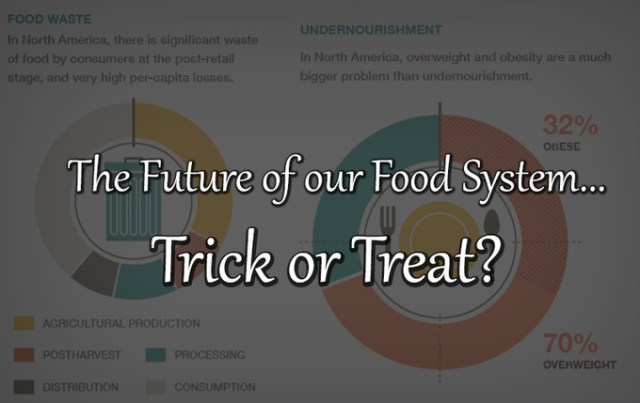
Future of food… Trick or Treat?

Source: gx196.infusionsoft.com

See on Scoop.itPrecision Agriculture

Posted in Uncategorized | Leave a comment

What is desertification and its UN-Convention ?

Willem Van Cotthem's avatarDESERTIFICATION

Source (marked with highlights): UNCCD

Facts and figures, Causes, Impact, Poverty, Sustainable Development

EXCERPT

Desertification is a phenomenon that ranks among the greatest environmental challenges of our time. Yet most people haven’t heard of it or don’t understand it.

Although desertification can include the encroachment of sand dunes on land, it doesn’t refer to the advance of deserts. Rather, it is the persistent degradation of dryland ecosystems by human activities — including unsustainable farming, mining, overgrazing and clear-cutting of land — and by climate change.

————————

PHOTO above : Successful building of a schoolgarden in Pretoria (Island of Sal, Cabo Verde, 2003-03), a TC-Dialogue Foundation project. (Photo WVC)

View original post

Posted in Uncategorized | Leave a comment

African biosciences research critical for transforming African smallholder agriculture

Susan MacMillan's avatarILRI Clippings

Gity Behrevan during the BecA-ILRI-Sweden partnership review in Nairobi, November 2013 (photo credit: BecA-ILRI Hub/Tim Hall).

‘Biosciences research could transform Africa’s agriculture and lead to food and nutrition security, but little is being done locally to support its funding, experts say.

‘Researchers and policymakers who attended a review meeting of the Biosciences eastern and central Africa-International Livestock Research Institute (BecA-ILRI)-Sweden partnership in Kenya last month (10-14 November) expressed concern that African governments are not investing enough in research that promotes biosciences despite its potential to improve agriculture.

‘“Our research programmes are mainly funded and supported by external donors,” says BecA-ILRI Hub director Appolinaire Djikeng. “This poses sustainability risks to our work if the donors withdraw. Djikeng urges African universities to be more involved in developing biosciences. . . .

‘The delegates commended the Swedish International Development Cooperation Agency (Sida) for supporting the partnership which runs various research programmes aimed…

View original post 204 more words

Posted in Uncategorized | Leave a comment

Ethiopia’s Livestock Master Plan makes a public splash in the research community of the ‘African livestock giant’

Ewen Le Borgne's avatarILRI Clippings

An Ethiopian ‘Livestock Master Plan’ is a big, and recent, example of cooperation between the International Livestock Research Institute (ILRI) and the Government of Ethiopia. That plan aims to change the face of livestock research and development programs within Ethiopia — not a minor step forward for a country deemed the livestock giant of Africa (see maps on the Livestock Geo-Wiki).

Directly following the recent ‘summit of the systems‘, a meeting to develop better integrated activities between the international CGIAR research family and the Ethiopian Agricultural Research System (EARS), HE Gebregziabher Gebreyohannes, state minister for livestock resources development,  publicly presented Ethiopia’s Livestock Master Plan on the premises of ILRI Ethiopia.

A collaborative project spearheaded by ILRI’s Barry Shapiro, the Livestock Master Plan proposes strategic recommendations covering a 15-year period that will feed into a second-generation National Growth and Transformation Program (GTP). The team behind the plan had already presented a poster about this…

View original post 438 more words

Posted in Uncategorized | Leave a comment

Integrating livelihoods and rights in livestock value chain research for women empowerment development programs

Dorine Odongo's avatarILRI policies, instititions and livelihoods program

Mozambique, Chokwe, Lhate village
In the recent past, there has been an increase in calls for integration of gender in agricultural research and development (R&D) owing to the recognition that gender-blind interventions have ended up exploiting women in order to empower households. In response to the call, R&D actors are putting in place measures to guarantee that R&D projects are gender-integrated with a focus on increasing provision for women’s economic empowerment in order to increase the income under their control. Income under women’s control is often used as a proxy indicator for empowerment.

To measure the gendered impacts of economic development interventions, gender scientists are increasingly using assets over income because income is easy to underreport and fluctuates remarkably across the year for agricultural communities. Moreover, some scholars have reported that although earning an income can enhance women’s economic and social status, it would be naïve to assume that earning an income alone brings…

View original post 574 more words

Posted in Uncategorized | Leave a comment

Poor access to improved technologies hinders legume production in Africa

Posted in Uncategorized | Leave a comment

ILRI scientists contribute to new FAO book on the International Year of Family Farming

Tezira Lore's avatarAgHealth

Heading home at dusk in Mozambique A boy returns home with his family herd at dusk in Lhate Village, Chokwe, Mozambique. Livestock farming offers unique features to support local livelihoods and economies in developing countries (photo credit: ILRI/Stevie Mann).

The year 2014 was declared the International Year of Family Farming. As the year comes to a close, the Food and Agriculture Organization of the United Nations (FAO) last month launched a book, Deep Roots, that shines the spotlight on the important role that family farming plays in sustainable food production and conservation of natural resources.

FAO was the implementing agency of the International Year of Family Farming. Over the course of the year, FAO championed intense policy dialogue on family farming involving governments, networks of family farmers, civil society organizations, research institutions, academia and the private sector.

Deep Roots reflects the momentum generated by these discussions and captures diverse experiences, perspectives and…

View original post 154 more words

Posted in Uncategorized | Leave a comment

12 paths to strengthening food security in an unstable world

In the face of climate change, conflicts and disease, our panel suggest how to ensure access to nutritious food for all

Source: www.theguardian.com

See on Scoop.itFood Policy, Supply, Security & Safety

Posted in Uncategorized | Leave a comment

Status of Regulations on #Fertilizer, #BioFertilizer and #BioPesticides in #Nigeria. @NafdacAgency

Posted in Uncategorized | Leave a comment

Global Livestock Sector Partners are Committed to Addressing Hunger and Malnutrition

Key organizations representing the global livestock sector, including the International Dairy Federation (IDF), International Meat Secretariat (IMS), International Poultry Council (IPC), International Egg Commission (IEC) and the International Feed Industry Federation (IFIF) have committed to support the call for action to end malnutrition and sustainably feed the world by UN FAO Director-General José Graziano da Silva at the 2nd International Conference on Nutrition (ICN2).

Source: ifif.org

See on Scoop.itPoverty, Hunger & Malnutrition

Posted in Uncategorized | 1 Comment

2015 Hunger Report | When Women Flourish, We Can End Hunger

Source: hungerreport.org

See on Scoop.itPoverty, Hunger & Malnutrition

Posted in Uncategorized | Leave a comment

How to Stop the Next Ebola: Call in the Veterinarians

“To prevent disease in humans, we should be able to address what’s happening in the animal world.”

Source: www.nationaljournal.com

"To prevent disease in humans, we should be able to address what’s happening in the animal world."

See on Scoop.itFood Policy, Supply, Security & Safety

Posted in Uncategorized | Leave a comment

Stakeholders meeting on Draft Fertilizer, Bio-fertilizer and Bio-Pesticides Regulations. @NafdacAgency Please visit www.nafdac.gov.ngfor more info

Stakeholder meeting on Draft Fertilizer, Bio-fertilizer and Bio-pesticides Regulations. Perticipants cut across Academia, Private and Govermental Organizations, NGOs, Activist. The Draft Regulations would be posted to the NAFDAC site http://www.nafdac.gov.ng and the VMAP blog (vmapblog.wordpress.com) for comments, contributions and Observations. The Public Public is hereby requested to do so as the Draft would remain on the site for a period of three(3) months. Thank you.

Posted in Uncategorized | Leave a comment

FAO sustainable feed survey shows far reaching demand for greater use of food waste in animal diets

The need to minimize water pollution, enhance biodiversity and exploit food waste for feed use are seen as critical by respondents to an FAO global survey, run as part of a project to develop more sustainable animal feed production and use.

Source: www.feednavigator.com

See on Scoop.itFood Policy, Supply, Security & Safety

Posted in Uncategorized | Leave a comment

Gut health, rumen functionality and natural antioxidants – Cargill reveals additives strategy

We anticipate the expansion in this segment will come about mainly through organic growth but we will remain open to all opportunities that will arise over the next five years and would not rule out moving in the direction of acquisitions to support such growth ambitions,” Gilles Houdart, marketing director of additives at Cargill Animal Nutrition, told FeedNavigator.

Source: www.feednavigator.com

See on Scoop.itFood Policy, Supply, Security & Safety

Posted in Uncategorized | Leave a comment

Nigeria sets target for 2017 cassava production

Akinwunmi Adeshina, Nigeria’s minister of agriculture, said, “In 2014, 38mn metric tonnes of cassava was produced in Nigeria. Our target for 2017 is to reduce the cost of production and this varies with locations within Nigeria. We want to reduce cost by giving out improved varieties to farmers, which we have been doing in the last three years.”

Source: africanfarming.net

See on Scoop.itAgriculture, Climate & Food security

Posted in Uncategorized | Leave a comment

Food safety must accompany food and nutrition security : The Lancet

Food safety needs concerted global effort. WHO has long collaborated on several joint activities with the UN Food and Agriculture Organization and the World Organization for Animal Health to ensure food safety at all stages of the food chain.

Source: www.thelancet.com

"Food safety needs concerted global effort. WHO has long collaborated on several joint activities with the UN Food and Agriculture Organization and the World Organization for Animal Health to ensure food safety at all stages of the food chain." – The Lancet

See on Scoop.itFood Policy, Supply, Security & Safety

Posted in Uncategorized | Leave a comment

What Does Warsaw Mean for Agriculture?

Agriculture needs to take center stage when all national governments discuss climate change. The ever-increasing demand for food cannot be met by a shrinking capacity to produce food. The poorest people have the least amount of responsibility for climate change, yet already suffer the most from it. Negotiators need to devote their attention to the inextricable link between climate change and agriculture – not the opposite, which is what we are seeing now as climate negotiators focus narrowly on national interests and domestic politics.”

Source: foodpolicyforthought.wordpress.com

Agriculture needs to take center stage when all national governments discuss climate change. The ever-increasing demand for food cannot be met by a shrinking capacity to produce food. The poorest people have the least amount of responsibility for climate change, yet already suffer the most from it. Negotiators need to devote their attention to the inextricable link between climate change and agriculture – not the opposite, which is what we are seeing now as climate negotiators focus narrowly on national interests and domestic politics.”

See on Scoop.itAgriculture, Climate & Food security

Posted in Uncategorized | Leave a comment

What are the conditions for successful large-scale land interventions? – Agriculture and Ecosystems Blog

Large-scale land interventions are on the rise. Whether through restoration projects such as the new 20×20 initiative and the Bonn Challenge, or foreign direct investment in huge swaths of land, investors are seeing big opportunities in large land projects. Join our month-long discussion.

Source: wle.cgiar.org

See on Scoop.itAgriculture, Climate & Food security

Posted in Uncategorized | Leave a comment

Thirteen Reasons to Establish a Home Permaculture Food Garden – Open Permaculture – Permaculture Design Course

#Permacultura http://t.co/H4orIjtcfG

Source: www.openpermaculture.com

See on Scoop.itAgriculture, Climate & Food security

Posted in Uncategorized | Leave a comment

Tropical forage-based systems for climate-smart livestock production in Latin America

SA's avatarCGIAR Research Program on Livestock and Fish

Writing in the November 2014 issue of Rural 21, Livestock and Fish researchers from CIAT argue that tropical forage grasses and legumes as key components of sustainable crop-livestock systems in Latin America and the Caribbean have major implications for improving food security, alleviating poverty, restoring degraded lands and mitigating climate change.

Climate-smart tropical forage crops can improve the livestock productivity of smallholder farming systems and break the cycle of poverty and resource degradation. Sustainable intensification of forage-based systems contributes to better human nutrition, increases farm incomes, raises soil carbon accumulation and reduces greenhouse gas emissions.

Read the full article

View original post

Posted in Uncategorized | Leave a comment

FAO: ‘Countries must do more to prevent avian influenza’

A new bird flu strain detected in Europe which is similar to strains reported to be circulating in 2014 in Asia poses a significant threat to the poultry sector, especially in low-resourced countries situated along the Black Sea and East Atlantic migratory routes of wild birds, FAO and the World Organisation say at-risk countries must step-up prevention efforts through increased bio-security.

Source: www.worldpoultry.net

"The new virus strain provides a stark reminder to the world that avian influenza viruses continue to evolve and emerge with potential threats to public health, food security and nutrition, to the livelihoods of vulnerable poultry farmers, as well as to trade and national economies. Therefore extreme vigilance is strongly recommended while progressive control efforts must be sustained and financed." – Worldpoultry.net

See on Scoop.itFood Policy, Supply, Security & Safety

Posted in Uncategorized | Leave a comment

What Does Warsaw Mean for Agriculture?

Janina's avatarFood (Policy) For Thought

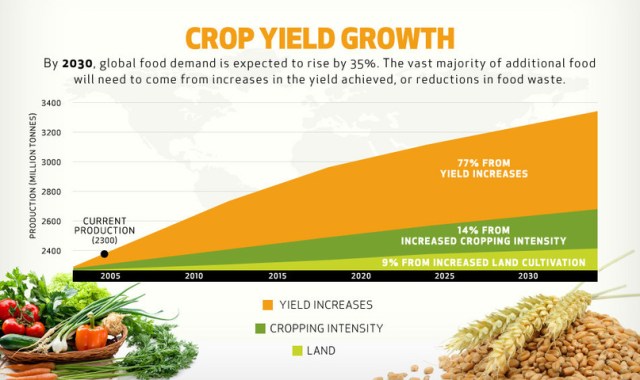
Well, the Warsaw summit on climate change has turned out to be a major disappointment, with many prominent NGOs walking out prematurely to signal their protest at governmental inaction and last-ditch agreements remaining vague and postponing real commitments to future meetings. Commentators especially deplored the lack of urgency that seemed to reign among the negotiators, all the more unwarranted since the summit came just at the heels of the disastrous typhoon in the Philippines, which many of the attendees’ speeches linked to the consequences of climate change. What would inaction mean in our field, concerning food policy? I found a couple of interesting graphs that might lend us some insights…

This is from a series called Post2015 by Farming First, which attempts to look ahead of the 2015 development agenda all the way to 2030 and showcase some potentials and challenges on the way.

On the website you can…

View original post 298 more words

Posted in Uncategorized | Leave a comment

Organic Farming and Climate-Smart Agriculture – A Complicated Relationship

Janina's avatarFood (Policy) For Thought

When working in international politics, you realize that efforts to improve (or, I daresay, save) the world revolve around buzzwords. Clearcut visions and concepts are required to form alliances, formulate action plans and (most importantly!) pledge political and financial support.

In agriculture, it seems we have passed ‘green’ (too reminiscent of the green revolution and its controversies) and ‘sustainable’ (too vague and multi-faceted) and arrived at ‘climate-smart agriculture’ (CSA). Climate-smart ag fits into global climate action, is quantifiable (via CO2-equivalent emission savings) and can encompass both mitigation and adaptation actions, making it a catch-all for a plethora of initiatives that can satisfy both the global North and South in their aims. So far, so good.

Thus, at the UN Secretary General’s Climate Summit in New York on 23 September, 180 senior officials and stakeholders attended the inaugural meeting of the Global Alliance for Climate-Smart Agriculture. The Alliance aspires to be a “food security…

View original post 478 more words

Posted in Uncategorized | Leave a comment

Monkey malaria on the rise among humans in Malaysia

The disease is caused by a parasite called Plasmodium knowlesi, transmitted by mosquitoes which usually feed on monkeys’ blood.

Source: m.scidev.net

"Once only monkeys were suffering — now people are getting sick too. Monkey malaria, which is three times more severe than other forms of malaria, now accounts for two-thirds of human malaria cases in Malaysian Borneo, says Balbir Singh, director of the Malaria Research Centre at the University of Malaysia in Sarawak." – Scidev.net 

See on Scoop.itAgriculture, Climate & Food security

Posted in Uncategorized | Leave a comment

Contribute to a consultation to set priorities for international agricultural research for development

Peter Ballantyne (ILRI)'s avatarCGIAR Research Program on Livestock and Fish

The Global Forum for Agricultural Research (GFAR) and the CGIAR Consortium have launched a consultation to get feedback from key partners on the priorities for publicly funded international research on agriculture.

What should be the priorities for agricultural research and innovation? What should be the priorities for publicly funded international research on agriculture in a development context? What should be the priorities for the CGIAR and its partners in research, in development and the private sector? And how do these priorities link back to the Sustainable Development Goals?

The CGIAR is in the process of developing a new strategy that will set such priorities, and will provide a concrete results framework for its work, to enable focused investments that lead to transformative development outcomes.

Please contribute to a global consultation that will lead to the  3rd Global Conference on Agricultural Research for Development (GCARD3).

CONTRIBUTE your ideas

View original post

Posted in Uncategorized | Leave a comment

FAO – News Article: Globally almost 870 million chronically undernourished – new hunger report

Africa was the only region where the number of hungry grew over the period, from 175 million to 239 million, with nearly 20 million added in the past four years. The prevalence of hunger, although reduced over the entire period, has risen slightly over the past three years, from 22.6 percent to 22.9 percent – with nearly one in four hungry. And in sub-Saharan Africa, the modest progress achieved in recent years up to 2007 was reversed, with hunger rising 2 percent per year since then.

Source: www.fao.org

Africa was the only region where the number of hungry grew over the period, from 175 million to 239 million, with nearly 20 million added in the past four years. The prevalence of hunger, although reduced over the entire period, has risen slightly over the past three years, from 22.6 percent to 22.9 percent – with nearly one in four hungry. And in sub-Saharan Africa, the modest progress achieved in recent years up to 2007 was reversed, with hunger rising 2 percent per year since then. 

See on Scoop.itAgriculture, Climate & Food security

Posted in Uncategorized | Leave a comment

PAEPARD: Unlocking Africa’s potential for Growth and Prosperity

Source: paepard.blogspot.com

"….Africa is not a poor continent, it just happens to have a lot of poor people. We must transition the poor into wealth and create economic ladders of opportunities. We must therefore, not only improve the private capital stocks for Africa; we must rapidly build Africa’s social capital stocks. We must work to improve Africa’s development outcomes, strengthen economic, social and political systems, and build an enduring Africa – prosperous, peaceful and stable" – Dr Adesina, Nigerian Agric Minister

See on Scoop.itAgriculture, Climate & Food security

Posted in Uncategorized | Leave a comment

Invitation: The role of agribusiness and PPPs in advancing African agriculture 25/11/2014

kalusam's avatarKalu Samuel's Blog

As part of the Brussels Briefings organized by CTA, the ACP Secretariat, the European Commission (DG DEVCO/DGAGRI) and Concord. The African Union Commission and BMZ/GIZ join us as partners. 

The Briefing will take place on Tuesday 25th November  2014 (9h00-13h00) at the ACP Secretariat, 451 Avenue Georges Henri, 1200 Brussels, room C.

You will find attached the programme (in French and English). Youneed to register online at http://brusselsbriefings.net  where all documents will be regularly posted.

View original post

Posted in Uncategorized | Leave a comment

Speculative Investment and the Global Food Crisis

GlobalFoodPolitics's avatarGlobal Food Politics

There’s been a great deal of discussion in recent weeks about the recent spike in global food prices. Nearly all agricultural crops—from cotton to rice, from wheat to cocoa—are near 30 year highs. The respite from 2007-08 food crisis appears to have been short-lived, and most analysts are pointing to a protracted period of expensive food.

US Secretary of Agriculture Tom Vilsack last week published an op-ed in the Financial Times in which he outlines steps necessary to avoid a global food price crisis. His framing of the problem echoes the neo-Malthusian assumptions: too many people, too much demand from middle class consumers, and so on. His prescriptions are pretty much what you’d expect from someone in his position: more investment in agriculture, especially biotechnology, more free trade, conclusion of the Doha Round, and so on.

What’s perhaps most telling about Vilsack’s discussion is what’s missing. As I see it…

View original post 696 more words

Posted in Uncategorized | Leave a comment

Advancing African Agriculture needs sound policies and effective partnerships

Euforic Services's avatarBrussels Development Briefings

Speaking at the second Brussels Development Briefing on 17 October, Sir John Kaputin, Secretary General of the ACP Secretariat helped to set the stage, contextualising the initiative and the role of agriculture in ACP countries.

Reminding participants of the importance of agriculture for ACP countries, Sir Kaputin stressed that in Africa 80% of population still lives in rural areas and bases its income on small scale farming. These communities confronted with new challenges, such as climate change and a liberalised and competitive market environment, which lower productivity and heavily impact on the lives of people.

Looking at this picture, and pointing out that agriculture clearly is the way out of poverty in most countries, Sir Kaputin called for “sound policies” to support agricultural development at local, national, and regional levels.

The Communication on “Advancing African Agriculture” goes in the right direction as it addresses exactly these elements…

View original post 85 more words

Posted in Uncategorized | Leave a comment

Next Brussels Briefing: Global food systems, local impact: the role of agribusiness and development partnerships in advancing African agriculture

ctabrussels's avatarBrussels Development Briefings

The next Brussels Development Briefing on “Global food systems, local impact: the role of agribusiness and development partnerships in advancing African agriculture” will take place Tuesday 25th November 2014 (9h-13h) at the ACP Secretariat (451 Avenue Georges Henri, 1200 Brussels, room C).

The transformation of the African agri-business sector is a key challenge to achieve food security and economic development. A differentiated approach to partnerships, based on the development of competitive local private sectors, is essential to boosting agricultural development in Africa.

In this context, the objective of this Brussels Briefing is to discuss strategies and approaches for harnessing the potential of development partnerships with the private sector to catalyse market development and productivity in African countries.

The outcome of this meeting should be a better understanding of the needs and constraints of the local agricultural sector and strengthen linkages between private sector and development cooperation. At the…

View original post 370 more words

Posted in Uncategorized | Leave a comment