The @WorldResources Institute On How To “Create A Sustainable Food Future”

The @WorldResources Institute On How To “Create A Sustainable Food Future”

Janina's avatarFood (Policy) For Thought

It happens that once you specialize in a topic, you get a little jaded about ‘broad overview’ talks. Whenever I go to one of those now, I notice myself mentally playing the ‘food security bingo’ game – what doesn’t the presenter mention? What is emphasized? The point scale in my head looks somewhat like this:

  • Mentions food waste as a problem: + 3
  • Speaks about diet choice: + 3
  • Mentions food sovereignty: + 2
  • Has a differentiated opinion about GMOs: + 1
  • Opens with “how in the world will we feed 10 billion people?”: – 1
  • Speaks about the green revolution as something to emulate: – 1
  • Doesn’t question the current feed vs. food vs. fuel distribution: – 2
  • Speaks about “incredible unused land resources in Africa and Latin America” (which are mainly pastoral or rainforest land): – 3
  • Speaks about multinationals as saviors or alternatively as THE ENEMY: – 3

Like…

View original post 693 more words

Posted in Uncategorized | Leave a comment

Back agriculture to get the most out of aid to Africa

Escaping the poverty trap begins with having enough food on your table and enough money in your pocket. For more than 500 million smallholder farmers all over the world, this means producing enough on two hectares (or less) of land to eat, and also having surplus to sell.

Source: m.scidev.net

Escaping the poverty trap begins with having enough food on your table and enough money in your pocket. For more than 500 million smallholder farmers all over the world, this means producing enough on two hectares (or less) of land to eat, and also having surplus to sell.

See on Scoop.itSustainable Livestock development

Posted in Uncategorized | Leave a comment

What Happens in a Cattle Feedlot – People Behind The Beef

Ryan Goodman's avatarBeef Runner

(In case you missed it, check out the first part of this series about my introduction to feedlots as a kid to learn where my interest for feeding cattle began.)

feed mill sunriseDuring the next few years, my interest in the cattle business grew even stronger. I focused on college courses in nutrition and managing feedlot cattle. The semester of graduation, I secured a job with JBS Fiver Rivers Cattle Feeding. I would be working in their feedlot in Dalhart, Texas with 60,000 head of cattle. That is like have 60,000 kids to feed and look after each day.

I was hired on as a management trainee, working in the cattle department. During my time there, I was charged with managing the receiving and shipping operations of the feedlot. I looked over the care of cattle as they walked off the truck, arrived in the pens, went through the processing barn to…

View original post 602 more words

Posted in Uncategorized | Leave a comment

How Lagos urbanisation affects Ikorodu farmers

“The lands were allocated by the state government for farming but they have been used to build accommodation.”

Source: www.premiumtimesng.com

See on Scoop.itSustainable Livestock development

Posted in Uncategorized | Leave a comment

Experts to discuss livestock and livelihoods for Africa

Nearly 500 delegates from over 20 countries will converge in Nairobi this morning October 27, to discuss Africa’s Animal Agriculture: Macro-trends and future opportunities. Meeting under the auspic…

Source: sustainable-livestock.ilri.org

See on Scoop.itSustainable Livestock development

Posted in Uncategorized | Leave a comment

Agric ministry launches hotline for farmers

GESS hot lines numbers are +234-081-421-087-80, +234-070-608-832-38, which can only be accessed Monday-Friday 8am-4pm.

Source: www.premiumtimesng.com

GESS hot lines numbers are +234-081-421-087-80, +234-070-608-832-38, which can only be accessed Monday-Friday 8am-4pm.


See on Scoop.itPrecision Agriculture

Posted in Uncategorized | Leave a comment

Antioxidants Help Sheep Take the Heat

Providing dietary antioxidants to sheep can improve the animals’ oxidative status and reduce the negative effects of heat stress.

Source: animal.supplysideinsights.com

See on Scoop.itPrecision Agriculture

Posted in Uncategorized | Leave a comment

Small animal that gives much more than a cow

Dorper sheep offers higher returns because it gains weight faster.

Source: www.nation.co.ke

See on Scoop.itFood Policy, Supply, Security & Safety

Posted in Uncategorized | 2 Comments

agri4africa

Agricultural transformation is a priority for Africa. Across the continent, the significant information needs of farmers – accurate local weather forecasts, relevant advice on agricultural practices and input use, real time price information and market logistics – remain largely unmet. To the extent that rural regions are typically sparsely populated with limited infrastructure and dispersed markets, the use of innovative information and communication technologies (ICTs) overcome some of these information asymmetries and connect farmers to opportunities that weren’t necessarily available to them earlier. Harnessing the rapid growth of digital technologies holds hope for transformative agricultural development.

Source: agri4africa.com

See on Scoop.itPrecision Agriculture

Posted in Uncategorized | 2 Comments

Challenges to Replicating & Scaling up: ICT4Ag Projects

Keron Bascombe's avatarTech4agri

The Panel of the CTA organized seminar on Scaling up ICT projects in Agriculture at the CWA 2014. Photo by Faumuina Felolini Maria Tafuna’i (@WIBDI_Samoa)

In the course of the activities of Tech4agri there has been heavy engagement with young entrepreneurs in the field that utilize a variety of ICTs in their agriculture projects. However they face challenges that prevent the progress of these projects.

Hurdles to overcome

Major amongst these challenges is lack of agri knowledge. While the majority of youth are tech savy and forward thinking, case in point the young developers of the Agrihack Talent Competition, a background in any field of study related to agriculture is missing. As a result apps, products and services that are developed using ICTs are not an exact fit for end users.

Who they are specifically, their problems,their needs and their capabilities in terms of understanding ICTs are all questions…

View original post 356 more words

Posted in Uncategorized | Leave a comment

Scaling up- scaling up: food security, smallholder farmers & markets

canwefeedtheworld's avatarOne Billion Hungry: Can We Feed the World?

LeapingandLearningFrontCover Click here to download the Leaping & Learning Report

October 16th 2014 is World Food Day, and in line with this years International Year of Family Farming, the theme of this World Food Day is “Family Farming: Feeding the world, caring for the earth” aiming to raise the profile of family farming and smallholder farmers. Across Africa, smallholders account for 80% of Africa’s farmland and produce 80% of the food in Asia and Sub Saharan Africa. However due to a lack of suitable infrastructure, access to inputs, technology and storage, the majority of smallholders farmers are not well connected to markets.

After a warm welcome and opening remarks from our very own Katrin Glatzel, and introductions from H.E. Ambassador Neil Briscoe, the UK Permanent Representative to the Rome-based Agencies the panellists shared some of their experiences, successes and challenges from their diverse fields of work.

We heard…

View original post 632 more words

Posted in Uncategorized | Leave a comment

NAFDAC to Regulate Use of Pesticides and Veterinary Medicine in Nigeria | NLIPW Newsroom – Nigerian Law Intellectual Property Watch

At the just concluded ‘Awareness Workshop on Safe and Responsible use of Veterinary Medicines, Pesticides and Animal Feeds’, the Director General of NAFDAC, Dr. Paul Orhii, who was represented by the Director of Veterinary Medicine and Allied Product, Dr. Bukar Ali Usman, announced that in the past, NAFDAC concentrated its efforts on winning the fight against counterfeit, fake and substandard medicines and that having achieved a considerable level of success in this fight, it has become necessary for the agency to focus on other aspects of control of regulated products such as the safe and responsible use of veterinary medicines, pesticides and animal feeds.

Source: www.nlipw.com

See on Scoop.itFood Policy, Supply, Security & Safety

Posted in Uncategorized | Leave a comment

New Market for Camel Milk and Shark Fish Conservation

Posted in Uncategorized | Leave a comment

CALL FOR PANELS ON FOOD GOVERNANCE

FoodGovernance's avatarFood Governance

Together with a colleague  I am organising a section at the ECPR general conference, Montreal 2015 ( http://www.ecpr.eu/Events/EventDetails.aspx?EventID=94)

We welcome panel and paper proposals (until 10 November  2014) that are based on the section description below.  If you have any questions, please do not hesitate to contact me: jessica.duncan@wur.nl

Cross-Disciplinary Issues for Food Policy and Governance: Challenges and Opportunities

Food has proven to be a complex, even wicked, policy issue which encompasses multiple policy domains. The call for a more integrated food policy away from mono-disciplinary focus on agricultural, international development, or health is  increasing. Food policy integrates nutrition and public health, agriculture, environment, ethics and social justice, trade, ecology, spatial planning, climate change, water management, and energy and therefore needs the analysis of all policy domains involved, as well as cross-policy domain research. The interconnectedness of  relevant policy domains means that food represents a policy challenge as well as…

View original post 218 more words

Posted in Uncategorized | Leave a comment

Linking Health Systems and nutrition | Transform Nutrition

Whether it be distribution of prophylactic supplements or foods for mothers and children, treatment of severe or moderate acute malnutrition, or behavior-change communication on maternal nutrition and child feeding, nutrition interventions involve systems of social structures (institutions and organizations) and people (policy-makers, managers, providers, and beneficiaries) across various sectors (health, social welfare, child development/education, agriculture, water, sanitation and hygiene, etc.).  Similar to the public health sector, the provision of good nutrition for all also faces challenges of making effective interventions/services sustainable, equitable, and at-scale.

Source: www.transformnutrition.org

See on Scoop.itPrecision Agriculture

Posted in Uncategorized | Leave a comment

Requirements for registration of imported animal feed, fish feed and premix  veterinary drugs and veterinary vaccine.

Posted in Uncategorized | Leave a comment

Yield gaps, trade liberalisation and biotechnology: three new reports on the way to tackle food insecurity

canwefeedtheworld's avatarOne Billion Hungry: Can We Feed the World?

cover_6Three new publications investigate proposed solutions to global food insecurity, exploring the potential consequences of liberalising trade, increasing crop yields and introducing biotechnology. The first, written by agricultural scientists Tony Fisher, Derek Byerlee and Greg Edmeades, Crop Yields and Global Food Security, investigates the rate at which crop yields must increase if we are to meet global demand for staple crops by 2050. They explore how such targets might be achieved and what the consequences would be for the environment and natural resources.

Population growth, rising incomes per capita and growing biofuel usage mean we expect demand for staple crop products to increase by 60% between 2010 and 2050. This increase can either be met by expanding land area under agriculture or by increasing the yields of crops grown on current land. With land being in short supply and much potential agricultural land requiring deforestation and natural habitat clearance…

View original post 1,578 more words

Posted in Uncategorized | Leave a comment

One Billion Hungry: Fighting hunger together

canwefeedtheworld's avatarOne Billion Hungry: Can We Feed the World?

590x130_RBA_bannerGordon Conway will lead and participate in a series of high-profile discussions on the critical issues raised in his book, One Billion Hungry: Can we feed the world?at the three Rome-based UN agencies on the 27th and 28th February 2013.

The UN agencies – the Food and Agriculture Organisation (FAO), the World Food Programme (WFP) and the International Fund for Agricultural Development (IFAD) – are critical to global thinking around agricultural development and as such their strategies have a far reaching impact on how we tackle global food security.

On 27th February, the three agency principals, José Graziano da Silva (FAO), Ertharin Cousins (WFP) and Kanayo Nwanze (IFAD) will comment on Gordon’s vision of achieving food security, and will be inviting comments and questions from permanent representatives and staff at FAO. This high-level seminar will be webcast live here at 2:30pm GMT+1. Gordon will then lead…

View original post 501 more words

Posted in Uncategorized | Leave a comment

Promoting Agricultural Trade to Enhance Resilience in Africa, 2014

canwefeedtheworld's avatarOne Billion Hungry: Can We Feed the World?

RESAKSS Click to download the full report here

Released the 9th of October 2014, the latest Annual Trends and Outlook Report from the Regional Strategic Analysis and Knowledge Support System (ReSAKSS)  ‘Promoting Agricultural Trade to Enhance Resilience in Africa’, assesses the structure and performance of trade by African countries in global and regional agricultural markets.

The food price crises of 2007/2008 and 2010/2011 highlighted how trade in agricultural products can have serious impacts on the livelihoods of poor and vulnerable people in particular. For instance, some government responses such as safety nets for the vulnerable were instrumental in preventing people falling further into poverty, but protectionist measures restricting exports proved ineffective or costly for local farmers in terms of lost income.

This report highlights how trade is of particular importance as it affects the availability of and access to food and the rate at which the economy…

View original post 595 more words

Posted in Uncategorized | Leave a comment

Hawaii based project leading to a ‘paradigm shift’ in insect based feed production

“Our reactors can generate more protein that an acre of soy. Moreover, our process does not use herbicides, or fertilizer, and also diverts food waste from landfills,” said Robert Olivier, CEO of Texas based bioconversion firm, Prota Culture, which is using insects to convert organic materials into a cheap source of feed in a bid to revitalize a dormant poultry sector in Hawaii.

Source: www.feednavigator.com

See on Scoop.itPrecision Agriculture

Posted in Uncategorized | Leave a comment

FAO and IFIF ‘on the same page’ on how to enhance #feedsafety and boost sustainability

Feed safety and antimicrobial resistance were two subjects grabbing the headlines at the annual meeting between long-time bedfellows, the UN’s FAO and the International Feed Industry Federation (IFIF), in Rome last week.

Source: www.feednavigator.com

See on Scoop.itFood Policy, Supply, Security & Safety

Posted in Uncategorized | Leave a comment

Animal disease monitoring is critical for human health, says FAO

To be more resilient in the face of such risks, countries need the resources to be able to better understand where disease is coming from and to prevent it from ever reaching people in the first place. By understanding animal health threats, we have the potential to be ahead of the curve and help prevent human tragedies from happening.”

Source: mobile.globalmeatnews.com

See on Scoop.itFood Policy, Supply, Security & Safety

Posted in Uncategorized | Leave a comment

Female agriculture scientists to revolutionise farming practices and rescue millions of citizens from hunger pangs (Africa Science News)

Willem Van Cotthem's avatarDESERTIFICATION

Read at :

http://africasciencenews.org/en/index.php?option=com_content&view=article&id=100%3Afemale-agriculture-scientists-to-fuel-africas-agrarian-revolution&catid=49%3Afood&Itemid=113&limitstart=1

Female Agriculture Scientists to Fuel Africa’s Agrarian Revolution

African must harness the potential of female agriculture scientists to revolutionise farming practices and rescue millions of citizens from hunger pangs.

Experts contend that African women contribute 70% of food produced yet they are grossly under-represented in research and policymaking as well as influential leadership positions in the agriculture sector.

An innovative professional development program funded by the Gates Foundation and the United States Agency for International Development (USAID) however aims to strengthen research and leadership skills of female agriculture scientists to enable them contribute to food security in sub-Sahara Africa.

The African Women in Agricultural Research and Development (AWARD) has been strengthening the capacity of African women scientists engaged in pro-poor and cutting edge research in agriculture since its inception in 2008.

So far, the AWARD programme has benefited 250 women across eleven countries in sub-Saharan Africa.

View original post 65 more words

Posted in Uncategorized | Leave a comment

It is imperative to invest in female researchers (SciDevNet)

Willem Van Cotthem's avatarDESERTIFICATION

Read at :

http://www.scidev.net/global/gender/multimedia/investing-female-scientists-feed-africa.html

Investing in female scientists to feed Africa

In this interview, Wanjiru Kamau-Rutenberg, director of the African Women in Agricultural Research and Development fellowship programme in Kenya, talks about AWARD’s work supporting the careers of female agricultural scientists across Sub-Saharan Africa.

She outlines the daunting challenge facing Africa: to rapidly expand agricultural production so that the continent can feed itself. Women currently produce the majority of Africa’s food but are severely underrepresented in agricultural research and development. Kamau-Rutenberg argues that it is therefore imperative to invest in female researchers.  Only by fully using this resource will Africa be able to meet its food needs.

(continued)

View original post

Posted in Uncategorized | Leave a comment

Zimbabwe announces livestock support scheme

“The livestock support scheme is a good idea. Provided it goes to the right hands, the livestock scheme will definitely go a long way in improving the quality of beef in the country. The greatest challenge we face in our industry is finance as we need to re-stock, people also need finance for supplementary feeds so that we have healthy livestock that will provide high quality beef. The other challenge we face is training. Everyone is now a farmer, so no one is willing to teach the next man. We should therefore draw a line and decide who is who,” he told GlobalMeatNews.

Source: www.globalmeatnews.com

See on Scoop.itSustainable Livestock development

Posted in Uncategorized | Leave a comment

Cattle fattening in Gamogofa benefits from improved market linkages

ymekasha's avatarLIVES-Ethiopia

fattened oxen buyers visiting producer farms (Photo:ILRI Yoseph Mekasha) Fattened oxen buyers visiting producer farms in Gamogofa (Photo:ILRIYoseph Mekasha).

Cattle fattening is an important component of livestock farming in Gamogofa Zone of the Southern Nations, Nationalities and Peoples Region (SNNPR) of Ethiopia. The Zonal Bureau of Agriculture reports that there are about 3.5 million cattle in the zone. Although the area is agro-ecologically suitable for cattle fattening, smallholder cattle fatteners are not earning much from the sector. The beef value chain actors who attended the livestock commodity platform meetings organized by the Livestock and Irrigation Value Chains for Ethiopian Smallholders (LIVES) project identified the poorly developed cattle marketing system as the number one challenge in the zone. Smallholder fatteners sell their cattle individually in the nearby markets or to local traders in their villages. The smallholders have generally low bargaining power as they do not have market information and thus traders usually dictate the prices. Due to lack of good market and the unfair prices, a…

View original post 618 more words

Posted in Uncategorized | Leave a comment

Advocating strategies for agricultural transformation: FAO and AfDB

canwefeedtheworld's avatarOne Billion Hungry: Can We Feed the World?

ID-100207881On the 29th September 2014 two events laid out global and African strategies for agriculture and food security. At its 24th session, the Committee on Agriculture (COAG), one of FAO’s Governing Bodies providing overall guidance on policies relating to agriculture, livestock, food safety, nutrition, rural development and natural resource management, met to discuss a wide range of issues, including family farming and sustainable agriculture.

Opening the event, FAO Director-General José Graziano da Silva, emphasised the broad range of options needed to transform global food systems and that a paradigm shift is needed to make agriculture sustainable. In particular a departure from “an input intensive model”. We need to reduce the use of agricultural inputs such as water and fertilizer and look to new solutions. Such approaches as agroecology, climate-smart agriculture and biotechnology were used as examples of alternatives to the current system but that their use…

View original post 620 more words

Posted in Uncategorized | Leave a comment

Recalls, Market Withdrawals, & Safety Alerts > Bravo Recalls Select Chicken and Turkey Pet Foods Because of Possible Salmonella Health Risk

Salmonella can affect animals eating the products and there is risk to humans from handling contaminated pet products, especially if they have not thoroughly washed their hands after having contact with the products or any surfaces exposed to these products.

Source: www.fda.gov

"Salmonella can affect animals eating the products and there is risk to humans from handling contaminated pet products, especially if they have not thoroughly washed their hands after having contact with the products or any surfaces exposed to these products."

See on Scoop.itFood Policy, Supply, Security & Safety

Posted in Uncategorized | Leave a comment

Evaluating value chain interventions: A review of recent evidence

“Value chain interventions are rarely evaluated as rigorously as interventions in agricultural production or health. This is due to various reasons, including the intrinsic complexity of value chain interventions, intricate contextual support factors, presence of multilevel system actors, constant adaption to market and nonmarket forces and the cost associated with conducting an evaluation.”

Keith Child's avatarCGIAR Research Program on Livestock and Fish

Value chain interventions are rarely evaluated as rigorously as interventions in agricultural production or health. This is due to various reasons, including the intrinsic complexity of value chain interventions, intricate contextual support factors, presence of multilevel system actors, constant adaption to market and nonmarket forces and the cost associated with conducting an evaluation.

This ILRI discussion paper discusses a range of approaches and benchmarks that can guide future design of value chain impact evaluations.

Twenty studies were reviewed to understand the status and direction of value chain impact evaluations. A majority of the studies focus on evaluating the impact of only a few interventions, at several levels within the value chains. Few impact evaluations are based on well-constructed, well-conceived comparison groups. Most relied on the use of propensity score matching to construct counterfactual groups and estimate treatment effects. Instrumental variables and difference-in-difference approaches are the common empirical approaches used for…

View original post 43 more words

Posted in Uncategorized | Leave a comment

Pastoralism: Animal health and food safety situation analysis in Kenya and Tanzania

“#Pastoralism is a farming system practised in arid and semi arid lands by societies that derive most of their food and income from livestock production.”

Tezira Lore's avatarAgHealth

Pastoralism is a farming system practised in arid and semi arid lands by societies that derive most of their food and income from livestock production. About 70% of the land mass in the Horn of Africa is dry land. In Kenya 80% of the land mass is classified as arid and semi-arid while approximately half of Tanzania consists of dry land. These dry lands can only be effectively used for livestock rearing, supporting wildlife resource harvesting and tourism.

The poster below, prepared for the Tropentag 2014 conference, presents findings of a situation analysis of animal health and its implication on food safety in Kenya and Tanzania. The study reports on livestock diseases with high prevalence and their likely effects on food safety and food security in pastoral communities in the two countries. The extent of species rearing diversification, pastoralist trade orientation and practices that may expose the community and their trading partners to animal and zoonotic infections…

View original post 59 more words

Posted in Uncategorized | Leave a comment

The most comprehensive ref available on veterinary antimicrobial drug use

Check out @VetUpdates’s Tweet: https://twitter.com/VetUpdates/status/487605009593688065

FCF! Antimicrobial Therapy in Vet Medicine, the most comprehensive ref available on veterinary antimicrobial drug use http://t.co/UKw53qOpgR

Posted in Uncategorized | Leave a comment

Sustainable Intensification in Agriculture

“The workshop brought together key thinkers to discuss sustainable intensification and more specifically its definition as well as the challenges facing it and the role of sustainable intensification in relation to environmental sustainability, animal welfare and human wellbeing.” – Canwefeedtheworld

canwefeedtheworld's avatarOne Billion Hungry: Can We Feed the World?

A report based on a two day workshop held in January 2012, part funded by the UK Government’s Foresight Programme, was recently published by the Food Climate Research Network and the Oxford Martin Programme on the Future of Food. The workshop brought together key thinkers to discuss sustainable intensification and more specifically its definition as well as the challenges facing it and the role of sustainable intensification in relation to environmental sustainability, animal welfare and human wellbeing.

The report concludes with a summary of the key insights from the workshop, summarised here:

View original post 298 more words

Posted in Uncategorized | Leave a comment

Sustainable agricultural intensification: Tackling food insecurity in a resource-scarce world

Improving agricultural yields efficiently and sustainably must be central in addressing Africa’s food insecurity challenges. This calls for “sustainable intensification”.

canwefeedtheworld's avatarOne Billion Hungry: Can We Feed the World?

By Lindiwe Majele Sibanda and Katy Wilson.

Reblogged from AlertNet

ID-10029986 (2)Today, the world is searching for solutions to a series of global challenges unprecedented in their scale and complexity. Food insecurity, malnutrition, climate change, rural poverty and environmental degradation are all among them.

A recent meeting hosted by the Irish government and the Mary Robinson Foundation – Climate Justice (MRFCJ) in Dublin convened experts and practitioners from around the globe to discuss how the next iteration of development goals following the Millennium Development Goals (MDGs) can respond to this set of challenges, as part of the so-called “post-2015” development agenda.

Sub-Saharan Africa is particularly vulnerable to these threats as both supply-side and demand-side challenges are putting additional pressure on an already fragile food production system. Indeed, current systems of production will only be able to meet 13 percent of the continent’s food needs by 2050, while three out of four…

View original post 1,052 more words

Posted in Uncategorized | Leave a comment

Boom and Bust: the future of our food producing ecosystems

canwefeedtheworld's avatarOne Billion Hungry: Can We Feed the World?

ID-100219796A recent paper, No Dominion over Nature, authored by UK ecologists, Professors Mark Huxham, Sue Hartley, Jules Pretty and Paul Tett, describes how current approaches to food production are damaging the long term health of ecosystems, hampering their ability to provide ecosystem services and leaving them vulnerable to collapse. Focusing on continual (and unsustainable) increases in agricultural productivity, for example through intensive monocultures, will inevitably lead to a “boom and bust” cycle.

The “dominant narrative” in meeting the ever increasing demand for food (some estimate we need to increase food production by 100% by 2050 to meet this demand) is to intensify agricultural production, an approach, such as the Green Revolution, that has so far allowed food production to keep pace with population growth. Such a pathway, as authors argue, is causing ecosystem deterioration, eroding the ecosystem services we rely upon such as pollination, climate regulation and water purification…

View original post 866 more words

Posted in Uncategorized | Leave a comment

ILRI food safety researchers present on health impacts of aflatoxins in animal-source foods

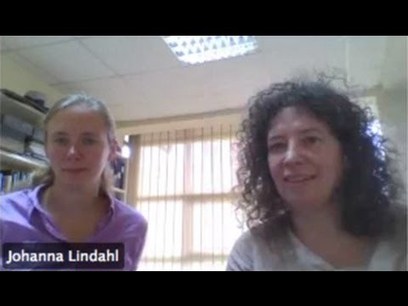
On 22 July 2014, Delia Grace and Johanna Lindahl, food safety researchers from the International Livestock Research Institute, presented on aflatoxins, animal health and the safety of animal-source…

Source: aghealth.wordpress.com

Aflatoxins in contaminated animal feed not only result in reduced animal productivity, but the toxins can end up in products like milk, meat and eggs, thus presenting a health risk to humans. Of these animal-source food products, milk has the greatest risk because relatively large amounts of aflatoxin are carried over and milk is consumed especially by infants.

See on Scoop.itFood Policy, Supply, Security & Safety

Posted in Uncategorized | Leave a comment

Smallholders and the livestock revolution

“Five livestock value chains have the most pro-poor promise: South Asia dairy, East Africa dairy, West Africa small ruminant meat, West Africa beef, Southern Africa small ruminant meat. . . .”

Susan MacMillan's avatarILRI Clippings

Goats being herded near a water point in Wajir, northern Kenya (photo credit: Riccardo Gangale).

‘Livestock production in smallholder systems exists throughout the developing world in a great variety of forms. Farm animals contribute considerably to the livelihood strategies of the poor and can be an important source of income.

‘Livestock keeping can also make a vital contribution to household food and nutritional security. The value of production of different livestock species in different production systems varies considerably. Due to a range of constraints, most small-scale livestock keepers are operating at levels of productivity well below their potential. Livestock investment must consider the positioning of small-scale livestock producers within the whole value chain.

‘Research shows the developing world undergoing a ‘livestock revolution’ characterized by accelerating demand for livestock products due to increasing populations and incomes. This livestock revolution is creating new opportunities for rural producers to participate in income-generating livestock enterprises…

View original post 118 more words

Posted in Uncategorized | Leave a comment

Protecting produce: ten African countries get biosecurity investment

An Australia-Africa initiative is sowing nearly $1m in training, mentoring and action plans to combat pests’ threat to agriculture, writes Caspar van Vark

Source: www.theguardian.com

Biosecurity broadly refers to ways of preventing or mitigating the threat of pests and diseases affecting animals, plants and humans. It can includefood safety hazards, animal diseases and plant pests.

See on Scoop.itFood Policy, Supply, Security & Safety

Posted in Uncategorized | Leave a comment

Where can I buy safer, healthier, more sustainable meat?

With chicken hitting the headlines for all the wrong reasons, what is the best way to buy better meat, asks Sue Dibb of Eating Better

Source: www.theguardian.com

The message to eat less meat is coming through loud and clear. Too much meat is not good for our health, its production is a major contributor to global warming, and feeding grains to animals exacerbates world hunger.

See on Scoop.itFood Policy, Supply, Security & Safety

Posted in Uncategorized | Leave a comment

Food, farming and antibiotics: a health challenge for business

Øistein Thorsen: Antibiotic use in farming is common but with serious effects on human health, it is time to replace, reduce and refine useage of the drug

Source: www.theguardian.com

The World Health Organization (WHO) warns the misuse of antimicrobial medicines and new resistance mechanisms are “making the latest generation of antibiotics virtually ineffective”, while at the 2013 G8 Summit, scientific ministers issued a statement calling antimicrobial resistance (AMR) “a major health security challenge of the twenty first century.”

See on Scoop.itFood Policy, Supply, Security & Safety

Posted in Uncategorized | Leave a comment

Eat more meat and save the world: the latest implausible farming miracle

George Monbiot: Allan Savory tells us that increasing livestock can reduce desertification and reverse climate change – but where is the scientific evidence?

Source: www.theguardian.com

“We can take enough carbon out of the atmosphere and safely store it in the grassland soils for thousands of years, and if we just do that on about half the world’s grasslands that I’ve shown you, we can take us back to pre-industrial levels while feeding people. I can think of almost nothing that offers more hope for our planet, for your children, for their children and all of humanity.” -Savory

See on Scoop.itSustainable Livestock development

Posted in Uncategorized | Leave a comment

Why George Monbiot is wrong: grazing livestock can save the world

L Hunter Lovins: George Monbiot’s recent criticism of Allan Savory’s theory that grazing livestock can reverse climate change ignores evidence that it’s already experiencing success

Source: www.theguardian.com

“…grazing #livestock can reverse #desertification and restore #carbon to the #soil, enhancing its #biodiversity and countering #climatechange.” – Savory

See on Scoop.itAgriculture, Climate & Food security

Posted in Uncategorized | Leave a comment

PAEPARD: African Livestock Futures: Realizing the potential of livestock for food security, poverty reduction and the environment in Sub-Saharan Africa

David Nabarro, Special Representative of the UN Secretary General on Food Security and Nutrition who directed the development and implementation of the study, states that 

“As people’s incomes increase, their demand for (and access to) livestock products tends to increase as well.” He believes that “the degree to which people have predictable access to safe livestock products depends on the extent to which local markets responds to increasing demand and to which gaps in production can be met through imports from elsewhere”.

Source: paepard.blogspot.com

As people’s incomes increase, their demand for (and access to) livestock products tends to increase as well.” He believes that “the degree to which people have predictable access to safe livestock products depends on the extent to which local markets responds to increasing demand and to which gaps in production can be met through imports from elsewhere”.

“The results of this research set the scene for more intensive work on options for expanding livestock production in Africa”,said David Nabarro. Follow-up work will explore how the dynamics of livestock markets will evolve in Africa and how changes in habitats will impact on the likelihood that new diseases will emerge and threaten the health of both animal and, if they are transmissible, human populations providing a detailed map for disease emergence hotspots under the different livestock scenarios. 

See on Scoop.itAgriculture, Climate & Food security

Posted in Uncategorized | Leave a comment

Why developing gender sensitive policy responses into Africa’s climate change adaptation and mitigation strategies in agriculture is a priority.

In Africa, gender-sensitive policy responses to the effects of climate change are critical to ensure a productive agriculture sector and a food-secure growing population

Source: ccafs.cgiar.org

 African #women especially those directly engaged as primary food producers are not only vulnerable to climate change but they are also effective agents of change in relation to implementing adaptation and mitigation strategies” said Dr. Ruth Aura, Chairperson of Federation of Women Lawyers – Kenya (FIDA-Kenya) who attended the meeting.

See on Scoop.itAgriculture, Climate & Food security

Posted in Uncategorized | 1 Comment

IITA Youth Agripreneurs to train young people from Borno State

“What we intend to do is actually use #agriculture to solve some of the social problems in most societies of #Africa including #poverty and #hunger,” Dr Nteranya Sanginga, IITA Director General said t.

Posted in Uncategorized | Leave a comment

ILRI food safety researchers present on health impacts of aflatoxins in animal-source foods | AgHealth

Aflatoxins are highly toxic fungal by-products produced by certain strains of Aspergillus flavus in grains and other crops. Consumption of very high levels of aflatoxins can cause acute illness and death. Chronic exposure to aflatoxins is linked to liver cancer, especially where hepatitis is prevalent, and this is estimated to cause as many as 26,000 deaths annually in sub-Saharan Africa.

http://aghealth.wordpress.com/2014/08/15/ilri-food-safety-researchers-present-on-health-impacts-of-aflatoxins-in-animal-source-foods/#like-878

Posted in Uncategorized | Leave a comment

Africa: a continent of resilience and opportunity

canwefeedtheworld's avatarOne Billion Hungry: Can We Feed the World?

ID-100224355Africa is often referred to as a continent of opportunity, economic or otherwise. In part because of the progress made – since 2000, rates of extreme poverty and hunger have dropped as have the number of new HIV infections, and access to education and health care is increasing. But also due to the predicted changes to take place over the next few decades – 6 of the 10 fastest-growing economies are in Africa, and a growing youth population means that the continent will have a working-age population bigger than that of China or India by 2035.

Indeed the theme of the first ever US-Africa Leaders Summit which recently drew to a close, was “Investing in the Next Generation.”. 40 or so heads of states and government from across Africa joined President Obama in Washington to discuss the opportunities for developing sustainable African economies. A key message from the summit…

View original post 687 more words

Posted in Uncategorized | Leave a comment

Using mobile phones to better understand refugees’ food needs

With more than 50 million people in refugee camps or fleeing conflict, the World Food Programme is using mobiles to provide critical food assistance

Source: www.theguardian.com

“We were curious: if we used mobile technology, could we get information faster, cheaper, and in a lighter way?” says Arif Husain, chief economist at the WFP, from the group’s no frills offices in a warehouse district outside of Rome. “Meaning that if you use SMS or voice calling, you don’t have 10 page questionnaires. You can throw out some simple questions, over time, and see the responses you get.”

See on Scoop.itAgriculture, Climate & Food security

Posted in Uncategorized | Leave a comment

Micronutrients and improving nutrition through food systems | International Food Policy Research Institute (IFPRI)

The first step any country should take to improve the micronutrient status of its population, according to Ruel, is to “work on the food system”

Source: www.ifpri.org

See on Scoop.itAgriculture, Climate & Food security

Posted in Uncategorized | Leave a comment

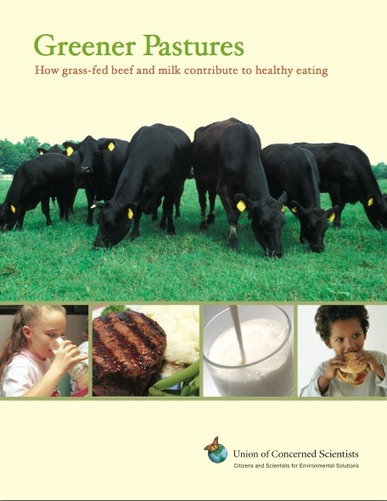
Grass-fed Beef and Milk Is Healthier

When a scientist says something works, or is better, it’s based on what research has demonstrated, or at least what it has demonstrated up to that point in time.  So when the Union of Concerned Sci…

Source: onpasture.com

Based on the review then, you can safely claim these things about grass-fed beef and milk:

• Steak and ground beef from grass-fed cattle can be labeled “lean” or “extra lean.”

• Some steak from grass-fed cattle can be labeled “lower in total fat” than steak from conventionally raised cattle.

• Steak from grass-fed cattle can carry the health claim that foods low in total fat may reduce the risk of cancer.

• Steak and ground beef from grass-fed cattle can carry the “qualified” health claim that foods containing the omega-3 fatty acids EPA or DHA may reduce the risk of heart disease.

– See more at: http://onpasture.com/2014/08/04/grass-fed-beef-and-milk-is-healthier/#sthash.Skeisory.dpuf

See on Scoop.itAgriculture, Climate & Food security

Posted in Uncategorized | Leave a comment

Human Development Report 2014 – Resilience and Vulnerability

“While the Human Development Report brings attention to the important concepts of vulnerability and resilience and to some extent explores why people are more or less resilient it fails to go beyond broad strategies to reducing vulnerability. As Duncan Green in his blog From Poverty to Power points out the report is evasive in addressing how to bring about real change, alter power structures to cater for marginalised groups and transform political systems to be more responsive, supportive and protective. Perhaps such specificity is beyond the scope of the UN system and so the main questions this report raises are whose responsibility it is to develop strategies to build global, national, local and individual resilience, what are the best approaches to reduce vulnerability and how can they be implemented?”

canwefeedtheworld's avatarOne Billion Hungry: Can We Feed the World?

cq5dam.web.221.289At Agriculture for Impact we talk a lot about resilience and in particular how farms and rural economies can become more resilient to shocks and stresses like climate change, pests and diseases and food price fluctuations. In the new UNDP Human Development Report 2014 released recently, the concept of resilience in terms of individuals, communities and of global political systems is explored. As the report states, “resilience is about ensuring that state, community and global institutions work to empower and protect people”.

In particular the report highlights the precariousness with which we view advances in human development, improvements in peoples’ welfare and the state of the environment and global governance. Corruption, environmental and humanitarian crises, crime, changing leadership, negligence of key sectors such as health and civil unrest can all spell disaster for progress made in tackling poverty, malnutrition, food insecurity, environmental degradation and poor health. As the report states…

View original post 685 more words

Posted in Uncategorized | Leave a comment

Private sector investment in Nigeria’s Agric sector tops N1.25trn in 2 years, says Minister

Mr. Adesina also says the best performing stocks in the Nigerian market today were agriculture-related stocks Private sector investment in Nigeria’s agricultural sector was valued at over $8billion…

Source: www.premiumtimesng.com

See on Scoop.itAgriculture, Climate & Food security

Posted in Uncategorized | Leave a comment

Nigeria to benefit from N79 billion World Bank credit for agriculture, water

World Bank pledges to support the design of a reform package for water resources management and irrigation in Nigeria. ————————— The World Bank’s Board of Executive Directors on F…

Source: www.premiumtimesng.com

See on Scoop.itFood Policy, Supply, Security & Safety

Posted in Uncategorized | Leave a comment

Ministries Of Health, Agriculture, Interior Partner On Ebola Virus–Chukwu – Leadership Newspapers #OneHealth

The Minister of Health, Prof. Onyebuchi Chukwu, said on Friday that the ministry was collaborating with other ministries to protect Nigerians from being infected by the Ebola virus. Chukwu told newsmen in Abuja that surveillance had been mounted in all the entry points into the country to stop the spread of the virus from other…

Source: leadership.ng

See on Scoop.itFood Policy, Supply, Security & Safety

Posted in Uncategorized | Leave a comment

Smallholders could feed Africa more efficiently

What are the options for sustainable intensification through livestock feeding? How can we best deal with the competition for biomass between livestock feeding and soil fertility? These are some of…

Source: sustainable-livestock.ilri.org

Posted in Scoop.it | Leave a comment

What is agroecology?

Agroecology is defined as “an ecological approach to agriculture that views agricultural areas as ecosystems and is concerned with the ecological impact of agricultural practices” – Can we Feed the World

canwefeedtheworld's avatarOne Billion Hungry: Can We Feed the World?

ID-100203114As the threat of climate change, natural resource scarcity and declines in the provision of the majority of ecosystem services continue, agroecology is increasingly being explored as an option for addressing the stress conventional farming systems put on the environment. To date, however, agroecology is still a niche farming method, relatively underutilised in agricultural development, policy and research despite growing evidence of its benefits for both productivity and sustainability. A new paper by Laura Silici at the International Institute for Environment and Development (IIED) explores what agroecology is, why it is not yet being scaled-up to any significant degree and recommends future action for integrating this social and ecological movement into modern farming systems.

Agroecology is defined as “an ecological approach to agriculture that views agricultural areas as ecosystems and is concerned with the ecological impact of agricultural practices”. The paper explains that it consist of three facets:

1)      The…

View original post 618 more words

Posted in Uncategorized | Leave a comment

Constraints to smallholder commercialisation

“While the report reports on smallholder farmers attitudes towards commercialisation, there is little discussion as to whether commercialisation is the best approach to creating sustainable and profitable food systems. Indeed many would disagree with such an approach in part for the fact that perhaps only the more well-off farmers can engage with wider markets. Greater emphasis needs to be given to why certain farmers cannot, due to various constraints, better plan their farm management for the long-term and for the welfare of their household, with or without future commercialisation.” – Can we Feed the World

canwefeedtheworld's avatarOne Billion Hungry: Can We Feed the World?

ID-100136355In the wake of the 2008 food price crisis, which exacerbated food insecurity and increased smallholder farmers’ vulnerability to shocks and stresses, recognition of the barriers smallholders face in becoming more productive and developing their farms as commercial businesses has been growing. In 2010, the UN Food and Agriculture Organisation implemented the Multidisciplinary Fund (MDF) project to help develop policies supportive of smallholder commercialisation in Africa, in particular identifying the heterogeneity amongst smallholders in terms of their attitudes to commercialisation.

A new report, Understanding smallholder farmer attitudes to commercialisation – the case of maize in Kenya, by the FAO, focuses on maize producers and rural youth in Kenya by investigating “attitudes, strategies and opportunities related to maize commercialisation” in Meru and Bungoma regions in the country. The report is based on key informant interview, focus group, farmer survey and stakeholder workshop data.

At present farm management is not undertaken…

View original post 500 more words

Posted in Uncategorized | Leave a comment

Farm Bill: Understanding the Agricultural Act of 2014 [Infographic] from the Academy of Nutrition and Dietetics

Source: www.eatright.org

The Agricultural Act of 2014, also known as the Farm Bill, protects vital nutrition assistance programs and includes initiatives that will improve the health of the nation. Learn more about this piece of legislation in the infographic below, and see how the Academy’s recommendations fared with the bill.”

Posted in Scoop.it | Leave a comment

Four things you should know about agriculture & food in Africa @Agribussiness @AgribussinessNig @AfricaAg @

Four things you should know about agriculture and food in Africa

The World Bank estimates that Africa holds 60% of the world’s uncultivated arable land. Coupled with a youthful workforce and water resources, the potential for agribusiness in Africa cannot be ignored.

How we made it in Africa looks at some of the key points raised at the event.

1. An investment of US$55bn needed in agriculture
“….70% of Africa’s population relies on agriculture for their income, and that a considerable portion lives in poverty, with little or no support to help increase productivity. In order to feed Africa and the world, significant investment will be required to meet Africa’s agricultural potential.”

2. Informal markets dominate
“Some 90% of all food in Africa (excluding South Africa) is purchased through informal markets, according to David Tschirley, professor at Michigan State University’s Department of Agriculture, Food and Resource Economics” ….“So we need transformation not just in the modern sector, but also in this traditional sector… there needs to be a whole food system supply chain transformation.”

3. Technology can leapfrog infrastructure deficit
“Lack of access to finance and market related information is a major limitation that small-scale farmers face in rural Africa. However, mobile penetration and innovations in mobile money technology can help reduce these challenges” Thad Simons, IFAMA’s board president and senior executive advisor for Novus International, said mobile phones can assist the agricultural supply chain.

4. Majority of arable land situated in only a few countries
According to Milu Muyanga, assistant professor at Michigan State University’s Department of Agriculture, Food and Resource Economics, most of sub-Saharan Africa’s arable land lies in just a handful of countries. “Most of these countries are fragile states… we are talking about DRC, Republic of Congo, Cameroon, Mozambique, and Zambia.”

Four things you should know about agriculture and food in Africa

Four things you should know about agriculture and food in Africa.

Posted in Africa, Agriciltural Policy, AR&D, Food safety & supply, Food Security, Hunger & Malnutrition, Poverty, Sustainable Development | Tagged , , , | Leave a comment

Call to halve target for added sugar

Source: www.bbc.com

Prof Ian MacDonald, chairman of the SACN working group on carbohydrates, said: “The evidence that we have analysed shows quite clearly that high free sugars intake in adults is associated with increased energy intake and obesity.

Posted in Scoop.it | Leave a comment

From dust bowl to carbon sink: the potential of conservation agriculture

Two new videos exploring conservation agriculture were recently shared. The first looks back to the US dust bowl in the 1930s that motivated the development of no-till farming and conservation agri…

Source: canwefeedtheworld.wordpress.com

Posted in Scoop.it | 2 Comments