































-
Archives
- March 2026
- February 2026
- September 2025
- August 2025
- March 2025
- January 2025
- November 2023
- September 2023
- July 2023
- June 2023
- May 2023
- March 2023
- June 2022
- April 2022
- January 2022
- December 2021
- November 2021
- October 2021
- September 2021
- August 2021
- July 2021
- June 2021
- April 2021
- October 2020
- September 2020
- July 2020
- June 2020
- May 2020
- April 2020
- March 2020
- February 2020
- January 2020
- October 2019
- September 2019
- August 2019
- July 2019
- June 2019
- May 2019
- April 2019
- March 2019
- February 2019
- January 2019
- December 2018
- November 2018
- October 2018
- September 2018
- August 2018
- July 2018
- June 2018
- May 2018
- April 2018
- March 2018
- February 2018
- January 2018
- December 2017
- November 2017
- October 2017
- September 2017
- August 2017
- July 2017
- June 2017
- May 2017
- April 2017
- March 2017
- February 2017
- January 2017
- December 2016
- November 2016
- October 2016
- September 2016
- August 2016
- July 2016
- June 2016
- May 2016
- April 2016
- March 2016
- February 2016
- January 2016
- December 2015
- November 2015
- October 2015
- September 2015
- August 2015
- July 2015
- June 2015
- May 2015
- April 2015
- March 2015
- February 2015
- January 2015
- December 2014
- November 2014
- October 2014
- September 2014
- August 2014
- July 2014
- June 2014
- May 2014
- April 2014
- March 2014
- February 2014
- January 2014
- December 2013
- November 2013
- October 2013
- September 2013
- August 2013
- July 2013
- June 2013
- May 2013
- April 2013
- March 2013
- February 2013
- January 2013
- December 2012
- November 2012
-
Meta
Let them eat carbines | Global Food Security blog
See on Scoop.it – Agriculture, Climate & Food security
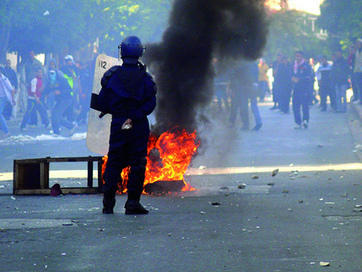
Food scarcity remains a fundamental cause of violent outbreaks across the world. Bryce Evans investigates the issue.
See on www.foodsecurity.ac.uk
Share this:
Posted in Uncategorized
Leave a comment
Making the food and farming industry more competitive while protecting the environment – Policies – GOV.UK
See on Scoop.it – Agriculture, Climate & Food security
How the government is responding to the growing population’s demand for food, while minimising the impacts of farming and food production on the environment.
See on www.gov.uk
Share this:
Posted in Uncategorized
Leave a comment
TED2013 Selects Allan Savory | savoryinstitute.com
See on Scoop.it – Agriculture, Climate & Food security
» TED2013 Selects Allan Savory | Healing the Grasslands, Rangelands and Savannas of the World.
Bukar Usman (D.V.M., M.V.S.c)‘s insight:
…We at Savory Institute are very proud to announce that Savory Institute Founder and President Allan Savory has been chosen to present at the TED2013 global conference “The Young. The Wise. The Undiscovered “ in Long Beach, California Feb 26-March 1, 2013….
See on www.savoryinstitute.com
Share this:
Posted in Uncategorized
Leave a comment
Evidence Supporting Holistic Management | savoryinstitute.com
See on Scoop.it – Agriculture, Climate & Food security
» Evidence Supporting Holistic Management | Healing the Grasslands, Rangelands and Savannas of the World.
See on www.savoryinstitute.com
Share this:
Posted in Uncategorized
Leave a comment
Allan Savory: “Agriculture is More Destructive than Coal Mining” | Big Picture Agriculture
See on Scoop.it – Agriculture, Climate & Food security
See on www.bigpictureagriculture.com
Share this:
Posted in Uncategorized
Leave a comment
Developing value chain action plans for the Ethiopia Livestock Master Plan
See on Scoop.it – Sustainable Livestock development
Earlier this year, the Bill and Melinda Gates Foundation (BMGF) approved funds to support the development of value chain action plans for the Ethiopia Livestock Master Plan (LMP). The project began…
See on clippings.ilri.org
Share this:
Posted in Uncategorized
Leave a comment
AGRA | Agro-dealers use cell phones to keep farmers up to date | WHAT WE DO
Posted in Uncategorized
Leave a comment
Sahel hunger crisis and the depletion of Nigerian buffer zone; a call to action
By Dr. B. A. Usman
“The Sahel is the ecoclimatic and biogeographic zone of transition, in Africa, between the Sahara desert to the north and the Sudanian Savanna to the south. Having a semi-arid climate, it stretches across the southernmost extent of Northern Africa between the Atlantic Ocean and the Red Sea. The Sahel covers parts of (from west to east) The Gambia, Senegal, southern Mauritania, central Mali, Burkina Faso, southern Algeria and Niger, northern Nigeria and Cameroon, central Chad, southern Sudan, northern South Sudan and Eritrea”. – en.wikipedia.org/wiki/sahel

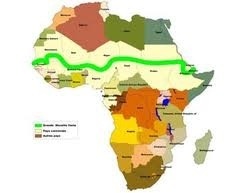
Figure 1; Showing Sahel Region
The Sahel Food Crisis covered by theguardian.com, Monday 19 November 2012 15.12 GMT via http://www.theguardian.com/global-development/interactive/2012/jul/19/sahel-food-crisis-guardian-interactive may by now probably include the Northern Nigeria, especially the Crisis stricken states bordering Cameroon, Chad and Niger Republics. This zone (black circle in Figure 2 below), incidentally serve as what many called as the ‘BUFFER ZONE’ This zone…
View original post 250 more words
Share this:
Posted in Uncategorized
1 Comment
Moringa Biodiesel and Food Security on Environmental Expert
See on Scoop.it – Agriculture, Climate & Food security
August 10, 2013 — Globally, about 870 million people do not have enough to eat, and more than two billion suffer from micronutrient deficiency, according to …
See on www.environmental-expert.com
Share this:
Posted in Uncategorized
Leave a comment
Grants to support scientific training of PhD students from developing countries
The CGIAR Research Program on Climate Change, Agriculture and Food Security (CCAFS) collaborates with the universities of Copenhagen and Aarhus (Denmark) to support the Climate Food and Farming (CLIFF) Research Network. CLIFF invites applications from PhD students in developing countries for short-term scientific training and research stays at CGIAR centers or affiliated research institutions. Applications are invited for training and travel grants of up to US$12 thousand for living and research costs at the host institution. The application deadline is 19 August 2013. Link
Share this:
Posted in Uncategorized
Leave a comment
Why Africa Can Feed Itself—and Help Feed the World Too – IEEE Spectrum
Posted in Uncategorized
Leave a comment
Glossary of participatory epidemiology terms
 The Participatory Epidemiology Network for Animal and Public Health (PENAPH) just released a glossary of participatory epidemiology
terms.
The glossary was compiled by Jeanne Coffin and Syed Noman Ali and can be downloaded at http://cgspace.cgiar.org/handle/10568/33352
Share this:
Posted in Uncategorized
Leave a comment
Big food security gains for Sub Saharan Africa countries in 2013 – South Africa | Moneyweb
See on Scoop.it – Agriculture, Climate & Food security
Moneyweb – Breaking news, independent analysis, latest JSE share prices, exchange rates and data on investment, finance and business in South Africa
Bukar Usman (D.V.M., M.V.S.c)‘s insight:
Sub-Saharan African nations made progress this past year, with the top three most improved sub-Saharan countries rising an average of eight places in the index. The three most improved countries — Ethiopia, Botswana, and Niger — improved their ranks largely owing to greater food availability and income growth particularly important drivers.
See on www.moneyweb.co.za
Share this:
Posted in Uncategorized
Leave a comment
Public Health Veterinarian: How to Pass the ACVPM Specialty Board Exam – Elliott Garber
See on Scoop.it – Food supply & food safety
I passed the ACVPM specialty board exam! Read on for everything you need to know about studying for and passing it yourself.
See on www.elliottgarber.com
Share this:
Posted in Uncategorized
Leave a comment
Agriculture Is The Future Of Nigeria
See on Scoop.it – Agriculture, Climate & Food security
Editor’s Note: This article is part of a series by the Financial Times’ This Is Africa publication on realizing Africa’s agricultural potential, in partnership with the Rockefeller Foundation. The Skoll World Forum is a proud media partner for the…
See on www.forbes.com
Share this:
Posted in Uncategorized
1 Comment
Three perspectives on sustainable food security: efficiency, demand restraint, food system transformation. What role for LCA?
Posted in Uncategorized
1 Comment
Call for Participation: Regional Youth Green Growth Forum 2013 | YPARD
Posted in Uncategorized
1 Comment
Food security law’s WTO complication
See on Scoop.it – Agriculture, Climate & Food security
Cheaper subsidy plan could soon breach global trade rules; India and others in G-33 bloc hope for break on this at Bali meet
See on www.business-standard.com
Share this:
Posted in Uncategorized
Leave a comment
Family Farming: The Key to Alleviating Hunger and Poverty
See on Scoop.it – Poverty, Hunger & Malnutrition
Small-scale, family-run farms not only form the base of rural communities in both the developing and developed world and provide a large number of jobs, but they are also at the center of sustainable production.
Bukar Usman (D.V.M., M.V.S.c)‘s insight:
..
"By working with family farmers to build on their knowledge in the development of sustainable agricultural practices, we can improve resilience in the food system — including resilience to climate change, food price shocks, conflict, and natural disasters," says Barbara Gemmill-Herren, Programme Officer at FAO.
See on www.huffingtonpost.com
Share this:
Posted in Uncategorized
Leave a comment
Can ‘value chains’ and ‘innovation platforms’ boost African agriculture? 11 reasons to be sceptical
See on Scoop.it – Agriculture, Climate & Food security
This post was co-written by Toni Darbas and Jim Sumberg. Toni Darbas is a social scientist at the Commonwealth Scientific and Industrial Research Organisation (CSIRO), Australia.
See on www.future-agricultures.org
Share this:
Posted in Uncategorized
Leave a comment
Food security in sub-Saharan Africa improves
See on Scoop.it – Agriculture, Climate & Food security
Du Pont global food security index shows availability of food improving in 2013, with rising incomes making affordability less of an issue
See on www.bdlive.co.za
Share this:
Posted in Uncategorized
Leave a comment
Draft report on sustainable agriculture and food systems available for public comment
See on Scoop.it – Agriculture, Climate & Food security
The Sustainable Development Solutions Network (SDSN), a global initiative for the United Nations, is looking for feedback on their draft report ‘Solutions for Sustainable Agriculture and Food Syste…
Share this:
Posted in Uncategorized
Leave a comment
CIAT team keen to implement dual-purpose cattle value chain in Nicaragua

The Livestock and Fish program director, Tom Randolph recently visited Nicaragua and Colombia. In Colombia he met colleagues in the International Center for Tropical Agriculture (CIAT), a partner centre for the program, which leads forages research within the program’s feeds platform as well as the dual-purpose cattle value chain activities in Nicaragua.
In Nicaragua, Randolph together with the CIAT team working on the value chain held meetings with Edwin Perez, a former ILRI employee, who is leading a new Technoserve dairy development project in the central-northern part of the country and José Antonio Rivera, a director at a private sector dairy product maker, Eskimo, which is also involved in dairy development actions. In addition, field visits to a dairy cooperative, a dairy farmer and a cheese maker were held. These meetings and field visits were aimed at exploring potential partnership areas and additional strategic research opportunities.
The need…
View original post 150 more words
Share this:
Posted in Uncategorized
1 Comment
Seeding the future: tapping gene banks to secure our food future – RN First Bite – ABC Radio National (Australian Broadcasting Corporation)
See on Scoop.it – Food supply & food safety
Thousands of years of crop domestication mean that fewer than a dozen flowering plant species now account for some 80 per cent of the world’s diet.
See on www.abc.net.au
Share this:
Posted in Uncategorized
Leave a comment
The efficiencies and increased productivity necessary to meet agricultural challenges cannot be achieved without a renewed focus on research.
Posted in Uncategorized
Leave a comment
Who will take the place of the aging African farmer?
Share this:
Posted in Uncategorized
Leave a comment
Blog | Solutions Journalism Network
See on Scoop.it – Agriculture, Climate & Food security
Bukar Usman (D.V.M., M.V.S.c)‘s insight:
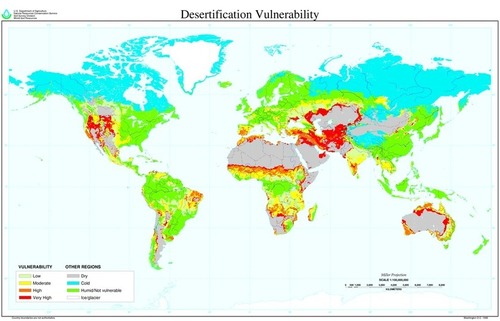
Project description: The world’s drylands comprise 41% of the earth’s surface and are home to 2.5 billion people – and the majority of the world’s poor. Dry area’s fragile ecosystems are at great risk of drought, water depletion and natural resource degradation and desertification thereby putting vulnerable communities at significant risk of food insecurity and conflict over diminishing resources of land and water. This report in the Sahel region of Northern Nigeria will examine how holistic grassland management can be augmented with indigenous local knowledge and shared using mobile technology and its social, economic and cultural impact on local communities as a means to reduce conflict between pastoralists and small farmers.
See on solutionsjournalism.org
Share this:
Posted in Uncategorized
Leave a comment
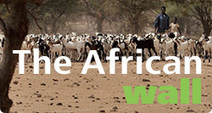
Great Green Wall: News detail
See on Scoop.it – Agriculture, Climate & Food security
Regional Validation Workshop of the Capacity Development Strategy and Action Plan in support of the implementation of the Great Green Wall for the Sahara and the Sahel Initiative
See on www.fao.org
Share this:
Posted in Uncategorized
Leave a comment
Overheard at Africa Agriculture Science Week, in Accra
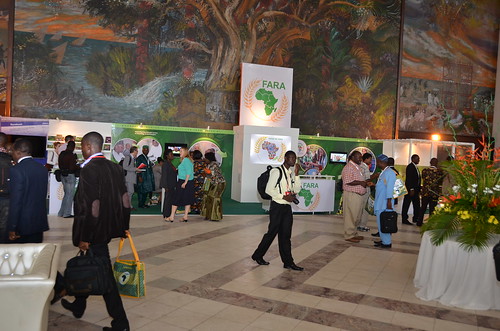
Entrance to FARA’s 6th Africa Agriculture Science Week (AASW6), in Accra, Ghana, 15-20 Jul 2013 (photo credit: ILRI/Paul Karaimu).
The following remarks were noted by members of the delegation of 22 staff of the International Livestock Research Institute (ILRI) who participated in the sixth Africa Agriculture Science Week (AASW6), ‘Africa Feeding Africa’, organized by the Forum for Agricultural Research in Africa (FARA) and held in Accra, Ghana, 15–20 Jul 2013.
- Africa is the final frontier for agriculture.
— Dyborn Chibonga, CEO of the National Smallholders’ Association of Malawi (NASFAM)
- Our agricultural systems today are under-performing but have huge potential to double or triple yields.
- Infrastructure and market links can make all the difference for farmers waiting for economic opportunities.
- Development is not something we do for others; it is something we do for ourselves.
- We produce enough food to feed every child, woman and man on the planet.
- 50% of Africa’s agricultural…
View original post 634 more words
Share this:
Posted in Uncategorized
1 Comment
Sustainable agriculture
See on Scoop.it – Agriculture, Climate & Food security
Sustainable agriculture integrates three main goals: environmental stewardship, farm profitability, and prosperous farming communities. Sustainable agriculture refers to the ability of a farm to produce …
See on www.sciencedaily.com
Share this:
Posted in Uncategorized
Leave a comment
International conference on managing quality in chains – Global Food Security
See on Scoop.it – Agriculture, Climate & Food security
International conference on managing quality in chains, 2-5 September 2013, Cranfield University
See on www.foodsecurity.ac.uk
Share this:
Posted in Uncategorized
Leave a comment
allAfrica.com: Africa – Poverty, Hunger Attributed to Decline in Agriculture (Page 1 of 2)
See on Scoop.it – Poverty, Hunger & Malnutrition
allAfrica: African news and information for a global audience
See on allafrica.com
Share this:
Posted in Uncategorized
Leave a comment
In Case You Missed It: Innovative Efforts in the Fight Against Global Poverty
See on Scoop.it – Poverty, Hunger & Malnutrition
Global Washington convened more than 200 people at Microsoft’s Redmond campus Thursday evening for a panel discussion centering around innovative solutions to
See on globalwa.org
Share this:
Posted in Uncategorized
Leave a comment
Could cows and sheep halt climate change and tackle rural poverty?
See on Scoop.it – Agriculture, Climate & Food security
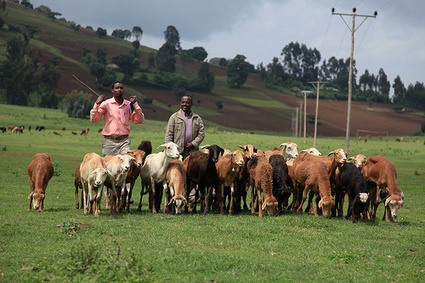
Agriculture is destructive, but doesn’t have to be. Livestock could help tackle climate change, desertification and rural poverty, writes Judith D Schwartz
See on www.theguardian.com
Share this:
Posted in Uncategorized
Leave a comment
New project to compile information of African livestock breeds launched
See on Scoop.it – Sustainable Livestock development
Improving the breeds of farm animals is one important way of resolving food problems to ensure food security for the sustainable development of humanity. This was said by Chan-Woo Kim, the ambassad…
See on sustainable-livestock.ilri.org
Share this:
Posted in Uncategorized
Leave a comment
Africa Fails To Fight Hunger In 50 Years
See on Scoop.it – Poverty, Hunger & Malnutrition
At the November 1974 UN World Food Conference in Rome, representatives of 133 governments called for the eradication of the scourge of hunger and malnutrition.
See on www.the-star.co.ke
Share this:
Posted in Uncategorized
Leave a comment
Bull taming, forbidden forests and genetic diversity
See on Scoop.it – Sustainable Livestock development
Trained for jallikattu for long, Pulikulam cattle are fierce, resistant to diseases and suitable for ploughing
See on www.thehindu.com
Share this:
Posted in Uncategorized
Leave a comment
Indigenous chicken breed can also improve poultry produce
See on Scoop.it – Sustainable Livestock Agenda SLA
LAHORE – The key solution for ensuring sufficient poultry products everywhere is to study the indigenous breeds, chalking out strategies for their efficient use in their respective home tracts, as modern breeds do not possess several characters and…
See on www.nation.com.pk
Share this:
Posted in Uncategorized
Leave a comment
“The Terror”
See on Scoop.it – Precision Agriculture
A few weeks ago a colleague and reader of tech4agri indicated his satisfaction with the most recent blog posts. Appreciative of his comment I asked if he would like to know more about any topic in …
See on technology4agri.wordpress.com
Share this:
Posted in Uncategorized
Leave a comment
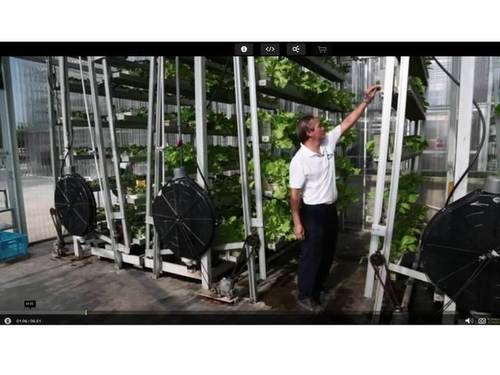
The future lies in Vertical Farming
See on Scoop.it – Precision Agriculture
More and more the talk of the global agriculture diaspora centres in the every increasing global population and the threat of food insecurity. Currently the global agri food system is steeped in mo…
Bukar Usman (D.V.M., M.V.S.c)‘s insight:
“The World’s first low carbon hydraulic water-driven, tropical vegetable urban vertical farm, using green urban solutions to achieve enhanced green sustainable production of safe, fresh and delicious vegetables, using minimal land, water and energy resources.”
See on technology4agri.wordpress.com
Share this:
Posted in Uncategorized
Leave a comment
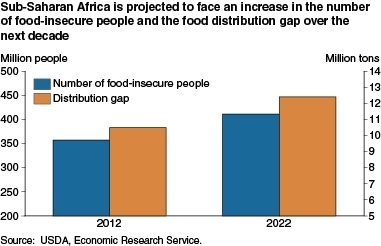
USDA ERS – Factors Affecting Food Production Growth in Sub-Saharan Africa
See on Scoop.it – Agriculture, Climate & Food security
Bukar Usman (D.V.M., M.V.S.c)‘s insight:
"
Sub-Saharan Africa is projected to remain the most food-insecure region over the next decade" Report USDA
See on www.ers.usda.gov
Share this:
Posted in Uncategorized
Leave a comment
Put sustainable intensification in the food systems toolbox

‘Sustainable intensification’ is one of those phrases regularly bandied about in discussions about agriculture. What does it actually mean?
The shorthand definition: ‘producing more food with less negative impact’ – seems hard to dislike. But when considering what it might mean in practice, all sorts of questions arise.
Does sustainable intensification imply a particular system or philosophy of agriculture? What about the ‘more food’ issue – how much more, what kind of food, produced where and for whom? How much weight does one attach to the ‘sustainable’ as opposed to the ‘intensification’ part? And what happens when ethical concerns such as animal welfare are added to the mix?
To read the full story by Tara Garnett, visit the CCAFS blog.
Photo: Florian
Share this:
Posted in Uncategorized
Leave a comment
Vietnamese journal publishes special issue on risk assessment in health research in Vietnam

The Vietnamese Journal of Preventive Medicine has published a special edition on risk assessment for health research in Vietnam. The June 2013 special edition is a compilation of over 10 original research papers on the application of risk analysis to the management of animal, human and environmental health in Vietnam. The subject of training and capacity development in health risk assessment in Vietnam is also featured.
Risk analysis is a scientific, risk-based approach to assessing the health effects and economic impacts of various hazards (for example, disease-causing microorganisms in food or chemical pollutants in water) in order to develop appropriate interventions to mitigate the health risks posed by the hazards, thus ensuring that people, animals and the environment are safe.
Risk analysis comprises three components: risk assessment, risk management and risk communication. In the developed world, risk assessment is widely applied and used as a tool for risk management, thanks…
View original post 411 more words
Share this:
Posted in Uncategorized
Leave a comment
NEPAD and WorldFish join up

Partnership and collaboration between organizations that have similar goals in mind and are determined to succeed can lead to tremendous positive changes.
African organizations are quickly realizing the importance of such agreements and are coming together to work on projects in which they both have mutual interests. An example of this is the Memorandum of Agreement (MOA) that was signed between the New Partnership for Africa’s Development (NEPAD) and WorldFish at the 6th FARA Africa Agriculture Science Week (AASW6) in Accra, Ghana.
View original post 122 more words
Share this:
Posted in Uncategorized
Leave a comment
CABI Blogs: Reducing hunger and undernutrition – how are we doing?
See on Scoop.it – Poverty, Hunger & Malnutrition
Hunger and undernutrition are amongst the most persistent global development challenges. Part of Millennium Development Goal 1 is to ‘Halve, between 1990 and 2015, the proportion of people who suffer from hunger’ (UN, 2012).
See on cabiblog.typepad.com
Share this:
Posted in Uncategorized
Leave a comment
Counting hunger

 When the writing of One Billion Hungry: Can we feed the world? began in 2010, it was estimated that there were around one billion chronically hungry people in the world, hence the title. When the book was launched in 2012, the Food and Agriculture Organisation of the United Nations, in their State of Food Insecurity in the World, had revised their methodology for calculating the number of hungry and published an updated figure of 870 million for the period 2010-2012 (details of their methodology and revised estimates can be found in a previous blog post). The new calculations indicate that the prevalence of extreme malnourishment peaked in 1990, fell to 2006 and then remained stable.
Getting these numbers right is incredibly important because they influence policy and form the basis upon which global decisions regarding hunger and development are made. But calculating worldwide statistics is notoriously difficult given…
View original post 377 more words
Share this:
Posted in Uncategorized
Leave a comment
Food, Technology and Biodiversity
See on Scoop.it – Precision Agriculture
A Historian’s Take on Food and Food Politics…
This brief article highlights that as much as technology has changed food production, there this is much more that has remained the same. Of the thousands of plants on Earth, 11 account for most of what we eat (corn, rice, wheat, cassava, potatoes, sorghum, millet, beans, barley rye and oats) . Not surprisingly, those 11 plants are the same that have been cultivated by humans for thousands of years–makes you think that early humans, while not technologically advanced, were constantly conducting agricultural experiments and found many of the best animal and plant resources for human consumption. This is one reason losing local indigenous knowledge about cultural ecology and the species’ genetic diversity would be a great loss for humanity.
See on www.rachellaudan.com
Share this:
Posted in Uncategorized
Leave a comment
Food of the future: can ‘Frankenfish’ survive politics? – SmartPlanet…
See on Scoop.it – Sustainable Livestock development
Sometime this summer or soon after, the federal Food and Drug Administration may finally approve the first-ever genetically modified animal for human consumption — a fast-growing Atlantic salmon that has taken 17 years to reach the threshold of American consensus. The man to thank — or blame, depending on how you feel about these things — is a former Soviet biologist who is bankrolling the endeavor with an eye on becoming a U.S. salmon farmer.
“I have no doubt the FDA will approve a genetically modified animal at some point,” says Kakha Bendukidze, the largest shareholder in AquaBounty Technologies, a Boston-area biotech company that wants to bring its genetically altered AquAdvantage Salmon to American dinner tables and supermarkets. “Whether it’s this fish or some other animal, it has to do this, or it risks America losing its biotechnology edge to countries like China.”
More than 33,000 fishermen, environmentalists and food safety advocates have written to the FDA to oppose the approval. Among their worries: that this genetically engineered fish might cause unique allergic reactions in humans; that it might escape and mix with wild salmon and ultimately out breed and out eat them; and that the fast-growing broods could flood the market and cripple the wild salmon fishing industry in coastal states like Alaska, Oregon and Washington
See on m.smartplanet.com
Share this:
Posted in Uncategorized
Leave a comment
Big Food won’t solve the obesity crisis
See on Scoop.it – Food issues
The proposal being touted is that Big Food can solve the obesity epidemic with the palatable oxymoron ”healthy junk food”. This creates a tempting stew of science, aesthetics, politics and morality.
See on www.smh.com.au
Share this:
Posted in Uncategorized
Leave a comment
Yes we can! Enhancing productivity and profitability of Africa’s main crops.
See on Scoop.it – Friday Links
Did you know that Africa consumes 24 million tons of rice yearly, and only 11 million of them are produced in Africa? Africa has always been held back by issues of food sustainability, and the prob…
See on aasw6.wordpress.com
Share this:
Posted in Uncategorized
Leave a comment
Ending Hunger | Global land rush
See on Scoop.it – Friday Links
This Oxfam spoof on the 1992 classic film Glengarry Glen Ross depicts the ugly side of what have come to be called “land grabs.”
See on www.endinghunger.org
Share this:
Posted in Uncategorized
Leave a comment
Kill the killer fly!
See on Scoop.it – Sustainable Livestock development
What do insects have to do with poverty or food insecurity? We talk about strengthening water, land and ecosystems services, and about conserving resources for poverty alleviation and development. …
See on aasw6.wordpress.com
Share this:
Posted in Uncategorized
Leave a comment
Jatropha: it boomed, it busted, and now its back
See on Scoop.it – Agriculture, Climate & Food security
Whatever happened to jatropha? Is the wonder biofuel that crashed back on the up? And should we care? Last July, while visiting Liberia, I met a local man who said he was a “recruiter” of smallho…
See on wle.cgiar.org
Share this:
Posted in Uncategorized
Leave a comment
Agriculture Conference Focuses on Africa-Owned Science
See on Scoop.it – Agriculture, Climate & Food security
Agriculture experts are gathered in Accra, Ghana for the 6th Africa Agriculture Science Week. The event is sponsored by the Forum for Agricultural Research in Africa, FARA.
The theme of th…
See on www.voanews.com
Share this:
Posted in Uncategorized
Leave a comment
African Countries Come Up Short on Investment in Agriculture
See on Scoop.it – Agriculture, Climate & Food security
Only seven of the 53 African Union countries who pledged to commit at least 10 percent of their national budgets to investment in agriculture in 2003 have reached that goal. Aid organizations say tha…
See on www.voanews.com
Share this:
Posted in Uncategorized
Leave a comment
Food safety-Key themes: OIE – World Organisation for Animal Health
See on Scoop.it – Sustainable Livestock development
zoonoses, animal welfare, animal health,food safety,veterinary,animal disease,animal,health,animal production,Bernard Vallat
See on www.oie.int
Share this:
Posted in Uncategorized
Leave a comment
Africa has the highest number of youth in the whole world, and some of the most fertile soils – the two combined could be a force to promote agricultural development!
See on Scoop.it – Agriculture, Climate & Food security
Youth engaging youth in agriculture Africa has the youngest population in the world; over 200 million people are between ages 15 and 24 and the African Economic Outlooks expects this number to doub…
See on youngfamersfoundation.wordpress.com
Share this:
Posted in Uncategorized
Leave a comment
Walk The Talk | Global Food for Thought
See on Scoop.it – Agriculture, Climate & Food security
BLOG by Dr. Shenggen Fan director general of the International Food Policy Research Institute (IFPRI)
Although many notable commitments to agriculture and food and nutrition security have been made in recent years by various actors—including developing country governments, members of the international community, and other key stakeholders—progress in fulfilling these commitments remains mixed. It will be essential for actors to “walk the talk” and move from rhetoric to action. Several important actions will be needed including:
–Investing in agricultural science and technology. These investments should include technologies for improved crop and livestock breeding; advanced biofuels derived from non-food feedstock; low carbon agriculture; resource-use efficiency which saves water and energy, as well as reductions in food losses and waste; and safe food systems. Technologies must be smallholder friendly and regionally applicable.
–Advancing a “nexus” approach in policy planning and implementation that takes into consideration the agriculture, nutrition, and health nexus and the food, water, and energy nexus. Sectoral synergies must be explored that promote win-win solutions while minimizing trade-offs at the same time. Environmental sustainability goals, for example, should not come at the expense of achieving food and nutrition security.
–Strengthening the capacities of developing countries through increased technical and financial support. These efforts should build the capabilities of national institutions to design, implement, monitor, and evaluate programs, initiatives, and policies. Experiences from Asian countries, like China and India, have shown that returns from these types of efforts are high.
See on globalfoodforthought.typepad.com
Share this:
Posted in Uncategorized
Leave a comment
Reshaping agriculture for nutrition and health | International Food Policy Research Institute (IFPRI)
See on Scoop.it – Poverty, Hunger & Malnutrition
The book of the papers of the conference held in India a year ago.
See on www.ifpri.org
Share this:
Posted in Uncategorized
Leave a comment
 Dr. Bukar Ali USMAN, mni