IFAD (@IFADnews) High Food Prices and the Global Epidemic of Obesity http://t.co/oZDKVylflc via @worldbank
(https://twitter.com/IFADnews/status/318018076291526657)
Posted from WordPress for Android

IFAD (@IFADnews) High Food Prices and the Global Epidemic of Obesity http://t.co/oZDKVylflc via @worldbank
(https://twitter.com/IFADnews/status/318018076291526657)
Posted from WordPress for Android
(@DiseaseDietDocs) We can heal or prevent chronic diseases likesuch as premature aging with a balanced and healthy lifestyle. Pls RT. http://t.co/vqrP4KfsSu (https://twitter.com/DiseaseDietDocs/status/317901996101361664)
Posted from WordPress for Android
27-03-2013 | |
Insecticide-treated nets control pests in animal shelters, reduce mosquitoes in homes | |
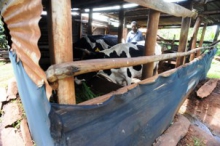 Black insecticide-impregnated nets encircling livestock pens kill disease-carrying mosquitoes and flies
27 March 2013, Rome – Asimple but innovative use of insecticide-impregnated nets to protect livestock is doubling and in some cases tripling milk outputs on smallholder dairy farms while also reducing mosquito-borne illnesses in humans in Kisii, Kenya, in the country’s western highlands. The FAO project is part of a wider strategy to vastly improve animal health in areas most affected by tropical diseases. |
View original post 1,152 more words
The Story of An Egg: The Marketing of Farming.
Working with the group called the Lexicon of Sustainability, PBS recently released a video entitled “The Story of an Egg.”
The video highlights the challenges associated with egg production and marketing in the United States. And it signals the scope of greenwashing in the conventional food stream.
Greenwashing refers to efforts by organizations to spin their marketing to appear more environmentally friendly. In the case of food production, greenwashing is fairly common. Terms like “free range” and “cage free” evoke the image of a chicken free to roam green fields and stand in stark contrast to the traditional intensive-model of egg production. But as The Story of an Egg shows, terms are often co-opted by marketers in an attempt to curry positive associations with their brands and influence consumer behavior. Indeed, “free range” and “cage free,” to paraphrase from one of my favorite movies, probably do not mean what…
View original post 102 more words

 This week we’ve been thinking about information. Specifically the type of information on agriculture and rural development that is available, how useful it is and to who. A lot of data and statistics went into the writing of One Billion Hungry and some was hard to find, out of date or non-existent. Indeed statistics, such as the United NationsFood and Agriculture Organisation’s (FAO) estimate of the number of chronically hungry people in the world, are often challenged because there are so few rigorous and comparable data sets available on food security and agriculture.
Yet policymakers often base investments in international development around evidence and farmers too must have access to clear and credible information in order to be competitive in the market. Ensuring information is timely, relevant and reliable, therefore is an important challenge. A recent paper by researchers at Tulane University investigated the impact of Food and…
View original post 623 more words
| ||
| ||
| ||
|
View original post 247 more words
While I was in Durban last summer I spent some time talking with folks involved in guerrilla gardening there. The idea of guerrilla gardening is to reclaim public spaces and use vacant lots and unused public spaces to grow food. The movement bridges social justice, environmental justice, and food sovereignty.
Some 26.5 million Americans who live in food deserts, areas without grocery stores which offer affordable food, especially fresh fruits and vegetables. The US Department of Agriculture’s Economic Research Service now offers a Food Access Research Atlas which maps the food deserts in the United States.
The irony is that such regions often have expansive access to fast food restaurants and convenience stores marketing junk food. But they do not have access to quality produce and groceries.
Perhaps not surprisingly, food deserts are disproportionately located in neighborhoods home to minorities and those living in poverty. Indeed, the racialization of food deserts have led some…
View original post 171 more words
FAO Media Centre (@FAOnews)Global consultation on #post2015 #dev agenda calls for #foodsecurity & #nutrition 2be central in development efforts http://t.co/wyqPlmlB
(https://twitter.com/FAOnews/status/301702393987477505)
FAO Fisheries Department
Improving biosecurity through prudent and responsible use of veterinary medicines in aquatic food production
13-2-2013
The current trend towards increasing intensification and diversification of global aquaculture has led
to its dramatic growth, thus making aquaculture an important food-producing sector that provides
an essential source of aquatic protein for a growing human population. For both developed and
developing countries, the sector is recognized as creator of jobs and an important source of foreign
export earnings. The expansion of commercial aquaculture, as is the case in commercial livestock
and poultry production, has necessitated the routine use of veterinary medicines to prevent and treat
disease outbreaks owing to pathogens, assure healthy stocks and maximize production. The expanded
and occasionally irresponsible global movements of live aquatic animals have been accompanied by
the transboundary spread of a wide variety of pathogens that have sometimes caused serious damage
to aquatic food productivity and resulted in serious pathogens becoming endemic in culture systems
and the natural aquatic environment. The use of appropriate antimicrobial treatments is one of the
most effective management responses to emergencies associated with infectious disease epizootics.
However, their inappropriate use can lead to problems related to increased frequency of bacterial
resistance and the potential transfer of resistance genes in bacteria from the aquatic environment
to other bacteria. Injudicious use of antimicrobials has also resulted in the occurrence of their
residues in aquaculture products and, as a consequence, bans by importing countries and associated
economic impacts, including market loss, have occurred. As disease emergencies can happen even
in well-managed aquaculture operations, careful planning on the use of antimicrobials is essential
in order to maximize their efficacy and minimize the selection pressure for increased frequencies of
resistant variants. The prudent and responsible use of veterinary medicines is an essential component
of successful commercial aquaculture production systems.
The FAO/AAHRI Expert Workshop on Improving Biosecurity through Prudent and Responsible
Use of Veterinary Medicines in Aquatic Food Production was convened in Bangkok, Thailand, from
15 to 18 December 2009, in order to understand the current status of the use of antimicrobials in
aquaculture and to discuss the concerns and impacts of their irresponsible use on human health, the
aquatic environment and trade. Such discussions became the basis for drafting recommendations
targeted for both government and private sectors and for developing guiding principles on the
responsible use of antimicrobials in aquaculture to be considered as part of future FAO Code of
Conduct for Responsible Fisheries (CCRF) Technical Guidelines on Prudent and Responsible Use
of Veterinary Medicines in Aquaculture.
Because aquaculture is expected to continue to increase its contribution to the world’s production
of aquatic food, offer opportunities to alleviate poverty, increase employment and community
development and reduce overexploitation of natural aquatic resources, appropriate guidance to
aquaculture stakeholders on the responsible use of veterinary medicines has become essential. Safe
and effective veterinary medicines need to be available for efficient aquaculture production, and
their use should be in line with established principles on prudent use to safeguard public and animal
health. The use of such medicines should be part of national and on-farm biosecurity plans and in
accordance with an overall national policy for sustainable aquaculture.
This publication is presented in two parts: Part 1 contains 15 technical background papers
presented during the expert workshop, contributed by 29 specialists, and which served as a basis for
the expert workshop deliberations; Part 2 contains the highlights of the expert workshop.

As I have already emphasized on the importance of the use of IT (Information Technology) in agriculture Pakistan for
1-Awareness of the farmer from cultivation to harvesting
2-Marketing of the crops afterwards
We have developed a mobile phone based information system for the farmers which use SMS as medium of communication. Our system focuses on the cheap delivery of the useful information for farmers including seeds, fertilizers, pesticides and weather. We were unable to market our system. Although we wanted to work extend this system.
Now I am very glad that Punjab Government jointly with Punjab Information Technology Board Agriculture Marketing Information Service (AMIS).
Purpose of Agriculture Marketing Information Service (AMIS) is to disseminate prices of agriculture commodities prices from 135 markets located across the province of Punjab. In 2010, Agriculture Department of Punjab decided to enhance the service by collecting international agricultural commodity prices and publishing these prices on AMIS…
View original post 152 more words
I will be sharing here the implementation details of agriculture information system which I have developed. Objective to share this information is to help others and give them a hint about the system. Although there is room for improvements.
This article covers the detailed implementation of components of system. All the technologies used in the project will also be explained in detail.

The features mentioned in the above sections are implemented. Web portal is implemented using Java Enterprise Edition (J2EE). Implementation technology is Java Server Faces version 2.0 (JSF2.0) and PrimeFaces is used as component library. Some of pages are developed in Java Server Pages (JSP). Database used is MySQL which is an open source database and used widely for web applications. Integrated Development Environment (IDE) used for the development is NetBeans 7.2.0.
First of all Java Enterprise Edition is…
View original post 1,805 more words


Sub-Saharan Africa was expected to maintain its position as the second-fastest growing emerging market region after Asia, with regional growth to remain above 5%.
Fitch Ratings on Wednesday attributed this to infrastructure spending, the development of mineral resources and growing consumer spending on the back of strengthened policy regimes, efforts to improve the business environment and rapid credit growth.
Further, the ratings agency commented that Africa was expected to benefit from foreign direct investment.
However, Fitch said in a statement that several factors would influence sovereign ratings across the continent over the next few months.
The agency cited Kenya’s March elections as being an important inflection point.
“ … [the] likelihood of a repeat of the scale of violence seen in 2007/8 is moderate, but incidents of ethnic violence are likely to increase in the run-up to the polls and immediately after,” it commented.
Further, Ghana’s full-year financial figures for 2012 were due to be released over the next few weeks, revealing the extent of its election-year spending overshoot, particularly on wages, and the damage to public finances.
In Rwanda and Uganda, delays in receiving aid were expected to complicate the management of government finances over the coming months.
Sub-Saharan Africa remains second-fastest growing emerging region.
AGRA (@AGRAAlliance) #Women are the key to unlocking potential within #Africa’s Agricultural Value Chains; meeting kicks off in #Lilongwe, #Malawi (https://twitter.com/AGRAAlliance/status/298671047815856128)
New Intervention for Livestock & Irrigation.
Agriculture 4 Impact (@Ag4Impact) Food, Farmers & Markets: Towards Government Action for Smallholders in 2013 http://t.co/IjQuOXLh (https://twitter.com/Ag4Impact/status/297887926577143808)
29 January 2013 | EN

The partnership will focus on Africa’s ‘most pressing agricultural challenges’
Flickr/CGIAR Climate
[NAIROBI] An international agricultural research programme has unveiled plans to collaborate with the African Union to drive agricultural research and boost productivity on the continent.
The collaboration will support the efforts of African research institutes at the country, sub-regional and continental level to realise science-based agricultural transformations and advance science and technology agendas, says Piers Bocock, director of knowledge management and communications at the CGIAR Consortium.
“In addition to developing capacity and sharing knowledge, the memorandum will facilitate the sharing of existing scientific and technological breakthroughs,” Bocock tells SciDev.Net.
The CGIAR Consortium is a global partnership that brings together 15 of the world’s leading agriculture research centres and that also leads 16 comprehensive global agricultural research programmes addressing food security.
The consortium will work to improve its coordination with governmental agricultural strategies and the AUC’s Comprehensive Africa Agriculture Development Programme (CAADP), which aims to boost African agriculture by addressing policy and capacity issues in the sector.
“By understanding the priorities of African governments, we can ensure that our research is focused on the most pressing agricultural challenges in Africa,” Bocock says.
Abebe Haile Gabriel, the AUC’s director of rural economy and agriculture, says the memorandum “calls for joint actions to guide the implementation of programmes and support activities for the CAADP,” while noting that the agreement does not include any financial exchange.
But collaborations such as this also raise a number of potentially challenging issues, says Maurice Bolo, director of the Scinnovent Centre, a Nairobi-based research and training organisation focused on science and innovation.
Bolo is keen to know, for example, how the partnership plans to tap into existing regional centres of excellence that were created under the New Partnership for Africa’s Development’s (NEPAD) Consolidated Plan of Action (CPA) on Africa’s Science and Technology
“This cooperation may further undermine intra-African networking or cooperation, which is already suffering, and there is little attention given to programmatic synergies with other continental initiatives, such as the CPA,” he says.
Bolo adds that there is very little collaboration between scientists in different African countries, and that this does not augur well for attempts aimed at increasing such collaboration.
He also expresses concern that the new memorandum does not focus sufficiently on agricultural innovation, a deficiency that he feels is common across the continent.
“Research and development products have stagnated in laboratories, whether at the CGIAR or African research institutes, and any new collaboration should give attention to moving these products into use or commercialisation,” Bolo says.
This article has been produced by SciDev.Net’s Sub-Saharan Africa desk.
Global partnership launched to drive Africa’s agricultural research – SciDev.Net.
18 June 2012 | EN

Local solutions to food security and agriculture issues are essential, say forum participants
Flickr/CIMMYT
[RIO DE JANEIRO] Nurturing local innovations and technologies — and empowering the creativity of local people — could play a far greater role in helping the world achieve sustainable development, a forum has heard.
There is a pressing need to shift from the dominant top-down approach to technology transfer, Melissa Leach, director of the STEPS centre, told the Fair Ideas event, hosted by the International Institute of Environment and Development last week (16–17 June).
Instead, fostering local technologies and innovations is increasingly important, she said.
“It is good to have global meetings like Rio+20 [the UN Conference on Sustainable Development], but there is greater need to realise that there is no single answer to human problems,” she told the meeting, held to discuss ideas for sustainable development before the Rio+20 summit this week (20–22 June).
This article is part of our coverage of preparations for Rio+20 — the UN Conference on Sustainable Development — which takes place on 20-22 June 2012. For other articles, go to Science at Rio+20
Processes for achieving sustainable development must connect to localinnovations, she said. “We need to empower the creativity of poor people to contribute to social, economic and ecological systems.”
Leach cited the case of East Africa, where decade-long efforts to improve food security — through a top-down approach involving sophisticated plant-breeding and high level biotechnology for drought-resistant maize — have not succeeded.
Many small-scale farmers are still trapped in poverty, and the food insecuritywitnessed in the Horn of Africa in 2011 has become recurrent problem.
But local people would be in an even worse situation, Leach claimed, without home-grown technologies. These include the results of farmer-participatory research — in which farmers conduct experiments in their fields — and efforts by local institutions to manage natural resources.
Kevin Urama, executive director of the Nairobi-based African Technology Policy Studies Network, said the challenge was that people still believed innovation and technologies must be transferred from north to south, rather than potentially being developed indigenously.
“We must go beyond looking for technological development and infusion from the West, to socio-technological solutions where the people who need it are part of the process,” he said after the meeting.
He gave the example of people living in arid and semi-arid conditions being aware of which crops would thrive in their local area. Such knowledge had to be researched to improve home-grown innovations and solutions, Urama said.
This article is part of our coverage on Science at Rio+20. Read more in ourlive blog.
Homegrown solutions ‘crucial to sustainable development’ – SciDev.Net.
The Agriculture Investment Case
Agriculture in Kenya is not usually thought of as an investment but as an occupation of the rural folk mostly the old. Many youths from rural and urban backgrounds shun this way of life and opt to flock the city to look for white collar jobs which are not there. Furthermore, our universities and places of higher education do not promote agriculture, instead they prepare students to be job seeker and not job creators.
Agriculture today has a compelling investment case…
Fast Growing Population
The Kenyan population is growing very fast – 1 million people per year and growing by almost 3%. Arable land is decreasing due to climate change and conversion into real estate. Demand for food is growing exponentially while supply is diminishing. A basic economic principle here; when demand goes high and supply low, the price will be high.
For instance coffee prices…
View original post 349 more words
The State of Food & Agriculture 2012 | International Food Policy Research Institute (IFPRI).
RSVP to Simone Hill-Lee – s.hill-lee@cgiar.org, 202-862-8107
International Food Policy Research Institute
2033 K Street, NW, Washington, DC
Fourth Floor Conference Facility
Quantity or quality? When it comes to investment in agriculture, a growing number of development experts vote for the latter. While the conventional approach to reducing poverty, hunger, and malnutrition has long been investing more, new evidence shows that targeted, fully informed investment works better, according to the latest edition of the UN Food and Agriculture Organization’s (FAO) annual flagship report, The State of Food and Agriculture 2012: Investing in Agriculture for a Better Future. The report was launched in Rome in December, and IFPRI, FAO, and the Partnership to Cut Hunger and Poverty in Africa are pleased to host the U.S. launch of this important publication.
Keith Wiebe and Sarah Lowder will provide a general overview of the report. Tewodaj Mogues, will present background work on the impacts and political economy drivers of public investments in agriculture. Michele McNabb will discuss models for inclusive and responsible investment in smallholder farming.
 Rodrigo de Oliveira Andrade
Latin America correspondent, SciDev.Net
It has been an action-packed day at the Second Global Conference on Agricultural Research for Development (GCARD2) so far. During the plenary session, which officially opened the meeting, we heard about the importance of discussing with smallholder farmers their needs to better define research priorities, as well as public policies to improve the agricultural development around the world, and about the essential role of partnership.
Monty Jones, chair of the Global Forum on Agriculture Research, said during his talk that radical changes in agricultural research for development are needed and that although research is essential, it in itself is not sufficient to impact the lives of smallholder farmers.
“We value scientific knowledge. However, it’s equally important to capitalise local knowledge, combining it with scientific knowledge to better attend to the needs of resource-poor farmers and smallholders,” he said.
Jones also highlighted the importance of putting farmers at the…
View original post 371 more words
‘Action, not just networks’ for agricultural developmentRodrigo de Oliveira Andrade Latin America correspondent, SciDev.NetIt has been an action-packed day at the Second Global Conference on Agricultural Research for Development (GCARD2) so far. During the plenary session, which officially opened the meeting, we heard about the importance of discussing with smallholder farmers their needs to better define research priorities, as well as public policies to improve the agricultural development around the world, and about the essential role of partnership.Monty Jones, chair of the Global Forum on Agriculture Research, said during his talk that radical changes in agricultural research for development are needed and that although research is essential, it in itself is not sufficient to impact the lives of smallholder farmers.“We value scientific knowledge. However, it’s equally important to capitalise local knowledge, combining it with scientific knowledge to better attend to the needs of resource-poor farmers and smallholders,” he said.Jones also highlighted the importance of putting farmers at the center of innovation.“Researchers must talk to farmers and think with them — not for them — to determine their needs, and give them innovations that meet the actual challenges.”He concluded by saying that achieving impacts requires continued efforts together and commitment to practical actions and that GCARD2 is an opportunity to set out our own commitments about this.“We need to be active during following days. The time for action is now.”Credit: GCARD2Carlos Perez del Castillo, chair of the CGIAR Consortium, asked for feedback from partners working with the consortium to improve the work being done.And Sujiro Seam, deputy director for Global Public Goods at the French Ministry of Foreign Affairs, said that “a key component of the system is partnership at all levels: national, bi-lateral, public-private, research-extension-farmer”.But Codrin Paveliuc-Olariu, a postdoctoral researcher at Gembloux Agro Biotech in Belgium, told SciDev.Net that only a few things have been done since the first GCARD meeting, in 2010. Most of the things that have taken place are related to capacity-building and partnerships, and more networks have been created and supported by GFAR and CGIAR.In his opinion this is not enough, since if organisations continue to create new networks and new partnerships without really giving value for money to the present ones, “we will be going nowhere”.“We don’t need more evaluations, assessment and studies, we need to give support to grassroots projects, to support stakeholder initiatives directly,” he said.“GCARD2 should be an improvement on the first meeting, not just a showcase of what has been done and ‘let’s move forward with that under a new name’. We need to take into consideration the changes in the past years, we need to consider what hasn’t been done and why, we need to listen to other voices also.”He also tweeted that he doesn’t agree with Monty Jones when he says that farmers are the only part of the food chain. “A full system made by multistakeholders approach is needed.”Additional reporting by Daniela Hirschfeld.This blog post is part of our coverage of GCARD 2012, which takes place on 29 October–1 November 2012 in Punta del Este, Uruguay. To read news and analysis on agricultural research please visit our website.
via ‘Action, not just networks’ for agricultural development.
From research to actionNovember 1, 2012Rodrigo de Oliveira Andrade Latin America correspondent, SciDev.NetThe field trip day has been the most exciting activity promoted by the Second Global Conference on Agricultural Research for Development (GCARD2) so far. Not just because we had the opportunity to find out about agricultural production in Uruguay, but also because we could learn a little bit more about the country itself and interact with people from all over the world closely, by sharing points of view over the work that had been done in the meeting during the past two days.After the buses left the Conrad Hotel yesterday morning, we made our way to the Montevideo countryside. During the journey through Punta del Este’s roads to the Rincón del Colorado zone, our guide, Roberto Zoppolo, introduced us to the local landscapes, agriculture, weather, and Uruguayan fauna and flora.I had chosen Circuit 5, entitled ‘Sustainable Production’. Our first stop was at the Wilson Ferreira Aldunate experimental station at the Uruguayan National Institute Agricultural Research (INIA), based in Las Brujas.Credit: Rodrigo de Oliveira AndradeZoppolo, who also is director of the INIA National Research Program on Fruit Production, told SciDev.Net: “Our rural development programmes focus on social and environmental sustainability, by ensuring the food security of smallholder farmers”.INIA has four others experimental stations around the country, including Salto Grande, in Camino al Terrible, and La Estanzuela, in Colonia.We saw some of the work being done by the institute in the field of horticulture, as well as onion crops adapted to different growing seasons and production areas.After our trip to INIA, we visited the Solari family, who introduced us to a new method of plague control that uses pheromones to prevent its reproduction. The women living there also shared with us their experiences in fruit production.Our visit to the Zunino family involved finding out how soils are preserved to achieve sustainability. The family uses a technique known as crop rotation on their farm, which helps to preserve soil quality while reducing the incidence of plagues and soils diseases.It was good take part in this circuit to understand how some partnerships are going on and how governmental institutions are dealing with the smallholder real problems and concerns.By the end of the day, everybody was exhausted and starving as well. So it was good to know that a barbecue was waiting for us at the Estancia Siglo XX. We witnessed a lovely sunset, accompanied by good food and conversation.This blog post is part of our coverage of GCARD 2012, which takes place on 29 October–1 November 2012 in Punta del Este, Uruguay. To read news and analysis on agricultural research please visit our website.
What about the farmers?November 2, 2012Rodrigo de Oliveira Andrade Latin America correspondent, SciDev.NetYesterday at the Second Global Conference on Agricultural Research for Development (GCARD2) delgates heard some of the main recommendations that will constitute the meeting’s priorities over the next two years. At the same session, an overview of the parallel session over the past three days of meeting was also released.During ‘Agenda for Action toward GCARD 2014′ we heard that the conference’s value goes beyond mere discussion. The key messages were: foster a culture to better enable partnership; develop guidelines and standards for partnership between research and development actors in particular; and promote innovative arrangements that enable, rather than frustrate, partnership.Delegates also heard that there is a need to clarify what public-private-civil partnerships are, who they involve and under what conditions they work. New mechanisms need to be created to unify all partners within a trusted relationship that includes country-level platforms, regional investment forums and global initiatives.Regarding public investment, it was recommended that GCARD and its stakeholders synthesise available information on investment levels and impacts by country and subject matter.Lot of actions were proposed, but nobody knows who will put them into practice in the upcoming months. This was one of the main criticisms raised by Ajay Jakhar, from the Farmer’s Forum in India, who also said in his talk that in the next GCARD meeting, “the farmers need to have more representation”.I only had the opportunity to hear what farmers and non-governmental organisations had to say about the meeting in one session throughout the entire conference, even though the official discourse had constantly said that farmers need to take part in the agricultural research process.Once again institutionalist discourse has remained rooted in official discussions. And the question which hasn’t been answered is [again]: how is everything that has been discussed going to benefit smallholder farmers, particularly the poorest ones?This blog post is part of our coverage of GCARD 2012, which takes place on 29 October–1 November 2012 in Punta del Este, Uruguay. To read news and analysis on agricultural research please visit our website.
GCARD2: Closing thoughtsNovember 2, 2012Rodrigo de Oliveira Andrade Latin America correspondent, SciDev.NetThe Second Global Conference on Agriculture Research for Development (GCARD2) is officially over. As I have previously said, the meeting has produced a lot of recommendations, but nobody knows how and who will put them into practice over the next two years. The conference’s closing session was chaired by Raj Pandora, from the GCARD Organising Committee, and had the presence of Rachel Kyte, World Bank vice-president.But the most anticipated speech came from the Uruguay’s minister of Livestock, Agriculture and Fisheries, Tabaré Aguerre.In his talk, he exalted the importance of the meeting, saying that GCARD has created a huge forum for sharing experiences and ideas, and has given Uruguay international visibility.“Our country has been committed to agricultural development focused on sustainability and farmers’ quality of life for years. And I believe that key to continuous improvement of this system is governance. It’s only through governance that we will have an efficient and sustainable national agricultural innovation system,” he said.Aguerre also highlighted that the GCARD has contributed with these actions and that the private-private and private-public partnerships must be coordinated by public policies well structured, given that many countries have experienced a growth of their development rates by using the natural resources in an exaggerated way.“Different examples of productive systems have been showed during the GCARD meeting. The world needs a more efficient and competitive agricultural system through the improvement of the smallholder farmers’ life from the food security and sustainability of production process. We won’t achieve our goals while exists poor farmers seen as secondary actors in the elaboration of public policies to the field. The measures need to be fair and compassionated and it won’t come from markets, but from the public sectors,” emphasised.Myriam Pérez Diaz, one of GCARD2′s social reporters, questioned whether the meeting was really able to address smallholders’ real problems, given that in the eyes of some participants GCARD2 is a very ‘big’ conference, which hampers inserting the smallholders’ interests on the meeting agenda discussion.“Global trading and price volatility, developed countries dumping under-priced products in poorer countries, land access and land grabbing and private companies buying arable land on developing countries. These are the real barriers to lifting smallholders out of poverty,” she wrote in one of her reports.“I really don’t understand the reason why nobody is addressing these concerns, which are precisely linked to the main agricultural issues to be overcome through this meeting,” she told SciDev.Net.Marcio Adriano, from Caritas Internacionalis, told SciDev.Net that he was disappointed with the sort of debates established during the conference and said that the GCARD appears to be distant from the smallholder farmers’ reality.“They are still trying to put the small farmers into the logic of the big agribusiness, which is indeed in the middle of the discussions. It seems that they still believe that increasing food productions is the solution against hunger in the world. They don’t seem to take into account the problem of the inequality of its distribution,” he said.Adriano concluded by saying that the academic knowledge still prevailed instead of the dialogue with the smallholder farmers’ local knowledge. Align these knowledge in a same direction is one of the main challenges postponed to the next GCARD meeting, which takes place in 2014.This blog post is part of our coverage of GCARD 2012, which takes place on 29 October–1 November 2012 in Punta del Este, Uruguay. To read news and analysis on agricultural research please visit our website.
Europe and Africa link up on ICT researchNovember 27, 2012David DicksonCorrespondent, SciDev.NetNo-one doubts that information and communication technologies (ICTs) make a substantial contribution to development, even in the poorest countries.Indeed, many have suggested that such technologies are helping developing countries to leap-frog the earlier stages of industrial transformation that the so-called developed countries have each had to pass through, offering a quick route to social and economic development.But developing countries, particularly those with a weak research and development base – as is the case in most of Africa – will not be able to achieve this on their own. They need support and assistance from countries that already have high level of ICT skills.For the next two days (28 and 29 November) more than 200 ICT experts and stakeholders will be attending the ‘2012 Africa-EU Cooperation Forum on ICT’, being held in the Portuguese capital of Lisbon.The meeting aims to strengthen and support the development of cooperation on ICT research and ICT for Development (ICT4D) between Africa and Europe.Those participating will include policy and decision makers, heads of stakeholder institutions and international organisations, and academics from both Africa and Europe. Topics to be covered range from e-learning infrastructures, to what are described as “living labs”.There will also be an emphasis on how ICTs can help Europe and Africa collaborate more closely in research. In particular, on the first day of the forum, (28 November), the AfricaConnect project, which has featured in regularly our news columns (see for example, here), will be formally launched in Europe.I will be attending the forum and posting regular blogs describing some of the main presentations and workshop discussions. And hopefully I will be able to pick up some broader information about future funding for research in developing countries in the EU budget. It promises to be a fascinating meeting.This blog post is part of our 2012 Africa-EU Cooperation Forum on ICT blog, which takes place 28-29 November 2012, in Lisbon, Portugal. To read news and analysis on ICTs please visit our website.
via Europe and Africa link up on ICT research.
The way ahead on ICT: progress through partnershipNovember 28, 2012David DicksonCorrespondent, SciDev.NetThe geographical proximity between Africa and Europe has inevitably led to a long and close relationship between the two continents. Over the past few centuries, colonialism has meant that the relationship has often been a painful one, with Europe as the dominant partner reaping the greater benefits.Today, as speakers emphasised at the first session of the 2012 Africa EU Cooperation Forum on ICT, which opened this morning in Lisbon, Portugal, the situation is very different. Cooperation between neighbours for mutual benefit is the theme of the day. And nowhere, it was stressed, is the potential for cooperation stronger that in the field of information and communication technologies.As Moctar Yedely, head of the information society division of the African Union Commission, put it: “our relationship is something that should never fail because we are so geographically close that we have no choice but to be close and to be friends”.Yedely stressed that ICT was about more than telephones and computers. “It is about those applications that will bring value to transforming African societies”. He added: “If a small village in Africa has access to the potential of ICT, it may bring benefits to a remote village in Europe”.Zoran Stancic, deputy head of the European Commission’s directorate general for communication networks, content and technology (DG-Connect), emphasised that joint work on ICTs was a central element of the broader partnership between Africa and the European Union (EU).He pointed out that the EU already recognised ICT as providing a central pillar for facilitating growth and jobs. “We see the same thing happening throughout Africa,” he said, pointing out that the number of mobile phone users in Africa had grown from 8 million to 800 million today.Stancic said that there was an “avalanche” of new innovative solutions being developed in Africa. For example, innovation in mobile banking in Kenya was a success story that needed to be promoted in a broader context.Cooperation in research was one way that Europe could help Africa achieve more successes. He said that there had been a constant rise in the number of African institution participating in Europe’s framework programmes, from 40 partners in the 6th Framework Programme (which lasted from 2002 to 2006) to more than one hundred in the current 7th Framework Programme.“We see the next framework programme as an important instrument to help this flourish in the future,” Stancic added. “A proper approach to facilitating cooperation between EU researchers and researchers in Africa can bring benefits to both sides. We want to work together to support capacity building in Africa, but European scientists can also benefit from our friends and partners in Africa.”The current challenge, both in Europe and Africa, he said, was to promote success stories in a way that would help political leaders “make the right choices in the future”.Portugal, the host for today’s meeting – and one that has the longest links with Africa of any European country – is one country that needs little convincing.Leonor Parreira, the secretary of state at the country’s Ministry of Education and Science, said that Portugal was committed to continuing initiatives that had already been started in area related to ICT, and to build on established alliances to evolve strong knowledge networks based on regional diversity and complementary.“It is critical that these partnerships become sounder to overcome differences between cultures and demonstrate that we have common interests,” Parreira said. “ICT has the potential to enable this.”Lots of fine words. The next two days will show what they mean in practice.This blog post is part of our 2012 Africa-EU Cooperation Forum on ICT blog, which takes place 28-29 November 2012, in Lisbon, Portugal. To read news and analysis on ICTs please visit our website.
via The way ahead on ICT: progress through partnership.
Has ICT fallen off the development radar?.
November 28, 2012
Scant funding for research facilities is hurting Africa – SciDev.Net.
Donors must work with African countries to provide crucial science infrastructure, argues S&T policy scholar Nicholas Michael Bashour.
African countries want and need financial support for research and innovation. Fortunately, there’s plenty of money to go around in that regard. For example, the European Union provides more funding to the continent than it gives to Asia and Latin America combined and there is additional support from Australian, North American and UK research agencies.
As a result, Africa should have a thriving research community. Unfortunately, this is not the case.
This is reflected, in part, in brain drain figures. The painful exodus of skilled labour has averaged about 20,000 professionals a year since 1990. [1]
Various data also reveal the disappointing reality that Africa’s contributions to the world’s research and development (R&D) remain very low — totalling less than 1 per cent of global investment in R&D and a mere 1.5 per cent of total scientific publications — and has been so consistently over the past decade. [2, 3] The fact that output remains low despite a sustained and arguably rising availability of external funding over the years is cause for concern.
The central reason for the discrepancy between the availability of research funds and the small scale of African scientific output is the lack of adequate research infrastructure: laboratories, data processing centres, biobanks and other brick-and-mortar facilities needed for research, especially near universities.
Constantly injecting money into African research without prioritising investment in its wider scientific ecosystem by supporting infrastructure development is proving to be a short-sighted and limited solution for expanding Africa’s role in global science and addressing the continent’s economic and social concerns.
Re-evaluating priorities
In most African countries, support for research infrastructure lags far behind that for other types of infrastructure projects, such as transport, water and power. It is certainly politically and socially difficult to justify spending money on a research laboratory or a data centre at the expense of a water sanitation treatment plant, for example.
However, given the current substantial global investment in African science and the continent’s growth potential, combined with its socioeconomic goals and the related benefits of R&D, funding for research infrastructure should be expanded and placed on an equal footing with other development funding.
The lack of adequate research infrastructure has implications beyond research productivity. Science and technology (S&T) collaboration and cooperation between Africa and other regions, including Europe and the United States, are affected by the absence of adequate infrastructure in Africa.
For the partnerships and collaborations that do exist between Africa and other countries, African scientists are at a disadvantage.
During the Promoting African European Research Infrastructure Partnerships workshop in London in October 2012, Zeinab Osman, director of the Institute for Technological Research at the National Center for Research in Sudan, noted that although she has access to external funding and sought-after biological samples in her home country, which allows her to build partnerships with interested institutions abroad, and despite her expertise and aspiration to conduct various research projects in Sudan, she is unable to do so simply because of inadequate research infrastructure.
Two-part solution
Her situation is too common in Africa, where highly qualified and well-trained scientists with connections to global research leaders, institutions and funds have limited ability to work because of a lack of an adequate research ecosystem.
So how can African countries build the necessary research infrastructure?
The appropriate solution has two dimensions: intra-African and international. On the intra-African side, African governments need to develop long-term strategic roadmaps for R&D investment that include infrastructure development.
By doing so, they can demonstrate to the international community an actual commitment to science research, as opposed to a mere desire to increase R&D capacities, making them a more attractive location for science investment and making them more likely to receive increased support for infrastructure development.
Such a strategy would also transform African countries from passive bystanders into responsible and proactive players in their own R&D futures.
Internationally, the diplomatic community inside and outside Africa, together with scientists and researchers, needs to encourage donor governments and agencies that provide Africa with development assistance and science funding to allow for, and promote, the use of some of this money for research infrastructure development. Substantial investment in infrastructure should also be part of any continent-wide S&T strategy.
Everybody’s problem
This is by no means an easy task. Donor countries, especially EU member states and the United States, fundamentally oppose providing funds for research infrastructure development in Africa on the grounds that this is something that African countries should fund themselves.
However, the lack of research infrastructure in the continent is not solely African countries’ problem. By working together with African governments to build infrastructure capacity, the international community can accomplish much more for Africa’s future growth and role in global science in a much shorter timeframe than it would if this was left to African countries alone.
Research infrastructure drives and promotes international science collaboration and helps build stable and lasting international relationships. It creates concrete social and economic benefits and can even precipitate investment in traditional infrastructure. It should not take a back seat to other types of investment.
Nicholas Michael Bashour is a Fulbright-Schuman fellow in Brussels, Belgium, and currently a visiting fellow at the Institute for Research Information and Quality Assurance in Berlin, Germany. Nicholas can be contacted at nicholas.bashour@fulbrightmail.org
[1] Tebeje, A. Brain drain and capacity building in Africa (IDRC, accessed 2013)
[3]OECD Science, Technology and Industry Outlook 2012 (OECD, 2012)
Food Security vs. Food Sovereignty.

Dr. B. A. Usman
+234 802 913 3339
+234 803 565 1540
http://www.linkedin.com/in/drbausman
From WordPress for BlackBerry.
African Farming (@africanfarming) tweeted at 5:15 PM on Wed, Dec 12, 2012:
#AfDB approves #Nigeria’s US$650 million #loan request for #agriculture #development: http://t.co/rEAEYzM8
(https://twitter.com/africanfarming/status/278895986095558656)
Get the official Twitter app at https://twitter.com/download
African Farming (@africanfarming) tweeted at 3:37 PM on Thu, Dec 13, 2012:
#UN report calls for farmer-centred approach to #agricultural investment: http://t.co/Q328Kac5 #FAO #food
(https://twitter.com/africanfarming/status/279233596907200512)
Get the official Twitter app at https://twitter.com/download
Sril Group Ltd (@Srilgroup)
News and information on food security for development – http://t.co/CBWNnZdk http://t.co/r8jJFEsy
(https://twitter.com/Srilgroup/status/286259141742325760)
Get the official Twitter app at https://twitter.com/download
Daily nation
By CHARLES WOKABI cwokabi@gmail.com
Posted Wednesday, February 29 2012 at 17:22
Agriculture has for a long time been the lifeblood of the Kenya’s growth engine raising about 30 per cent of the Gross Domestic Product.
As such, the industry offers a huge chance for both seasoned, and budding investors who are willing to ditch the traditional misconceptions that farming is just a dirty and unprofitable venture for the rural folks.
The young Kenyans featured here are good illustrations of this fact, and act as the latest reminder that the agriculture industry can hand you great success.
However, like any other business venture, making it in agriculture requires massive research and planning before betting your hard earned millions on it.
Fortunately, in Kenya today, there many firms at the helm spearheading research and advisory services in the industry. Among them is the government’s Kenya Agricultural Research Institute. Financial institutions willing to fund such ventures…
View original post 386 more words
Daily nation
By CHARLES WOKABI
Posted Wednesday, February 29 2012 at 17:11
His insatiable passion for agriculture led him to farming as a part-time income-boosting activity last year. On his three-quarter acre piece of land, Mr Ngugi built a 20-by-21 square metre greenhouse by last December and sowed the Anna F1 tomato variety, known for high productivity.
He spent about Sh550,000 on the greenhouse structure, agro-chemicals and the set up of a 70,000-litre capacity rain water harvesting system as his farm does not have piped water.
After planting in December, the crop will be harvested in March and will go on for the next eight months. He expects to earn a gross income of about Sh1.5 million in the first season.
Ngugi also plans to plant 1,000 seedlings of water melon in August, which he projects will earn him Sh100,000 in three months. By then, he hopes to have expanded his water…
View original post 714 more words
Food Security in AfricaThis entry was posted on January 18, 2012. Bookmark the permalink. Leave a commentIn Africa there are a number of weaknesses and constraints as well as strengths and opportunities for the development of the agricultural sector and the attainment of national and household food security. The use of low yielding crop varieties and breeds of livestock, as well as high post harvest losses, significantly contribute to low production and productivity. The challenge is to make improved technologies available and accessible to small scale farmers in a sustainable manner, and ensure the youth who are the majority in the continent population participates in the agricultural sector.The youth in the continent has neglected farming an industry considered to be the backbone of the economy and run to the cities searching for white collar jobs, leading to mushrooming slums in the cities, this as lead to increase in national poverty and makes the first millennium goal out of reach. These facts emphasize the vital need to hurriedly start a campaign and training for the youth to go back to the farms if there is to be significant progress towards addressing the problem of hunger and poverty in Africa.The other major issue is the seasonal pattern in the production and marketing of farm products, this is dominated by rain-fed agricultural production with food supplies running low between successive harvests, resulting in a severe and widespread seasonal hunger problem. This is the most serious dimension of hunger in rural areas of Africa. The interactions between food shortages, labour demand, pest and disease incidence and human energy supplies limit cultivated areas and labour inputs into crop care, thereby adversely affecting yields.For the continent to be able to achieve the first millennium goal ‘eradicating poverty and hunger’ much need to be done. With the number of unemployed young people skyrocketing day by day in the continent, more emphasis need to be put on encouraging and enticing the youth to go back to the farms, this, not only will it provide a source of employment but also enable Africa to be food secure. With proper education on pest and disease controls, use of irrigation rather than merely relying on seasonal rain, expanding market and transportation infrastructure and use of advancing technology will take the African economy to another page through agriculture
In Africa there are a number of weaknesses and constraints as well as strengths and opportunities for the development of the agricultural sector and the attainment of national and household food security. The use of low yielding crop varieties and breeds of livestock, as well as high post harvest losses, significantly contribute to low production and productivity. The challenge is to make improved technologies available and accessible to small scale farmers in a sustainable manner, and ensure the youth who are the majority in the continent population participates in the agricultural sector.
The youth in the continent has neglected farming an industry considered to be the backbone of the economy and run to the cities searching for white collar jobs, leading to mushrooming slums in the cities, this as lead to increase in national poverty and makes the first millennium goal out of reach. These facts emphasize the vital need to hurriedly…
View original post 219 more words
Greenhouses to entice youth to take up farmingThis entry was posted on March 9, 2012. Bookmark the permalink. Leave a commentBy Ally JamahThe Youth Enterprise Fund is set to construct 420 greenhouses across the country in a Sh150 million strategy to lure youth into entering the world of profitable farming.The Fund will also give loans to thousands of youth groups to buy their own greenhouses and access modern technology.The Chairperson of the Fund’s board, James Gitau, revealed on Monday that youth groups in all the 210 constituencies will soon be invited to apply for the greenhouses to be built in the first phase of the programme.“We expect to involve 5,000 youth in the first phase. This new project will create instant jobs for them and will also improve the country’s food security considerably,” he said during the project’s launch.The greenhouses will be constructed by Amiran Kenya, the organisation that first introduced large-scale green houses in the country in the late 1980s. The two organisations formally signed a Memorandum of Understanding on Monday at a Nairobi hotel to kickstart the programme.The greenhouses will have a drip irrigation system, seeds, crop protection products, a sprayer and nursery set. Also included as part of the package will be health and safety protective gear and access to training, agro-support and insurance.Agrivijana loanThe second phase of the programme will see youth groups access what has been dubbed as the “Agrivijana loans”, which allows them to buy their own green houses and receive appropriate training and equipment to launch profitable farming.Youths will be given Sh358,000 but they must raise 10 per cent of the loan. Repayment will start following a four-month grace period.“Using new technologies, we can show how Kenyan youth can make lots of money for themselves from farming. They wouldn’t need to move into towns anymore to look for jobs,” said Amiran’s MD Pinaas Moskovich.For groups to qualify, they must have at least quarter of an acre of land with access to an adequate supply of water. Seventy per cent of the members must be aged between 18-35.
via Greenhouses to entice youth to take up farming.
By Ally Jamah
The Youth Enterprise Fund is set to construct 420 greenhouses across the country in a Sh150 million strategy to lure youth into entering the world of profitable farming.
The Fund will also give loans to thousands of youth groups to buy their own greenhouses and access modern technology.
The Chairperson of the Fund’s board, James Gitau, revealed on Monday that youth groups in all the 210 constituencies will soon be invited to apply for the greenhouses to be built in the first phase of the programme.
“We expect to involve 5,000 youth in the first phase. This new project will create instant jobs for them and will also improve the country’s food security considerably,” he said during the project’s launch.
The greenhouses will be constructed by Amiran Kenya, the organisation that first introduced large-scale green houses in the country in the late 1980s. The two organisations formally…
View original post 185 more words
As much as humanitarian aid is important in saving lives, let us think of allocating a portion of the millions we perennially sink into emergency relief to irrigate and support farming projects in dry region for enhanced food security. It has been said for long that if you give someone a fish you feed them for a day, but if you show them how to fish you feed them for the lifetime.
It is possible for people living in the sub-Saharan Africa to feed the region by producing their own food if the state as well as non-state actors changed tact and embraced permanent solutions. It is undesirable that irrigation has not been fully exploited and some schemes that starts are not properly managed leading to their collapse. I many area you will find volumes of water during rainy seasons flowing on the surface and in some cases becoming a…
View original post 77 more words
New Indigenous Chicken By KariThis entry was posted on August 8, 2012. Bookmark the permalink. Leave a commentA new breed of indigenous chicken breed has been introduced in the market. The new breed introduced by Kenya Agricultural Research Institute produces more eggs and meat and can be reared under free-range conditions.According to the research findings released in the Organic Farmer Magazine, a publication of African Insect Science for Food and Health, the new breed adapts well with the local climatic conditions and management systems. If kept in good conditions, the research shows that a hen can produce between 220-280 eggs a year depending on the management system, the research report indicated.With good quality feeding of 6.20kg of feed given in five months and careful chicken husbandry, the hen can attain 1.5 kg in weight in the five months period. A cock that has consumed 6.8 kg of feed weighs up to 2.10kg over the same period. To maintain optimum egg production, a hen from the breed requires 122g of feed per day.A Senior Researcher at KARI Dr. Ann Wachira says its ability to survive in harsh environment makes the breed favorable in arid and semi arid lands especially in Kitui, Mwingi and Machakos. “The birds can do well under free-range and organic farming management systems”, says Dr. Wachira adding that it has quiet temperament and excellent feathering to adapt to conditions in which it is reared faster than other birds.To meet the demand of the breed in the country, she says the institute has acquired a modern incubator for 35,000 eggs. A day-old chicken goes for shs 80, four week-old chicks at shs 180, breeding cocks sells at shs 800 while fertile eggs are going for shs 600 for a tray of 30 eggs. Unlike other chicken breeds in the market, it is easy to differentiate between eggs and cockerels as the hens are black in colour while the cockerels are speckled, says Dr. Wachira.Source: The Star (Nairobi)
via New Indigenous Chicken By Kari.
A new breed of indigenous chicken breed has been introduced in the market. The new breed introduced by Kenya Agricultural Research Institute produces more eggs and meat and can be reared under free-range conditions.
According to the research findings released in the Organic Farmer Magazine, a publication of African Insect Science for Food and Health, the new breed adapts well with the local climatic conditions and management systems. If kept in good conditions, the research shows that a hen can produce between 220-280 eggs a year depending on the management system, the research report indicated.
With good quality feeding of 6.20kg of feed given in five months and careful chicken husbandry, the hen can attain 1.5 kg in weight in the five months period. A cock that has consumed 6.8 kg of feed weighs up to 2.10kg over the same period. To maintain optimum egg production, a hen from the…
View original post 166 more words
Make Farming More Attractive to Youths Says Obasanjo in KenyaThis entry was posted on August 8, 2012. Bookmark the permalink. 1 CommentFormer Nigerian president Olusegun Obasanjo yesterday said lack of electricity in most rural areas is one of the major reasons why youths shy away from agriculture. The former president said for youths to be drawn to agriculture, the sector must be made attractive. “If the only place we have bright lights is in the cities, the youths will remain in the cities. You have to bring some light to the rural areas for youth to take agriculture seriously,” said Obasanjo.Making agriculture attractive is the only way Kenya and other African countries can ensure food security and sufficiency and even export, said Obansanjo. “We must encourage commercial farming supported by technology to drive agricultural development,” said the former president who is a successful farmer. Obasanjo was speaking at the third African governance, leadership and management convention in Mombasa.He said most youths are influenced by the West. Rappers from America and other European countries, he said, entice African youths that they disregard farming as a viable sector in Africa. “They entice the youths. We must do something about this. I went to the village. The youngest farmer in my village is my cousin who is now 67,” noted Obasanjo, much to the amusement of the audience.The former president said agriculture and agribusiness must be given support on skills. The key for great progress in Africa is agribusiness. “Small and medium enterprises and agribusiness are the sure ways of wealth generation and employment creation for most of our people in Africa,” he said.
via Make Farming More Attractive to Youths Says Obasanjo in Kenya.




 Dr. Bukar Ali USMAN, mni
EMAIL |
|