Could Africa Feed the World?

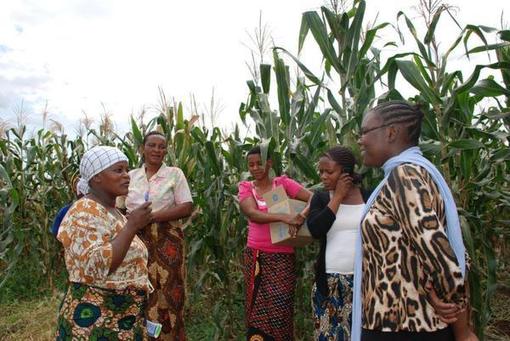
Africa was the only region where the number of hungry grew over the period, from 175 million to 239 million, with nearly 20 million added in the past four years. The prevalence of hunger, although reduced over the entire period, has risen slightly over the past three years, from 22.6 percent to 22.9 percent – with nearly one in four hungry. And in sub-Saharan Africa, the modest progress achieved in recent years up to 2007 was reversed, with hunger rising 2 percent per year since then.

Source: globalfoodpolitics.wordpress.com

See on Scoop.itPoverty, Hunger & Malnutrition

Posted in Uncategorized | Leave a comment

Could Africa Feed the World?

GlobalFoodPolitics's avatarGlobal Food Politics

South African Farm (Photo: Siphiwe Sibeko) South African Farm (Photo: Siphiwe Sibeko)

As Americans set off for the Thanksgiving holidays, few will likely pause to reflect on the global inequality surrounding access to food. A estimated one billion people worldwide are obese; an estimated 870 million are hungry. The geography of the maldistribution of food largely reflects the traditional north-south patterns of inequality more generally.

Like this broader pattern of inequality, the unequal distribution of food resources has both natural (geographic) and anthropocentric origins. While progress has been made in reducing the total proportion of the global population that suffers from hunger, progress in Africa has been slower than the global average. The Food and Agriculture Organization’s 2012 State of Food Insecurity in the World report noted that the number of hungry people declined from 18.6 percent of the global population in 1990-92 to 12.5 percent of the global population in 2010-12. But as the press…

View original post 637 more words

Posted in Uncategorized | Leave a comment

Framing African Hunger

GlobalFoodPolitics's avatarGlobal Food Politics

Saturday Night Live last week screened a devastating critique of the charity industry, highlighting so many of the problems associated with these types of initiatives: the Western expert; the helpless “African;” the placeless “Africa;” and so many others. It’s well worth watching–and dissecting.

View original post

Posted in Uncategorized | Leave a comment

Small-scale farms mixing livestock and crops are the way to feed the world—Kenya newspaper

Paul Karaimu's avatarILRI Clippings

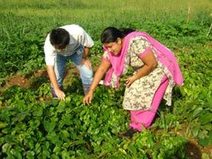
Climate Smart Villages- Karnal

Small-scale farms mixing crops and livestock, such as this one in India, will feed a growing world population (photo credit: CCAFS/Vishwanathan).

An article published this week (18 Nov 2014) in the online edition of Kenya’s Standard newspaper highlights the important role that mixed livestock and crop farms will play in feeding the world in coming years.

The article cites research by the International Livestock Research Institute (ILRI) that showed that ‘farmers and policymakers need to turn their attention to mixed farming systems, especially in [neglected medium-] potential areas’ because these farms ‘more than the traditional breadbaskets and rice bowls of the past, will feed the growing world over the next few decades.’

According to the article, ‘farmers who mix growing crops with rearing livestock in both poor and developed countries, not only boost food security efforts’, but also earn much needed income in the process.

Read the whole article: How…

View original post 26 more words

Posted in Uncategorized | Leave a comment

About MCMi > Immunology of Protection from Ebola Virus Infection

The purpose of this workshop is to discuss important aspects of Ebola virus and vaccine immunology in order to inform future clinical, scientific and regulatory decision-making related to vaccines against Ebola.

Source: www.fda.gov

See on Scoop.itFood Policy, Supply, Security & Safety

Posted in Uncategorized | Leave a comment

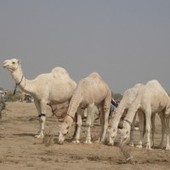
Dairy Camel ~ Transforming from Desert Ecosystem to Modern Farming

The old world camels (Dromedary and Bactrian) are well adapted to the harsh (both cold extreme and hot extreme) and hostile (deserts with scarce water and feed availability) ecosystems of the north…

Source: camel4all.wordpress.com

See on Scoop.itAgriculture, Climate & Food security

Posted in Uncategorized | Leave a comment

PAEPARD: Expert consultation on the future of Agricultural Knowledge Resource Centres in ACP regions

Knowledge is increasingly online and digital, making connectivity essential; and offline explicit knowledge invisible. Getting their own hidden knowledge online and visible is a number one task for institutional KRCs. It also makes sure that knowledge seekers are more likely to find more of what they want. Extension, educational and practical (non-scientific) information as well as content in smaller languages is especially missing. Physical ‘reading’ and ‘storage’ spaces are becoming redundant in many institutions; these spaces can be re-purposed to support other forms of communication and interaction. Peter Balyntine – ILRI

Source: paepard.blogspot.com

"We need to adapt knowledge and information to different types of value chains: global value chains (in which other countries and regions are involved and depend from each other): in this you need something beyond a local Knowledge Resource Centers; local value chains can be targeted by KRCs (stakeholders; the State, the industry, the local communities) Pascal Bonnet" – CIRAD

See on Scoop.itAgriculture, Climate & Food security

Posted in Uncategorized | Leave a comment

Leventis Foundation Agricultural Schools Training Programme in Modern Agriculture

Posted in Uncategorized | Leave a comment

New project to examine potential farm to landscape impact and adoption of forage technologies in Tanzania

Peter Ballantyne (ILRI)'s avatarCGIAR Research Program on Livestock and Fish

Maize stover in Tanzania The German Ministry for Economic Cooperation and Development (BMZ) has just approved a small grant to the International Center for Tropical Agriculture (CIAT) for a project entitled the ‘potential farm to landscape impact and adoption of forage technologies in smallholder dairy production systems in Tanzania.’ The project will start in January 2015 and run for two years. It is aligned to the CGIAR research program on livestock and fish.

The overall project goal is to improve the productivity and livelihoods of smallholder dairy farmers with minimum trade-offs for the environment through increased adoption of improved forage technologies. It will raise awareness among stakeholders (development organizations, policy makers, farmers) about potential impacts of forage technologies on productivity, environment, and livelihoods and adoption potential and barriers so that they can better target their interventions.

The first step in the project is to classify the crop-livestock systems with special regard to feeding systems…

View original post 465 more words

Posted in Uncategorized | Leave a comment

Kenya, hotspot for aflatoxin poisoning, opens aflatoxin lab and ‘aflasafe’ facility for biocontrol of this fungal toxin

The plant will be expected to produce 15 tons of the aflasafe in a week, with the initial target being to produce sufficient amounts to treat about 100, 000 hectares. The facility will also serve in making aflasafe for local and regional trials and serve as a demonstration facility for manufacturing and business plan development,” he said, adding that construction of the factory, the first of its kind in Africa, will be completed within 12 months.

Source: clippings.ilri.org

"The plant will be expected to produce 15 tons of the aflasafe in a week, with the initial target being to produce sufficient amounts to treat about 100, 000 hectares. The facility will also serve in making aflasafe for local and regional trials and serve as a demonstration facility for manufacturing and business plan development,” he said, adding that construction of the factory, the first of its kind in Africa, will be completed within 12 months." – ILRI

See on Scoop.itFood Policy, Supply, Security & Safety

Posted in Uncategorized | Leave a comment

National Geographic weighs in on (several) inconvenient truths and (several different sides) of the ‘beef debate’

There’s a new feature article in National Geographic this month titled: Carnivore’s Dilemma. Written by Robert Kunzig and photographed by Brian Finke, the feature asks, and attempts to answer, the …

Source: clippings.ilri.org

See on Scoop.itFood Policy, Supply, Security & Safety

Posted in Uncategorized | Leave a comment

National Geographic weighs in on (several) inconvenient truths and (several different sides) of the ‘beef debate’

Susan MacMillan's avatarILRI Clippings

O'KeefeGeorge_Cow'sSkull-RedWhiteAndBlue_1931

Georgia O’Keefe, Cow’s Skull: Red, White and Blue, 1931 (via Metropolitan Museum of Art).

There’s a new feature article in National Geographic this month titled: Carnivore’s Dilemma. Written by Robert Kunzig and photographed by Brian Finke, the feature asks, and attempts to answer, the question: ‘Is America’s appetite for meat bad for the planet?’

It’s a good, if ambitious, question to set.

For example, check which of the following is true: Meat is ‘Unhealthy. Nutritious. Cruel. Delicious. Unsustainable. All-American.’

‘In the beef debate’, Kunzig begins, ‘there are so many sides.’

Meat is murder. Meat—especially beef—is cigarettes and a Hummer rolled into one. For the sake of the animals, our own health, and the health of the planet, we must eat less of it.

Meat is delicious. Meat is nutritious. Global demand is soaring for good reason, and we must find a way to produce more of it.

In short, meat—especially…

View original post 1,274 more words

Posted in Uncategorized | Leave a comment

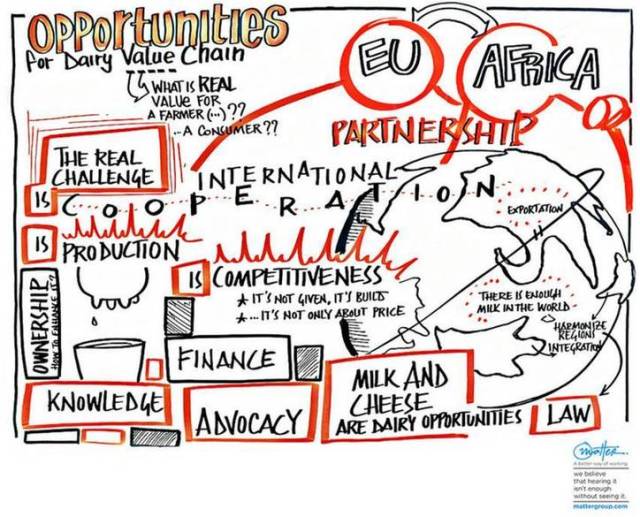
Value chain seminar shares lessons, tools, approaches to African dairy development

Jo Cadilhon's avatarCGIAR Research Program on Livestock and Fish

African Dairy Value Chain Seminar In September 2014, the International Livestock Research Institute (ILRI) and the Technical Centre for Agriculture and Rural Cooperation ACP-EU (CTA) organized a dairy value chain seminar with support from the CGIAR Research Programs on Policies, Institutions, and Markets and on Livestock and Fish.

The main topics of discussion were:

  1. African smallholder inclusion into dairy value chains
  2. Private-sector investment into the African dairy industry
  3. Gender roles and empowerment in African dairy value chains

Visit the seminar wiki page to find presentations and posters, notes of the stories shared on dairy value chain development in Africa, and feedback from peers to real-life problems faced by four practitioners or researchers of dairy value chains in Africa.

There are also photos, blogposts and several videos discussing the outcomes of the seminar from the viewpoints of organizers and participants.

View original post

Posted in Uncategorized | Leave a comment

Researchers and partners critique framework to assess environmental impacts of livestock

Peter Ballantyne (ILRI)'s avatarCGIAR Research Program on Livestock and Fish

For the past year, researchers from the International Livestock Research Institute, other research institutes and national partners have been working on a framework to carry out a ‘Comprehensive Livestock Environment Assessment for Improved Nutrition, a Secured Environment and Sustainable Development along Livestock Value Chains.’ On 30 and 31 October, the project team met in Kenya to review progress and the state of the framework.

See a presentation introducing the framework:


The framework has been tested in two districts in Tanzania – Morogoro and Lushoto – and local partners from the test sites joined the discussions. Indeed, a presentation of the framework with actual data and results from Lushoto was also presented.

The framework looks at four important dimensions – biodiversity, soil and land, water, and waste – seeking to provide decision support information for people working on dairy development. The idea is that a set of important sentinel data on…

View original post 264 more words

Posted in Uncategorized | Leave a comment

White House Garden Harvests Vitamin-A Rich Orange Sweet Potato

APO's avatarDatabase of Press Releases related to Africa - APO-Source


White House Garden Harvests Vitamin-A Rich Orange Sweet Potato

The sweet potato was chosen to highlight its role in improving the nutrition and health of millions of children and women throughout sub-Saharan Africa

WASHINGTON, November 17, 2014/African Press Organization (APO)/ For the first time, this year’s crop in the U.S. White House kitchen garden included orange sweet potato (OSP), a root vegetable rich in vitamin A, that is becoming popular in Africa. The sweet potato was chosen to highlight its role in improving the nutrition and health of millions of children and women throughout sub-Saharan Africa by providing essential vitamin A.

Logo: http://www.photos.apo-opa.com/plog-content/images/apo/logos/harvestplus.png

Photo: http://www.photos.apo-opa.com/plog-content/images/apo/photos/141115.png

Vitamin A deficiency (VAD) is a major public health problem in many countries. It impairs immunity, increases the risk of illnesses such as diarrheal disease, and causes eye damage that can lead to blindness and even death. Annually, up to 500,000 preschool children go…

View original post 963 more words

Posted in Uncategorized | Leave a comment

Semen Collection Using Phantom in Dromedary Camel

“Conclusion; Phantom could be considered as a suitable approach to collect semen due to simplicity, safety, and lack of specimen contamination in dromedary camel.” Findings

Posted in Uncategorized | Leave a comment

International Foundation of Science (IFS) call for individual research grants

“To be eligible for support from IFS Individual Research, applicants must be citizens of a developing country that is eligible for IFS support, and carry out the research in an eligible country (this does not have to be the country of citizenship).” – ILRI

Liya Dejene's avatarILRI Clippings

Providing early-career support to promising young developing country researchers has been the mandate of the International Foundation for Science (IFS) for many years. Building on this experience, the new IFS Strategy 2011-2020, launched in 2011, emphasizes three approaches:

  1. Individual Research (this call)
  2. Collaborative Research
  3. Contributing Innovation

In the Individual Research Approach, IFS continues its commitment to support excellent individual research and to build capability of early-career scientists in the developing world to undertake research on the sustainable management of biological and water resources.

Applicants are encouraged to tackle research issues linked to these areas, and to develop solutions that are relevant to local contexts. By encouraging local researchers to work in their home countries, generating cutting-edge and locally relevant knowledge, we hope to contribute to strengthening their countries’ research capability and ultimately contributing to a global research community aimed at reducing poverty and supporting sustainable
development.

The Research Areas for Individual Research

Proposals are sought under one of three…

View original post 464 more words

Posted in Uncategorized | Leave a comment

First-ever Global Nutrition Report provides comprehensive narrative on levels of malnutrition across the world | International Food Policy Research Institute (IFPRI)

The GNR will contribute to country-led efforts to strengthen accountability, share learning about what is working, and highlight bottlenecks to progress and how they may be overcome,” said Lawrence Haddad, a senior research fellow at the International Food Policy Research Institute (IFPRI) and co-chair of the independent expert group that produced the report. 

Source: www.ifpri.org

See on Scoop.itPoverty, Hunger & Malnutrition
Posted in Uncategorized | Leave a comment

2014 Global Hunger Index—Facts and Findings for Africa South of the Sahara | International Food Policy Research Institute (IFPRI)

Displaced populations and their host communities face a high risk of food insecurity, malnutrition, and epidemics. The security situation in northern Mali improved due to international efforts, but violence has increased in northern Nigeria. An exodus of people from northern Nigeria, the Central African Republic and from Darfur, Sudan, put more pressure on Chad, Cameroon, and Mali to absorb refugees.

Source: www.ifpri.org

See on Scoop.itPoverty, Hunger & Malnutrition

Posted in Uncategorized | Leave a comment

Think we can’t end global malnutrition by 2030? Think again | International Food Policy Research Institute (IFPRI)

Source: www.ifpri.org

See on Scoop.itFood Policy, Supply, Security & Safety

Posted in Uncategorized | Leave a comment

GM agricultural technologies for Africa: A state of affairs | International Food Policy Research Institute (IFPRI)

The adoption of agricultural biotechnology, and specifically genetically modified (GM) crops, by many African countries has been quite limited to date, however. To further inform the debate over agricultural biotechnology, this report collects current information on the status of biotechnology in Africa—with an emphasis on GM crops—and assesses the opportunities offered by and constraints on adoption.

Source: www.ifpri.org

See on Scoop.itPrecision Agriculture

Posted in Uncategorized | Leave a comment

Global diets link environmental sustainability and human health : Nature : Nature Publishing Group

Diets link environmental and human health. Rising incomes and urbanization are driving a global dietary transition in which traditional diets are replaced by diets higher in refined sugars, refined fats, oils and meats.

Source: www.nature.com

See on Scoop.itFood Policy, Supply, Security & Safety

Posted in Uncategorized | Leave a comment

Postdoctoral Fellowships on Innovative Methods and Metrics for Agriculture and Nutrition Actions

FoodGovernance's avatarFood Governance

Call for Applications:  Postdoctoral Fellowships on Innovative Methods and Metrics for Agriculture and Nutrition Actions (IMMANA Fellowships)

(led by the Friedman School of Nutrition Science and Policy at
Tufts University)

Download the Call

Objective: To accelerate the development of innovative and interdisciplinary methods, metrics and tools to advance scientific understanding of the linkages between agriculture and food systems, health, and nutrition outcomes, and thereby inform policy and programmatic actions in low and middle income countries (LMICs).

Funding available: Six one-year postdoctoral research fellowships, in four rounds (2015-2018), with stipends for fellows and two mentors.

Who can apply: Researchers who have completed a doctoral degree in any field related to agriculture, nutrition or health research and practice, and are seeking a career in research, education, and engagement at the intersection of two or more of these fields. Eligible candidates must have received their doctorate within 3 years of their proposed fellowship…

View original post 169 more words

Posted in Uncategorized | Leave a comment

High-profile ILRI conference discusses the future of livestock research for healthy animals and people

‘ILRI research has contributed to appropriate health management systems leading to healthy animals, people and ecosystems and increase animal-source food and income for all’.

Source: aghealth.wordpress.com

See on Scoop.itSustainable Livestock development

Posted in Uncategorized | Leave a comment

Chicken Plant Spreading Salmonella, Agriculture Department Powerless to Stop Them

A 2001 court decision crippled the federal government’s ability to shut down food plants that are sickening people.

Source: www.alternet.org

See on Scoop.itFood Policy, Supply, Security & Safety

Posted in Uncategorized | Leave a comment

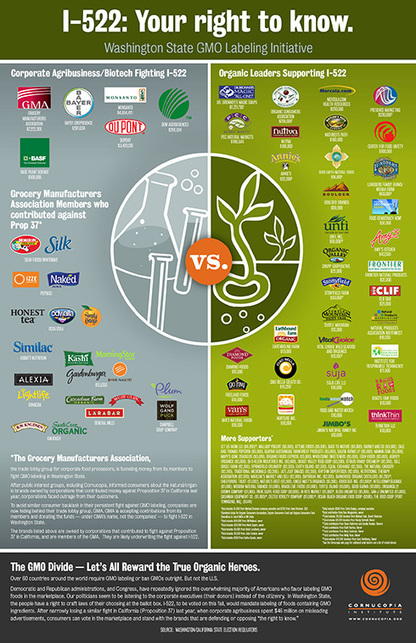
The Good, the Bad and the Ugly = Decoding the GMO Food Fight in Washington State – Cornucopia Institute

The Cornucopia Institute has updated the infographic detailing supporters and opponents of Washington state’s historic November 5 vote on the labeling of GMO food ingredients, known as I-522.

Source: www.cornucopia.org

See on Scoop.itFood Policy, Supply, Security & Safety

Posted in Uncategorized | Leave a comment

MANUAL ON LIVESTOCK DISEASE SURVEILLANCE AND INFORMATION SYSTEMS

The FAO has always been concerned with agricultural development and food security. Recent disease epidemics, in both developing and industrialised countries, have once again focussed attention on livestock disease and their potential to harm development. In the context of developing countries, disease epidemics do four things:

They reduce herds and flocks dramatically, which, in the case of pastoral peoples, is a major blow to food security and the ability to survive;

They cause trading partners to – quite understandably – put trade barriers in place in order to protect their own countries from infection. Where livestock or meat exporting countries are affected by epidemics, their “pariah” status can cost millions of dollars in terms of foreign exchange losses, and drive farmers and the local meat industry to the wall.

They are a deterrent to sustained livestock production.

They add significantly to the cost of livestock production through the necessity for the application of costly disease control measures.

Source: www.fao.org

See on Scoop.itSustainable Livestock development

Posted in Uncategorized | Leave a comment

A value chain approach to animal diseases risk management: Technical foundations and practical framework for field application

Classical risk assessment approaches for animal diseases are influenced by the probability of release, exposure and consequences of a hazard affecting a livestock population. Once a pathogen enters into domestic livestock, potential risks of exposure and infection both to animals and people extend through a chain of economic activities related to producing, buying and selling of animals and products. Therefore, in order to understand economic drivers of animal diseases in different ecosystems and to come up with effective and efficient measures to manage disease risks from a country or region, the entire value chain and related markets for animal and product needs to be analysed to come out with practical and cost effective risk management options agreed by actors and players on those value chains.

Value chain analysis enriches disease risk assessment providing a framework for interdisciplinary collaboration, which seems to be in increasing demand for problems concerning infectious livestock diseases. The best way to achieve this is to ensure that veterinary epidemiologists and social scientists work together throughout the process at all levels.

Source: www.fao.org

See on Scoop.itSustainable Livestock development

Posted in Uncategorized | Leave a comment

FAO’s Animal Production and Health Division

Protecting livestock against diseases and preventing their spread is one of the keys to fighting hunger, malnutrition and poverty. The Emergency Prevention System for Transboundary Animal and Plant Pests and Diseases (EMPRES) was established by FAO’s Director General in 1994. AGA is entrusted with the EMPRES animal disease component, which provides information, training and emergency assistance to countries to prevent, contain and control the world’s most serious livestock diseases, while also surveying for newly emerging pathogens.

Source: www.fao.org

See on Scoop.itFood Policy, Supply, Security & Safety

Posted in Uncategorized | Leave a comment

Your Food Is Poisoning You

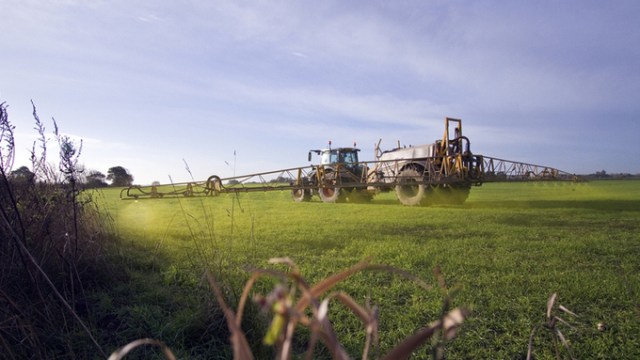
Despite being treated like Bigfoot believers by their opponents, pesticide ascetics are inching their way toward credibility. Introduced by Monsanto in the early 1970s under the trade name Roundup (and used primarily back then as a weed killer), glyphosate is now used throughout the world on wheat and soy crops and since 2007 it has been the most widely used herbicide in the U.S.

Source: www.outsideonline.com

See on Scoop.itFood Policy, Supply, Security & Safety

Posted in Uncategorized | Leave a comment

Yet Another Reason to Avoid GMOs | Natural Grocers

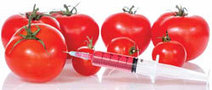
The industry assures us it’s safe, but new research has found that glyphosate, the active ingredient in Monsanto’s popular herbicide Roundup®, is more insidious to human health than previously thought.


Research published in the journal Entropy found that glyphosate interferes with several biochemical pathways in the human body, disrupting the healthy balance of gut bact

Source: www.naturalgrocers.com

See on Scoop.itPrecision Agriculture

Posted in Uncategorized | Leave a comment

Future of food… Trick or Treat?

Source: gx196.infusionsoft.com

See on Scoop.itPrecision Agriculture

Posted in Uncategorized | Leave a comment

Here’s Why Pasture-Raised Turkeys Are So Expensive

And here’s why you should buy them….

Source: www.huffingtonpost.com

See on Scoop.itPrecision Agriculture

Posted in Uncategorized | Leave a comment

School garden yields more crops than imagined

At Walter Bracken STEAM Academy, they still teach the three Rs: radishes, rhubarb and rutabagas.

Source: www.reviewjournal.com

See on Scoop.itPrecision Agriculture

Posted in Uncategorized | Leave a comment

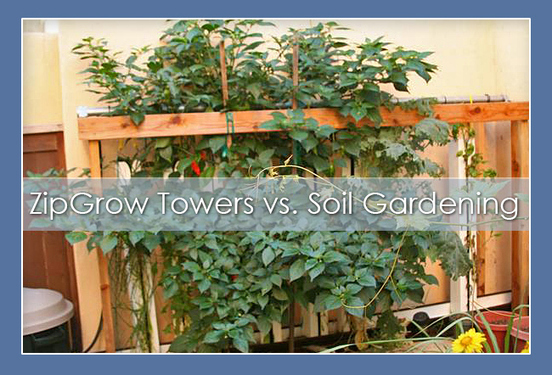
ZipGrow towers vs. Soil Gardening

The Whartons want a garden, but don’t have much space in their backyard. Here are the results of their ZipGrow towers vs. Soil Gardening experiment.

Source: brightagrotech.com

See on Scoop.itPrecision Agriculture

Posted in Uncategorized | Leave a comment

Why smallholders should be involved in research

“If farmers are the implementers of these technologies, then obviously they should be involved in their design and development.”

Gilbert Nakweya

Source: m.scidev.net

See on Scoop.itFood Policy, Supply, Security & Safety

Posted in Uncategorized | Leave a comment

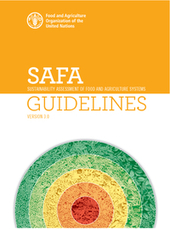
SAFA (Sustainability Assessment of Food and Agriculture systems) Guidelines

The Sustainability Assessment of Food and Agriculture systems (SAFA) Guidelines were developed for assessing the impact of food and agriculture operations on the environment and people. The guiding vision of SAFA is that food and agriculture systems worldwide are characterized by all four dimensions of sustainability: good governance, environmental integrity, economic resilience and social well-being.

Source: www.fao.org

See on Scoop.itFood Policy, Supply, Security & Safety

Posted in Uncategorized | Leave a comment

FAO – News Article: Strengthening links between industry and agriculture to build sustainable food systems

Supporting farmers to add value to the food chain goes beyond the monetary dimension of increasing their incomes, Graziano da Silva argued, saying: “It means more nutritious and healthy foods, produced sustainably.”

Source: www.fao.org

See on Scoop.itFood Policy, Supply, Security & Safety

Posted in Uncategorized | Leave a comment

Who Gets To Decide What Is “Organic”?

What “organics” is, how it should be defined, and how it should be regulated is a hot topic right now from Brussels to Berlin. The reason? The European Commission has proposed a new legislative framework, and was met with broad opposition from organic farmers, politicians, and industry reps.

Source: foodpolicyforthought.wordpress.com

See on Scoop.itPrecision Agriculture

Posted in Uncategorized | Leave a comment

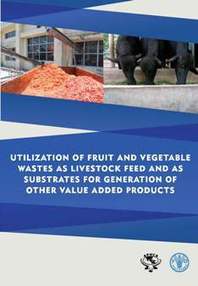
Utilization of fruit and vegetable wastes as livestock feed and as substrates for generation of other value-added products

By 2050 the world will need to feed an additional 2 billion people and will require 70 per cent more meat and milk. The increasing future demand for livestock products, driven by increases in income, population and urbanization will impose a huge demand on feed resources. Sustainability of feed production systems is being challenged due to biophysical factors such as land, soil and water scarcity, food-fuel-feed competition, on-going global warming and frequent and drastic climatic vagaries, along with increased competition for arable land and non-renewable resources such as fossil carbon-sources, water and phosphorus. A key to sustainable livestock development is efficient use of available feed resources including reduction in wastage, and enlargement of the feed resource base through a quest for novel feed resources, particularly those not competing with human food.

Source: www.fao.org

See on Scoop.itSustainable Livestock development

Posted in Uncategorized | Leave a comment

Conference Insects to feed the world

The conference “Insects to feed the world” organized by the FAO/WUR, that took place last May in The Netherlands was a milestone in the recognition of the professional insect industry. Feed industry leaders, insect breeders, universities, NGO’s and other stakeholders gathered for the first time, with a clear message: Insects for feed and food are viable solutions for the protein deficit problem.

Source: www.wageningenur.nl

See on Scoop.itPrecision Agriculture

Posted in Uncategorized | Leave a comment

Successes and failures with animal nutrition practices and technologies in developing countries

ABSTRACT

During the last four decades a number of animal-nutrition-based technologies and practices have been developed and used in developing countries, with varying degrees of success. Some technologies have produced profound beneficial effects and have been widely used; while others have shown potential on research stations but have not been taken up by farmers. To learn from these experiences, the FAO Animal Production and Health Division organised an e-conference from 1 to 30 September 2010. This document presents the current status of animal nutrition practices and technologies being practiced in developing countries and an analysis of the reasons for their success or failure. It also contains a synthesis paper that summarises the major issues discussed by participants and presents conclusion drawn and lessons learnt for the future. This document is expected to assist developing countries make informed decisions about the adoption of appropriate animal nutrition practices and technologies. In addition, it should also be useful for the development community, including donor agencies, to better understand, prioritize and support appropriate animal nutrition practices and technologies in developing countries.

Source: www.fao.org

See on Scoop.itSustainable Livestock development

Posted in Uncategorized | Leave a comment

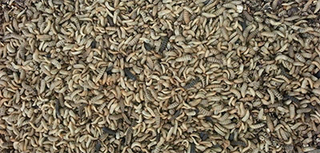
Insect meal has potential as a future animal feed, FAO study finds

Livestock production is resource hungry: it occupies 75 percent of all agricultural land, including crop and pasture land, and consumes 8 percent of global human water use, mainly for the irrigation of feed crops.

Source: www.fao.org

“Insects have many advantages over other feeds,” he added. “They grow and reproduce easily, have high feed conversion efficiency since they are cold blooded and can be reared on bio-waste. One kilo of insect biomass can be produced from around 2 kilos of waste.” – Studies

See on Scoop.itPrecision Agriculture

Posted in Uncategorized | Leave a comment

Using Gamification to improve knowledge of Agriculture in Africa – Farm Defenders #ICT4Ag

kalusam's avatarKalu Samuel's Blog

In recent times gamification has been used to learn new skills, however I always thought improving knowledge of Agriculture in Africa using gamification is not possible until I played the Farm Defenders game. The Farm Defender is a 3D farm simulation game spanning the entire continent of Africa that lets you create farms in every environment, from the lush tropics to the barren deserts. Grow your crops and become wealthy all while preventing disease, pests, and maximizing yield using real-life African farming techniques sustainably.

The Farm Defenders is an initiative to “gamify” economic development in Africa by realistically simulating local conditions. The simulation is realistic to the details of the local soil type, weather, and natural challenges and is not your typical farming simulation video game.

IMG00394-20131105-1010 Playing the Farm Defenders Game at the #ICT4Ag13 conference in Kigali, Rwanda.

Here’s a synopsis from the Farm Defenders website:

“This game…

View original post 232 more words

Posted in Uncategorized | Leave a comment

New project to boost yam production in West Africa – Press releases – IITA

31 October 2014
Smallholder farmers in the main yam-growing areas of West Africa will benefit from a new project that aims to develop new varieties of this crucial staple crop and enhance yam breeding capabilities and partnerships in the region.. This is a list of the IITA Press Release for 2014.

Source: www.iita.org

See on Scoop.itFood Policy, Supply, Security & Safety

Posted in Uncategorized | Leave a comment

Five ways to do better business with Africa’s small-scale farmers

Insight into business in Africa

Source: www.howwemadeitinafrica.com

See on Scoop.itFood Policy, Supply, Security & Safety

Posted in Uncategorized | Leave a comment

Safe and fair food for informal markets: A food safety impact narrative

Peter Ballantyne (ILRI)'s avatarILRI Clippings

In most developing countries, food-borne diseases are a major cause of sickness and death. Whilst many countries acknowledge food safety is a major problem, there is little up-to-date, comprehensive information on food safety issues at national level. Safer food can generate both health and wealth for the poor, but it requires radical and evidence-based change in the way food safety in informal markets is assessed, managed and communicated.

Over the past decade, ILRI research has provided insight into the impacts of food-borne diseases, challenged conventional thinking on food safety and developed a successful approach to participatory risk analysis for understanding and managing food safety in a more dynamic future.

Download the research brief

More information

View original post

Posted in Uncategorized | Leave a comment

Foreign investment in developing country agriculture – evidence for inclusivity

canwefeedtheworld's avatarOne Billion Hungry: Can We Feed the World?

ID-10052509Evidence that investing in agriculture in developing countries as a way of tackling poverty and hunger is growing. Given the sheer number of people working in the agricultural sector, investments can have benefits on a large-scale but there are also risks and big investments can, in some cases, harm the rural sector, taking land and resources away from local people. Aiming to illustrate these risks and benefits are a couple of recent reports.

A paper from the UN Food and Agriculture Organisation, Impacts of foreign agricultural investment on developing countries: evidence from case studies, brings together FAO case studies on “the impacts of foreign agricultural investment on host communities and countries”. These studies show that large-scale land acquisitions, particularly where land rights are tenuous and governance poor, can have detrimental consequences for local communities, depleting natural resources and harming livelihoods, factors which increase rather than reduce poverty. Such…

View original post 817 more words

Posted in Uncategorized | Leave a comment

mNutrition – how mobile phones are improving nutrition

While many mothers in developing countries don’t have access to healthy foods, almost all of them have access to something else: a mobile phone

Source: www.theguardian.com

See on Scoop.itPrecision Agriculture

Posted in Uncategorized | Leave a comment

Linking smallholder dairy farmers to modern value chains that respond to increasing urban demands in Africa

The Technical Centre for Agricultural and Rural Cooperation (CTA) is a joint international institution of the African, Caribbean and Pacific (ACP) Group of States and the European Union (EU). Its mission is to advance food and nutritional security, increase prosperity and encourage sound natural resource management in ACP countries. It provides access to information and knowledge, facilitates policy dialogue and strengthens the capacity of agricultural and rural development institutions and communities. CTA operates under the framework of the Cotonou Agreement and is funded by the EU.
Le Centre technique de coopération agricole et rurale (CTA) est une institution internationale conjointe des Etats du Groupe ACP (Afrique, Caraïbes, Pacifique) et de l’Union européenne (UE). Il intervient dans les pays ACP pour améliorer la sécurité alimentaire et nutritionnelle, accroître la prospérité dans les zones rurales et garantir une bonne gestion des ressources naturelles. Il facilite l’accès à l’information et aux connaissances, favorise l’élaboration des politiques agricoles dans la concertation et renforce les capacités des institutions et communautés concernées.
Le CTA opère dans le cadre de l’Accord de Cotonou et est financé par l’UE.

Source: cta.int

See on Scoop.itPrecision Agriculture

Posted in Uncategorized | Leave a comment

ILRI researchers test communication approaches for optimizing informed consent processes

Paul Karaimu's avatarILRI news

The International Livestock Research Institute (ILRI) aims to employ the highest standards in its research, including the ways it engages with partners and stakeholders. The institutional research ethics committee (IREC) provides oversight of this effort. It was established to set and monitor ethical standards, including those affecting how researchers engage with farmers and other people participating in research.

Informed consent is a key approach to ensure that ILRI research is not exploiting the people it works with and aims to serve.

Informed consent is essential, not only for legal and moral reasons but because the process provides a vehicle for dialogue between researchers and the people who keep livestock and are most affected by any interventions that may be developed. Informed consent processes can be particularly complex in cross-cultural contexts. In these settings, novel communication approaches may enhance participant understanding of project information, so their consent can be…

View original post 164 more words

Posted in Uncategorized | Leave a comment

A major presentation on ‘the power of livestock’ to transform today’s resource-scarce agricultural lands

“Animals are competing users of natural resources, as are crops, forests, lots of things. All land use is a trade off. There is no more free land a water, or not much.” – ILRI

Susan MacMillan's avatarILRI news

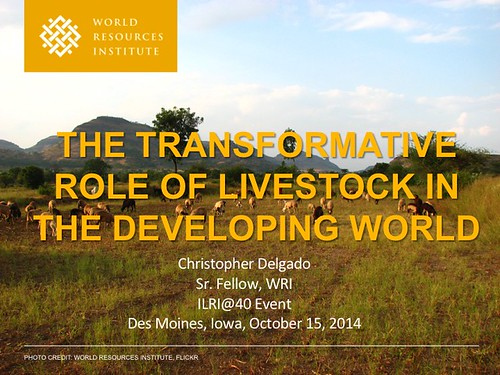
Delgado Slide01

A major presentation was made at a special side event at the Borlaug Dialogue, in Iowa, on 15 Oct 2014. The side event was hosted by the International Livestock Research Institute (ILRI) and the Bill & Melinda Gates Foundation (BMGF) as part of a series marking ILRI’s 40-year anniversary this year. The presentation was made by Chris Delgado, who in 1999 led ground-breaking studies showing that a ‘Livestock Revolution’ was taking place in the global South.

Welcome to the special ILRI side session
Lindiwe Majele Sibanda,
board chair of ILRI and chief executive officer and head of diplomatic mission of the Food, Agriculture and Natural Resources Policy Analysis Network (FANRPAN), welcomed dignitaries and friends of ILRI to the two-hour evening event.

Lindiwe Majele Sibanda

Lindiwe Majele Sibanda, ILRI board chair and CEO and head of diplomatic mission of FANRPAN (photo on Flickr by Borlaug Dialogue/World Food…

View original post 3,174 more words

Posted in Uncategorized | Leave a comment

Apply: 2015 Global E-Learning Program in Post Harvest Technology

kalusam's avatarKalu Samuel's Blog

e-learning group PEF e-learning group PEF, Photo credit: PEF

The postharvest training program will be launched in January 2015 by The Postharvest Education Foundation and have up to 40 young horticultural professionals currently working in developing countries enrolled over a period of 12 months during 2015. Training activities will include a wide assortment of reading, e-learning and fieldwork assignments to be undertaken by each trainee in their home country.

Participants can choose the crops they are most interested in, and focus on the technologies of most suitable for their region. A registration fee of $600 was charged for the 2015 training program, with a 50% discount available for those located in less developed countries. PEF will supply all the required training materials and provided participants with weekly online interactive sessions, feedback and mentoring.  Priority will be given to those trainees who have the approval or permission of their supervisor, and it should be…

View original post 180 more words

Posted in Uncategorized | Leave a comment

Livestock and Fish external evaluation update 5 – Comment on the draft report

“The program focus on poor producers in the targeted countries and value chains created an important methodological challenge for the program’s value chains approach since there are weak market drivers, relatively little value addition and, in several locations, poor prospects for private sector investment or services provision. Another methodological challenge was the need to effectively engage wide ranging stakeholders in the process and mobilizes necessary resources for value chain transformation, while at the same demonstrating proof-of-concept for technological and technological innovations. The program had to develop a value chains approach for handling the above and other methodological challenges while piecing together funding from different pools of core and bilateral resources.” – ILRI

Keith Child's avatarCGIAR Research Program on Livestock and Fish

The draft report of the CRP-Commissioned External Evaluation of the Program’s Value Chain Approach is now available for comment (more information on this evaluation). Comments are open until 17 November – Download the draft report here.

The value chains work of the Livestock and Fish program is focused on animal-source food value chains in nine countries: smallholder dairy in Tanzania and India; pork in Uganda and Vietnam; small ruminants in Ethiopia and Burkina Faso; aquaculture in Egypt and Bangladesh; and dual purpose dairy-meat in Nicaragua. In each country, research for development (R4D) sites have been established to “serve as laboratories” for characterizing and assessing smallholder value chains, introducing and generating evidence on technological and institutional innovations, mobilizing resources needed to transform the selected value chains, and identifying strategies and mechanisms for scaling up.

The program focus on poor producers in the targeted countries and value chains created…

View original post 419 more words

Posted in Uncategorized | Leave a comment

Dairy Camel ~ Transforming from Desert Ecosystem to Modern Farming

Posted in Uncategorized | Leave a comment

Who Gets The Money? On Helping Africa To Feed Itself – in the US.

“This brings up again the whole food sovereignty debate and the question whether smallholder farmers’ knowledge and traditional methods are the future of society or a bucolic and sentimental dream of idealists. I think the answer lies somewhere in between; but if the odds are always stacked in one particular way, it’s hard to give both a chance.” – Food(Policy) for thought.

Janina's avatarFood (Policy) For Thought

Philanthropy is an interesting concept. Here is one person, or a board of people, with more money to distribute than small nations have budgets. If they choose to concentrate on a topic, their impact can be immense and drive research, NGO actions and government policies in the direction of their liking because of the financial incentive. What a responsibility.

The NGO Grain decided to check on that responsibility and have a look at where the Bill and Melinda Gates Foundation spent their money. The Guardian (hilariously – look at who they are sponsored by) reported.

Screen Shot 2014-11-04 at 10.12.31 PM

Isn’t that interesting? Of course, development spending can occur in a variety of ways, but it is striking nonetheless where the Gates Foundation thinks most support is needed. And they have become a massive player in supporting agriculture and food issues, with more than $3 billion to date given to various organizations.

Screen Shot 2014-11-04 at 10.25.08 PM

Almost a quarter goes…

View original post 738 more words

Posted in Uncategorized | Leave a comment

4 frustrating agriculture messages we need to fix

Ryan Goodman's avatarBeef Runner

Lately I have been involved in (and observing) some frustrating conversations. We have so many systems at play in the world of agriculture right now, and people are fighting tooth and nail to gain an edge on the competition. Even if that means throwing our neighbor under the bus. It is incredibly difficult to be a person who honestly believes that multiple systems can coexist and do so sustainably.

Grass-fed versus grain-fed.

These marketing terms are inaccurate and leading customers to believe that if beef isn’t labeled “grass-fed” or if it was in a feedlot, it must have never been on pastures or fed grass. Reality is that most all beef cattle spend the majority of their lives on pasture, consuming forages, even those that finish on a diet high in grains. If we’re going to voluntarily label for a premium, it is more accurate and does better justice to the…

View original post 738 more words

Posted in Uncategorized | Leave a comment

Freie Universität seeks research assistant/PhD candidate to work on live vaccines against Theileriosis

Requirements
We are looking for a highly motivated and creative person who is interested in working within a multidisciplinary team. The successful candidate must have a microbiology, immunology or veterinary degree and should be willing to travel and work in Africa for periods of up to several months. She/he will be enrolled as a PhD student at the doctoral studies program
Biomedical Sciences at Dahlem Research School (DRS) of Freie Universität Berlin and is expected to complete her/his studies in accordance with valid regulations of the PhD degree program. Furthermore, she/he will be actively engaged in all activities relevant to the project and research group

Liya Dejene's avatarILRI Clippings

Department of Veterinary Medicine
Institute for Parasitology and Tropical Veterinary Medicine
Research assistant – PhD candidate
50% Entgeltgruppe 13 TV–L FU
For a limited period of 3 years, starting as soon as possible
The Institute for Parasitology and Tropical Veterinary Medicine of the Freie Universität Berlin (http://www.fu-berlin.de/) participates in a DFG funded project with six African partner institutes from Egypt, Tunisia, Sudan, Uganda, Kenya and Tanzania (http://theileriainafrica.weebly.com/the-network.html).

This network focuses on the evaluation and implementation of live vaccines against Theileriosis caused by Theileria annulata and Theileria parva in North and Eastern Africa. The candidate will study the genetic diversity of Theileria spp. in the field, maintain and develop strategies to transfect Theileria infected cell lines and participate in vaccination trials under field conditions.

Requirements
We are looking for a highly motivated and creative person who is interested in working within a multidisciplinary team. The successful candidate must have a microbiology, immunology or veterinary degree and…

View original post 170 more words

Posted in Uncategorized | Leave a comment

Nine more TEDx talks on food security

canwefeedtheworld's avatarOne Billion Hungry: Can We Feed the World?

Last year we brought you six of our favourite TEDx talks on food security and since then we’ve discovered a whole lot more. Here are nine more interesting talks we think you might like.

JosetteJosette Sheeran, head of the UN’s World Food Program, talks about why, in a world with enough food for everyone, people still go hungry, still die of starvation, still use food as a weapon of war. Her vision: “Food is one issue that cannot be solved person by person. We have to stand together.” Watch the video.

BittmanMark Bittman, New York Times food writer, weighs in on what’s wrong with the way we eat now (too much meat, too few plants; too much fast food, too little home cooking), and why it’s putting the entire planet at risk. Watch the video.

HalweilBrian Halweil, publisher of Edible Manhattan, was on track to become a doctor…

View original post 354 more words

Posted in Uncategorized | Leave a comment

Contribute your ideas to improve Food security in Africa

kalusam's avatarKalu Samuel's Blog

IMG00155-20130727-0726Several Months ago, I and a three other African visionaries sat down in Accra, Ghana and developed a startup: Agricnet Solutions Enterprises, a one-stop Agric consultancy and viable social enterprise that aims to reduce food waste due to post harvest fruits and vegetable losses,improving the eating habits of people in sub-saharan Africa where small holders and farming families contribute greatly to the food security of their families and rural communities.

View original post 154 more words

Posted in Uncategorized | Leave a comment