

 Solutions to the world’s food insecurity and environmental problems are numerous. Some suggest it is the not the lack of a solution that hampers progress in addressing hunger, climate change and natural resource scarcity but rather the difficulty in choosing the most
appropriate
solution.
Solutions to the world’s food insecurity and environmental problems are numerous. Some suggest it is the not the lack of a solution that hampers progress in addressing hunger, climate change and natural resource scarcity but rather the difficulty in choosing the most
appropriate
solution.
The International Food Policy Research Institute recently launched the results of a new research project (Food Security in a World of Growing Natural Resource Scarcity: The Role of Agricultral Technologies), which assesses the likely impacts of agricultural technologies on global crop productivity, hunger and economic development. Showcasing the project, is an infographic, produced by IFPRI, which outlines:
The eleven agricultural innovations investigated
- No-till farming
- Water harvesting
- Organic agriculture
- Precision agriculture
- Drought tolerance
- Heat tolerance
- Integrated soil fertility management
- Drip irrigation
- Sprinkler irrigation
- Nitrogen use efficiency
- Crop protection
The data used
Global crop land was divided into cells, and data on physical characteristics such…
View original post 317 more words











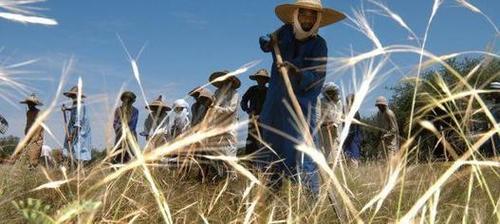

















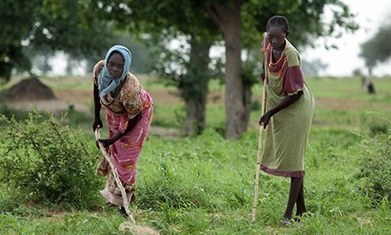
 A ‘fact’ that is commonly used to support the case for doing something about young rural Africans’ apparent lack of interest in agriculture is that ‘the average age of farmers in Africa is increasing’. An aging population of farmers is seen to be undesirable, with the implication being that if nothing is done the agricultural sector will slowly crumble as the remaining farmers progressively work themselves into the grave.













 Dr. Bukar Ali USMAN, mni
