‘Soft’ science at ILRAD/ILRI: A lively look back at three decades of veterinary epidemiology for development

Susan MacMillan's avatarILRI news

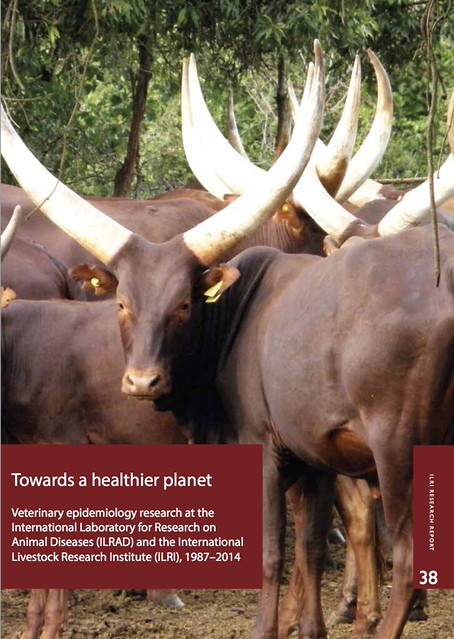
Towards a Healthier Planet, ILRI Research Report, 2015

The International Livestock Research Institute (ILRI) marked its 40-year anniversary last year, 2014. One of the publications commissioned to celebrate that milestone is this new research report, Towards a Healthier Planet, written by Brian Perry, a distinguished former ILRI staff member who in 1987 initiated the Epidemiological and Socioeconomics Program at ILRI, or, to be precise, at ILRI’s predecessor, the International Laboratory for Research on Animal Diseases (ILRAD). Perry is now a visiting professor at the University of Oxford and honorary professor at the University of Edinburgh.

For almost thirty years, the International Laboratory for Research on Animal Diseases (ILRAD) then ILRI benefited from a strong research program in the epidemiological sciences. Over time, it progressively broadened its coverage in disease, disciplinary and geographic terms. The results of this work have now been assembled in this impact narrative, which carefully documents the wide range of issues addressed by the…

View original post 924 more words

Posted in Uncategorized | Leave a comment

Mekon Delta Case Study: Agricultural transformation in developing countries under contexts of urbanization and climate change

FoodGovernance's avatarRural Sociology Wageningen University

Welcome to Can Tho University Welcome to Can Tho University

For the month of August the Mekong Delta Development Research Institute (MDI) is hosting a summer school case study on Agricultural transformation in developing countries under contexts of urbanization and climate change- the case of the Vietnamese Mekong Delta, for the International Master of Science in Rural Development (IMRD) programme from Ghent University.  Wageningen’s Rural Sociology Group is involved in the IMRD programme and as a result, I was able to come and participate in a supportive capacity for the first two weeks.

Case Study Participants at Can Tho University Case Study Participants at Can Tho University

About the Mekong Delta Development Research Institute (MDI)

MDI is an interdisciplinary organization of Can Tho University (Can Tho, Vietnam). It was established in 2005 from the Mekong Delta Farming Systems Research and Development Institute. MDI has the mission to “improve life quality of rural people and ensure socio-economic and environmental sustainability of the…

View original post 287 more words

Posted in Uncategorized | Leave a comment

#Climatechange and vertical gardening

Climate change and vertical gardening.

Vertical Garden

Posted in Africa, Agriciltural Policy, AR&D, Food safety & supply, Food Security, Poverty, Sustainable Development | Leave a comment

Just how much gas does Africa’s livestock produce? A new environmental lab sets up to find out

Susan MacMillan's avatarILRI Clippings

MazingiraMobileGHGunit

The mobile greenhouse gas measuring laboratory of ILRI’s Mazingira Centre (photo credit: ILRI/Susan MacMillan).

‘Scientists at the International Livestock Research Institute (ILRI) in Kenya have established a state-of-the-art laboratory to help find a strategy to reduce greenhouse gas (GHG) emissions from livestock in Africa.

‘The laboratory, which has equipment such as respiration chambers and manure management gadgets, is the first of its kind in Africa and started operating in April this year, according to the scientists at the institute who spoke during a visit to the ILRI by the UK chief science advisor Mark Walport last month (15 July).

“The livestock-related research on GHGs will help determine real measures of emissions data to help explore realistic, locally adapted mitigation strategies in reducing global warming,” said Klaus Butterbach-Bahl, a principal scientist, livestock systems and environment, ILRI. . . .

“Unfortunately there is no reliable data on GHG emissions from…

View original post 128 more words

Posted in Uncategorized | Leave a comment

Ecological Intensification: More food and a healthier environment.

canwefeedtheworld's avatarOne Billion Hungry: Can We Feed the World?

By Alice Marks

An agroecosystem. Credit: S. Carrière, IRD An agroecosystem. Credit: S. Carrière, IRD

It is no secret that natural resources such as water, nutrients, land and also biodiversity, are increasingly threatened by the changing climate and inefficient farming practices. Farmers often rely on these resources in order to produce food, so it is worrying to see them routinely diminished. Agriculture requires that natural ecosystems are modified and manipulated to better produce food, creating agroecosystems. However, the development of agroecosystems does not need to come at the cost of the environment. All people rely on natural resources, but these risk being damaged and depleted if current agricultural methods continue to be used. In order to meet the challenge of feeding 9 billion people by 2050, food systems must be re-imagined to incorporate more sustainable practices

Methods of producing food need to be more efficient and less environmentally costly. Ecological intensification aims to help agriculture become…

View original post 693 more words

Posted in Uncategorized | Leave a comment

Nigeria: FG Commits N77m to IITA Youth Agripreneur Programme

Posted in Uncategorized | Leave a comment

Youth Session-Animal Agriculture; the next frontier for the youth in Africa #APPLY

Posted in Uncategorized | Leave a comment

If the youth can farm, Africa’s agriculture will be transformed.

Posted in Uncategorized | Leave a comment

Food In the Sustainable Development Goals: Great Ideas, But What About Demand?

Janina's avatarFood (Policy) For Thought

The finalized text for the Sustainable Development Goals was published on August 1st. I was curious to see what it had to say on sustainable food and agricultural systems. I summarize my thoughts below for a quick impression; thereafter you can find a blow-by-blow list of all instances where the SDGs mention food or agriculture with my comments. Your thoughts are obviously very welcome too!


In general, I was positively surprised by the level of detail and thoughtful suggestions in the SDGs when addressing food security. While it doesn’t go so far as to recognize food sovereignty, the importance and needs of smallholder farmers are recognized, important barriers to their success are identified, and the international community is committing itself to invest in improving sustainable and efficient practices.

Of course, the devil lies in the detail. What is still not addressed, and yet so so relevant for future sustainable food systems…

View original post 1,778 more words

Posted in Uncategorized | Leave a comment

It makes sense to prioritize the quality of diet in hospitals, particularly in desertified countries

Willem Van Cotthem's avatarDESERTIFICATION

Photo credit: Treehugger

© St Luke’s University Farm — Farmer Lynn harvests lettuce

Innovative hospital farm provides fresh, nutritious food to patients

“Let food be thy medicine, and medicine be thy food.” – Hippocrates

by Katherine Martinko

Nutrition plays such an important role in personal health that it makes sense to prioritize the quality of diet in hospitals. The question is, why as has it taken so long?

When my mother underwent a major surgery, she begged me to come cook for her as soon as she got out of the hospital. The food she received while in recovery was so tasteless, stale, and seemingly devoid of nutrients that she thought she would suffer from malnutrition before recovering from the surgery. I stayed with her for weeks, cooking meal after meal with produce from her huge kitchen garden, helping to heal her with nutritious and delicious food.

“That’s why I…

View original post 104 more words
Posted in Uncategorized | Leave a comment

Safe Food, Fair Food project communication now available in English, French and Portuguese

Kristina Rösel's avatarSafe Food, Fair Food

During our writeshop in November 2012, some of the outputs we finalized were a poster (see below) and a factsheet for a wider dissemination of our project goals and achievements. We took advantage of the linguistic diversity of our group’s participants and the factsheet was translated in Portuguese and French to address the non-Anglophone countries in sub-Saharan Africa. The brochures have now been published by the International Livestock Research Institute.

You are invited to display our poster and circulate the factsheet to colleagues, students…

View original post 9 more words

Posted in Uncategorized | Leave a comment

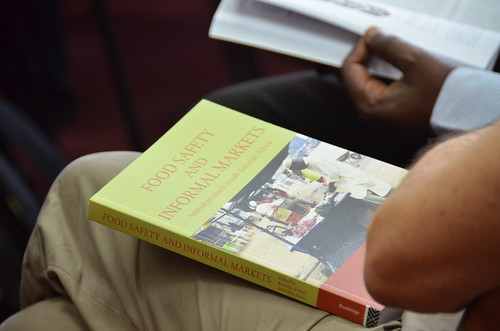
Free e-version of book on food safety in informal markets in sub-Saharan Africa now available

Kristina Rösel's avatarSafe Food, Fair Food

We are pleased to announce that the book, Food Safety and Informal Markets: Animal Products in Sub-Saharan Africa, edited by Kristina Roesel and Delia Grace of the International Livestock Research Institute (ILRI), is now freely available online as an open access resource.

The book was published in October 2014 and officially launched in January 2015. It highlights key messages of the ILRI-led Safe Food, Fair Food project (2008-2011) and 25 proof-of-concept studies on the safety of milk, meat and fish in eight countries across sub-Saharan Africa. The project was funded by the German Ministry for Economic Cooperation and Development and implemented by local partners and students.

Access the PDF version of the book.

Food safety and informal markets book launch: Book

View original post

Posted in Uncategorized | Leave a comment

Sustainable Intensification: Radical measures and new paradigms for achieving food security in Africa

canwefeedtheworld's avatarOne Billion Hungry: Can We Feed the World?

Stephanie Brittain

InfographicLaunched today by Agriculture for Impact, a new Sustainable Intensification database aims to explain the ecological, socio-economic and genetic approaches that together contribute to the Sustainable Intensification of agriculture in sub-Saharan Africa in an easily accessible way, illustrated by more than 80 case studies.

Never has there been a greater need for a new paradigm for improving African agriculture. Worldwide, more than 800 million people suffer from chronic hunger. Meanwhile, Africa’s population alone is set to double to 2.4 billion by 2050, putting additional pressure on our planet’s resources to achieve food security for all. A 2011 FAO publication estimated that 1.2 million km2 of land will need to be converted to agriculture by 2030 to meet the increasing demand for food; most of which will need to occur in South America and sub-Saharan Africa. On top of that, climate change is likely to…

View original post 679 more words

Posted in Uncategorized | Leave a comment

Nigeria: Attend 9th Edition of Western Nigeria Intl. Agribusiness Conference, Ondo State Nigeria (WESNAGRIC SUMMIT)

Posted in Uncategorized | Leave a comment

UK chief scientific adviser visits Kenya: Part 4—Development of a field-friendly diagnostic test for MERS

Susan MacMillan's avatarILRI news

Joerg Jores with Sir Mark Walport

Joerg Jores (right) gives Sir Mark Walport, UK chief scientific adviser, an overview of work to develop a field-friendly diagnostic test for Middle East respiratory syndrome (photo credit: ILRI/Paul Karaimu).

Among short presentations made to Sir Mark Walport, the UK chief scientific adviser, on his 15 Jul 2015 tour of the biosciences laboratories at the International Livestock Research Institute (ILRI), in Nairobi, Kenya, was one by Joerg Jores, a molecular biologist working to better control important livestock diseases of Africa and other developing regions. Jores is a senior scientist in ILRI’s Vaccine Biosciences program whose work supports the CGIAR Research Program on Livestock and Fish.

Northeastern Kenya 10

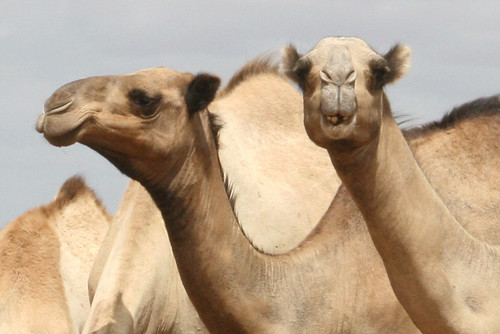
Camels in northern Kenya (photo credit: IRIN photos).

In 2012, a novel coronavirus called Middle East Respiratory Syndrome (MERS)-CoV emerged in the Arabian Peninsula. Human cases have been reported from 25 countries, with the most recent outbreak in the Republic of…

View original post 178 more words

Posted in Uncategorized | Leave a comment

UK chief scientific adviser visits Kenya: Part 2—’One Health’ surveillance of infectious livestock-to-human diseases

Susan MacMillan's avatarILRI news

Eric Fevre gives an overview of his UK-Kenya livestock and human health projects

Eric Fèvre gives Sir Mark Walport, UK chief scientific adviser, an overview of his UK-Kenya livestock and human health projects (photo credit: ILRI/Susan MacMillan).

One-Health approaches to battling diseases spread to people by animals
The first scientist of two scientists to make a short presentation to Sir Mark Walport, the UK chief scientific adviser, on his 15 Jul 2015 visit to the International Livestock Research Institute (ILRI), in Nairobi, Kenya, was Eric Fèvre, a veterinary epidemiologist and joint appointee at ILRI and the Institute of Infection and Global Health at the University of Liverpool. Fèvre manages several field-oriented research projects on neglected zoonoses on behalf of the CGIAR Research Program on Agriculture for Nutrition and Health.

Zoonotic diseases, which are transmitted between animals and people, have cost global economies more than USD20 billion in direct costs over the past decade, with a further USD200 billion in indirect…

View original post 494 more words

Posted in Uncategorized | Leave a comment

Designing practical ways to help the urban poor make choices that improve their nutrition

Susan MacMillan's avatarILRI news

Dominguez-SalasPaula

Paula Dominguez-Salas, above, is a post-doctoral scientist of ILRI and the Leverhulme Centre for Integrative Research on Agriculture and Health (LCIRAH) researching gender and nutrition issues in Nairobi slums (photo credit: ILRI).

Written by Paula Dominguez-Salas

To improve interventions in food systems of the urban poor, scientists at the International Livestock Research Institute (ILRI) are investigating urban food and nutritional choices in two slums in Nairobi, Kenya. Their aim is to develop interventions that help people make food choices that improve their nutrition while staying within their low household food budgets and access.

Access to healthy diets is at the heart of good nutrition and the achievement of the UN’s Sustainable Development Goals. Foods of animal origin are the only source of vitamin B12 and have good quality protein, preformed vitamin A, highly bioavailable iron, and zinc, in addition to good profiles in other micronutrients. Animal-source foods are…

View original post 385 more words

Posted in Uncategorized | Leave a comment

In Africa, livestock are a catalyst for economic growth—Livestock data study findings

Paul Karaimu's avatarILRI Clippings

Tanzania Dairy Goats and Root Crops Project: M&E training

Investing in smallholder farmers who own livestock in rural Africa, such as these women in Tanzania, is a catalyst for economic growth (photo credit: ILRI/Deo Gratias Shayo).

Last October (2013), the World Bank reported on the findings of a case study on ‘Livestock and Livelihoods in Rural Tanzania.’ The study assessed opportunities and barriers to contributions livestock make to livelihoods of the poor in three African countries.

This analysis was part of a two-year ‘Livestock Data Innovation in Africa’ project funded by the Bill & Melinda Gates Foundation. The project was implemented in Niger, Tanzania and Uganda by the World Bank, the African Union–Interafrican Bureau for Animal Resources and the International Livestock Research Intistute (ILRI) from 2010 to 2012.

The study reveals ‘investment gaps, potential benefits, and overall social impact’ of the livestock sector in rural Africa, the article says. These facts include how the ‘livestock sector [contributes] to the economic…

View original post 272 more words

Posted in Uncategorized | Leave a comment

African drylands: Livestock demand and supply

Susan MacMillan's avatarILRI Clippings

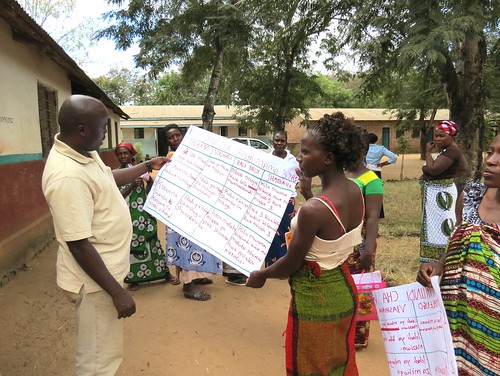
Village women and livestock in Niger

Village women and livestock in Niger (photo credit: ILRI/Stevie Mann).

‘A key function of the United Nations Food and Agriculture Organization is to estimate food security across the world. These estimates are published each year as the State of Food Insecurity in the World reports. The number of under-nourished people is re-evaluated annually using a food balance sheet approach. For a broad group of crops and livestock commodities, national estimates of the food available for human consumption are made.

ILRI’s Tim Robinson and colleagues believe these estimates present the possibility of mapping the changing demand for livestock products and also the associated changes in production that will be required to meet future demand. . . .

This study is a contribution to a World Bank background paper, Africa Drylands Study: The Economics of Resilience of Livestock in the African Drylands (forthcoming in 2014). . . .’

Read the full post…

View original post 6 more words
Posted in Uncategorized | Leave a comment

What is wrong with feeding animal by-products?

What is wrong with feeding animal by-products?.

It all depends who you ask, as they all have a saying in this case: the animal, the producer, the renderer, the consumer. I am going to prepare a detailed article on this topic, but let me say briefly that it is consumers who run the highest risk in this issue, namely their health.

It is true; nobody wants to pay more than they have to for their food, but at the same time we all want to make sure this food is not going to kill us. And, in my opinion, this is the root of the whole issue. Taking a consumer’s point of view, we are faced with such media-enhanced freak stories as mad-cow disease, toxins in milk, and Salmonella in eggs and meat. It is no wonder some consumers might start to believe it would be best to convert pigs and poultry to vegetarians (a paradox for people who are going to consume animal products).

But, is this the correct solution? I think not.

Instead, I think we must work harder and invest heavily towards enhancing the quality control and safety of animal by-products, starting from farm level, bringing up the pressure at the slaughterhouse, and then doing the utmost possible during rendering and storage. In my opinion, a ban is never as effective as finding the correct way to resolve an issue by providing viable alternatives and restricting usage to correct applications. We cannot ban humans from consuming peanuts because they might be a source of mycotoxins as much as we cannot ban cereals from animal diets for the very same reason. We did not ban all antibiotics in animal farming, but we restricted their use to therapy, whereas we found viable alternatives for growth promotion. We should work along similar principles when it comes to animal by-products.

Posted in Agriciltural Policy, Animal health for human health, AR&D, Food safety, Food safety & supply, Food Security, Hunger & Malnutrition, Poverty, small holder | 1 Comment

How theories of change contribute to Livestock and Fish research monitoring

Peter Ballantyne (ILRI)'s avatarCGIAR Research Program on Livestock and Fish

Theories of change have become part of the landscape of CGIAR research programs – also the program on Livestock and Fish.

Livestock and Fish is a complex program characterized by multiple projects spread over a vast geography currently covering nine countries (value chains).

Its delivery of research and development outcomes depends on the creation of pro-poor technological innovations (product lines) and strategic collaboration with a diverse set of actors (researchers, development actors, governments and donors) to facilitate uptake of the innovations at scale.

Recognizing the program’s complexity, a different sort of results-oriented monitoring and evaluation framework is required.

In this report, Keith Child and colleagues share  the program’s experience with a theory of change (ToC) approach to monitoring and evaluation.

Download the report

View original post

Posted in Uncategorized | Leave a comment

Livestock and Fish Independent External Evaluation kicks off this year

Keith Child's avatarCGIAR Research Program on Livestock and Fish

In 2015, the Livestock and Fish CGIAR Research Program will be evaluated by a team commissioned by the Independent Evaluation Arrangement (IEA) office of the CGIAR. You can learn more about the evaluation here.

As a first step, the evaluation team led by Brian Perry, a veterinary surgeon by profession and epidemiologist by specialization is planning to meet in Kenya the week of 1st February to plan and initiate the evaluation. At the beginning of the week, the evaluation panel will be off ILRI campus holding their own internal team meeting. They will arrive at ILRI on Wednesday 4th Feb at noon to meet the Livestock and Fish Program management, Flagship leaders, other program staff and the ILRI management team.

The agenda for the meetings can be found here.

The members of the team are:

  1. Anni McLeod, evaluation team member
  2. John Morton, evaluation team member
  3. Peter Udén, evaluation…

View original post 1,047 more words

Posted in Uncategorized | Leave a comment

New ILRI study finds high levels of aflatoxin in milk and dairy feeds in Greater Addis Ababa milk shed

Tezira Lore's avatarAgHealth

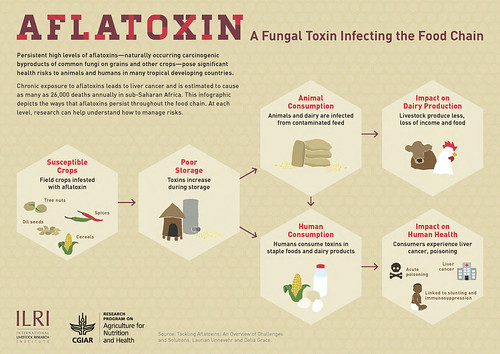
ILRI aflatoxin infographic

Aflatoxins are highly toxic fungal by-products produced by certain strains of Aspergillus fungi in more than 40 susceptible crops including maize and groundnuts. Aflatoxins can be separated into aflatoxins B1, B2, G1 and G2.

When ingested, aflatoxin B1 is metabolized to aflatoxin M1 which is secreted into milk. Aflatoxin B1 is particularly important because it has been found in most foods and animal feeds and is highly carcinogenic.

Aflatoxins cause around 90,000 cases of liver cancer each year and are strongly associated with stunting and immune suppression in children. Aflatoxins in contaminated animal feed can lead to reduced animal productivity. They can end up in products like milk, meat and eggs, thus presenting a health risk to humans, with children being particularly susceptible.

In Ethiopia, previous studies have investigated aflatoxin contamination in staple cereals, red chili pepper and ground peas. Now, a new research study published in the journal Food…

View original post 615 more words

Posted in Uncategorized | Leave a comment

Fostering inclusive growth means investing in agriculture to pay dividends in poverty reduction (IFAD)

Willem Van Cotthem's avatarDESERTIFICATION

Read at :

http://ifad-un.blogspot.be/2013/10/less-hunger-but-not-good-enough.html

Less Hunger, But Not Good Enough

By José Graziano da Silva, Kanayo Nwanze, and Ertharin Cousin

Every year, we take a snapshot of world progress in the fight against chronic hunger. This year, the picture is looking better, but it’s still not good enough.

Some 842 million people are estimated to have been suffering from chronic hunger in 2011-2013, according to The State of Food Insecurity in the World, a report released jointly by the Food and Agriculture Organisation of the United Nations (FAO), the International Fund for Agricultural Development (IFAD) and the World Food Programme (WFP).

This figure is down from 868 million during 2010-2012, and represents a decline of 17 percent since 1990-1992. Significant as this progress may be, it cannot disguise the harsh reality: roughly one person in eight suffers from hunger.

The vast majority of undernourished people, 827 million, live in developing…

View original post 235 more words

Posted in Uncategorized | Leave a comment

How to end the chronic hunger with more money? Social protection in the form of cash transfers will eliminate hunger immediately !

Willem Van Cotthem's avatarDESERTIFICATION

Photo credit: FAO

Women farmers in Myanmar. In rural areas, pro-poor investments should support family farmers and other small-holders in a variety of ways.

Achieving Zero Hunger: Combining social protection with pro-poor investments

An additional $160 per year for each person living in extreme poverty will end chronic hunger new UN estimates show

JOINT FAO / WFP / IFAD NEWS RELEASE

10 July 2015, Rome – Eradicating world hunger sustainably by 2030 will require an estimated additional $267 billion per year on average for investments in rural and urban areas and in social protection, so poor people have access to food and can improve their livelihoods, a new UN report says. This would average $160 annually for each person living in extreme poverty over the 15 year period.

Prepared by FAO, the International Fund for Agriculture Development (IFAD) and the World Food Programme (WFP), the report, which was presented…

View original post 366 more words

Posted in Uncategorized | Leave a comment

Zero hunger is possible

Willem Van Cotthem's avatarDESERTIFICATION

Photo credit: FAO

FAO Director-General José Graziano da Silva addresses the plenary at the 3rd International Conference on Financing for Development.

Investing in a future free from hunger

With the right investments in agriculture and social production, zero hunger is possible – FAO Director-General at Addis Conference

Highlighting the historic opportunity to become the “Zero Hunger generation”, FAO Director-General José Graziano Da Silva called for additional investments in social protection and rural development at the Third International Conference on Financing for Development in Addis Ababa, Ethiopia, today.

The expected Addis Ababa Accord on Financing for Development will serve as a roadmap for future investments in development that are people-centered and sustainable and a crucial pillar of the UN’s new Sustainable Development Goals (SDGs).

“Through the SDGs and the Accord, the world has declared: ‘Our goal is to end poverty and hunger,'” da Silva said addressing world leaders, civil society and…

View original post 204 more words

Posted in Uncategorized | Leave a comment

Greece: Food Insecurity At Europe’s Doorstep

Janina's avatarFood (Policy) For Thought

I am back from Cuba and have a long list of posts in my mind, both from the conference I attended and from talking to Cubans on the street. Coming soon.

However, these days I can’t stop thinking about a topic closer to home, at least mentally – the Greek/European tragedy unrolling over the last weeks with popular referenda, meetings behind closed doors and politics winning over economic arguments. All culminating with the reluctant approval of the demanded austerity reforms (here a version annotated by former Finance Minister Varoufakis) by the Greek parliament amidst widespread doubts as to their effectiveness, while Greek youth throwing molotov cocktails clashed with police outside the debate’s doors.

Among the demands is an even harsher restructuring of the value-added tax system in an effort to increase government revenue and service the country’s unsustainable debt, which in 2014 had reached 177% of its GDP.

Among…

View original post 1,278 more words

Posted in Uncategorized | Leave a comment

Beef feedlots: Polluters or efficient use of resources?

Susan MacMillan's avatarILRI Clippings

Livestock production

Livestock production in California (image via Flickr/US Department of Agriculture).

There’s been an interesting debate published in the Wall Street Journal this week on whether feedlot beef is bad for the environment. Robert Martin, director of the Food System Policy Program at the Johns Hopkins Center for a Livable Future, says the pollution spreads for miles. Jude Capper, a livestock sustainability expert based in Britain, says the beef industry keeps things safe

‘Feedlots play a huge but controversial role in the raising of beef cattle in the U.S., which produced an estimated 24.3 billion pounds of beef last year, down slightly from an average of 26 billion for the previous five years.

‘The overwhelming majority of beef cattle spend their last months with hundreds if not thousands of other cows in feedlots, where they are fattened before being slaughtered.

‘But while feedlots help provide large amounts of protein in Americans’ diets, there…

View original post 515 more words

Posted in Uncategorized | Leave a comment

  Putting agriculture on top – the sequence to ‘GIS a map to food security’

Enricka's avatar

Terrain Map of Trinidad Terrain Map of Trinidad

In my previous post, GIS a map to food security, I identified eight benefits of GIS technology. Additionally, I introduced you to the Land Information System of Trinidad and Tobago (LISTT) Parcel Viewer, a program under the Land Management Division of the Government of the Republic of Trinidad and Tobago. Today, I want to explore how this application can further facilitate Agricultural Tenants (farmers).

View original post 535 more words

Posted in Uncategorized | Leave a comment

GIS a map to food security

Posted in Uncategorized | Leave a comment

CGIAR Research Program on Livestock and Fish participates in CIAT’s 45 Anniversary Celebrations

Evelyn Katingi's avatarCGIAR Research Program on Livestock and Fish

CIAT logoThe Livestock and Fish CGIAR Research Program director, Tom Randolph, yesterday, 8 October 2012, attended the day-long 45th anniversary celebration in Nairobi for the International Center for Tropical Agriculture (CIAT).

The celebration was hosted by Ruben Echeverria, CIAT director general and Robin Buruchara, CIAT regional director. The International Livestock Research Institute (ILRI) director general, Jimmy Smith, also participated, as well as CIAT colleague, Brigitte Maass. Randolph served as a panelist in the afternoon discussion on ‘Strengthening South – South Partnerships in Africa’s Development’.

The panel session explored the role and challenges of partnerships and, more specifically, lessons from experiences with south-to-south partnerships. In his remarks, Randolph highlighted the changing needs and nature of partnerships since the CGIAR centres, including CIAT, were established in the 1960s and 1970s. He highlighted the current challenge the Livestock and Fish program faces in working closely with development actors to identify and test solutions for…

View original post 315 more words

Posted in Uncategorized | Leave a comment

Livestock and Fish program signs partnership agreement with the Swedish University of Agricultural Sciences

Peter Ballantyne (ILRI)'s avatarCGIAR Research Program on Livestock and Fish

Jimmy Smith signs the agreement; Livestock and Fish director Tom Randolph look on

Recently, ILRI director general Jimmy Smith signed a Strategic Partnership Agreement between the Swedish University of Agricultural Sciences (SLU) and the CGIAR Research Program on Livestock and Fish.

According to program director Tom Randolph, this is a key milestone in the evolution of the program, adding strong academic expertise to the existing livestock and fish research for development partnership.

The agreement was earlier signed by SLU’s Vice-Chancellor Lisa Sennerby Forsse.

SLU Vice-Chancellor Lisa Sennerby Forsse with Professor Ulf Magnusson

In the coming two years SLU will contribute with expertise in the area of heard health but also investigate the possibilities of deepening the cooperation in the areas of animal genetics and feed and forages.

More on the SLU Global web site

View original post

Posted in Uncategorized | Leave a comment

ILRI research brief says marketing information tool has improved livestock trading in Somaliland

Paul Karaimu's avatarILRI Clippings

Hargeisa livestock market – goats selected for export

Goats at a market in Somaliland (photo credit: ILRI/Peter Ballantyne).

By Andrew Wangili

A new research brief by the International Livestock Research Institute (ILRI) shows that a livestock marketing information system (LMIS) has improved access to animal marketing information and helped increase trading in livestock in Somaliland.

The livestock sector is a major source of livelihood in many Somaliland households. Exports of sheep and goats, particularly to the Middle East, experienced tremendous growth between 2007-2012, but despite the opportunities for producers and traders offered by this growth, livestock trade is characterized by underdeveloped legal frameworks, transactional uncertainty and high information costs. Traditional institutions and religious practices guide the livestock trade in Somaliland.

In 2007, Terra Nuova set up the LMIS to address high market information cost in the state. This LMIS activity and the analysis of its data were conducted as part of a ‘Reducing vulnerability of Somali communities by raising the capacity of indigenous systems…

View original post 266 more words

Posted in Uncategorized | Leave a comment

THE 4TH NATIONAL AGRICULTURE MANAGEMENT SUMMIT, TRAINING & EXHIBITION ON LIVESTOCK’S&CROP MANAGEMENTS IN NIGERIA

Posted in Uncategorized | Leave a comment

Global discussions on agricultural curricula: Where are Africa and South East Asia?

aoescala's avatarThe GFAiR Blog

17 May 2010, Thiaye - Farmers checking the growth of cabbage plants in a farmer field school. The field is divided into two parts where farmers implement improved techniques in one part and traditional techniques in another and then compare results.</p>
<p>GCP/RAF/009/NET: Sub-Regional Programme for Participative Training  in Integrated Production and Pest Management through Farmer Field Schools for Benin, Burkina Faso, Mali and Senegal.The Global Confederation of Higher Education Associations for Agricultural and Life Sciences (GCHERA) co-organized from 15-17 June, 2015 in Zaragoza, Spain the conference “Agricultural Higher Education in the 21st Century” in which Young Professionals for Agricultural Development (YPARD) participated. GFAR supports this nice GCHERA-YPARD collaboration as both are members of GFAR Steering Committee. 

View original post 920 more words

Posted in Uncategorized | Leave a comment

Health and Food Plants are Better than Ornamental Plants~ Grow for Health and Food.

Dr Raziq Kakar's avatarPastoralists, Nomads, Small and Medium Scaled Family Farmers are the Custodian of Native genetic resources and Sustainable Farming Systems

The food security challenge and health complications, strongly realize the importance of those plants (trees, shrubs, bushes etc) which can add to food and health. There are many plants which can give beauty along with the food and health promising nutrients. A movement to turn from just ornamental to health promising and food plants will be a great revolution in human heritage. I here by give the example of Moringa tree as a typical case, how it adds to health and food.img_58431

Moringa oleifera is a tree native to the Himalayas and cultivated throughout the subtropics. Also called the ‘drumstick tree’ due to its odd shape, moringa oleifera grows very well in numerous climate types and offers many health benefits. It has over 92 nutrients and 46 natural antioxidants, as well as anti-inflammatory compounds. A superfood to rival most other superfoods due to its incredible nutritional value, it is also said to treat…

View original post 138 more words

Posted in Uncategorized | Leave a comment

How Africa can withstand the growing threat of climate change, North-west Nigeria as a case study

Posted in Uncategorized | Leave a comment

Top 10 Lucrative Farming Businesses

Posted in Uncategorized | Leave a comment

Six tips for Nigerian banks to help financing agriculture

Posted in Uncategorized | Leave a comment

OPPORTUNITIES AVAILABLE TO YOUNG PEOPLE IN AGRICULTURE THROUGH AGRIBUSINESS

Posted in Uncategorized | Leave a comment

How Can One Tap Into The Value Chain System In Nigeria’s Agriculture? Part 1

Posted in Uncategorized | Leave a comment

IFPRI 2014–2015 Global Food Policy Report features chapter on food safety management

Tezira Lore's avatarAgHealth

Pork at the wet market A local pork vendor at the wet market sells her meat to two local women, Hung Yen province, Vietnam (photo credit: ILRI/Nguyen Ngoc Huyen).

The 2014–2015 Global Food Policy Report launched last week (18 March 2015) by the International Food Policy Research Institute (IFPRI) examines the major food policy issues, developments and decisions around the world in 2014 and highlights challenges and opportunities for 2015.

An entire chapter has been dedicated to the subject of food safety which is a major global concern. The chapter titled Food safety: Reducing and managing food scares is authored by Delia Grace, leader of the Food Safety and Zoonoses program at the International Livestock Research Institute (ILRI), and John McDermott, director of the CGIAR Research Program on Agriculture and Health (A4NH) led by IFPRI.

The chapter begins with a review of the high-profile foodborne disease events…

View original post 210 more words

Posted in Uncategorized | Leave a comment

New ILRI report reviews the knowns and unknowns of antimicrobial resistance in animal agriculture in developing countries

Tezira Lore's avatarAgHealth

Cattle in Botswana A herd of cattle in Botswana. A new report by ILRI identifies key evidence gaps in our knowledge of antimicrobial resistance in the livestock and fisheries sub-sectors in the developing world (photo credit: ILRI).

Antimicrobial resistance occurs when microorganisms (bacteria, viruses, fungi and parasites) develop the ability to continue growing in the presence of an antibacterial, antiviral, antifungal or antiparasitic substance to which they were previously sensitive.

The use of antibiotic drugs to prevent and treat livestock diseases is a key driver for the development of agriculture-related antimicrobial resistance which is now a global public health problem as antibiotics in food animals can enter the food chain and affect the health of consumers and communities.

In developing countries, antimicrobial resistant pathogens are commonly found in animals, animal food products and agro-food environments. However, the lack of national surveillance systems means that we do not have reliable estimates of the true…

View original post 277 more words

Posted in Uncategorized | Leave a comment

A concept note for camel development

Posted in Uncategorized | Leave a comment

International Camel Conference at Islamia University Bahawalpur Pakistan

Posted in Uncategorized | Leave a comment

Camel and other Livestock~ A tool for Healthier Food and Rural Development in Cholistan Desert

Posted in Uncategorized | Leave a comment

Some Facts About Camel along with its Real Terminology

Posted in Uncategorized | Leave a comment

CNN reports that drought in Horn is increasing conflicts between people and wildlife

Susan MacMillan's avatarILRI Clippings

Kenya Safari

Elephants and livestock both need water on a regular basis  (photo of Kenya elephant on Flickr by Shawna Nelles).

CNN reports that ‘As the Horn of Africa suffers its worst drought for 60 years, there are reports of growing conflict between people and wildlife over the region’s limited resources.

‘. . . Jan de Leeuw, from the International Livestock Research Institute (ILRI), says during periods of drought people get desperate.

‘”Herders have animals which are thirsty and because these are areas which have very few water points if wells don’t have water they might have to walk 50-100 kilometers to find another,” he said.

‘Leeuw says that Ethiopian herders have told him that during times of drought rules about certain areas being protected for livestock in their opinion can be broken.

‘But it’s not just the livestock that’s using areas it shouldn’t says Leeuw.

‘”Based on aerial surveys in Kenya…

View original post 170 more words

Posted in Uncategorized | Leave a comment

G20 agriculture ministers meet this week: Must invest in food markets to bolster food security–Guardian

Susan MacMillan's avatarILRI Clippings

Commercial dairying in northeastern India

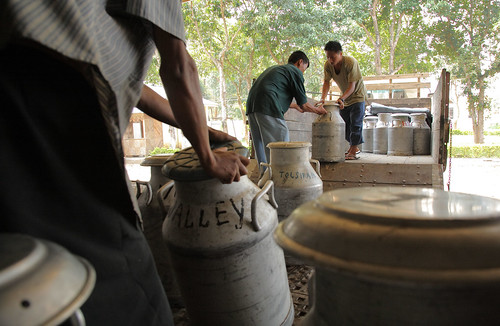
Workers unload milk cans at a commercial dairy plant in Dimapur, Nagaland, India (photo credit: ILRI/Mann).

A blog in the Guardian this week argues for the G20 agriculture ministers meeting this week to support ‘new investment in farming and vibrant, transparent markets to address food security.’

‘As the G20 agriculture ministers prepare to meet for the first time this week, they will be tasked with addressing a series of complex challenges that have an impact on everyone from smallholder farmers and entrepreneurs to scientists, policymakers, financiers and food consumers around the world.

‘In other words, we all have good reason to take notice. Ensuring global food security entails weighing a series of related but independent challenges to identify possible synergies and opportunity costs. . . .

‘What brings these variables together is agricultural markets—specifically, how they function and how and when they fail. We must support and build these markets, but…

View original post 154 more words

Posted in Uncategorized | Leave a comment

With the right investments, Africa’s small farms could make profits as well as food

Susan MacMillan's avatarILRI Clippings

IFAD Rural Poverty Report 2011

ILRI Corporate Report 2009-2011: Cover

Mohamed Béavogui, director of the west and central African division of the International Fund for Agricultural Development (IFAD), has the following to say in the Guardian‘s Poverty Matters Blog.

‘Africa’s smallholder farmers not only have the potential to produce enough food for export—and thereby contribute to food security worldwide—but to help lead the way to robust growth and development across the continent. That is, if the right kinds of investments and policy approaches are taken to vastly improve their productivity through better access to technology, credit, transportation and markets. . . .

‘Agricultural markets are changing. We no longer need to think exclusively in terms of export crops because new market opportunities are emerging on Africa’s doorstep. As cities expand and incomes increase, people in urban areas are changing their eating habits and becoming consumers who want more meat, dairy products and vegetables, and they expect higher quality standards—we…

View original post 163 more words

Posted in Uncategorized | Leave a comment

Information systems on domestic animal genetic resources

ILRI Communications's avatarILRI Clippings

For the November 2011 ‘liveSTOCK Exchange’ event at ILRI, Tadelle Dessie, Yetnayet Mamo and Okeyo Mwai prepared an issue brief on the Domestic Animal Genetic Resources Information System (DAGRIS) …

In developing countries, lack of accurate information on the diversity and status of existing farm animal genetic resources is believed to exacerbate the alarming rate of
irreversible loss of genetic diversity. Such losses reduce opportunities to improve food security, alleviate poverty and attain sustainable agricultural practices.

DAGRIS (http://dagris.ilri.cgiar.org) is an electronic source of systematic information on indigenous farm animal genetic resources. Initial development of the system focused on three priority farm animal species in Africa – cattle, sheep and goats. It was subsequently expanded to include other livestock species (chicken, pigs, buffalo and yak) and developing countries in Africa and Asia.

Download Issue Brief 9.


On 9 and 10 November 2011, the ILRI Board of Trustees hosts…

View original post 60 more words

Posted in Uncategorized | Leave a comment

Livestock genetic resources of and for the poor: Where ILRI research stands

Susan MacMillan's avatarILRI Clippings

For the November 2011 ‘liveSTOCK Exchange’ event at ILRI, Okeyo Mwai, livestock geneticist, reflects on ILRI’s research over the past decade on the animal genetic resources of the developing world and future directions.

Watch the 2-minute interview with Okeyo Mwai.

What we achieved in the last decade
With the Food and Agriculture Organization of the United Nations and many other partners, local as well as international, we achieved:

> Greater public understanding of the value of Africa’s indigenous livestock genetic resources through assessments and articulations of their global ‘meltdown’ in recent decades and the causes for this.

> Greater understanding by policymakers that the best way to conserve this important ‘barnyard diversity’ is to make greater use of native breeds, populations and genes on farms—and that implies providing the farmers both with the animal stock and with incentives for maintaining them.

> Greater scientific understanding of the rich storehouse of…

View original post 462 more words

Posted in Uncategorized | Leave a comment

Toughening animal agriculture for worse climate with ‘preventive breeding’–Scientific American

Susan MacMillan's avatarILRI Clippings

MinoanBull'sHead

Minoan terracotta bull’s head, 14th-century BC (via Christie’s).

Animal diseases cost cash-strapped African farmers about $300 billion a year in lost income and veterinary bills. Now scientists are proactively breeding livestock with defenses against these pests before they strike.

Scientists from . . . CGIAR . . . are setting up a “preemptive breeding” program to develop livestock with resistance to potential widespread outbreaks of currently localized diseases to help reduce some of the losses that would occur.

‘Most of the world’s 38 billion livestock are kept in Africa where they face threats from diseases, reduced grazing land and a lack of vaccines. Livestock in Europe or the U.S., by contrast, are rarely lacking in food and medicine, says Okeyo Mwai, a livestock geneticist at the International Livestock Research Institute (ILRI) in Kenya. “Most of the problems are in Africa where the costs of treating diseases are huge. As…

View original post 363 more words

Posted in Uncategorized | Leave a comment

Hidden stories in the agri-food value chains

stpascuc's avatarFood Governance

MafiaOrganized crime is a continuously evolving phenomenon.  The United Nations Convention against Transnational Organized Crime (2000) defined  “organized criminal group” as a structured group of three or more persons, existing for a period of time and acting in concert with the aim of committing one or more serious crimes or offenses […] in order to obtain, directly or indirectly, a financial or other material benefit. (United Nations, 2000).

Typically organized crime groups profit and thrive through the manipulation and monopolization of legitimate markets, institutions, and industries – e.g. financial markets, labour unions, and construction or sanitation (UNODC, 2014) as well as through black markets and illegitimate practices – e.g. illicit drug trade and human trafficking. They rely on tools of violence, corruption, bribes, graft, extortion, intimidation, and murder to maintain their respective operations and control their market profits (Costa, 2010). With high market stakes and violence-based operations, criminal organizations remain…

View original post 686 more words

Posted in Uncategorized | Leave a comment

Why gender matters for food safety

Tezira Lore's avatarAgHealth

The following is an excerpted version of a blog post originally published on the CGIAR Research Program on Agriculture for Nutrition and Health (A4NH) website.


Some of the foods that would most enhance nutrition in diets in the developing world are also the riskiest in terms of food safety. Numerous health risks exist along the value chain for livestock and fish products, from production to consumption. In this post, Sophie Theis (Research Analyst, Poverty, Health, Nutrition Division, International Food Policy Research Institute) and Delia Grace (Program Manager, International Livestock Research Institute) relate findings from a recent A4NH/International Livestock Research Institute analysis of 20 livestock and fish value chains in Africa and Asia that reveal how gender differences in value chain participation influence risk exposure.

The results from the participatory risk assessment of these value chains are published in Grace et al. (2010) and a paper analyzing the gendered…

View original post 553 more words

Posted in Uncategorized | Leave a comment

A4NH 2014 annual report highlights ILRI book on food safety research

Tezira Lore's avatarAgHealth

Food Safety and Informal Markets: Animal Products in Sub-Saharan Africa The CGIAR Research Program on Agriculture for Nutrition and Health (A4NH) led by the International Food Policy Research Institute (IFPRI) last week (4 June) published its 2014 annual report, marking three full years of its first phase of research. The report highlights a range of research work by the program’s flagships, including the delivery of biofortified crops, work on aflatoxin control and the development of a new global indicator to measure women’s dietary diversity. The International Livestock Research Institute (ILRI) leads the A4NH flagship on agriculture-associated diseases. The annual report features a key output of this flagship, namely, a new book, Food Safety and Informal Markets: Animal Products in Sub-Saharan Africa, published in October 2014. Edited by ILRI researchers Kristina Roesel and Delia Grace, the book synthesizes lessons from 10 years of food safety research in Africa, including 25 case…

View original post 19 more words

Posted in Uncategorized | Leave a comment

Dangote Industries Limited invests $1bn in commercial rice production and processing in Nigeria

Posted in Uncategorized | Leave a comment

Global conference on One Health features ILRI research on antimicrobial use in developing countries

“Livestock in developing countries suffer a high burden of preventable disease, and this burden is likely to increase as livestock systems become more intensive. Antibiotics and other antimicrobial drugs are often used to treat animal disease infections.
” ILRI

Tezira Lore's avatarAgHealth

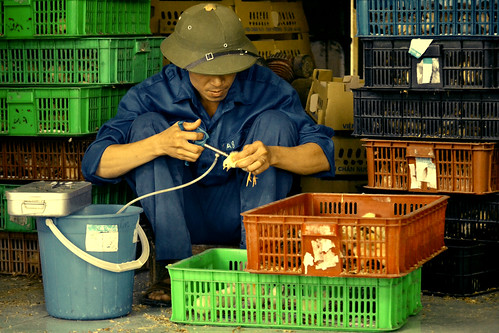
Vaccinating chicks in Vietnam

Livestock production is beset by many challenges. Animal diseases, in particular, can lead to reduced production of milk, meat and eggs. In some cases, animal disease infections may result in death, leading to loss of livelihoods for livestock keepers.

Livestock in developing countries suffer a high burden of preventable disease, and this burden is likely to increase as livestock systems become more intensive. Antibiotics and other antimicrobial drugs are often used to treat animal disease infections.

However, authors of a study published in March 2015 in the Proceedings of the National Academy of Sciences of the United States of America (PNAS) warn that the use of antimicrobial drugs in livestock production could contribute to the spread of drug-resistant pathogens in both livestock and humans, posing a significant public health threat.

The study also projects that by the year 2030, global antimicrobial consumption will rise by 67% and nearly double in…

View original post 178 more words

Posted in Uncategorized | Leave a comment

Coaching and mentoring as a learning transfer strategy in LIVES

Beamlak Tesfaye's avatarLIVES-Ethiopia

By Mamusha Lemma

Avocado seedling grafting practices (Photo:ILRILIVES) LIVES coaching and mentoring is helping avocado farmers (photo:ILRILIVES).

Training is often criticized for not making a significant impact on improving performance. Many training managers are increasingly concerned about how to ensure the transfer of learned skills and knowledge from a training context to the work environment. The challenge arises from how training is traditionally planned and implemented. In most cases, training is conducted as a standalone activity, with little focus on skill transfer strategies, which determines the success of training programs. But when training is properly designed and implemented, with an appropriate follow-up strategy, it can significantly influence performance at an individual, organizational and system level.

Farmers often face several constraints in applying knowledge and skills gained from training such as inadequate technical support from development agents, lack of market incentives to enter into new businesses, and shortage of finance to buy agricultural inputs. Coaching and mentoring can be…

View original post 438 more words

Posted in Uncategorized | Leave a comment

Healthy Food for a Healthy World- Working towards nutrients security

canwefeedtheworld's avatarOne Billion Hungry: Can We Feed the World?

By Stephanie Brittain

More than 800 million people suffer from chronic hunger and two billion suffer from nutrient deficiency. One in four children is stunted and one in two is malnourished. At the same time, 1.9 billion people are overweight, of which 600 million are obese. This is the current state of global nutrition; unbalanced and unequal.

healthly food for a healthy worldIn recognition of this, the Chicago Council held the London launch of their latest report “Healthy Food for a healthy World: Leveraging Agriculture and Food Security to Improve Global Nutrition” on the 2nd of June 2015.  A distinguished panel discussed the key issues that are raised in the report, including Per Pinstrup-Andersen, Chair, High Level Panel of Experts on Food Security and Nutrition, Montpellier Panel member Lindiwe Sibanda, CEO of the Food, Agriculture and Natural Resources Policy Analysis Network (FANRPAN), Catherine Bertini, Distinguished Fellow, Global Agriculture and Food…

View original post 954 more words

Posted in Uncategorized | Leave a comment