I am very happy to have contributed to a chapter in this exciting new book:
Feeding Paradise? Corporeal Food Citizenship in the Galapagos
Christine Franke, Jessica Duncan, and Stephen Sherwood
Don’t forget to ask your libraries to order it! 

I am very happy to have contributed to a chapter in this exciting new book:
Feeding Paradise? Corporeal Food Citizenship in the Galapagos
Christine Franke, Jessica Duncan, and Stephen Sherwood
Don’t forget to ask your libraries to order it!
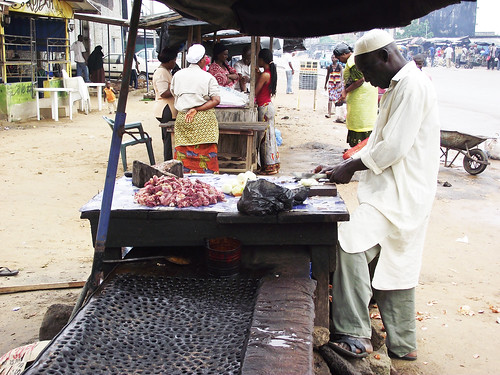 Locally made beef stew sold in Bagnon market at Yopougon, Abidjan, Côte d’Ivoire. Informal food trade is less amenable to regulation and may be an important cause of foodborne disease (photo credit: ILRI/Valentin Bognan Koné).
The World Health Organization last month (August 2015) published a book on trade and health that provides useful background information for health policymakers to formulate a national response to trade and health-related issues, especially within the context of liberalization of global trade.
Trade liberalization influences the entire food supply chain. Changes along the food supply chain in turn influence the environment in which consumers make choices about the food they eat. These choices affect the diets of consumers and, therefore, the prevalence of foodborne diseases, undernutrition, and obesity and diet-related noncommunicable diseases.
There are also indirect effects of trade liberalization on human nutrition and health. These include the effects on household incomes and the inadvertent…
View original post 249 more words
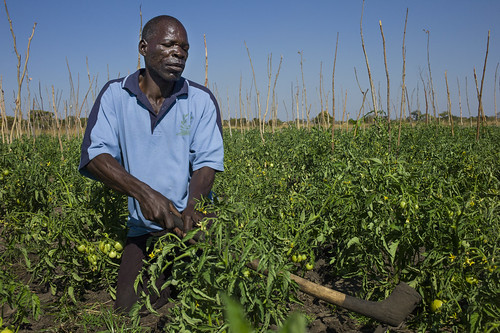 A man works in his vegetable field on the Barotse Floodplain, Zambia (photo credit: WorldFish/Anna Fawcus).
A new publication by the Food and Agriculture Organization of the United Nations (FAO) focuses on influencing food environments for healthy diets through four areas: production of diversified food, food safety, food labelling and food-based dietary guidelines. FAO defines food environments as the settings with all the different types of food made available and accessible to people as they go about their daily lives.
The chapter on food safety was authored by Delia Grace, veterinary epidemiologist and food safety expert at the International Livestock Research Institute (ILRI). The chapter begins with an overview on foodborne diseases and the groups that are most vulnerable. It then goes on to discuss the health burden of—and trends in—foodborne diseases, the role of food safety in ensuring a healthy food environment and interventions…
View original post 100 more words

Cattle grazing in Borena, Oromia, Ethiopia (photo credit: ILRI/Camille Hanotte).
‘It is fair to assume many private investors in Africa did not grow up milking a cow or shepherding cattle through the Sahara Desert.
‘But, with a growing number of firms gobbling up arable land in Africa—not solely for crop production but also for livestock and cattle—investment shops are slowly redirecting capital to this agricultural subsector.
Investing in this segment of African economies can be transformative, as a significant portion of African wealth and growth opportunity is walking on four legs on the African continent.
Africans are demanding an increased percentage of meat in their diet.
‘Livestock investment addresses other poverty in the agricultural value chain—manure, feed and milk—as well as providing economic protection against drought. Yet investors will have to overcome both institutional and physical constraints on the livestock sector—market information, diseases and available pasture—to achieve financial returns.
‘Market information (and market distortions)…
View original post 343 more words
PENAPH receives many requests about more information on how to analyze qualitative data. There will be a course in May that addresses qualitative research methods that should be of interest to PENAPH members
Introduction to qualitative research methods for animal health
Dates: 23-25 May 2017
Venue: Foresight Centre, University of Liverpool, L69 3GL
About the course
This is a 3 day course involving a stimulating mix of tutorials and activities. Course highlights include:
Developing qualitative research questions
The use of different methods of data collection
Analysing qualitative data
Interpreting qualitative data
Course tutors
Professor Liz Perkins
Dr Francine Watkins
Dr Rob Christley
Plus guest speakers
For more information click on the link: course webpage
https://www.liverpool.ac.uk/infection-and-global-health/Qualitative-research-course/
Read at :
http://land-l.iisd.org/news/global-alliance-for-climate-smart-agriculture-launched/
A coalition formed by 14 governments and 32 organizations will aim to enable 500 million farmers around the world to practice climate-smart agriculture. The ‘Global Alliance for Climate-Smart Agriculture’ was launched during the Climate Summit, on 23 September, and the Alliance held its first meeting on 24 September in New York, US.
The Global Alliance for Climate-Smart Agriculture (CSA), will work for: sustainable and equitable increases in agricultural productivity and incomes; increased resilience of food systems and farming livelihoods; and reduced greenhouse gas (GHG) emissions from agriculture. The Alliance will also aim to boost food and nutrition security through climate-adjusted and natural-resource efficient agricultural practices, food systems and social policies.
The Alliance members, which include governments, farmers, scientists, businesses, civil society, and regional and international organizations, represent millions of farmers, a quarter of the world’s cereal production, 43 million undernourished…
View original post 83 more words
Photo credit: Food Tank
Tata Somba, Benin – September 6, 2012: Local woman with a small child passing through the green field. – http://foodtank.com/assets/images/head/iStock_76694969_MEDIUM_opt_opt.jpg
by Marisa Tsai
Recently, the Montpellier Panel, a team of African and European experts in agriculture, trade, ecology, and global development, released a report titled, “Set for Success: Climate-Proofing the Malabo Declaration.” The report reviews the climate-related targets of the Malabo Declaration on Accelerated Agricultural Growth and Transformation for Shared Prosperity and Improved Livelihoods, a set of agricultural goals adopted at the African Union Summit in 2014. Panelists urge African governments to better address climate change challenges by increasing support for smallholder farmers and scaling up innovative programs.
According to the report, the impacts of climate change pose a high risk to African food security and economic growth. Agricultural activities employ between 60 and 90 percent…
View original post 138 more words
Read the full article: Science Daily
Photo credit: SciDevNet – Copyright: Panos
If scientists, farmers and policy makers could consistently work together, Africa will achieve self-sufficiency in wheat production in the very near future.
That was one of the central themes at a meeting convened in Nigeria recently to discuss wheat matters, including presentations of various studies.
From the participants at the 4-day international wheat conference of the Support to Agricultural Research for Development of Strategic Crops (SARD-SC) Project held in Abuja, Nigeria, 27 February to 2 March, it was quite clear to me that wheat is becoming a major staple on the continent.
It is an important source for vitamins and minerals as well as carbohydrates, fiber, magnesium, vitamin B, folic acid, antioxidants and phytochemicals. These nutrients can help prevent many of the chronic diseases plaguing Africa, where the disease burden is great and overstretching the health infrastructures.
Growing the…
View original post 72 more words

Read the full article: IIED
Senegal currently has a complex and poorly regulated system of land governance, which — combined with an urbanisation trend and increasing outsider interest — is leading to land privatisation and a consequent reduction in the availability of cultivable land for small producers. Young farmers in particular are struggling to gain sufficient access to land to maintain viable enterprises. Here we draw on field research to understand the drivers and impacts of trends in land use and ownership in rural Senegal, and suggest that government-backed land reform offers the best immediate chance of addressing the power imbalances that threaten rural livelihoods.

 The Gender Strategy of the the CGIAR Research Program on Integrated System for the Humid Tropics, or Humidtropics, committed to the empowerment of women.
It focused on four areas: access to material assets, access to knowledge and know-how, improved capacity (including the ability to make decisions) and the ability and self confidence to make choices.
To support mainstreaming of these into Humidtropics research, the program developed four classroom-training modules to be used by facilitators of innovation platforms.
These cover:
The source for these training materials was the IITA Training Manual for Gender Mainstreaming and Analysis: Building Capacity for Agricultural Research for Development and Innovation, as well as tools for gender analysis adapted by the Food and Agriculture Organization of the United Nations, the International Fund for Agricultural Development and the Institute of Development…
View original post 1 more word

Nelson Chikowa, Malawi potato and groundnut farmer (photo credit: ILRI/Stevie Mann).
‘. . . The United Nations projects that the global population will increase from 7.3 billion in 2015 to 9.7 billion in 2050. This growth will be concentrated in the world’s poorest countries, where standards of living are set to rise rapidly, increasing demand for resource-intensive meat and dairy products. Together, these trends are heightening fears that the world’s cupboards may run bare in the coming decades.
‘This scenario leads to the nearly ubiquitous assertion that we must double world food production by 2050, which is widely repeated by agribusinesses and scholars alike. This claim is often coupled with calls to reduce impacts on the environment even as food production ramps up. The common prescription is for a ‘sustainable intensification’ of agriculture that both increases yields and reduces the harmful side effects of tilling and fertilizing billions of acres of land.
View original post 330 more words

 The twelth Brussels Development Briefing was held on 1st July 2009 (European Commission, Berlaymont Building) and dealt with “The Role of Livestock for ACP countries: challenges and opportunities ahead”. This Briefing discussed key issues on livestock for ACP countries and reviewed the role of livestock for ACP economies and the drivers of change.
Welcome remarks:Marc Debois (DG Development, European Commission) [Intervention], Dr Hansjörg Neun (CTA)
Panel 1 – The role of livestock for ACP economies and the drivers of change
This session reviewed the key role that livestock play in most of ACP countries in terms of livelihoods, economic development, human nutrition and rural poverty alleviation. It will also identify emerging challenges such as the recent trends on livestock food demand, the accelerated (re)emergence of diseases affecting animals and humans, the climate change impact and…
View original post 280 more words
The next Brussels Development Briefing no. 48 on “Strengthening rural livelihoods in the face of rapid urbanisation in Africa” will take place on 20th March 2017 from 14:00 to 18:00, at the ACP Secretariat in Brussels, Belgium. This Briefing will be co-organised by CTA, BMZ/GIZ, the ACP Secretariat, European Commission (DG DEVCO) and Concord .
Rural areas in many African countries are undergoing manifest transformation processes fuelled by dynamics such a population growth, urbanisation and increasing mobility. The relationship between rural and urban areas is changing and the rural-urban divide is fading, with increasing flows of people, goods and services between the two and the emergence of new migratory and livelihoods patterns. Next to the growth of capital and major cities, much of the urbanization witnessed in African countries has taken place in the continuum of rural areas with villages, towns and smaller cities below 500,000 inhabitants, fuelled in…
View original post 232 more words

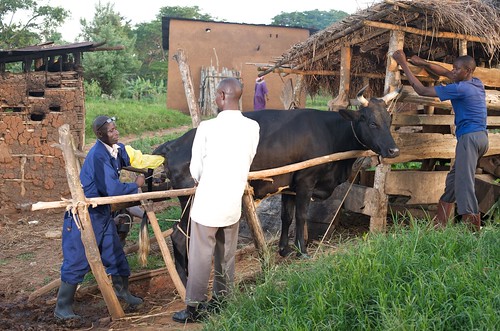
Artificial insemination service in a smallholder dairy farm (photo credit: EADD).
Demand for animal products continues to outstrip production in most of sub-Saharan Africa. Efforts by countries to boost livestock production by means of breeding technologies like artificial insemination (AI) have been constrained by limited uptake, due to many factors. Using a choice experiment (CE) methodology, researchers from the International Livestock Research Institute, Justus-Liebig University of Giessen, Germany, and Charles Darwin University undertook a study to investigate which characteristics of AI services, offered through dairy hubs, farmers prefer.
The study was conducted in the western Kenya milk shed where the East African Dairy Development (EADD) project is employing the ‘dairy hub’ approach. Dairy hubs consist of milk chilling and/or bulking plants from which smallholder dairy farmers access bulk markets for the milk they produce as well as auxiliary services, such as AI, previously out of reach for many farmers.
The findings of…
View original post 172 more words
This entry is part of a special series of blog posts about the UN’s Committee on World Food Security (CFS): The Future of the CFS? Collectively reflecting on the directions of UN’s most inclusive body. Read more about this project here.
Today we continue with our fourth thematic cluster: “Emerging Issues at the CFS: How are they being addressed?”. In this post, Alison Blay-Palmer reflects on opening at the international level for discussing food with an increasingly regional and sustainability focus. She questions whether emerging initiatives call into question the capacity of the CSM and its constituent groups to achieve its mandate on the Right to Food.
This is not an exclusive project. If you would like to participate, please let us know: foodsecuresolutions@gmail.com

I offer the following comments as a new observer of the CFS process. I attended CFS 42 (2015) and then 43…
View original post 1,011 more words


The African Union Commission and FAO establish effective knowledge platforms between IGAD member States. / A major regional initiative towards building resilience in the Sahel and the Horn of Africa.
ADDIS ABABA, Ethiopia, August 4, 2015/African Press Organization (APO)/ — The Food and Agriculture Organization of the United Nations (FAO) today signed a Memorandum of Understanding with the African Union Commission (AUC) on the implementation of the Regional Initiative on Resilience in the Sahel and the Horn of Africa.
The initiative will establish effective knowledge platforms between IGAD member States, as well as strengthen the capacity of institutions to scale up proven cost effective resilience enhancing good practices.
In the Horn of Africa, the focus will be on supporting IGAD and member states (Ethiopia, Kenya, Somalia and South Sudan) to enhance knowledge on practical means for resilience building as well as heighten the awareness of dynamics of resilience…
View original post 462 more words

Africa Sustainable Livestock 2050 (ASL2050) launched today in Addis Ababa, encouraging governments to think beyond livestock today, for the people of tomorrow. ASL2050 is a cross-sectoral initiative analysing the impact of a growing livestock sector on public health, the environment, and livelihoods. Government ministers and representatives from Burkina Faso, Egypt, Ethiopia, Kenya, Nigeria and Uganda,… Read more on http://africa-newsroom.com/press/governments-meet-to-discuss-the-sustainable-future-of-livestock-in-africa?lang=en

Image credit: Humidtropics.
A new book from CGIAR offers lessons for researchers working with smallholder farmers in Southeast Asia to further adoption of integrated agricultural systems innovations. ‘
Published by the World Agroforestry Centre (ICRAF) as an output of the recently concluded CGIAR Research Program on Integrated Systems for the Humid Tropics (‘Humidtropics’ for short), the new book offers insights and recommendations to support research on integrated agricultural systems targeting smallholder farmers. Its lessons are gleaned from Humidtropics program research in the Central Mekong ‘Action Area’.—Lisa Hiwasaki on ICRAF’s ‘Agroforestry World‘ blog
From the book’s preface
‘The Mekong region covers several mainland Southeast Asian countries. The region has a huge heterogeneity in its topography, farming systems, ethnic populations, markets and sociopolitical systems. It is moreover undergoing intense social, economic and ecological changes that offer many economic opportunities, and at the same time pose potential threats to the livelihoods…
View original post 893 more words
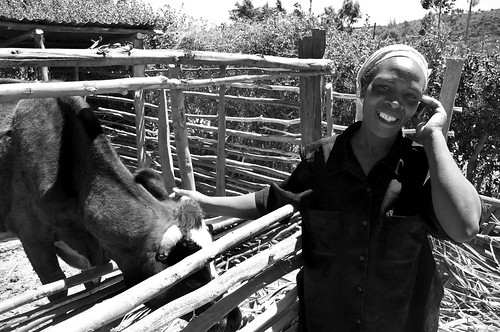
Lucy Wangeci Kuria of Kenya with her cow and her phone (via Flickr/Jeff Haskins).
A CABI-led consortium has gained GSMA funding to help three million people access nutrition information using mobile technology.
More than three million people in sub-Saharan Africa and South Asia will soon be able to access vital nutrition and health information using mobile technology as part of a new project to help tackle malnutrition – a leading cause of child death worldwide. The GSMA Mobile for Development Foundation has appointed a CABI-led consortium as the global content provider to the mNutrition initiative – a UK Department For International Development (DFID)-funded project that aims to improve the nutritional status of more than three million people. The initiative will tackle malnutrition and help beneficiaries to access nutrition-based agricultural and health information using mobile technology.
The consortium comprises CABI, BMJ, the Global Alliance for Improved Nutrition…
View original post 519 more words
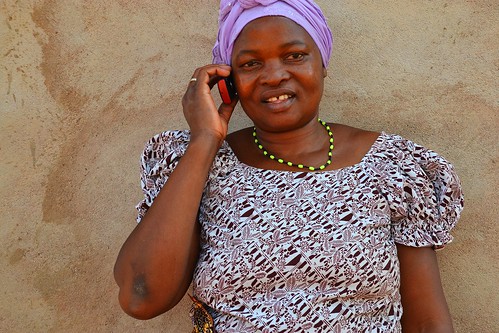
Tanzanian woman on her cell phone (photo credit: CCAFS/Cecilia Schubert).
A new open-access Nutrition Knowledge Bank has been created as part of a GSMA mNutrition initiative to help tackle malnutrition in Africa and Asia. This collection of content on good nutritional practices includes factsheets and mobile messages for anyone to download and use. Funded by the UK Department for International Development (DFID), the mNutrition project aims to deliver nutrition information to 3 million people in 12 developing countries.
Adequate nutrition is critical to the physical and mental development of children and to long-term human health, but one out of three people in developing countries suffers from micronutrient deficiency. Experts consider poor access to agricultural and health information a major barrier to the uptake of improved nutritional practises, particularly by women and vulnerable groups in marginalized areas.
mNutrition delivers content to people at risk of malnutrition in Bangladesh, Ghana…
View original post 238 more words
New York, Mar 9 2012 5:05PM
The United Nations food agency today called for $69.8 million in additional funding to prevent a full-blown food and nutrition crisis from unfolding in Africa’s Sahel region.
In a <“http://www.fao.org/news/story/en/item/122921/icode/“>news release, the Food and Agriculture Organization (FAO) said that at least 15 million people are estimated to be at risk of food insecurity in countries in the Sahel, including 5.4 million people in Niger, three million in Mali, 1.7 million in Burkina Faso and 3.6 million in Chad, as well as hundreds of thousands in Senegal, the Gambia, and Mauritania.
“We need to act to prevent further deterioration of the food security situation and to avoid a full-scale food and nutrition crisis,” FAO’s Director-General, José Graziano da Silva, said. “Part of the solution is to improve the access of farmers and herders to local markets, encourage the use of local products, and…
View original post 288 more words
Photo credit: FAO
A market in Boulder, Colorado, USA.
Declining prices could thwart international efforts to eradicate hunger and extreme poverty unless steps are taken to guarantee decent incomes and livelihoods for small-scale producers, FAO Director-General José Graziano da Silva said today.
Globally, food prices are believed to be back to their long-term downward trend in real terms, as supply growth outpaces demand.
This follows the price surges experienced during the 2008-12 period and a prolonged period of volatility in food markets, Graziano da Silva told Agriculture and Trade Ministers and other government officials and experts, attending a high-level meeting on agricultural commodity prices at FAO’s headquarters in Rome.
“As policy makers, you are confronted by the challenge of keeping nutritious food affordable for the poor, while ensuring good incentives for producers, including family farmers,” he…
View original post 172 more words
Photo credit: FAO
Members of an Indian farmers group measure local groundwater levels at an observation well.
Failure to act now to make our food systems more resilient to climate change will “seriously compromise” food production in many regions and could doom to failure international efforts to end hunger and extreme poverty by 2030, FAO Director-General José Graziano da Silva warned today.
“Agriculture holds the key to solving two of the greatest problems now facing humanity: eradicating poverty and hunger, and contributing to maintaining the stable climatic conditions in which civilization can thrive,” he told participants at a roundtable on climate change during the World Government Summit in Dubai.
The FAO Director-General stressed in particular the need to support smallholder farmers in the developing world adapt to climate change.
“The vast majority of the extremely poor…
View original post 197 more words
Photo credit: FAO
Empowering small-scale farmers and providing them better access to information, markets and technologies is key to ensuring future food security. Photo: FAO
http://www.un.org/apps/news/story.asp?NewsId=56221
Warning that diminishing natural resources and a changing climate have put humankind’s future ability to feed itself “in jeopardy,” the United Nations underlined today that while the planet still has the potential to produce enough food, “major transformations” are needed to make production sustainable and to ensure that all of humanity benefits.
In The Future of Food and Agriculture: Trends and Challenges report, the UN Food and Agriculture Organization (FAO) highlights that while “very real and significant” progress in reducing hunger has been achieved over the past 30 years, these have often come at a heavy cost to nature.
“Almost half of the forests that once covered the…
View original post 129 more words
Experts at the 47th Brussels Development Briefing on the topic of “Regional Trade in Africa: Drivers, Trends and Opportunities” all agreed that Africa’s largest market opportunity lies within the continent. The event, which was held at the ACP Secretariat on Friday 3 February 2017 attracted an audience of close to 200 people, who joined the organisers to discuss the progress made in integrating Africa’s regional markets, and to explore suggestions for overcoming barriers to intra-African trade. Key findings from the African Agricultural Trade Status Report (AAFTR) 2017 by CTA and IFPRI were also presented at the Briefing. The event was co-organised by CTA, the International Food Policy Research Institute (IFPRI), the European Commission / DEVCO, the ACP Secretariat, and CONCORD.

“When you come to look at intra-African trade, you can see the contrast between raw products exports to the rest of the world, and greater…
View original post 940 more words

Many may not realise that agribusiness and tourism are two of the top five emerging growth industries to 2030.
According to a recent report from Deloitte Access Economics, our sectors are two of the best positioned to take advantage of key features such as Australia’s:
Holding us back are a few key disadvantages, including regulatory burden, rainfall, water availability and water reliability, low soil fertility, an ageing workforce and high labour costs.
At least three of these six disadvantages are common to all Australian businesses, and are areas where we can find ways to work together to boost our competiveness. And what greater way to seek to overcome them, and capitalise on the opportunities ahead for our sectors…
View original post 1,118 more words
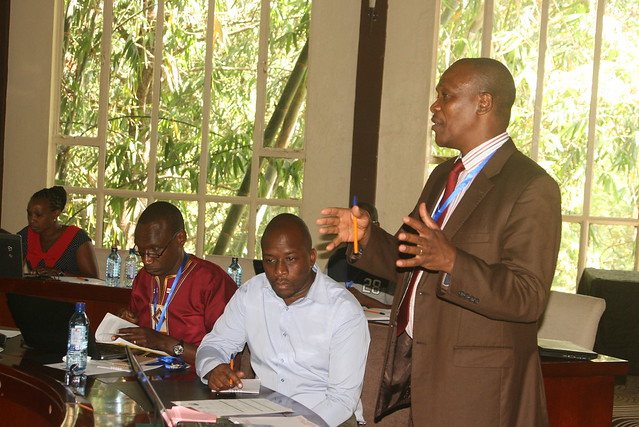 Joseph Karugia of ReSAKKS at a policy workshop for African researchers (photo credit: ILRI)
Correct identification and implementation of comprehensive agricultural policies is an important step in the fight against poverty and food and nutrition insecurity, in line with Sustainable Development Goals One and Two on ending poverty, and hunger, respectively.
In Africa, the African Union Summit of 2003 declared the Comprehensive Africa Agriculture Development Program (CAADP) an integral part of the New Economic Partnership for Africa’s Development (NEPAD) which is aiming to address hunger and poverty. CAADP is a pan-African, continental policy framework that provides a set of principles and broadly defined strategies to guide countries in reviewing their own situations and identifying investment opportunities within the agriculture sector that have optimal returns and impact. CAADP emphasizes the use of evidence in policy formulation and implementation as a key principle.
In order to influence policies, researchers and other stakeholders…
View original post 510 more words

Please come to the sources of the natural health. I assure you camels’ milk really works. Look the use of antibiotics at such a high level in dairy sector and other spheres of life. Slow, natural and ecofriendly foods can save the health of humanity.
We disagree with having cows filled with antibiotics, primarily because of the problems created by bacterial resistance to drugs given without cause. But now we’re learning that there’s even more wrong with antibiotics in cattle: their dung releases more methane. Catherine Elton reports for Conservation Magazine: Antibiotic use and overuse in livestock has long been […]
via Antibiotics, Even Worse than Anticipated — Raxa Collective
The microbiologists continuously exploring camel milk for its unique antimicrobial characteristics. They revealed that camel milk’s (CM) antimicrobial attributes are more important than other…
Source: Superfood (Camel Milk) can Beat the Challenge of Superbug (Bacterial Resistance to Antibiotics)
The philosophy of symbiosis is really great and incredible. All my ideas of natural health are based on this philosophy. I’m never in favor of killing microorganisms in the body, instead, I w…
Source: The Philosophy of Symbiosis and Gut’s Role in Natural Health
 Making technologies available to smallholder mixed crop–livestock farmers to grow fodder can increase milk yields and quality in an environmentally sustainable manner. Hyderabad, India. (photo credit: ILRI/Stevie Mann)
In 2015–2016, the International Livestock Research Institute (ILRI) and partners revealed extraordinary findings that the greenhouse gas (GHG) emissions from cattle in Kenya maybe up to 10 times lower than previous estimates, clearly making the case for improving Africa-specific understanding of GHG emissions to develop better-targeted climate change mitigation and adaption strategies. Taking this research one step further, working with governments and other civil society partners, offers opportunities to bring about change in international policies benefitting smallholder farmers, as was shown with the passing of the United Nations Environment Assembly resolution on combatting climate change. Moreover, translating research in a favourable policy environment paves the way for capacity building that can translate into the mass scaling of the sustainable intensification of farming.
View original post 412 more words
According to a promo of Chinese Camel Milk Company of Xinjiang, the camels’ milk features are provided as following. The contents in brackets are provided by author for further details. With …
Source: Easy Understandable But Important Features of Camel Milk

Women peeling cassava roots in a cassava processing centre (photo credit: IITA).
‘The US government, yesterday, said it has invested $75 million (about N2.3 billion) in [Nigeria’s] agricultural sector, just as it launched agribusiness partnerships with Chi Farms and Niji Foods. . . .
‘Speaking at the USAID Feed the Future Partnering for Innovation Initiative in Lagos, Mission Director of USAID Nigeria, Mr. Michael Harvey, said that USAID aims to address development and business challenges to agricultural inputs and mechanization by providing quality technical advisory services and expanded market opportunities for smallholder farmers via these partnerships, noting that the partnerships will also capitalize on the untapped potential of smallholder farmers and small processors to help grow agribusinesses, create secure jobs, and boost economic growth in Nigeria.
‘Harvey said, “Since 2014, Feed the Future has invested $75 million in Nigeria helping 800,000 Nigeria farmers acquire improved seeds, fertilizers, tools and access…
View original post 236 more words
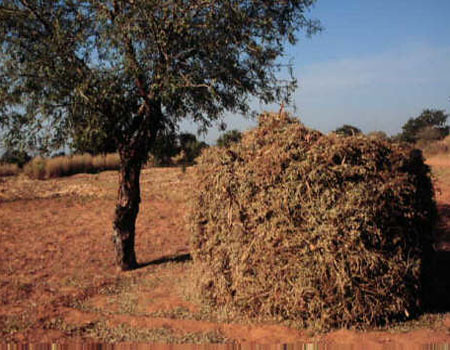
Cowpea fodder bundles stacked in Niger for livestock feed (photo credit: ILRI).
‘Of the many virtues of grain legumes, one is little recognized. Visitors to the livestock fodder markets of West Africa are always surprised to see groundnut and cowpea haulms (stalks and stems of legume plants) sold at prices that exceed that of cereal grains and not infrequently even that of groundnut and cowpea seeds, particularly during periods when sheep keepers are fattening their animal for slaughter at festivities such as Tabaski.
‘In fact, the haulms of these legumes have proved excellent animal fodder of such high palatability that sheep can gain liveweight quicker than when fed many forage grasses planted for that purpose. In these times of increasing fodder demand fueled by the on-going ‘livestock revolution’, as well as decreasing land and water resources, producing good-quality fodder for animal stock from the same land and water as that…
View original post 112 more words
 A new extension brief by the International Livestock Research Institute (ILRI) explains the principles of haymaking using tropical grasses and legumes.
Produced by ILRI researchers and partners in Zimbabwe, the brief gives practical steps on how smallholder farmers can make hay from grasses and legumes such as cowpeas, velvet bean (Mucuna pruriens) lablab (Lablab purpureus) including details on cutting, conditioning and storage of hay.
Hay is a very popular form of forage preservation that provides an important source of animal feed in smallholder farming systems where natural rangeland is increasingly limited.
Download the brief: Principles of haymaking using tropical grasses and legumes
Photo credit: UN NEWS CENTRE
Rural development and youth employment are strongly connected to migration. Photo: FAO/Riccardo Gangale
The world must take urgent action to mobilise the estimated $265 billion a year needed to achieve the first two Sustainable Development Goals to end poverty and hunger by 2030, the head of the United Nations agency for financing rural development projects has told an international conference.
“The need is urgent,” Kanayo F. Nwanze, President of the International Fund for Agricultural Development (IFAD) said at last night’s opening of a conference, titled “Investing in inclusive rural transformation: innovative approaches to financing,” held in Rome, Italy on 26-27 January.
“Despite decades of commitments and considerable effort to end poverty and hunger, nearly 800 million children, women and men still go hungry every day, and an almost equal…
View original post 149 more words

John Oboum’s climate-smart small-scale farm site in Western Kenya (photo credit: CCAFS / Cecilia Schubert).
‘One of the most urgent challenges we face in the next several decades is feeding a growing world population without irreparably damaging Earth’s land, air and water systems. Nearly 800 million people worldwide are undernourished today. The U.N.‘s Sustainable Development Goals call for ending hunger and achieving food security by 2030. . . .
‘Since 2000, [hunger] has decreased across all regions of the world, but 50 countries—mainly in sub-Saharan Africa and South Asia—still have alarming or severe hunger rates.
‘At the Global Landscapes Initiative in the University of Minnesota’s Institute on the Environment, our research focuses on increasing global food security while reducing harmful impacts from agriculture to Earth’s natural resources.
We have found that one key strategy to combating food insecurity—lack of access to nutritious foods—is increasing food production on small…
View original post 343 more words

‘For just the fourth time in its 72-year history, the United Nations General Assembly has focused on a health issue: the rise of “superbugs” and antibiotic-resistant infections. These pose a “fundamental threat” to society, said then UN Secretary-General Ban Ki-moon, and are inspiring a fresh sense of urgency to find solutions.
‘The livestock sector has played an important role in creating this emerging health threat. It can also help stop it. . . .
‘Unless we take effective action, we could run out of effective ways to treat some of the world’s most serious diseases.
‘We have recently seen worrying evidence in China and in the US of E. coli, a common bacterium, that is resistant to the last line of antibiotic defense, a 1950s drug called colistin. . . .
Two-thirds of human infectious diseases originate in animals. And drug resistance that starts in animals may follow into…
View original post 337 more words
 As one of the panelists, I attended a discussion on “Strengthening Social Science and Policy Research” hosted by the International Food Policy Research Institute (IFPRI)’s South Asia Office and the International Rice Research Institute (IRRI) at the 24th Annual AERA Conference held at the ICAR-Indian Veterinary Research Institute in Izatnagar (India) on 17 December 2016.
View original post 1,456 more words
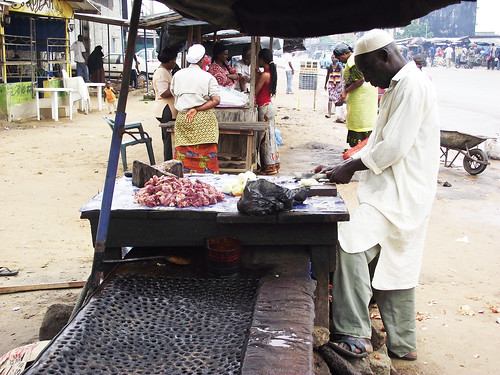 Locally made beef stew sold in Bagnon market at Yopougon, Abidjan, Côte d’Ivoire (photo credit: ILRI/Valentin Bognan Koné).
What are the key food safety issues related to livestock production and animal-source foods and what are their potential impacts on human health and nutrition?
Join an upcoming joint Agrilinks and Microlinks webinar on 25 January 2017 at 0900–1100 hours EDT where experts will share effective approaches to improving food safety and quality related to livestock production.
Attendees will learn about improving food safety and quality throughout the livestock value chain including production methods, processing and storage technologies, risk assessments, policy impacts, opportunities for the private sector and consumer education.
View original post 153 more words

Do you love rabbits? Do you know rabbit meat tastes so good and are very healthy too? Do you know you can make good money in 2017, raising rabbits? To find answers to this questions we visited Doeland Farms and discussed with the CEO. See excerpts below….
I am Ogbonna Bethel U. I had my Bachelor in Agriculture from Michael
Okpara University of Agriculture – Umudike, Nigeria, where I studied
Animal Science. I am also a member of Nigeria Institute of Animal
Science.
I studied Animal Science as applicable to Agriculture because right
from childhood I have this passion for nature with special interest
for plants and animals. But Animals occupy a larger place in my heart.
I entered into Agriculture because unlike just farming Agriculture
deals with applications of scientific knowledge and concerted human
effort in solving farm related problems, so as someone who has a knack
for nature…
View original post 573 more words
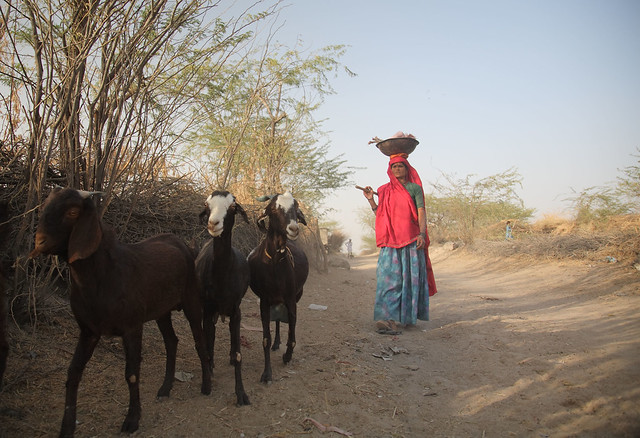 Livestock in India (photo credit: ILRI/Stevie Mann).
One of the fastest growing subsectors in agriculture–livestock–can significantly contribute to the United Nations’ Sustainable Development Goals (SDGs) if the opportunities it offers, especially for people in developing countries, are harnessed for economic growth, improved livelihoods and food and nutritional security.
Shirley Tarawali, assistant director general of the International Livestock Research Institute (ILRI), says that over the next few decades, smallholder food producers of developing countries, who today produce most of the livestock products bought and consumed in developing countries, can not only help meet the SDGs but can also help meet their countries’ rising demand for milk, meat and eggs.
Five of world’s top six commodities in terms of commercial value are animal-source foods, which are worth over USD700 billion annually and there is increasing demand for them in developing countries.
Speaking at a seminar co-hosted by the Texas A&M College of Veterinary…
View original post 451 more words

ILRI’s Delia Grace (left) and Shirley Tarawali (right), made two of the three presentations at the second of a four-part series of meetings-cum-webinars on enhancing nutrition through market-led livestock development in developing countries. This series is being organized by Land O’Lakes International Development and ILRI (photo credits: left, ILRI/Susan MacMillan, and right, ILRI).
On 17 Oct 2016, Land O’Lakes International Development and the International Livestock Research Institute (ILRI) hosted a one-day meeting and webinar in Washington, DC, on the challenges of increasing consumption of meat, milk and eggs in poor rural and producer households in low-income countries through improved development of local, and largely informal, livestock markets.
While donors and implementing agencies continue to promote economic gains though market-led livestock programs, less is known about how these programs can maximize the potential for animal-source foods to improve nutrition and health while also contributing to sustainable and nutritious food systems.
Bearing…
View original post 1,729 more words

A High Level Panel of Experts on Food Security and Nutrition (HLPE) is the science-policy interface of the Committee on World Food Security (CFS), which is, at the global level, the foremost inclusive and evidence-based international and intergovernmental platform for food security and nutrition.
HLPE reports serve as a common, comprehensive, evidence-based starting point for intergovernmental and international multistakeholder policy debates in CFS. The HLPE draws its studies based on existing research and knowledge and organizes a scientific dialogue, built upon the diversity of disciplines, backgrounds, knowledge systems, diversity of its Steering Committee and Project Teams, and upon open electronic consultations.
HLPE reports are widely used as reference documents within and beyond CFS and the UN system, by the scientific community as well as by political decision-makers and stakeholders, at international, regional and national levels.
In October 2014, the CFS requested the HLPE to prepare a…
View original post 2,262 more words
 Visit this Pinterest page maintained by ILRI for 102 advocacy communications: Livestock—Opinions.
This year, with a pilot project funded by the Bill & Melinda Gates Foundation starting in Sep 2016, the International Livestock Research Institute (ILRI) stepped up its advocacy work supporting livestock development for a more sustainable and equitable world.
The following are among ILRI’s top advocacy communications of 2016.

By Shirley Tarawali
Plant scientist and crop-livestock and pastoral systems specialist/ILRI assistant director general
Harnessing livestock for the Sustainable Development Goals, 21 Mar 2016

By Shirley Tarawali
DID YOU KNOW? ILRI in the Livestock Global Alliance, 1 Jun 2016

By Delia Grace
Veterinary epidemiologist and food safety expert/ILRI program leader/A4NH flagship leader
Pandemic proofing the world—An epidemiologist in Nairobi on the next Zika virus, 28 Jun 2016

By Jimmy Smith
Animal scientist and leader/ILRI director general
Jimmy Smith’s address to UK parliamentary group on…
View original post 259 more words

Nathanael Johnson, a talented food writer at Grist, a non-profit environmental news and commentary site based in Seattle, has published a thoughtful special series of eight articles around a question seldom looked at squarely in the eye—that is: How can we eliminate absolute poverty from the world without destroying the environment in the process?
Helpfully, Johnson provides some solutions and best practices, and draws out some principles from them, showing how humanity just might protect people and the planet both. Unusually for an environmentalist, he recommends we ‘put people first’
Excerpts from his new series follow (emphases added), but readers are encouraged to go to the Grist site and read the whole series. The landing page where you’ll find links to all eight articles in the series is here.
‘. . . The escalator out of poverty runs on fossil fuels and forests. There’s overwhelming evidence on this point.
View original post 1,370 more words
 Measuring livestock systems—and the socioeconomic benefits they generate—remains a challenge due to a lack of high-quality, nationally representative data. Livestock is often neglected in many national statistical operations and, as a result, decision makers are unable to design evidence-based livestock sector policies and investments.
A new multi-partner publication provides guidance for effectively including livestock in multi-topic and agricultural household surveys. The livestock module template provided in this Guidebook can be used by survey practitioners and stakeholders to generate household-level statistics on livestock, its role in the household economy, and its contribution to livelihoods.

Farmer from southern Ethiopia’s Southern Nations, Nationalities and Peoples’ region holding one of her household chickens (photo credit: ILRI Camille Hanotte).
Written by Calestous Juma, Harvard University.
Africa, which imports nearly 83% of the food it consumes, has a real chicken and egg problem. The continent is caught between pressure from imports in some countries and an inability to meet demand in others.
Africa’s chicken crisis is an expression of overall weaknesses in its agricultural system. If Africa cannot raise its grain production it cannot expect do well in increasing its chicken output.
It is a complex problem. Producing chickens requires low-cost feed such as corn. Yet producing grain to meet human needs remains one of the continent’s most pressing challenges. Africa’s urban populations, for example, are growing faster than the continent can produce grain. This has contributed to Africa’s shift from being a net food exporter to…
View original post 999 more words

Farmland in Mali (photo by World Bank).
‘. . . [A]ccording to a new study published in the Proceedings of the National Academy of Sciences, . . . [Africa] will . . . need to dramatically increase its agricultural efficiency. Right now, Africa imports 20% of its cereal needs, despite having a quarter of the world’s arable land. . . .
With a population expected to expand by another 1.3 billion people by 2050, Sub-saharan African countries will have to import half of all needed cereals in the next 30 years, if drastic changes to agricultural methods aren’t taken, the study concluded.
‘In addition to closing the gap between actual and potential crop yields, farms will need to increase crop intensity, or the amount of crops grown on the same field within a year, and expand irrigation.
‘“If intensification is not successful and massive cropland land expansion is to…
View original post 285 more words
by
The U.S. Agency for International Development’s (USAID) Bureau for Food Security in Washington DC has announced funding for a second 5-year phase of the Africa Research in Sustainable Intensification for the Next Generation (Africa RISING) program beginning October 2016. Funded through the agency’s Feed the Future initiative the second phase of Africa RISING will focus on ensuring farming communities within target feed the future zones of influence in Ethiopia, Malawi, Zambia, Tanzania, Ghana and Mali get access to the best-bet/best-fit improved farming practices identified by the project’s research team during the first phase of the project.
“Farmers need access to improved agricultural technologies that have gone through an iterative research process to establish suitability and quality if they are to sustainably optimize the productivity of their farms in…
View original post 179 more words
Photo credit: CIAT
To address all the SDG’s, we’re going to need to think like farmers. That means taking a systems approach that includes all kinds of agro-ecological farm systems. This mantra echoed through all the sessions at the Ecosystem Services Partnership Conference: Ecosystem Services for SDGs in Africa. Goals, 2, 5, 6, and 15 were in the spotlight, and to meet them, we have to think broadly and holistically.
That might not be what you expected to read, but CIAT research shows that farmers are the ultimate, great systems thinkers, and we need to tap into and build upon their vast network of knowledge to tackle the problems that face the ecosystems we are trying to protect and livelihoods we are aiming to support.
Goal 2: End hunger, achieve…
View original post 53 more words
http://www.sciencedaily.com/releases/2010/07/100720123633.htm
ScienceDaily (July 20, 2010) — Urgent action is needed to stop the rapid and alarming loss of genetic diversity of African livestock that provide food and income to 70 percent of rural Africans and include a treasure-trove of drought- and disease-resistant animals, according to a new analysis presented at a major gathering of African scientists and development experts.
Experts from the International Livestock Research Institute (ILRI) told researchers at the 5th African Agriculture Science Week (www.faraweek.org), hosted by the Forum for Agricultural Research in Africa (FARA), that investments are needed now to expand efforts to identify and preserve the unique traits, particularly in West Africa, of the continent’s rich array of cattle, sheep, goats and pigs developed over several millennia but now under siege. They said the loss of livestock diversity in Africa is part…
View original post 369 more words
Photo credit: CIAT Blog
by
New varieties of high-quality, drought-resistant forage grasses could boost milk production by 40 percent and generate millions of dollars in economic benefits for struggling East African dairy farmers, according to a new analysis by experts at CIAT.
“Farmers could benefit more from surging consumer demand for livestock products in East Africa,” said Dr. Steven Prager, a senior scientist at the Center. “Our research shows that brachiaria grasses could be the cornerstone of productive and resilient livestock systems that quickly provide more milk and money for small-scale dairy farmers.”
Prager is co-author of the new CIAT study that assessed benefits that could accrue to East African dairy producers from adopting new varieties of a pasture grass called brachiaria. The grasses were developed by…
View original post 169 more words
 Blanket recommendations of technologies and improved practices could be one of the reasons for low adoption of interventions by agricultural systems which are highly diverse in agro-ecological and socio-economic conditions. The purpose of classification of farming systems is to develop strategies and interventions relevant to the various systems which may vary in the type and degree of severity of constraints, resource base and enterprise patterns.
Dairy farming systems in Ethiopia have been extensively characterized. However, a comprehensive characterization of dairy systems in the highlands across the value chain supported with quantitative data and a valid statistical analysis is rare in the literature.
The LIVES project has initiated case studies through its MSc sponsorship program to characterize dairy systems in the highland states of Ethiopia, namely Amhara, Tigray, Southern Nations, Nationalities and Peoples’ region (SNNPR) and Oromia. This working paper synthesizes and analyses two case studies in five districts of Amhara…
View original post 638 more words

Figure 1. Gross expenditure on R&D (GERD) across regions, in purchasing power parity (UNESCO Institute for Statistics).
‘. . . In 2012, the share of the world’s articles with at least one African author was around 2.3%. Growing, but still incredibly low relative to the African share of world population of around 15% in 2015. Even in some big and rapidly growing middle-income countries, such as India or Indonesia, much of the research done is carried out by external academics or consultants.
There is a vicious circle of under-investment in research in developing countries, especially in the social sciences.
To make matters worse, expenditure on social science research is generally less than 20% of gross expenditure on R&D . . . .
The very essence of a democracy with a vibrant civic culture rests on the assumption that citizens and decision-makers have access to reliable…
View original post 624 more words

Lethal bacteria are showing resistance to more and more antibiotics, and financial and legal hurdles are making it harder than ever for science to create effective new drugs. . . .
The arsenal of antibiotics is nearly empty.
And significant financial…
View original post 439 more words
By Nora McKeon
This entry is part of a special series of blog posts about the UN’s Committee on World Food Security (CFS): The Future of the CFS? Collectively reflecting on the directions of UN’s most inclusive body. Read more about this project here. This is not an exclusive project. If you would like to participate, please let us know: foodsecuresolutions@gmail.com
Last week Carolin Anthes reflected on the role of human rights in the CFS and across the UN system. This week, Nora McKeon presents a critique of the rise of multistakeholder processes in food security governance, warning that a failure to take power imbalances and interests into account is working to reinforce the corporate food regime.
There is a popular aspiration today for governance arrangements that give voice to those most affected and hold governments to account. Such approaches require clear…
View original post 1,191 more words
 ILRI veterinary epidemiologist and food safety expert Delia Grace (photo via Flickr ©FAO/Giuseppe Carotenuto).
This opinion piece, written by ILRI scientist and program leader Delia Grace, was originally published by Devex on 16 Dec 2016.
The numbers when it comes to drug resistance are apocalyptic. Already responsible for up to 700,000 deaths a year, the number of victims could reach 10 million by 2050, making superbugs a bigger killer than cancer is today if urgent action is not taken.
There is great concern (although as yet limited evidence) that much of this growing global health threat is linked to the overuse and misuse of antibiotics in animals, especially livestock. This has accelerated the resistance of disease-causing bacteria and other microbes that also then infect people.
But while such overuse and misuse of precious treatments in animal production is a ticking time bomb, millions are conversely affected today by poor access…
View original post 780 more words


 Dr. Bukar Ali USMAN, mni