


-
Archives
- March 2026
- February 2026
- September 2025
- August 2025
- March 2025
- January 2025
- November 2023
- September 2023
- July 2023
- June 2023
- May 2023
- March 2023
- June 2022
- April 2022
- January 2022
- December 2021
- November 2021
- October 2021
- September 2021
- August 2021
- July 2021
- June 2021
- April 2021
- October 2020
- September 2020
- July 2020
- June 2020
- May 2020
- April 2020
- March 2020
- February 2020
- January 2020
- October 2019
- September 2019
- August 2019
- July 2019
- June 2019
- May 2019
- April 2019
- March 2019
- February 2019
- January 2019
- December 2018
- November 2018
- October 2018
- September 2018
- August 2018
- July 2018
- June 2018
- May 2018
- April 2018
- March 2018
- February 2018
- January 2018
- December 2017
- November 2017
- October 2017
- September 2017
- August 2017
- July 2017
- June 2017
- May 2017
- April 2017
- March 2017
- February 2017
- January 2017
- December 2016
- November 2016
- October 2016
- September 2016
- August 2016
- July 2016
- June 2016
- May 2016
- April 2016
- March 2016
- February 2016
- January 2016
- December 2015
- November 2015
- October 2015
- September 2015
- August 2015
- July 2015
- June 2015
- May 2015
- April 2015
- March 2015
- February 2015
- January 2015
- December 2014
- November 2014
- October 2014
- September 2014
- August 2014
- July 2014
- June 2014
- May 2014
- April 2014
- March 2014
- February 2014
- January 2014
- December 2013
- November 2013
- October 2013
- September 2013
- August 2013
- July 2013
- June 2013
- May 2013
- April 2013
- March 2013
- February 2013
- January 2013
- December 2012
- November 2012
-
Meta
RESILIENCE OF NATIVE LIVESTOCK BREEDS TO CLIMATE CHANGE
Posted in Poverty, Hunger, Malnutrition
Leave a comment
Camel Milk: Why Do You Need This In Your Home?
Share this:
Posted in Poverty, Hunger, Malnutrition
1 Comment
A move away from ‘grain fundamentalism’ to higher quality milk, meat and egg calories to fight malnutrition

Derek Headey, a senior research fellow at the CGIAR’s International Food Policy Research Institute, yesterday published an opinion piece in The Telegraph on the importance of using milk, meat and eggs to fight malnutrition and stunting in the developing world. But, Headey warns, these ‘animal-sourced foods’, particularly fresh milk and eggs, are prohibitively expensive for poor households.
When poorly nourished children in developing countries fall behind in their physical growth and become stunted relative to their healthier peers, they tend to fall behind in a lot of other things too: their health, cognitive development, schooling, and eventually, their productivity and income as adults.
The high social and economic costs mean that there are high returns to preventing stunting, provided these actions happen early.
‘In poor countries most growth faltering takes place from six months of age until a child’s second birthday. . . .
‘When children are fed…
View original post 707 more words
Share this:
Posted in Poverty, Hunger, Malnutrition
Leave a comment
Next Brussels Briefing n. 53: ”The next generation of farmers: successes and new opportunities”
Share this:
Posted in Poverty, Hunger, Malnutrition
Leave a comment
How to Integrate New Chickens to a Flock
Share this:
Posted in Poverty, Hunger, Malnutrition
Leave a comment
Collaboration is key to achieving the long-term benefits of data sharing
 Many conversations about open data for agriculture and nutrition promote the win-win scenario of improved livelihoods for farmers, as well as more nutritious, environmentally conscious food. However, examples of open data benefiting farmers often only span one growing season, or include small groups of farmers. This begs the question, does open data truly have the capacity to trigger transformative change in agriculture?
Data exists on a spectrum, which ranges from closed, to shared, to open. Shared data can only legally be shared with certain individuals or groups, due to data ethics recommendations. Just as the food system is comprised of several actors, such as input providers, farmers, retailers and policymakers, who make decisions that affect both others and themselves, the data ecosystem comprises of data collectors, data re-users, data subjects and others. Most actors in the food system fulfil multiple roles within the data ecosystem. For example, a…
View original post 463 more words
Share this:
Posted in Poverty, Hunger, Malnutrition
Leave a comment
One-size-fits-all ‘livestock less’ measures will not serve some one billion smallholder livestock farmers and herders

Smallholder dairying in Kenya (photo credit: Accelerated Value Chain Development/Sophie Mbugua).
‘Once again, the debate on sustainable diets and in particular on (not) eating animal-derived products is resurfacing in the media, as illustrated most recently by an article in The Guardian. The paper reported on a study by J. Poore and T. Nemecek entitled ‘Reducing food’s environmental impacts through producers and consumers’, published in the latest edition of Science magazine. The article concludes that ‘avoiding meat and dairy products is the single biggest way to reduce your environmental impact on the planet’. Both the study and the article recognize the ‘large variability in environmental impact from different farms’ and the need to deal with the most harmful ones. Still, they seem to overlook the evidence from the 1.3 billion smallholder farmers and livestock keepers for whom livestock is an important source of income and food security.

Family goat keeping in…
View original post 698 more words
Share this:
Posted in Poverty, Hunger, Malnutrition
Leave a comment
Women are the (invisible) guardians of livestock diversity–New FAO study
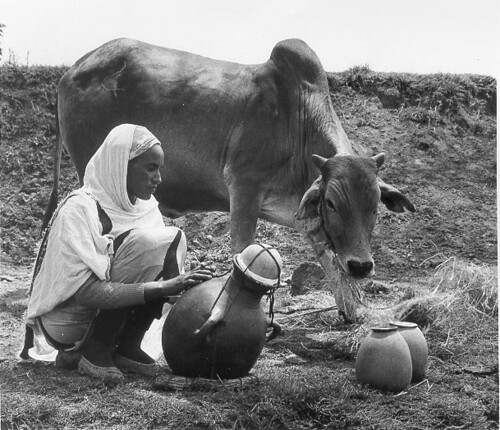
Ethiopian woman churning butter the traditional way (photo credit: ILRI/Apollo Habtamu).
A new study by the Food and Agriculture Organization of the United Nations argues that to succeed, livestock breed conservation efforts must empower women.
‘Women livestock keepers worldwide must be recognized as the major actors in efforts to arrest the decline of indigenous breeds, crucial for rural food security and animal genetics, [the] new FAO study argues.
‘Yet women’s contribution to indigenous livestock breeding and conservation is poorly documented and undervalued, the study Invisible Guardians: Women Manage Livestock Diversity says.
‘Of the 600 million poor livestock keepers in the world, around two-thirds are women, whose men often have migrated to the cities. Women stay at home with the children and live by cultivating crops and keeping indigenous small stock such as chickens or goats, and perhaps a cow.
‘Indigenous breeds are adapted to often harsh local conditions, are disease…
View original post 820 more words
Share this:
Posted in Poverty, Hunger, Malnutrition
Leave a comment
Why cows are getting a bad rap in lab-grown meat debate
“Cattle produce more than just hamburgers for well-off consumers, and they typically do so by utilizing rain-fed forage growing on non-arable land.” – Susan MacMillan

A small-scale production line of the leghemoglobin for a plant-based hamburger is displayed during a media tour of Impossible Foods labs and processing plant in Redwood City, California, US 6 Oct 2016 (photo credit: /Beck Diefenbach—S1BEUGSRCGAA).
By Alison Van Eenennaam, University of California, Davis
A battle royal is brewing over what to call animal cells grown in cell culture for food. Should it be in-vitro meat, cellular meat, cultured meat or fermented meat? What about animal-free meat, slaughter-free meat, artificial meat, synthetic meat, zombie meat, lab-grown meat, non-meat or artificial muscle proteins?
Then there is the polarizing ‘fake’ versus ‘clean’ meat framing that boils this complex topic down to a simple good versus bad dichotomy. The opposite of fake is of course the ambiguous but desirous ‘natural’. And modeled after ‘clean’ energy, ‘clean’ meat is by inference superior to its alternative, which must logically be ‘dirty’ meat.
The narrative…
View original post 1,293 more words
Share this:
Posted in Poverty, Hunger, Malnutrition
Leave a comment
New World Bank report says food-borne illnesses cost US$ 110 billion per year in low- and middle-income countries
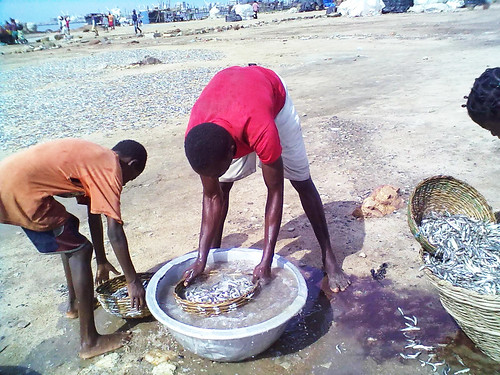 Rinsing fresh fish in Accra, Ghana (photo credit: ILRI/Kennedy Bomfeh).
A new World Bank study finds that the impact of unsafe food costs low- and middle-income economies about US$ 110 billion in lost productivity and medical expenses each year. Yet a large proportion of these costs could be avoided by adopting preventative measures that improve how food is handled from farm to fork. Better managing the safety of food would also significantly contribute to achieving multiple Sustainable Development Goals, especially those relating to poverty, hunger and well-being.
Foodborne diseases caused an estimated 600 million illnesses and 420,000 premature deaths in 2010 according to the World Health Organization. This global burden of foodborne disease is unequally distributed. Relative to their population, low- and middle-income countries in South Asia, Southeast Asia and sub-Saharan Africa bear a proportionately high burden. They account for 41% of the global population yet 53% of all foodborne…
View original post 450 more words
Share this:
Posted in Poverty, Hunger, Malnutrition
Leave a comment
On World Food Day, Take a Holistic Approach to Food Production
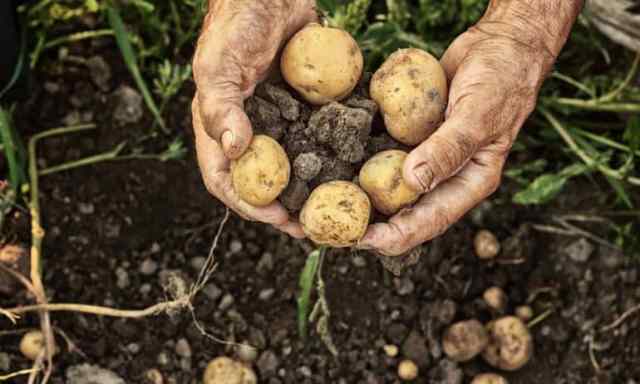
October 16 is World Food Day. It can be a day of action, dedicated to tackling hunger and ensuring food security and nutrient-dense diets for everyone. Food should nourish and nurture people, society, and the planet, but in so many ways, the food system is broken.
“Not only have habits changed, but also foods. When was the last time you consumed a potato with the flavor, color, and smell of potatoes? We are not just losing food, we are losing food quality,” says agricultural engineer Dr. Walter Pengue.
Across the world, decreasing soil quality is stripping food of its nutrients: 33 percent of the Earth’s land surface is moderately to highly affected by some type of soil degradation. Food has also become the main driver of human health costs—while almost one-third of all people are undernourished and 815 million people still go to bed hungry, close to 30 percent of all…
View original post 196 more words
Share this:
Posted in Poverty, Hunger, Malnutrition
Leave a comment
Book Launch – Flourishing Foodscapes: Designing City Region Food Systems


On Thursday 27 September 2018 Valiz and the Amsterdam Academy of Architecture will host a programme dedicated to the launch of the book entitled ‘Flourishing Foodscapes – Designing City Region Food Systems’.
About Flourishing Foodscapes
Flourishing Foodscapes is a book about the the social and spatial organization of networks and systems of food provisioning. It explores, highlights and discusses strategies and designs for creating future-proof city region food systems by addressing the social, economic, and ecological vulnerabilities and sustainabilities of current and future foodscapes, as well as how the spatial qualities of the rural and urban landscape and its use need to adapt and change. A key argument in the book is that food not only has to do with nutrition, but that it links up with and influences a multitude of domains; from health to (eating) culture and from employment to climate change. It has a major impact on the city…
View original post 286 more words
Share this:
Posted in Poverty, Hunger, Malnutrition
Leave a comment
Enhancing global livestock advocacy for sustainable development
 Some of the work going on at an end-of-project GLAD workshop held last week at ILRI, in Nairobi (photo credit: ILRI/Judy Kimani).
This article was written by Judy Kimani, communications and knowledge management specialist for ILRI’s Policies, Institutions and Livelihoods program.
Global Livestock Advocacy for Development (GLAD) has been a two-year project whose main objective has been to raise investor interest in livestock-related research-for-development issues. It has done this largely by distilling and presenting evidence and creative content about smallholder livestock systems and their critical roles in sustainable food systems and development. GLAD has also undertaken strategic engagement around sustainable livestock issues at targeted high-profile events and has strengthened capacity in livestock advocacy communications.
Members of the GLAD project, which is funded by the Bill and Melinda Gates Foundation, believe that underfunding of the livestock sector in developing countries is partly due to a global lack of awareness and understanding…
View original post 734 more words
Share this:
Posted in Poverty, Hunger, Malnutrition
Leave a comment
CGIAR Research Program on Agriculture for Nutrition and Health publishes 2017 annual report
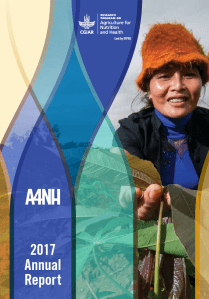
The CGIAR Research Program on Agriculture for Nutrition and Health (A4NH) has published its 2017 annual report which highlights the program’s accomplishments and activities during the first year of its second phase.
Detailed in the report are research, events and results from across A4NH’s five research flagships and four focus countries, including:
- in-depth analyses of food systems in Bangladesh, Ethiopia, Nigeria and Vietnam, with a recently released report on findings in Ethiopia;
- details on the release of 29 new biofortified crop varieties, extending reach to 3.6 million farming households;
- the first licence for Aflasafe to be granted to a private company in Africa, for production, sale, and distribution in the Gambia and Senegal to protect crops from aflatoxin;
- a special issue of the journal Global Food Security dedicated to stories of change, an innovative initiative building a resource base of experiential knowledge that explores drivers of change in…
View original post 38 more words
Share this:
Posted in Poverty, Hunger, Malnutrition
Leave a comment
Meat, milk, eggs can make a big difference in the first 1,000 days of life in low-income countries—New report
 Cover of a new report,The influence of livestock-derived foods on nutrition during the first 1,000 days of life, by Delia Grace, Paula Dominguez-Salas, Silvia Alonso, Mats Lannerstad, Emmanuel Muunda and Nicholas Ngwili, all of ILRI, and Abbas Omar, Mishal Khan and Eloghene Otobo of Chatham House, 2018, ILRI Research Report 44. Nairobi, Kenya: ILRI.
There is great potential for
food produced from livestock
to contribute to better health
in low-income populations.
—Review by the International Livestock Research Institute
and the Chatham House Centre on Global Health SecurityGlobal efforts to limit or reduce
the consumption of meat, milk and eggs
over environmental concerns
should exclude pregnant and breastfeeding women
and babies under the age of two,
especially in low-income settings
where other sources of protein and micronutrients
are not available or not customarily used.
An extensive review of research found demonstrable nutritional benefits of providing children, particularly in…
View original post 970 more words
Share this:
Posted in Poverty, Hunger, Malnutrition
Leave a comment
Brazil, Russia, India, China and South Africa (BRICS) Tuberculosis (TB) Research Network to accelerate research and innovation through collaboration across the BRICS countries

The National Department of Health is hosting the third BRICS TB Research Network Meeting, over 28 – 29 June 2018, in Johannesburg with delegates from the World Health Organization, Brazil, Russia, India and South Africa. The meeting is part of the multi-country vision to accelerate research and innovation in TB through the BRICS cooperation mechanisms. This is a preparatory meeting in advance of… Read more on https://africa-newsroom.com/press/brazil-russia-india-china-and-south-africa-brics-tuberculosis-tb-research-network-to-accelerate-research-and-innovation-through-collaboration-across-the-brics-countries?lang=en
Share this:
Posted in Poverty, Hunger, Malnutrition
Leave a comment
Egypt: The Food and Agriculture organization (FAO) and Central Agency for Public Mobilization and Statistics (CAPMAS) Hold a Workshop on “Transforming Food and Agriculture to Achieve the Sustainable Development Goals (SDGs)”
The Food and Agriculture organization of the United Nations (FAO) in Egypt and the Central Agency for Public Mobilization and Statistics (CAPMAS), with the participation of the relevant ministries, held yesterday an awareness-raising workshop on Transforming Food and Agriculture to Achieve the Sustainable Development Goals (SDGs) from 24 to 26 June 2018. The workshop was conducted by experts from… Read more on https://africa-newsroom.com/press/the-food-and-agriculture-organization-fao-and-central-agency-for-public-mobilization-and-statistics-capmas-hold-a-workshop-on-transforming-food-and-agriculture-to-achieve-the-sustainable-development-goals-sdgs?lang=en
Share this:
Posted in Poverty, Hunger, Malnutrition
Leave a comment
Foods available to African farm households increase with market access and off-farm work

Common foods of Khulungira village, in central Malawi: Nsomba zophika (fish stew), chimanga chophika (boiled maize), nyemba zophika (mixed beans with salt and oil), bowa wofutsa (dried mushrooms with ground groundnuts), nkhwani wophatikiza ndi maungu anthete ndi kachewere wophika (pumpkin leaves, pumpkin blossoms and potatoes) and mazira ophika ndi phwetekere, anyezi, mafuta ndi mchere (boiled eggs with tomato, onions, oil and salt) (photo credit: CGIAR/Mann).
A unique dataset covering land use and production data by more than 13,000 smallholder farm households in 93 sites in 17 countries across sub-Saharan Africa is described in a paper recently published by the Proceedings of the National Academy of Sciences (PNAS).Mark van Wijk, a scientist at the International Livestock Research Institute (ILRI), led the study with other colleagues from ILRI and partner institutions. Excerpts from the paper, and its key messages, follow.
‘We calculated a simple indicator of food…
View original post 1,391 more words
Share this:
Posted in Poverty, Hunger, Malnutrition
Leave a comment
Latest Brussels Briefing n. 50: “Growing food in the cities: Successes and new opportunities”

The latest Brussels Development Briefing no. 50 on “Growing food in the cities: Successes and new opportunities” took place on 10 April 2018 from 09h00 to 13h00, ACP Secretariat, Brussels 451 Avenue Georges Henri, 1200 Brussels. This Briefing was organised by the ACP-EU Technical Centre for Agricultural and Rural Cooperation (CTA), in collaboration with the European Commission / DEVCO, the ACP Secretariat, and CONCORD.
TWITTER:Follow @brubriefings and use hashtag #BBUrbanAg
This Briefing discussed the development of urban agriculture in Africa, the Caribbean and the Pacific, looking at successful urban agribusinesses and the innovations, partnerships and policy developments that are creating new opportunities in this field.
In particular, the Briefing featured an exchange of views and experiences around agriculture in urban and peri-urban areas, and the main drivers for its growth and uptake by youth and women. It shared best practices and achievements across ACP countries from the…
View original post 382 more words
Share this:
Posted in Poverty, Hunger, Malnutrition
Leave a comment
Next Brussels Briefing no.51: «Agriculture as an engine of economic reconstruction and development in fragile countries»
The next Brussels Development Briefing no. 51 on ”Agriculture as an engine of economic reconstruction and development in fragile countries ” will take place on 27 June 2018 from 09h00 to 13h00, ACP Secretariat, Brussels 451 Avenue Georges Henri, 1200 Brussels. This Briefing will be organised by the ACP-EU Technical Centre for Agricultural and Rural Cooperation (CTA), in collaboration with the European Commission / DEVCO, the ACP Secretariat, and CONCORD.
To participate in the next Briefing please register online
Reader (coming soon)
Photos (coming soon)
Biodata of the speakers (coming soon)
–Brussels Briefing 50: ”Growing food in the cities: Successes and new opportunities”
PROGRAMME
08h00-09h00 Registration
09h00-09h15 Introduction to the Briefing
Introductory remarks: Viwanou Gnassounou, Assistant-Secretary-General, ACP Secretariat; Leonard Mizzi, Acting Director Devco C, Planet and Prosperity and Head of Unit Rural Development, Food Security, Nutrition, Europeaid, European Commission; Michael Hailu…
View original post 168 more words
Share this:
Posted in Poverty, Hunger, Malnutrition
Leave a comment
Animal health scientists promote One Health approach in tackling infectious diseases in Africa
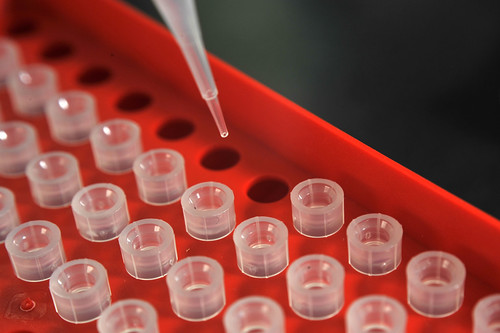 Pipetting in ILRI’s biosciences laboratories (photo credit: ILRI/David White).
The scourge of infectious diseases in Africa was the subject of a recent symposium co-hosted by the Academy of Science of South Africa, the Uganda National Academy of Sciences and the German National Academy of Sciences (Leopoldina) in Durban, South Africa on 12–13 April 2018.
The symposium titled Surveillance and response to infectious diseases and co-morbidities: An African and German perspective was attended by about 100 participants from Africa and Germany including senior researchers, policymakers and representatives from the private sector. Presentations and discussions revolved around antimicrobial resistance, One Health, co-morbidities of infectious diseases and the ‘Big Four’ infectious diseases in humans (HIV/AIDS, malaria, tuberculosis and hepatitis C).
Scientists from the human medical field dominated the symposium but in a panel discussion, the few animal health scientists present, including Kristina Roesel from the Animal and Human Health program…
View original post 111 more words
Share this:
Posted in Poverty, Hunger, Malnutrition
Leave a comment
GFAR Talks: Empowering Farmers at the Center of Innovation through Participation in Research
 In this episode of GFAR Talks, we will examine how agricultural research can and must become a participatory process in which everyone is involved—from the perspectives of farmers, researchers and donors themselves.
Share this:
Posted in Poverty, Hunger, Malnutrition
Leave a comment
The rise of Community Supported Agriculture in China

 Image from Cultivate https://www.facebook.com/collectivecultivate/
On April 16th, Shi Yan, pioneer of the Community Supported Agriculture movement in China will visit Wageningen after participating in FAO’s International Symposium on Agroecology. During the day she will visit a selection of CSAs and in the evening she will give a presentation at Wageningen University.
Where: Room C013/VIP Room Forum Building
When: 19:00-21:30
In 2008 Shi Yan started the first CSA of China in the area of Bejing as a joint project with her university, the district government, and the Renmin Rural Reconstruction Centre. By now some 800 CSA’s are operating around China.
Shi Yan had been inspired by her experience of working with Earthrise Farm, a small CSA in Minnesota, USA. “It changed my life,” says Shi Yan. She arrived there thinking that she would study its business model, “but when living there, I realised that farming is not just a model, it’s a…
View original post 186 more words
Share this:
Posted in Poverty, Hunger, Malnutrition
Leave a comment
Empowering ruminant livestock enterprises in Mali—A Feed the Future-ILRI project
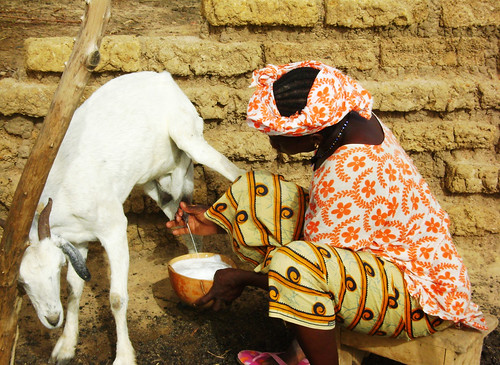
A woman milks one of her goats in Mali (photo credit: ILRI/Valentin Bognan Koné).
The Feed the Future Mali Livestock Technology Scaling Program is a three-year initiative (2016–2019) promoting inclusive growth of all actors adding value to the production and marketing of ruminant livestock in this large, and largely livestock-dependent, West African country. The program, led by the International Livestock Research Institute (ILRI) aims to increase the incomes and food and nutritional security of 266,000 people who keep cattle, sheep and goats, as well as other actors in this value chain in three regions of southern and central Mali: Sikasso, Mopti and Timbuktu. Supported by the United States Agency for International Development (USAID) as part of the US government’s Feed the Future initiative, this livestock program is helping to close productivity gaps in Mali’s ruminant production systems, enhancing both the volume and the value of these animals…
View original post 546 more words
Share this:
Posted in Poverty, Hunger, Malnutrition
Leave a comment
Livestock research addresses issues underlying the pastoral crisis in the Horn of Africa
Things Fall Apart
Things have quickly fallen apart in this particular drought in the Horn’s vast drylands because of a toxic mix of underlying factors.
Land Use
Among the things not being redressed are land-use policies and practices that fail to account for population increases and thus are restricting herders to ever smaller, drier and more fragmented rangelands. Increasing numbers of mixed crop-and-livestock farmers are moving onto former rangelands and cropping them unsustainably. We are in urgent need of sustainable land-use policies in this region, which comprises many of the world’s oldest and most renowned pastoral cultures. These societies have endured here precisely because they have evolved lifestyles that suit the region’s highly variable environments that are largely inhospitable to cropping. Pastoral communities need land-use policies that help them enhance their uncommon resilience to climate and other shocks.
Climate Change
If climate change shows us anything, it is that we…
View original post 789 more words
Share this:
Posted in Poverty, Hunger, Malnutrition
Leave a comment
Mobile pastoralism—A 10,000-year-old practice still robust, if threatened, in the Mediterranean today
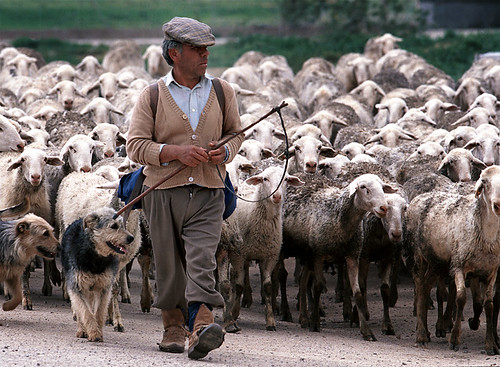
A Spanish shepherd and his flock (photo via Flickr/Jeromy Johnson).
From the Mediterranean Consortium for Nature and Culture
‘Mobile pastoralism is the movement of people and livestock through the landscape in search of water and pasture, and includes different practices such as transhumance, semi-nomadic and nomadic pastoralism and certain practices of extensive grazing—all involving people, herds and movement, and all having a positive impact on biodiversity.
‘This 10,000 year old cultural practice which still occurs in a wide variety of forms across the Mediterranean Basin, and is important in all the Mediterranean Consortium for Nature and Culture countries, is today threatened. Below are the activities the MCNC is involved in, to help ensure this vital way of life remains robust enough to stand it’s ground in today’s world.
‘For the last 5 years we have been studying the practice of Mobile Pastoralism in the Mediterranean Basin, and the innumerable ways in which it helps protect the…
View original post 476 more words
Share this:
Posted in Poverty, Hunger, Malnutrition
Leave a comment
Cleaning up assessments of livestock-environment systems in developing countries with CLEANED
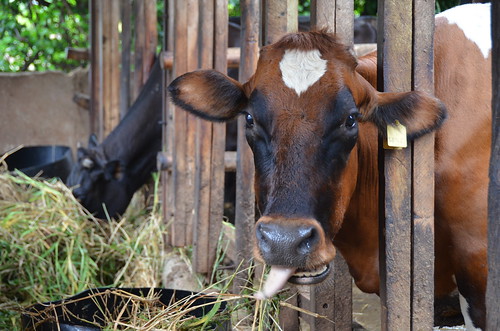
Dairy cow in Tanga, Tanzania (photo credit: ILRI/Paul Karaimu).
As a vegetarian, my occupation as a livestock scientist might come as an odd choice. But here’s the thing: Livestock science isn’t about promoting meat eating; it’s about investigating better ways of farming meat so we don’t harm the environment in the process.
‘Global projections show that rising incomes are only expected to increase the demand for meat. I don’t think that has to be a bad thing.
‘The question for me is not whether we produce or eat meat — but how we do it. And lab-grown meat, which has recently grabbed global headlines, is not the only way.
‘Some key reasons farmers keep animals, especially in developing countries, are so they can earn better incomes, have better prospects for their families, and produce manure to fertilize their farms. Eating meat regularly is often not an option. Milk, eggs and other dairy products, however, contribute…
View original post 284 more words
Share this:
Posted in Poverty, Hunger, Malnutrition
Leave a comment
Beef cattle grazing on American rangelands—not feedlots—could be net carbon sink
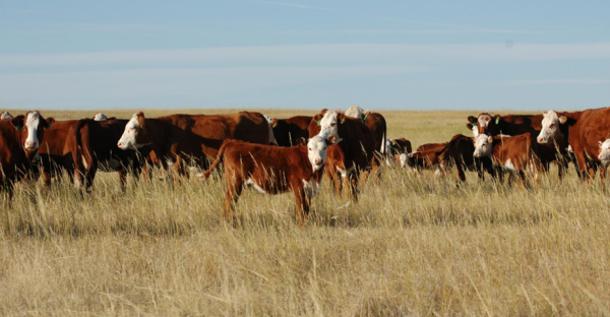
Beef cattle on pasture in the USA (photo credit: BEEF magazine).
A new research paper by Michigan State University scientists analyses the impacts of soil carbon sequestration on life cycle greenhouse gas emissions in Midwestern USA beef finishing systems.
Highlights
• On-farm beef production and emissions data are combined with 4-year soil carbon analysis.
• Feedlot production produces lower emissions than adaptive multi-paddock grazing.
• Adaptive multi-paddock grazing can sequester large amounts of soil carbon.
• Emissions from the grazing system were offset completely by soil carbon sequestration.
• Soil carbon sequestration from well-managed grazing may help to mitigate climate change.
The following excerpts (excluding references) are from the paper.
Abstract
‘Beef cattle have been identified as the largest livestock-sector contributor to greenhouse gas (GHG) emissions. Using life cycle analysis (LCA), several studies have concluded that grass-finished beef systems have greater GHG intensities than feedlot-finished (FL) beef systems. These studies…
View original post 924 more words
Share this:
Posted in Poverty, Hunger, Malnutrition
Leave a comment
Animal health and welfare, two cornerstones of sustainable, responsible and effective food production
 Monique Eliot, director general of the OIE, leads a high-level panel discussion at the Global Forum for Food and Agriculture, in Berlin, 19 Jan 2018 (photo credit: BMEL/Inga Kjer/photothek).
Improved animal health and welfare standards do more than improve animal health and welfare, as important as those are. Applying such standards can increase food production in ways that also protect the environment and enhance the resilience of livestock producers and systems.
Any transition to more responsible and efficient livestock production models depends on nations implementing, and meeting, appropriate health and welfare standards. This is why equipping national officials and private businesses with the technical knowledge and resources to adapt global standards to local circumstances is so important.
This point was repeatedly raised by the keynote speakers at a high-level panel on the future of animal health and welfare organized by the World Organisation for Animal Health (OIE) as…
View original post 1,191 more words
Share this:
Posted in Poverty, Hunger, Malnutrition
Leave a comment
’If you care about agriculture, you care about livestock’—Bill Gates
‘. . . According to Reuters, the Gates Foundation will pump $40m into research for higher-yielding dairy cows, as well as chickens that lay better quality eggs, livestock vaccines and “supercrops” that can withstand droughts or disease.“
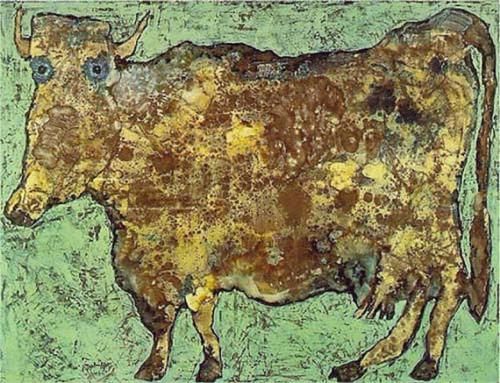
The Cow with the Subtile Nose, by Jean Dubuffet, 1954.
‘. . . According to Reuters, the Gates Foundation will pump $40m into research for higher-yielding dairy cows, as well as chickens that lay better quality eggs, livestock vaccines and “supercrops” that can withstand droughts or disease.
‘These will help farmers in need across the globe—the International Livestock Research Institute says that there are 750 million people in low and middle-income countries who depend on livestock (cattle, sheep and goats) farming, which acts as a source of both nutrition and income.
“If you care about the poor, you should care about agriculture. And if you care about agriculture, you care about livestock,” Gates told an audience at the University of Edinburgh on Friday.
“What that means in this context is helping poor farmers get as much as possible out of their animals.”
‘The input from Gates will be part of a $174 million agricultural project with Britain’s Department…
View original post 1,617 more words
Share this:
Posted in Poverty, Hunger, Malnutrition
Leave a comment
DFID/UKAid provides £4 million for genetics and health research to aid sustainable livestock production in Africa
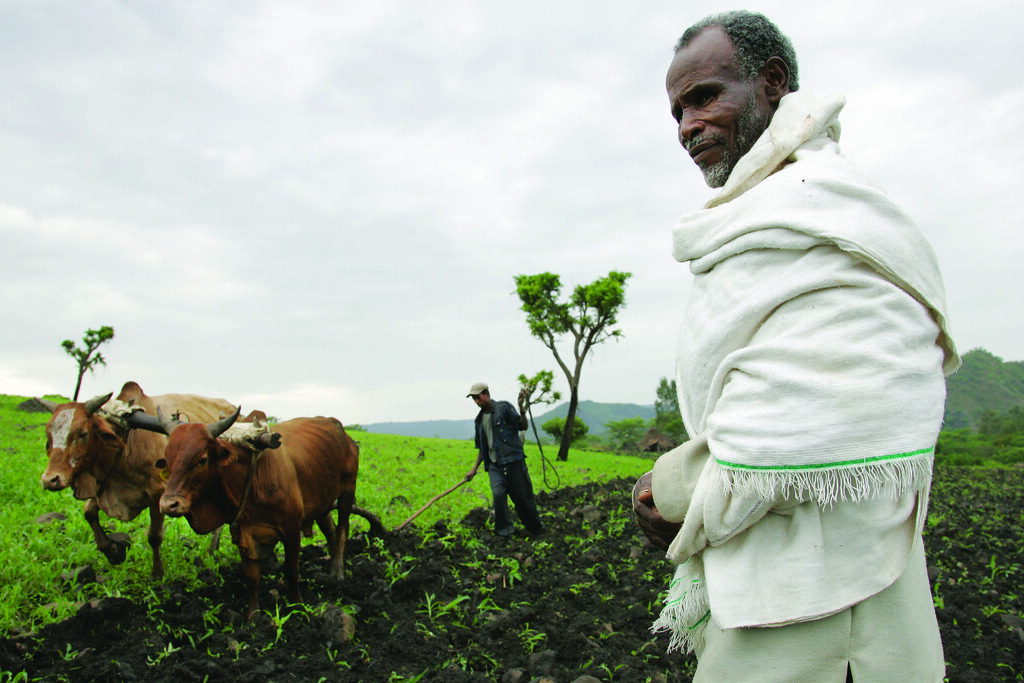
More oxen for ploughing means less labour for farmers (photo: ILRI/Stevie Mann). In Ethiopia’s Ghibe Valley, ILRI-led tsetse fly control methods allowed cattle to flourish in an area previously almost uninhabitable for them. This encouraged more farming in the area, relieving to a degree population and soil erosion pressures in higher, tsetse-free, elevations. Such was the impact this has had on the livelihood of farmer Worku Mengiste that he was able to employ two casual labourers to do work he previously did himself. Here he watches on as they plough his field.
Research to improve the health and productivity of farmed animals in tropical climates has received a £4 million boost from the UK Government.
The investment from the Department for International Development (DFID) was announced by the Secretary of State for International Development, Penny Mordaunt, during a visit to the University of Edinburgh.
Funding will enable scientists in…
View original post 694 more words
Share this:
Posted in Poverty, Hunger, Malnutrition
Leave a comment
Sustainable livestock futures—BMZ, GIZ and ILRI at the Global Forum for Food and Agriculture this week
For several days this week (18–20 Jan 2018), several scientific directors and staff of the International Livestock Research Institute (ILRI)—Jimmy Smith, Shirley Tarawali, Dieter Schillinger, Lutz Merbold and Kristina Roesel—will be participating with several ILRI partners in the Global Forum for Food and Agriculture (GFFA), held in Berlin, Germany.
This annual German three-day international conference focuses on the future of the global agri-food industry. Now in its tenth year, the GFFA in 2018 is focusing on Shaping the Future of Livestock—Sustainably, Responsibly, Efficiently.
GFFA is organized by the Federal Ministry of Food and Agriculture in cooperation with the Berlin Senate, Messe Berlin GmbH and the GFFA Berlin e.V. This is the tenth year of GFFA, which takes place at the start of International Green Week (19–28 Jan 2018), a large Expo-like international exhibition of the food, agriculture and gardening industries. GFFA also includes the
View original post 1,659 more words
Share this:
Posted in Poverty, Hunger, Malnutrition
Leave a comment
To transform agricultural extension, give youth a voice

At the recent Africa Agriculture Extension week in Durban, there was a common refrain: “Demand for food in Africa is growing and expected to double by 2050.” This is why we see continued growth and employment opportunities in the agricultural value chain and why agriculture extension—or training– is more important than ever.
So what exactly is agriculture extension? Agricultural extension focuses on delivering advisory services for technologies that help crop, livestock, and fishery farmers, among others. Extension workers are trainers, advisors, project managers, community developers and policy advocators. They also conduct administrative support for local governments and help farmers make decisions and share knowledge. Agriculture extension, which services smallholder farmers throughout the value chain, is crucial in achieving food, nutrition and income security.
Even though agriculture extension is key to building the food systems of the future, it is not always fit for purpose. In Africa, for example…
View original post 94 more words
Share this:
Posted in Poverty, Hunger, Malnutrition
Leave a comment
Peste des petits ruminants (PPR) is going to be history, but how?

I got impressed by the virtues of collective actions while reading the GFAR blog post Remembering our collective actions: The unforgettable story of Rinderpest eradication. This infectious disease which was once thought very difficult to control, was nevertheless totally eliminated from the world, thanks to the collective actions. My institution, ICAR-Indian Veterinary Research Institute, among several others, played an active role in the global campaign against Rinderpest under the leadership of FAO and OIE. This disease is history now.
And I am wondering, what could be the next big opportunity for collective actions to make an impact on the livelihoods of people depending on livestock? Those of you who have background in the livestock sector must have figured out already: it’s Peste des petits ruminants (PPR), a destructive, fast spreading viral disease that kills sheep and goats—the livelihoods of millions of the world’s poor. Many of you…
View original post 871 more words
Share this:
Posted in Poverty, Hunger, Malnutrition
Leave a comment
Second PENAPH Conference: Participatory Approaches to One Health
January 10-12, 2018 – Khon Kaen, Thailand
Participatory Approaches in Animal Health, Public Health, One Health and Ecohealth
Registration for the Second PENAPH Conference and conference courses is still open at
Hotel bookings for the Pullman Raja Orchid Hotel are still available. Please download the form in the link below and contact the hotel. Payments for the hotel can be made by advance wire or with a credit card on arrival.
Click to access reservation-for-rooms-penaph-january-2018.pdf
We have 70 confirmed participants and 40 papers. See you in Khon Kaen.
Share this:
Posted in Poverty, Hunger, Malnutrition
Leave a comment
Sustainable food systems: What it means for CIAT research
 Mark Lundy is the Leader of Sustainable Food Systems at CIAT
It is big and involves so many processes and actors. Some would even say it’s scary.
I’m talking about the food system, or the movement of food from cultivation of crops to disposal of food scraps.
“It’s everything and it’s nothing. But the important thing about the food system as a concept and as a tool is it allows us to connect things,” said Mark Lundy, leader of Sustainable Food Systems program at the International Center for Tropical Agriculture (CIAT), during the #CIAT50 celebrations at the center’s headquarters in Cali, Colombia.
At CIAT, Lundy is leading efforts to define a sustainable food systems approach, particularly the focus areas of research.
CIAT characterizes sustainable food systems as food systems that “aim at achieving food and nutrition security and healthy diets while limiting negative environmental impacts and improving socio-economic welfare,” and…
View original post 364 more words
Share this:
Posted in Poverty, Hunger, Malnutrition
Leave a comment
Learning about data for farmers and how it can help to “cross the donga”
Dan Berne and Valeria Pesce
 Dan Berne introducing the course
In the week of 20-24 November 2017, GFAR convened a course and symposium on Farmers’ access to data in Centurion, South Africa.
This event is an example of the activities that GFAR wants to promote towards ensuring that communities determine their own needs and their own future, which is one of the key focal areas on which partners in GFAR have agreed to work. Farmers’ awareness of their needs and their rights, in this case data needs and data rights, is key in this process..
GFAR organized the event in collaboration with the Information Training and Outreach Centre for Africa (ITOCA), the Global Open Data for Agriculture and Nutrition (GODAN) initiative and the Technical Centre for Agricultural and Rural Cooperation (CTA).
 Breakout groups
In the training course, we brought together a group of 16 participants from 14 countries learning, but…
View original post 2,222 more words
Share this:
Posted in Poverty, Hunger, Malnutrition
Leave a comment
Learning about data for farmers and how it can help to “cross the donga”
Dan Berne and Valeria Pesce
 Dan Berne introducing the course
In the week of 20-24 November 2017, GFAR convened a course and symposium on Farmers’ access to data in Centurion, South Africa.
This event is an example of the activities that GFAR wants to promote towards ensuring that communities determine their own needs and their own future, which is one of the key focal areas on which partners in GFAR have agreed to work. Farmers’ awareness of their needs and their rights, in this case data needs and data rights, is key in this process..
GFAR organized the event in collaboration with the Information Training and Outreach Centre for Africa (ITOCA), the Global Open Data for Agriculture and Nutrition (GODAN) initiative and the Technical Centre for Agricultural and Rural Cooperation (CTA).
 Breakout groups
In the training course, we brought together a group of 16 participants from 14 countries learning, but…
View original post 2,222 more words
Share this:
Posted in Poverty, Hunger, Malnutrition
Leave a comment
Towards Food and Nutrition Security: Where is IITA going in the next half century?
 Burundi women dance to welcome visitors during farmers open day.
The year 2017 marks the 50th anniversary of the International Institute of Tropical Agriculture (IITA). The anniversary was celebrated to reflect two milestones: the first 50 years, covering the period from its inception up till now; and the next 50 years, covering the present to the next 50 years. The first core event, held on 24 July, celebrated the achievements of the institute and its people – researchers, staff, alumni, partners and donors – that have been part of the history and success of the institute.
The second celebration event was a conference organized to address the challenges, opportunities and strategies for ensuring food and nutrition security for the coming 50-year period. The conference had a foresight and futuristic focus; this is pertinent particularly given the key challenges of population growth and climate change and their impact…
View original post 1,384 more words
Share this:
Posted in Poverty, Hunger, Malnutrition
Leave a comment
IITA: Transforming African Agriculture
 IITA’s first 50 years showed how partnership is a key ingredient for success in IITA’s efforts to bring about transformation in agriculture.
Agriculture is central to the development of the African continent, currently contributing 40% to 80% to the Gross Domestic Product (GDP) in several countries. In recent years, it has been put back on to the development agenda of most African governments. In Nigeria, for instance, the agricultural policy document of the current government builds on the Agricultural Transformation Agenda of the previous government, and is tagged as “The Green Alternative”.
For a long time, however, agriculture had been seen as a back-breaking and thankless occupation, contributing to people’s livelihoods and creating employment, but only at the subsistence level. Agriculture, however, has the potential to drive economic development and wealth creation. To harness its potential for transformation, agriculture needs to be seen as a commercial business operation at all…
View original post 1,410 more words
Share this:
Posted in Poverty, Hunger, Malnutrition
Leave a comment
People and Animal Agriculture~The Philosophy of the Low Carbon Livestock
Share this:
Posted in Poverty, Hunger, Malnutrition
Leave a comment
PENAPH Conference Course: Introduction to Participatory Epidemiology and Surveillance
We have enough sign-ups to offer the Introduction to Participatory Epidemiology and Surveillance Course, but still have a few more slots available. You can sign-up on the eventbrite site at https://www.eventbrite.com/e/second-penaph-conference-participatory-approaches-to-one-health-tickets-37155665596. The course description is below:
Introduction to Participatory Epidemiology and Surveillance
Instructors: Jeff Mariner, Sirikachorn Tangkawattana and Warangkhana Chaisowwong
Course Learning Objectives:
Upon completion of the course, participants will be able to:
- Describe the principles and concepts of participatory approaches and differentiate participatory methods from other methods
- Conduct semi-structured interviews and lead participatory exercises such as mapping, visualization techniques, ranking and scoring methods
- Utilize direct observation as a tool in assessments
- Interpret results and communicate findings of research, assessments and surveillance activities that employ participatory methods
- Design participatory studies and surveillance activities using participatory methods or that combine participatory methods with quantitative approaches.
Course duration: 10 days – Jan 15-19 and Jan 22-26
Course Description:
This…
View original post 235 more words
Share this:
Posted in Poverty, Hunger, Malnutrition
Leave a comment
Future of (sustainable) livestock production: Efficient, but measured–Time Magazine on major new ILRI study
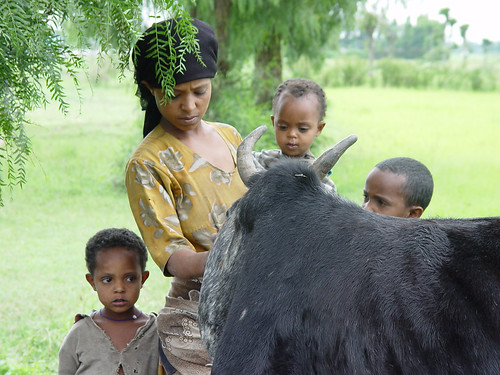
Ethiopian livestock-keeper and her children (photo credit: ILRI/Apollo Habtamu).
Livestock production may have a bigger impact on the planet than anything else. A new study from the International Livestock Research Institute (ILRI) shows how the effects vary from country to country — and points the way toward a more sustainable future.
Below, Time Magazine‘s senior environmental journalist Bryan Walsh reports (well) on a big new livestock study from ILRI.
‘You may think you live on a planet, but really you live on a gigantic farm, one occasionally broken up by cities, forests and the oceans. Some 40% of the world’s land surface is used for the purposes of keeping all 7 billion of us fed — albeit some of us, of course, more than others. And the vast majority of that land — about 30% of the word’s total ice-free surface — is used not to raise grains, fruits…
View original post 840 more words
Share this:
Posted in Poverty, Hunger, Malnutrition
Leave a comment
Superfood (Camel Milk) can Beat the Challenge of Superbug (Bacterial Resistance to Antibiotics)
Share this:
Posted in Poverty, Hunger, Malnutrition
Leave a comment
Superfood (Camel Milk) can Beat the Challenge of Superbug (Bacterial Resistance to Antibiotics)
Share this:
Posted in Poverty, Hunger, Malnutrition
Leave a comment
Food Insecurity Metrics Now in Sync
 “If you can’t measure, you can’t manage”
-Peter Drucker
That is why metrics are important for the government or any institution, and development partners in addressing food insecurity, malnutrition, hunger, poverty. According to FAO, after a prolonged decline since 1990, the number of undernourished people has increased to 815 million in 2016, from 777 million in 2015.
FAO’s mandate is to help reduce hunger and to track the progress towards its goal. That brings the importance of having a unified system to get the important data and information and manage the situation in order to effect the eradication of hunger.
CFS44 tackled the importance and the development of common metrics to measure food insecurity in one of its side events. Gone are the days when measurement was viewed from different lenses or tools and methodologies were varied. Though there is no single tool that captures all the dimensions of food…
View original post 113 more words
Share this:
Posted in Poverty, Hunger, Malnutrition
Leave a comment
The Shifting State of Sustainability: Can the private sector really deliver a public good?

The development community, with some notable exceptions, is waking up to the absurdity of measuring only their inputs and outputs like the number of farmers trained or the number of hectares certified as “farmed sustainably”. In many cases, missing is the measurement that matters most: what positive (or negative) difference did their efforts make for the lives of their intended beneficiaries? What was their impact?. Of course, the most thoughtful are indeed measuring well and applying the emerging range of mixed methods to understand impact and impact pathways. However, in a shift that portends a seismic change in how sustainability works, it is the private sector that is increasingly pushing the envelope for many commodities. After all, today firms have to increasingly account for the efficacy of all their investments, even those once considered soft investments in Corporate Social Responsibility (CSR) or sustainability.
We at the Committee on Sustainability Assessment (COSA) applaud…
View original post 1,288 more words
Share this:
Posted in Poverty, Hunger, Malnutrition
Leave a comment
Could animals help solve the world’s ‘calorie’ as well as ‘hidden’ hunger?—ILRI’s Delia Grace on World Food Day
The interview below, Could animal-sourced protein really solve the world’s hunger crisis?, of veterinary epidemiologist and food safety expert Delia Grace, of the International Livestock Research Institute (ILRI), was originally published in the Oct 2017 ‘Food and Nutrition Security’ issue of the monthly newsletter for Health for Animals. Both display quote graphics below are by Health for Animals.
Each year, 161 million children under the age of five lack the nutrients they require for their development.
This malnourishment causes stunting—both physical and cognitive—and ultimately costs our world 4.5 trillion US dollars in economic impacts each year.
In a world where extreme poverty has fallen in recent decades, this ‘hidden hunger’ can often be forgotten.
‘With such a huge problem to tackle and FAO’s World Hunger Day on October 16th, we spoke to Dr Delia Grace, Programme Director at International Livestock Research Institute (ILRI), based in…
View original post 885 more words
Share this:
Posted in Poverty, Hunger, Malnutrition
Leave a comment
ILRI scientist Delia Grace receives the Trevor Blackburn Award for contributions to animal health and food safety
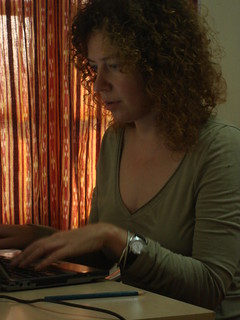 Delia Grace, veterinary epidemiologist at the International Livestock Research Institute (photo credit: ILRI/Susan MacMillan).
We are pleased to congratulate Delia Grace on being announced as the winner of the British Veterinary Association’s (BVA) Trevor Blackburn Award in recognition of her multiple outstanding contributions to animal health, animal welfare and food safety in Africa and Asia.
In particular, she was recognized for her work with community health programs and research into public health and food safety; her pioneering work highlighting the benefits and risks of the engagement of women in livestock farming in developing countries; and the delivery of training and studies in numerous African countries.
The announcement was made today, 25 September 2014, during the awards ceremony at the BVA Members’ Day in Manchester, United Kingdom.
Grace is a veterinary epidemiologist with nearly 20 years’ experience in developing countries. She leads the Food Safety and Zoonoses program at…
View original post 330 more words
Share this:
Posted in Poverty, Hunger, Malnutrition
Leave a comment
Why good policies and public funding (only) won’t change the world

We have been cutting trees to plant food crops, since the beginning of time. Forest cover loss is a major contributor to climate change – the biggest challenge of our times. So, we won’t save the world without saving forests.
However, while the connection between forests and climate is very well recognized, agriculture is an elephant in the room at the climate talks and a rare bird at the discussions about forestry.
International deforestation curbing policy infrastructure is well developed. It includes the New York Declaration on Forests, the Bonn Challenge, Initiative 20×20, AFR100 and now also the UN Strategic Plan on Forests 2017-2030, just to mention a few of its components.
These are all great, but throwing billions at conservation and afforestation won’t work without making agriculture sustainable and zero-deforestation. “Foresters must get out of the woods and focus more on deforestation drivers!” invokes Hans Hoogeveen…
View original post 121 more words
Share this:
Posted in Poverty, Hunger, Malnutrition
Leave a comment
Digging deeper into soil: The future of food

It’s another rainy day in the coastal Odisha, India. The Bhitarkanika village looks drenched and dark. Meet Pampa Dolui, age 34, a single mother of two, who has adopted a grim routine over these months, digging soil outside her home to let in the saline water from the sea to enter her sweet water pond.
And she seems to be preparing to uproot the banana tree outside her hut, to create more space for saline water to come in through a freshly dug canal. While chopping the tree she tells her children, “See, the whole tree has turned brown, like rust, nothing will grow anymore, too much salt in the soil”. Now like every other fifth person in village, she is also going to rent out her saline ponds for prawn cultivation at a meager price, as that seems to be the only way to survive.
Other residents in nearby…
View original post 176 more words
Share this:
Posted in Poverty, Hunger, Malnutrition
Leave a comment
Webinar Wrap-up: Farmers’ Rights: How Complementarity between Researchers and Farmers Impact the Conservation of Genetic Diversity, Food Security and Livelihoods of the Poor

GFAR partners CGIAR, GODAN (Global Open Data Initiative for Agriculture and Nutrition) and Asociación Andes, through a GFAR Collective Action supported by GFAR Secretariat, organized on 19 September 2017 a second webinar on the topic of Farmers’ Rights. The webinar was an opportunity to exchange information and best practices on how researchers and smallholder farmers work together in a complementary way, to achieve the conservation of genetic diversity, food security and improve the livelihoods of the most vulnerable populations. The interest in this topic was remarkable, with more than 160 people registered and 65 participating on-line.
Participants are aware that the formal and informal seed systems alone cannot achieve the conservation of genetic diversity, food security and improve the livelihoods of the most vulnerable populations. Joint efforts and collective actions between researchers and smallholder farmers are needed. Trust, better communication skills and partnerships should be promoted and strengthened.
View original post 897 more words
Share this:
Posted in Poverty, Hunger, Malnutrition
Leave a comment
CGIAR Research Program on Agriculture for Nutrition and Health releases 2016 annual report

The CGIAR Research Program on Agriculture for Nutrition and Health (A4NH) is pleased to announce the publication of its 2016 annual report, detailing the accomplishments and developments of the fifth and final year of the program’s first phase. The report highlights research and results from 2016, including
- the successful expansion of aflasafe, a biocontrol product helping to fight aflatoxin contamination across Africa;
- the Stories of Change in Nutrition case study series, which shares experiences to help countries understand how an enabling environment can combine with policies and programs to drive nutritional improvement;
- the first Agriculture, Nutrition and Health Academy Week, held in Addis Ababa, which brought together more than 300 participants from around the world to present research and learn from one another;
- a randomized trial of an integrated nutrition-sensitive agriculture program in Burkina Faso; and
- an update on the ongoing impacts of biofortification, with more than 140 varieties of…
View original post 45 more words
Share this:
Posted in Poverty, Hunger, Malnutrition
Leave a comment
Processing African cassava peels, potentially a billion dollar business
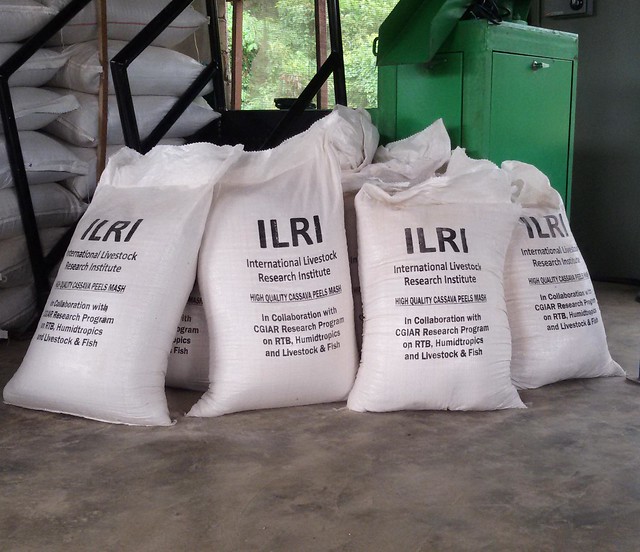 Bags of high quality cassava peel mash feed, Ibadan, Nigeria (Photo credit: ILRI/Iheanacho Okike)
With livestock production expected to more than double in the next 40 years, transforming cassava peels into high quality feed holds huge potential for African economies struggling to meet rapidly rising demand for animal-source products, according to research proposal recently published by three CGIAR centres.
Africa’s estimated 50 million tonnes of cassava peel waste per year could generate at least 15 million tonnes of HQCP, substantially addressing shortfalls in the supply of animal feed and eventually creating a USD 2 billion a year industry.
The research has been proposed by the International Livestock Research Institute (ILRI), International Institute of Tropical Agriculture (IITA) and International Potato Center (CIP), with the support of CGIAR Research Programs (CRPs) on Root Tubers and Bananas (RTB), Humidtropics, and Livestock and Fish. Working closely with private sector partners, ILRI is leading…
View original post 407 more words
Share this:
Posted in Poverty, Hunger, Malnutrition
Leave a comment
New factories in Nigeria transform cassava peels into livestock feed, creating jobs and incomes for women
 Cassava peel processing factory under construction in Benue State, Nigeria (photo credit: ILRI / Yinka Olasusi).
Nigeria is the world’s largest producer of cassava, with a yearly output of about 50 million tonnes and a production increase of about 3% yearly.
Presently, about 25 million tonnes of fresh cassava roots are used for garri (a popular West African food made out of cassava tubers), 6 million tonnes for local food products, 1.5 million tonnes for production of dried chips and 3.5 million tonnes are lost to wastage before or during peeling and processing the tuber. This annual amount of cassava production is projected to increase to up to 150 million tonnes by 2020.
Cassava processing generates cassava peels, stumps and undersized or damaged tubers, which together account for up to a third of processed whole-tuber weight. Cassava peels are perishable and are mostly disposed of by burning or allowing them to rot in heaps…
View original post 493 more words
Share this:
Posted in Poverty, Hunger, Malnutrition
Leave a comment
Join our next GFAR Collective Action Webinar on Farmers’ Rights

GFAR partners CGIAR, GODAN (Global Open Data Initiative for Agriculture and Nutrition) and Asociación Andes, through a GFAR Collective Action, are pleased to invite you to:
Our webinar:
“Farmers’ Rights: How Complementarity between Researchers and Farmers Impact the Conservation of Genetic Diversity, Food Security and Livelihoods of the Poor”
Date: 19 September 2017
Time: 15h00 Rome time
Duration: 2 hours max
Registration: open
This webinar aims to exchange best practices and information on:
- how to achieve complementarity in practice between the formal research and smallholder farmers to achieve food security and improve the livelihoods of smallholder farmers;
- how to contribute to the protection of traditional knowledge and the implementation of the rights of farmers to participate in the benefits arising from the use of plant genetic resources for food and agriculture;
- how to save, use, exchange and sell farm-saved seeds and propagating material.
Agricultural research has faced a…
View original post 1,107 more words
Share this:
Posted in Poverty, Hunger, Malnutrition
Leave a comment
2nd PENAPH Conference: 7 Pre and Post Conference Courses in January 2018 at Khon Kaen University, Thailand
Second PENAPH Conference Course Catalog
We are pleased to announce 7 pre- and post-PENAPH Conference courses. The course offer a variety of perspectives on participatory and qualitative methods in animal Health, One Health, Eco-Health and surveillance. Course durations range from one-day introductions to a full 10-day course in participatory epidemiology as the first step to PENAPH certification as a PE Practitioner.
We are currently creating the registration site on Eventbrite which will handle Conference and course registration and payment. Course will be held at Khon Kaen University.
Detailed course posted on the Second Conference Page (https://penaph.net/second-penaph-conference-participatory-approaches-in-animal-health-public-health-one-health-and-ecohealth/). Fees include lunch, coffee breaks and local transport. Course fees do not include travel expenses, hotels or meals not specifically mentioned.
Courses:
- Lawa Lake Trip: Integrated control of liver fluke using an EcoHealth/ One Health approach, 1 day field trip Jan 9 2018, KKU
- Qualitative research applied to surveillance, 4 day course, Jan 15-18…
View original post 72 more words
Share this:
Posted in Poverty, Hunger, Malnutrition
Leave a comment
Goat is playing a Pivotal role in Rural Economy! Small Scaled Farming is a Hope

An article in ‘Animal’ compares the lifetime performance (mortality, maturity, nutrition, birth weight etc.) of West African Dwarf goats kept under various feeding systems.
via Lifetime performance of West African dwarf goats under different feeding systems — ILRI news
Share this:
Posted in Poverty, Hunger, Malnutrition
Leave a comment
Lifetime performance of West African dwarf goats under different feeding systems
 West African dwarf goat in Ghana (photo credit: ILRI/Paul Karaimu).
A new paper by scientists at in the International Livestock Research Institute (ILRI) and Wageningen University and Research (WUR) compared the lifetime performance of West African Dwarf goats (WAD) kept under various feeding systems. They conclude that West African smallholders can best enhance their goat production systems by supplementing the diets of their grazing goats with farm-generated feeds.
Comparisons of the lifetime productivity of individual animals raised by farmers using alternative livestock interventions allowed the research team to assess, reliably and over the long term, the investment opportunities for smallholder farmers.
A dynamic modelling approach was used to explore the effects of different feeding strategies on the lifetime productivity of West African Dwarf goats in southwestern Nigeria. These goats, which are markedly stunted, with typical heights of 30 to 50 cm (12 to 20 in), are more disease…
View original post 271 more words
Share this:
Posted in Poverty, Hunger, Malnutrition
Leave a comment
 Dr. Bukar Ali USMAN, mni