Food and food systems thinkers advocate a national ‘food policy’ for the US–and maybe the rest of us?

Susan MacMillan's avatarILRI Clippings

Dubuffet

‘Woman Eating’ (‘Mangeuse’), by Jean Dubuffet, 1944, Museum of Modern Art.

Did you miss this call for a US national food policy by Mark Bittman, New York Times columnist and lead food writer; Michael Pollan, leading food, food systems and food science author; Ricardo Salvador, director of food and environment at the Union of Concerned Scientists; and Olivier de Schutter, former UN special rapporteur on the right to food.

Seems there is much in these ultra-sane approaches that is relevant to countries other than the United States.

Here is their summary
‘The U.S. government has never before had a national food policy, let alone one that seeks at the highest level to align federal agricultural policies with our public health and environmental objectives. Were the next president to inaugurate such a policy, and by executive action establish the mechanisms for its implementation, the potential would dramatically…

View original post 482 more words

Posted in Uncategorized | Leave a comment

HUNGER ERADICATION ESSENTIAL TO ACHIEVE SUSTAINABLE DEVELOPMENT – UN FOOD AGENCY (UN News)

Willem Van Cotthem's avatarDESERTIFICATION

New York, May 30 2012  6:05PM
Sustainable development will not be achieved unless hunger and malnutrition are eradicated, the United Nations food agency warned today in a new report.

“We cannot call development sustainable while this situation persists, while nearly one out of every seven men, women and children are left behind, victims of undernourishment,” said the Director-General of the Food and Agriculture Organization (FAO), José Graziano da Silva, in a news release.

In the report – entitled Towards the future we want: end hunger and make the transition to sustainable agricultural and food systems – prepared for the UN Sustainable Development Conference (Rio+20), which will be held in Brazil next month, FAO stresses the need to address the flaws in the current food system so that hundreds of millions of people in developing countries have the means to produce or purchase the food they need for their own consumption…

View original post 269 more words

Posted in Uncategorized | Leave a comment

No clear benefit for most healthy people to consume vitamin supplements : grow your own fresh food in containers (Science Daily)

Willem Van Cotthem's avatarDESERTIFICATION

Read at :

http://www.sciencedaily.com/releases/2013/12/131217170859.htm

Importance of Food as Key Provider of Vitamins and Nutrients

Dec. 17, 2013 — While dietary supplements can help some people meet their nutrition needs, eating a wide variety of nutrient-rich foods is the best way for most people to obtain the nutrients they need to be healthy and reduce their risk of chronic disease, according to the Academy of Nutrition and Dietetics.

Two newly published studies in Annals of Internal Medicine, and an accompanying editorial, indicate there is no clear benefit for most healthy people to consume vitamin supplements.

“These findings support the evidence-based position of the Academy of Nutrition and Dietetics that the best nutrition-based strategy for promoting optimal health and reducing the risk of chronic disease is to wisely choose a wide variety of foods,” said registered dietitian nutritionist and Academy spokesperson Heather Mangieri. “By choosing nutrient-rich foods that provide the…

View original post 220 more words

Posted in Uncategorized | Leave a comment

Aquaculture, homestead gardening and nutrition awareness

Willem Van Cotthem's avatarDESERTIFICATION

Training manual on household based pond aquaculture, homestead gardening and nutrition awareness

Currently many farming households face health and economic risks because of problems in malnutrition as a result of lack of knowledge and training, improved technologies and processes in farming. From the beginning of the CSISA-BD project, the World Fish Center has initiated introduction improved practices and technologies in rural farming to address malnutrition in farming households. In order to address the problem discussed, as a part of this project it has been felt there is a lack of skilled trainers and training materials. Based on field experience and existing training manuals, the WFC has developed training material and manuals on ‘Household Based Pond Aquaculture, Homestead Gardening and Nutrition Awareness with respect to the environment and socio-economic risks faced by fish farmers. These manuals have been developed for government and non-government training staff and fish farmers. During the project…

View original post 76 more words

Posted in Uncategorized | Leave a comment

Small-scale fish farming ponds in Africa

Willem Van Cotthem's avatarDESERTIFICATION

Photo  credit: IPS

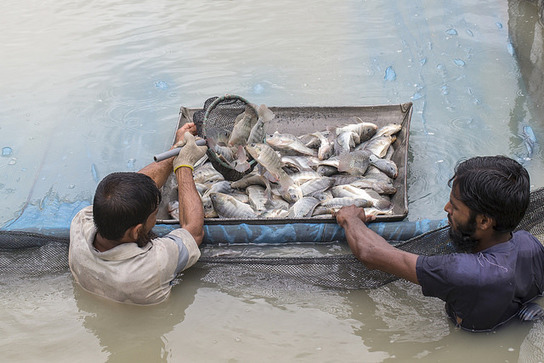
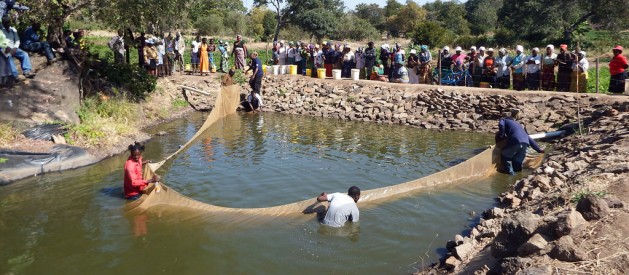
Fish farming has fast turned into a way for many Africans to beat poverty and hunger. Credit: Jeffrey Moyo/IPS

Fish Farming Now a Big Hit in Africa

In many African towns and cities, thriving fish farmers have converted their swimming pools and backyards into small-scale fish farming ponds, triggering their proverbial rise from rags to riches

Hillary Thompson, aged 62, throws some grains of left-over rice from his last meal, mixed with some beer dregs from his sorghum brew, into a swimming pool that he has converted into a fish pond.

View original post 259 more words

Posted in Uncategorized | Leave a comment

The 17 SDGs could transform Africa

Willem Van Cotthem's avatarDESERTIFICATION

Photo credit: SciDevNet

Copyright: Jan Banning/Panos

Why SDGs could transform Africa

by

Alberto Leny

Speed read

  • The World Bank says 75 per cent of the poorest nations are in Sub-Saharan Africa
  • The17 sustainable development goals (SDGs) could transform the continent
  • But this can happen mainly through embracing and financing the SDGs

Embracing and financing the sustainable development goals could help Africa develop, writes Alberto Leny.

Africa is in the limelight as the world ushers in the post-2015 development agenda.

The World Bank statistics indicate that 75 per cent of the world’s poorest countries are located in Sub-Saharan Africa, including ten with the highest proportion of residents living in extreme poverty. [1]

World leaders passed a resolution to adopt the new 2030 Agenda for Sustainable Development last year (25 September) at the United Nations General Assembly in New York, United States [2]. The Sustainable Development Goals (SDGs), which has…

View original post 57 more words

Posted in Uncategorized | Leave a comment

Integration for Food Security and Poverty Alleviation

GFAiR's avatarThe GFAiR Blog

Photo-of-participants-at-Nigeria-National-Consultation-672x424

It is definitely important and beneficial when activities in the research sphere fit in and meet the needs and priorities of its target group. When looked at holistically, it is important that research institutions, whether international, regional or national, ensure their research and results meet the need of the countries where they find themselves. This was the core of discussions and a major component of the two-day CGIAR National Consultation on Site Integration held in Nigeria between the 16th and 17th of November 2015.

As part of preparations towards the Third Global Conference on Agricultural Research and Development (GCARD3), the Consultative Group for International Agricultural Research(CGIAR) organised this consultation. The National consultation, which was hosted and coordinated by the International Institute of Tropical Agriculture (IITA), brought together stakeholders from the CGIAR Research Programs (CRPs), private sector, International Donors, farmer groups, commodity associations, Youth network and organisations, the Federal Ministry…

View original post 455 more words

Posted in Uncategorized | 1 Comment

African camels could hold a key to controlling the spread of the MERS virus in humans

“Camels are an extremely important source of livelihood, nutrition and income in Africa. They are especially common in arid and semi-arid areas of the continent, particularly in East Africa. But having these animals around may not be risk-free for humans.”

Susan MacMillan's avatarILRI Clippings

SamplingACamel_ByEricFevre

Taking a blood sample from a came (photo credit: Eric Fèvre).

‘African camels could hold important clues to controlling the potential spread of a respiratory disease transmitted by the animals.

‘For many years African camels have lived with the disease and the risk of it spreading to humans is still low. But more research is necessary to understand the disease better. This is even more important given the confirmation that the chains of transmission of the human Middle East Respiratory Syndrome Coronavirus (MERS-CoV) infection originated from contact with camels. MERS was first recognised in 2012.

Camels are an extremely important source of livelihood, nutrition and income in Africa. They are especially common in arid and semi-arid areas of the continent, particularly in East Africa. But having these animals around may not be risk-free for humans.

‘However, there have been no human cases of MERS diagnosed in Africa. This could be…

View original post 567 more words

Posted in Uncategorized | Leave a comment

Agriculture is in every SDG: Part 1

canwefeedtheworld's avatarOne Billion Hungry: Can We Feed the World?

By Alice Marks

Story-2-SDGsSkimming the eye across the colourful chart of the Sustainable Development Goals (SDGs), it is easy to spot a couple which are intrinsically and directly linked to agriculture, but a closer look reveals that they are in fact all linked to agriculture. A healthy global agricultural sector underpins and supports so many aims of the SDGs that its development will be important for their overall success. As sustainable agriculture is essential for sustainable food systems and livelihoods, here is a breakdown of how agriculture, farming and nutrition fit into the first 7 goals

1. No Poverty

Over 70% of the world’s poorest people live in rural areas, and rely heavily on agriculture for their survival and livelihoods. According to the World Bank, evidence shows that GDP growth generated in agriculture has large benefits for the poor, and is at least twice as effective in reducing poverty…

View original post 958 more words

Posted in Uncategorized | Leave a comment

Cowpea (Vigna unguiculata) for smallholder farmers

Willem Van Cotthem's avatarDESERTIFICATION

Photo credit: Africa Rising

Growing cowpea creates new business opportunities for small scale outgrowers

Quality cowpea seed production offers Zambian women farmers opportunities for quality lives

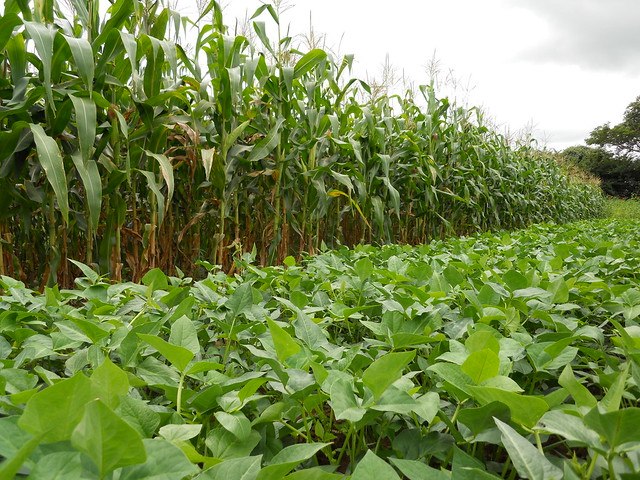
In economies like Zambia, where maize-based farming is predominant, grain legumes – such as cowpea and soybean add the much needed fertility to the soils degraded by monocropping. Legumes are widely grown as intercrops or in rotations on maize-based farming systems. They fix substantial amounts of atmospheric nitrogen through biological nitrogen fixation in the soil, help improve  soil fertility and also contribute to improved crop productivity. However, one the main challenges to growing legumes is the fact that their seeds are not easily available to farmers. But thanks to an emerging breed of bold farmers who have taken to producing seeds for their colleagues in Eastern Zambia, this challenge is being mitigated.

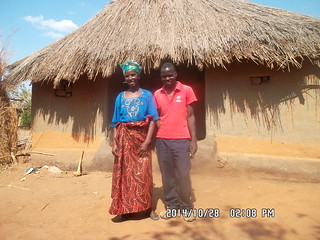
Mrs. Tichoke Phiri with her son, Kenneth, at their homestead in Kawalala Camp, Katete District Photo credit: Cannon Mukuma/IITA

Mrs. Tichoke Phiri with her son, Kenneth, at their homestead in Kawalala Camp, Katete District

View original post 155 more words

Posted in Uncategorized | Leave a comment

Year End Food Reads and Possibilities for 2016

Thought+Food's avatarThought + Food

ID-100338573

On the last day of the year, some insights on the year in agriculture in the US, research on farming and rural communitiesand a look at the growing place of agricultural biotechnology in the food system.

As a planet, we all had a moment of hope as the Paris climate talks seemed to bring some possibility of action in the right direction but climate disruption is already impacting food production and food securityin many communities. A plan to combat climate change must include a plan for food production and the understanding that conservation and agriculture are not separate and opposing goals. Rather, initiatives that focus on both are optimal.

While it is encouraging to see the efforts to reduce food waste on the consumption side, much remains to be done on reducing postharvest losses which are particularly significant in developing economies: great reads on that

View original post 57 more words

Posted in Uncategorized | Leave a comment

Slum farming and superbugs—An ‘Urban Zoo’ science project tracks bacterial routes in complex environments

Susan MacMillan's avatarILRI Clippings

Animals-in-slums

Animals in a Nairobi slum (via Africa Slum Journal).

‘The next superbug could emerge from the slums of the developing world, researchers warn.

‘Rapid, unplanned growth in many urban areas has people, livestock and wildlife living in close proximity and with inadequate sanitation. These are ideal conditions for microbes to evolve and spread.

‘So a major project is underway, designed to shed light on how microbes move through the slums of Nairobi and beyond.

‘It’s known as the Urban Zoo project. “Zoo” is short for zoonosis, the spread of diseases from animals to humans. From salmonella to swine flu, that’s how we get most of our diseases.

‘But “zoo” also suggests the menagerie of creatures found in Nairobi’s slums that could carry those diseases.

Fenced in by sheets of rusting corrugated metal in Nairobi’s Viwandani neighborhood, Joseph Mwai and his family share a couple thousand square feet with three cows…

View original post 623 more words

Posted in Uncategorized | Leave a comment

How to improve smallholder farm productivity ?

Willem Van Cotthem's avatarDESERTIFICATION

Photo credit: Africa Rising

Mashehe Salum

Tanzania farmer harvested 60 bags of maize despite severe drought

by JONATHAN ODHONG

Mashehe Salum is a small scale maize and legume farmer in Ngipa village, Kiteto District in central Tanzania. Four years ago, maize yield from her 4 acre farm was barely enough to feed her family of five. She knew she could get more from her farm, but didn’t know what to do improve her farm productivity.

Mashehe’s farm is located in a semi-arid region with low and erratic rainfall. So water access was a significantly big challenge to her farming endeavor. And just like other farmers in Ngipa village, she also planted recycled seeds.  Year after year, she would use the broadcasting technique to plant her maize and year after year the result would be the same –poor harvest, not adequate to feed her family.

But Mashehe’s story today is a stark…

View original post 106 more words

Posted in Uncategorized | Leave a comment

Guest Commentary – Nutrition Sensitivity Needed to Tackle Hunger in the 21st Century | Chicago Council on Global Affairs

Many nutrition-sensitive programs are designed to be context specific, and the panel discussed opportunities and challenges for ensuring greater access to these new practices and technologies and ways to continue to increase uptake in developing countries.

Sourced through Scoop.it from: www.thechicagocouncil.org

See on Scoop.itFood Policy, Supply, Security & Safety

Posted in Uncategorized | Leave a comment

Is There a Trade-Off between “Sustainable” Foods and Food Safety?

Another day, another media story in which I weigh in on some food policy-relevant story: I was quoted last week in an article in US News & World Report about the potential link between Chipotle…

Sourced through Scoop.it from: marcfbellemare.com

See on Scoop.itFood Policy, Supply, Security & Safety

Posted in Uncategorized | Leave a comment

Aquatic animal health in the Livestock and Fish program: Year in review

This blog post highlights how WorldFish and its partners are collaborating to tackle emerging diseases in aquatic animals and developing better management practices to minimize their impact.

Sourced through Scoop.it from: livestockfish.cgiar.org

See on Scoop.itFood Policy, Supply, Security & Safety

Posted in Uncategorized | Leave a comment

No young farmers – no food – no life?

GFAiR's avatarThe GFAiR Blog

quynh nguyen Hoang Kim Vuong, a young Vietnamese farmer at her SRI farm in Yen Bai province

Farming is a lowly job with a poor image and low profile. As young people flock to cities to realize their dreams, what will be the future of agriculture and food industry?

Youth – defined by the United Nations as aged between 15 to 24 – make up 18% of the world’s population. According to the Asian Farmers’ Association for Sustainable Rural Development,  young people who live in the rural areas have been neglected by their governments, communities and families.

The sons and daughters of farmers are often reluctant to go farming as they see it as a back-breaking and dirty job needing little skill. Farming is not seen as profitable, land ownership is not secure, and there is a lack of rural infrastructure and of government incentive policies.

But there is hope… some regional…

View original post 359 more words

Posted in Uncategorized | Leave a comment

Companies team up for sustainable agriculture standard

GFAiR's avatarThe GFAiR Blog

binhMore than 80 corporations from all over the world have agreed to support a new global assessment tool to ensure their agricultural practices are conducted sustainably, safely and consistently.

As members of the Sustainable Agriculture Initiative Platform (SAI), formed in 2002, they are working together to implement  The Farm Sustainability Assessment (FSA) tool which will be used as a common global standard in assessing, improving and communicating sustainable agriculture. This will cover  supply chains that extend all over the world.

FSA is now being built in an online universal database, in multiple languages and with multiple filtering options so that it can be tailored to regional situations and for specific crops. This system will offer complete supply chain mapping, including the ability to communicate data on on-farm sustainability throughout the supply chain, from farmer to retailer.

Users of the database can also blend in other standards and labels in several…

View original post 150 more words

Posted in Uncategorized | Leave a comment

Walls must fall for agriculture to become sustainable

GFAiR's avatarThe GFAiR Blog

640px-Berlin_1989,_Fall_der_Mauer,_Chute_du_mur_24 (1)

Agricultural research has been very scattered and isolated; highly specialized but seldom collaborative. There is a need to look at the bigger picture instead of working in isolation in different disciplines.

Investments in agriculture have been focused very much on research in the past decades, as evidenced by the Green Revolution. New varieties, new technologies led to increased crop production, crop diversification, and so on. However, in the pursuit of greater efficiencies, invisible walls in agriculture have been set up – with or without us being conscious of it.

In Tuesday’s Parallel Session that tackled Capacity Development for Sustainable Agriculture, differing views and perspectives were presented on which is the priority for investments: research or extension.

It is worth noting that one of the most senior scientists in the session – Dr. R.P Singh – sees the need to invest more in extension and information dissemination systems rather than in…

View original post 267 more words

Posted in Uncategorized | Leave a comment

The black sheep of agricultural development: land tenure

GFAiR's avatarThe GFAiR Blog

land tenure

At the High Level Policy Dialogue leading up to GCARD3 (The Third Global Conference on Agricultural Research for Development), issues ranging from investment strategies to open access data, to climate smart solutions are hot topics of discussion. But what is missing?

View original post 621 more words

Posted in Uncategorized | Leave a comment

Tracking progress and spending on nutrition

canwefeedtheworld's avatarOne Billion Hungry: Can We Feed the World?

ID-100328810The Global Nutrition Report 2015: Actions and accountability to advance nutrition and sustainable development, has as a key theme the notion of tracking progress on tackling undernutrition as an important factor in holding donors, governments and other institutions to account. The data in the report itself plays a role in monitoring progress. At present, data allowing the monitoring of impact and reach of nutrition-specific interventions is limited. Lack of consensus on data, metrics and methods make monitoring difficult to undertake, analyse and compare, although improvements are being seen in actions to track nutrition.

Approaches to tackling undernutrition need to be multi-sectoral, which makes tracking both nutrition spending and progress towards targets difficult. As the Global Nutrition Report 2015 states, countries make progress when actions from multiple levels converge and reinforce each other in a virtuous circle. Nutrition-sensitive approaches, which seek to both reach a direct nutrition goal as well…

View original post 988 more words

Posted in Uncategorized | Leave a comment

Agriculture, nutrition, and health: more than meets the eye | IFPRI

Most of our health systems are set up to respond to problems, whereas agriculture can be part of a prevention approach.

Sourced through Scoop.it from: www.ifpri.org

See on Scoop.itFood Policy, Supply, Security & Safety

Posted in Uncategorized | Leave a comment

The Lancet marks World Antibiotic Awareness Week with series on access and effectiveness of antimicrobials

Tezira Lore's avatarAgHealth

World Health Organization infographic on antibiotic resistance and what the agriculture sector can do (credit: WHO). Infographic on antibiotic resistance and what steps the agriculture sector can take to tackle this global challenge (credit: World Health Organization).

The Lancet yesterday (18 Nov 2015) published a new series titled Antimicrobials: sustainable access and effectiveness in recognition of the World Health Organization’s inaugural World Antibiotic Awareness Week, 16 to 22 November 2015.

The theme of the global campaign, Antibiotics: Handle with Care, reflects the overarching message that antibiotics are a precious resource and should be preserved. They should be used to treat bacterial infections, only when prescribed by a certified health professional. Antibiotics should never be shared and the full course of treatment should be completed – not saved for the future.

The five papers in the Lancet Series cover access to effective antimicrobials as a global challenge, understanding the mechanisms and the drivers of antimicrobial resistance, maximizing access to achieve appropriate human antimicrobial use in low- and…

View original post 118 more words

Posted in Uncategorized | Leave a comment

Don’t flush the nutrients down the toilet

canwefeedtheworld's avatarOne Billion Hungry: Can We Feed the World?

By Katrin Glatzel

When you think of clean water and hygienic toilets, it’s not usually concerns about nutrition that come to mind first. Well, you might want to reconsider.

Poor sanitation, limited hygiene practices and unsafe water sources expose billions of people, particularly children and other vulnerable groups, to a wide range of preventable diseases and consequently high mortality rates in many countries. According to UNWater and the World Health Organisation, two and a half billion people do not have access to basic sanitation and 783 million people have no access to clean water.

Diseases and Diarrhoea lead to preventable child deaths

1 Credit: UN, Albert Gonzalez Farran

As a result, around four million people die from waterborne diseases every year; just over two million of these deaths are due to diarrhoea and one million of those are children under the age of five. Despite that these young children suffer…

View original post 614 more words

Posted in Uncategorized | Leave a comment

Vets encouraged to sign antibiotic awareness pledge

Today (Wednesday 18 November) is European Antibiotic Awareness Day (EAAD) and vets are being urged to sign an online pledge to become an “antibiotic guardian”. EAAD is an annual public …

Sourced through Scoop.it from: www.vettimes.co.uk

See on Scoop.itFood Policy, Supply, Security & Safety

Posted in Uncategorized | Leave a comment

Scare Tactics – Why Do So Many “Public Health Experts” Promote Fear vs. Food?

bovidiva's avatarBovidiva

pork chop 1How many of us are motivated by fear every single day? We’d like to think that we’re lucky enough to live in a society where we don’t feel afraid. In contrast to inhabitants of many war-torn regions we are unlikely to be shot as we drive to work; when we’re sick we have the luxury of modern medical attention (Obamacare not withstanding); and we can buy almost any food we fancy, at any time of year and feel safe in our food choices… or can we?

Food safety is an underlying assumption of dietary choice within the USA. We buy food based on three major factors: taste, price and nutrition. Safety isn’t a defining factor in choosing between the cheese quesadilla, the chef’s salad or the T-bone steak because most of us have rarely experienced significant negative health effects as a consequence of food choice (aside from the annual…

View original post 1,086 more words

Posted in Uncategorized | Leave a comment

Ask A Farmer: How Are Antibiotics Used in Cattle?

Ryan Goodman's avatarBeef Runner

Stock image via Montana Stockgrowers Association Stock image via Montana Stockgrowers Association

I am often asked how antibiotics are used in cattle. Every situation is different and every veterinary prescription can change depending on a large number of environmental factors. The following Questions and Answers regarding antibiotics use in cattle come from South Dakota State University Extension. Be sure to visit their page to learn more about antibiotics use in livestock, how farmers and veterinarians work together to raise cattle for a safe beef supply.

Read more FAQ about raising cattle and submit your own questions on my Ask A Farmer page.

What are antibiotics?

Antibiotics are medicines that are given to people and animals to treat or prevent certain illnesses caused by bacteria.  Antibiotics either kill or hinder the growth of harmful bacteria in animals and people.

Why are antibiotics given to cattle?

Antibiotics are given to animals that are sick, in order…

View original post 1,619 more words

Posted in Uncategorized | Leave a comment

Agricultural innovation – Planting the seeds for a sustainable future | AgriPulse

Embracing innovation and making decisions based on sound science is the only way we can confront these challenges

Sourced through Scoop.it from: www.agri-pulse.com

See on Scoop.itPrecision Agriculture

Posted in Uncategorized | Leave a comment

The future of agriculture: Turning manure and food waste into a valuable resource | AgriPulse

The result was a science-based, open-source and collaborative process to develop measurement and communication resources that help dairy farmers and companies identify opportunities for improvement and track progress across the entire value chain – from grass to glass.

Sourced through Scoop.it from: www.agri-pulse.com

See on Scoop.itPrecision Agriculture

Posted in Uncategorized | Leave a comment

The Future of Agriculture: Turning Manure and Food Waste into a Valuable Resource | Chicago Council on Global Affairs

Sourced through Scoop.it from: www.thechicagocouncil.org

See on Scoop.itPrecision Agriculture

Posted in Uncategorized | Leave a comment

Science and sustainable development

Willem Van Cotthem's avatarDESERTIFICATION

Photo credit: UN News Centre

A researcher conducts tests at the International Atomic Energy Agency’s Terrestrial Environment Laboratory, in Seibersdorf, Austria. Photo: IAEA/Dean Calma

Science stands at heart of sustainable future, UNESCO says on World Science Day

Citing science, technology and innovation as key components of the upcoming United Nations climate change negotiations in Paris, the UN Educational, Scientific and Cultural Organization (UNESCO) today urged governments to “do everything to support societies across the world, on every continent, to create and share knowledge.”

In a message on the occasion of World Science Day for Peace and Development 2015, UNESCO Director-General Irina Bokova reminded the world just two months after the UN agreed on a new sustainable development agenda that “science stands at its heart as a force for positive transformation and a development multiplier.”

Established by UNESCO in 2001, World Science Day is celebrated worldwide on 10…

View original post 84 more words

Posted in Uncategorized | Leave a comment

The Economics of Agricultural Information for Smallholder Farmers

The public sector has a crucial role in generating and making available agriculture-related information to smallholder farmers, argues Ajit Maru, GFAR’s Senior Knowledge Officer, but more research …

Sourced through Scoop.it from: gcardblog.wordpress.com

See on Scoop.itPoverty, Hunger & Malnutrition

Posted in Uncategorized | Leave a comment

Financing development under President Buhari: The role of Pan African development finance institutions (DFIs)

APO's avatarDatabase of Press Releases related to Africa - APO-Source

The Central Bank of Nigeria (CBN) has prognosticated a possible economic recession in 2016. This possible worst outcome of the present slump is something I am sure President Muhammadu Buhari would do everything to prevent. No president wants to be known in history as a ‘Recession President.’ However, this undesirable economic situation can sometimes become a reality, even in spite of the best efforts… Read more on http://www.africa-newsroom.com/press/financing-development-under-president-buhari-the-role-of-pan-african-development-finance-institutions-dfis?lang=en

View original post

Posted in Uncategorized | Leave a comment

Which way would you go to stop an unfolding food crisis for children ? (Willem Van Cotthem)

Willem Van Cotthem's avatarDESERTIFICATION

Did you read my former posting on this blog ?

UNICEF CHIEF URGES ACTION TO STOP UNFOLDING CRISIS FOR CHILDREN IN THE SAHEL.

Yes?  Then you know that UNICEF’s Executive Director Anthony Lake “called today on the global community to take action to prevent one million children in the Sahel region of West and Central Africa from becoming severely malnourished.

He said : “We must begin at once to fill the pipeline with life-sustaining supplies to the region before it is too late.” and “underscored the urgency to act before the ‘lean season’ when food runs out due to inadequate rain or poor harvests, which can start as early as March in some of the countries across the Sahelian belt.

I fully agree that UNICEF and its partners must be prepared to get sufficient amounts of ready-to-use therapeutic foods to treat severe acute malnutrition. …

View original post 467 more words

Posted in Uncategorized | Leave a comment

How to address the root causes of food insecurity and child malnutrition ?

Willem Van Cotthem's avatarDESERTIFICATION

Photo credit: MSF (Ricardo Garcia Vilanova)

Mothers feed their children therapeutic food at MSF’s outpatient therapeutic feeding center in Bokoro, Chad, where MSF teams are responding to a fourth malnutrition crisis in five years.

Is the food crisis for children still unfolding ?

By Prof. Dr. Willem Van Cotthem

University of Ghent – Belgium

Drought and Desertification Consultant

http://desertification.wordpress.com

In December 2011, I posted some comments on a publication entitled “UNICEF CHIEF URGES ACTION TO STOP UNFOLDING CRISIS FOR CHILDREN IN THE SAHEL” (https://desertification.wordpress.com/2011/12/22/unicef-chief-urges-action-to-stop-unfolding-crisis-for-children-in-the-sahel-un-news/)

Today, I wonder if any changes in that situation have been registered.  Please read my former comments and today’s conclusions.

Which way would you go to stop an unfolding food crisis for children?

1997-12-02-General view 02 of a community garden in Niou (Burkina Faso) - (Photo WVC). 1997-12-02-General view 02 of a community garden in Niou (Burkina Faso) – (Photo WVC).

A food crisis can be stopped in different ways : with therapeutic food or with locally produced…

View original post 1,534 more words

Posted in Uncategorized | Leave a comment

4 ways to reduce malnutrition

canwefeedtheworld's avatarOne Billion Hungry: Can We Feed the World?

ID-100126431 Image courtesy of [rakratchada torsap] at FreeDigitalPhotos.net Tackling undernutrition is, as the full extent of malnutrition and micronutrient deficiencies becomes apparent, critical for human wellbeing and development. In the past we have tended to focus, with limited success, on ensuring people have enough to eat, on making the world “food secure” and on fighting hunger but now we are beginning to understand that if we are to lead healthy, productive lives, it is also about having enough to eat of the right mix of nutrients. And unlike hunger, often viewed as a more common problem in developing countries, poor nutrition, whether through famine or feasting, can be universal.

In 2008, when The Lancet published their Series on Maternal and Child Undernutrition, global policymakers began to take notice and the Scaling-Up Nutrition movement was born. Today this momentum is continuing and the new Sustainable Development Goals focus more on nutrition…

View original post 1,407 more words

Posted in Uncategorized | Leave a comment

Unlocking the potential of Africa to scale livestock development, high-level conference

James Stapleton's avatarILRI news

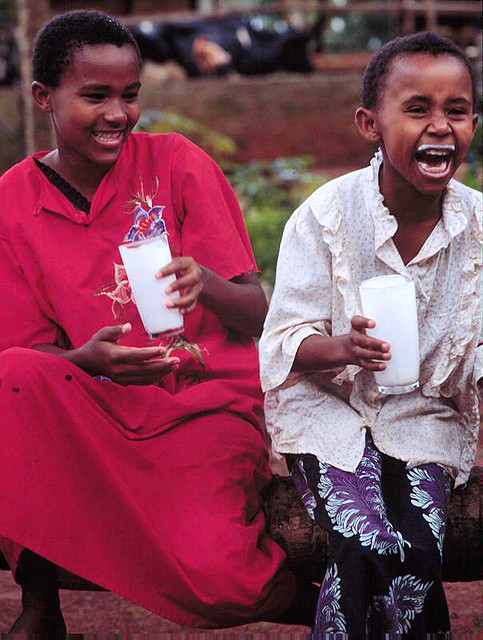
Kenya children drinking milk Kenya children drinking milk (photo credit: ILRI/Dave Elsworth).

The African continent stands at a crossroads. Stimulated by rapid population, urbanization and per capita income rises, African economies are growing at unprecedented rates. The ‘sustainable intensification’ of agricultural systems offers greater food security, incomes, trade, and smallholder competitiveness. Failure could leave African states vulnerable to climate shock, rising food prices, and trade deficits.

Grabbing this bull by its horns, the International Livestock Research Institute (ILRI) and the African Union-Interafrican Bureau for Animal Resources (AU-IBAR) have prepared a policy brief for the three-day high-level meeting on ‘feeding Africa’ starting today in Dakar, Senegal.

Only annual livestock productivity growth of at least 6% will be able to meet rising demand for livestock products domestically.

Improved livestock genetics, health and feed—guided by policies geared towards enabling a sustainable and business-friendly environment—are key to unlocking the potential of agriculture in Africa, according to the policy…

View original post 358 more words

Posted in Uncategorized | Leave a comment

Africa Day for Food and Nutrition Security

canwefeedtheworld's avatarOne Billion Hungry: Can We Feed the World?

ADFNS-201541This Friday (30th October) marks the 6th annual Africa Day for Food and Nutrition Security (ADFNS). This year the day will be commemorated in Kampala, Uganda, where, at the 15th Ordinary Session of the African Union Summit in 2010 it was first declared. Since then the day has been commemorated in Malawi, Ethiopia, Niger and the Democratic Republic of Congo.

In 2014 at the 23rd session of the AU summit, African Heads of State committed to ending hunger by 2025 and reducing stunting to 10% in the same period. This commitment is one of seven forming the Malabo Declaration. ADFNS provides an opportunity to reaffirm this goal and report on progress that has been made in reaching this commitment, among other objectives. The UN Food and Agriculture Organisation 2015 State of Food Insecurity in the World report asserts that, as projected for 2014-2016, the…

View original post 755 more words

Posted in Uncategorized | Leave a comment

Reducing the vulnerability of Somali livestock communities through capacity development and enhanced market access

Peter Ballantyne (ILRI)'s avatarILRI Clippings

According to ILRI’s Nadhem Mtimet, livestock provides around 60% of gross domestic product (GDP) in Somaliland and the sector employs over 70% of the population. Livestock producers, he says, are very market-oriented, and the country exports around three million small ruminants each year to Saudi Arabia and other countries in the Middle East.

Ensuring high quality and disease-free animals for export is thus critical to the development of the Somalia’s northern states of Somaliland and Puntland. There is also a growing need to balance the production of more animals with the sustainable management of the dry areas in which the animals are reared. Staff of the IGAD Sheikh Technical Veterinary School (ISTVS) and Reference Centre already see the need for more action and research on issues around soil and land degradation, dryland management and adaptation to climate change. It is not enough to just produce more animals, they…

View original post 1,520 more words

Posted in Uncategorized | Leave a comment

Delivering Sustainable Development Goals in Africa

On the 25-27 September 2015 world leaders unanimously adopted the sustainable development goals (SDGs) during the 70th UN General Assembly.

Sourced through Scoop.it from: www.internationalpolicydigest.org

See on Scoop.itFood Policy, Supply, Security & Safety

Posted in Uncategorized | Leave a comment

What progress has been made in tackling world hunger?

On World Food Day Stephen Devereux writes on the growing consensus that social protection has to be at the heart of any efforts to reduce rural poverty and ensure access to food, or the means to buy f…

Sourced through Scoop.it from: www.ids.ac.uk

See on Scoop.itPoverty, Hunger & Malnutrition

Posted in Uncategorized | Leave a comment

Global Meat Consumption – The Visual

Janina's avatarFood (Policy) For Thought

I’ve been playing around a bit with Tableau, a data visualization tool that is seriously so much fun! It has great interactivity too, except that WordPress doesn’t – womp womp – so click on the image (or here) to head on over for the interactive version.

Basically, this shows meat consumption data that I downloaded from the OECD by country and region (at the bottom). The first map shows per capita consumption, the second total country consumption, the bars at the bottom show which countries and regions drive total consumption, and the bars on the right side show you how average consumption changes across time and compares across types of meat.

Screen Shot 2015-10-24 at 11.17.04 AM

When you head on over, you can use the time slider to get a visual representation of the  changes over time. Click on the bars on the right to isolate each meat on all the maps. And have…

View original post 32 more words

Posted in Uncategorized | Leave a comment

PAEPARD: Feeding Africa: an action plan for African agriculture transformation

Transformation is the development of a strategic action plan for agricultural transformation in Africa. The aim is to build a strong and sustainable agricultural sector for food and nutrition security, youth employment, poverty alleviation and rural transformation.

Sourced through Scoop.it from: paepard.blogspot.com.ng

M

See on Scoop.itFood Policy, Supply, Security & Safety

Posted in Uncategorized | Leave a comment

Food and the Transformation of Africa

African agriculture has long been a symbol of the continent’s poverty. But that is starting to change. Thanks to digital technology, Africa’s leaders can today overcome the isolation of the continent’s smallholders and build a new food system suited to contemporary needs. 

Sourced through Scoop.it from: www.foreignaffairs.com

See on Scoop.itAgriculture, Climate & Food security

Posted in Uncategorized | Leave a comment

Making the shift to sustainable agriculture: 10 principles

canwefeedtheworld's avatarOne Billion Hungry: Can We Feed the World?

By Katy Wilson

According to the recently released 2015 Global Hunger Index from the International Food Policy Research Institute (IFPRI), hunger levels remain “serious” or “alarming” in 52 of 117 countries, despite many countries having reduced their hunger scores by at least half since 2000, including Brazil, Azerbaijan and Mongolia. The highest levels of hunger were recorded in Central African Republic, Chad and Zambia. Several new studies and reports suggest that failure to meet countries’ food needs requires the transformation of our food systems and a shift to sustainable farming.

Global Harvest Initiative’s 6th annual Global Agricultural Productivity Report (2015 GAP report), released last week states that for the second year in a row the rate of global agricultural productivity growth (1.72%) falls short of the level needed to feed an estimated 9.7 billion people by 2050 (1.75%). Regionally, the rate of agricultural productivity growth is particularly…

View original post 688 more words

Posted in Uncategorized | Leave a comment

Sustainable Development Goals: Does success start with failure?

canwefeedtheworld's avatarOne Billion Hungry: Can We Feed the World?

dfsffAs an outcome of the Rio+20 conference in 2012, countries agreed to embark on the process of developing the Sustainable Development Goals to carry on the work of the Millennium Development Goals. Set to be adopted at a UN high-level plenary meeting of the General Assembly in September this year, the SDGs have come under recent criticism.

15 years ago, 189 UN members adopted the Millennium Declaration and the 8 Millennium Development Goals, comprising of 18 quantified targets and 48 statistical indicators (later expanded to 21 targets and 60 indicators). The MDG Report 2014 discusses progress so far in achieving the MDGs. The SDGs aim to continue the economic, social and environmental vision the MDGs first set out to achieve but the proposed SDGs number 17 in total with 169 targets and an estimated 300 or so indicators. In a blog post last year we discuss the 17 proposed…

View original post 1,063 more words

Posted in Uncategorized | Leave a comment

Sustainable Development Goals – an update

canwefeedtheworld's avatarOne Billion Hungry: Can We Feed the World?

ID-10027716On the 19th July after 7 days of discussions, the UN General Assembly’s Open Working Group (OWG) on Sustainable Development Goals (SDGs) agreed an outcome document containing 17 proposed Sustainable Development Goals and 169 targets. The OWG, which comprises of 30 representatives from the five UN regional groups nominated by UN Member States, and the commitment to create the SDGs came out of the UN Conference on Sustainable Development held in Rio de Janeiro in June 2012. The OWG’s primary responsibility has been to create the proposed SDGs and this proposal will be submitted to the UN General Assembly for consideration at its 68th session on the 24th September 2014.

Taking place at the UN headquarters in New York, OWG 13, chaired by Macharia Kamau of Kenya and Csaba Kőrösi of Hungary, was extended by a day due to overnight negotiations. In particular discussions around the issues…

View original post 874 more words

Posted in Uncategorized | Leave a comment

Addressing hunger, malnutrition and climate change with our eyes open: the future of the Millennium Development Goals

canwefeedtheworld's avatarOne Billion Hungry: Can We Feed the World?

dublin-conference-logo-140x85“We are sleepwalking towards the edge of history’s cliff”. This was a sentence uttered by former vice-president of the US, Al Gore at the recent Hunger Nutrition Climate Justice conference in Dublin in reference to the impact of climate change on global food security, poverty, inequality and resource scarcity. Thinking about this statement, one might think it means we are blindly stumbling towards our inevitable demise but it is not because we are blind to the challenges we face nor to the solutions rather it is our unresponsiveness in addressing them which Al Gore was referring to.

While the former vice-president often delivers a rousing speech around the dangers of climate change, his speech this time was targeted to a broader development agenda. We are not only witnessing extreme levels of hunger, malnutrition and widespread poverty but any progress we have made towards eradicating these injustices will be lost if…

View original post 979 more words

Posted in Uncategorized | Leave a comment

Why an ambitious climate deal is key to achieving zero hunger

canwefeedtheworld's avatarOne Billion Hungry: Can We Feed the World?

By Katrin Glatzel

As climate negotiators and delegates from nearly 200 countries gather in the beautiful city of Bonn for a last time before the international climate negotiations take place in Paris in early December, much is at stake. Not only do we hope to reach an agreement that will put our world on course to limit global warming to 2°C above pre-industrial levels, we also need to reach an agreement that makes the poorest of the poor more resilient to weather extremes in the coming years.  This is a tall order. And as if it wasn’t already enough, we also need to overcome poverty and hunger. “Good news” is that these two challenges go hand in hand.

©UNICEF Ethiopia ©UNICEF Ethiopia

The two biggest challenges we are confronted with this century is managing climate change and ending poverty and hunger. As Lord Stern recently put it: if we fail at one…

View original post 544 more words

Posted in Uncategorized | Leave a comment

Building a Common Food and Nutrition Policy: asking the new structures question

Transmango Member's avatarTRANSMANGO

Terry Marsden revisits the opinion paper he wrote earlier this month on a common food policy and reflects on the ‘new structures question’. If you would like to comment on this please join us in our discussion on #commonfoodpolicy on Twitter or Facebook.

Since my first intervention calling for a radical reorganisation of the CAP, both in terms of individual responses and further reading, I am increasingly struck by the significant weight of evidence calling for more policy integration around food. This includes various EU Foresight reports. In debating these proposed changes and policy needs it is perhaps important not to rush into concerns about changes in actual policy instruments and structures, but first to more fundamentally consider and debate some of the principles which lie behind a ‘new deal for food’ in Europe. One key area is to re-position rural development concerns right at the heart of the debate…

View original post 577 more words

Posted in Uncategorized | Leave a comment

Hunger and War: The New Global Challenge

GFAiR's avatarThe GFAiR Blog

GHIThe Global Hunger Index is out, and while it shows the level of hunger in developing countries has fallen by 27% since 2000, it also highlights the disturbing link between armed conflict and severe hunger. With the current displacement of thousands of migrants fleeing warzones in Africa and the Near East, a global approach to ending hunger is urgently needed – one which includes the rehabilitation and revitalizing of national agricultural systems, says Thomas Price, Senior Programme Officer at the GFAR Secretariat.

View original post 734 more words

Posted in Uncategorized | Leave a comment

ILRI@tropentag 2014: Livestock-based options for sustainable food and nutritional security and healthy lives

Paul Karaimu's avatarILRI news

In 2014, to mark 40 years of international research, the International Livestock Research Institute (ILRI) is facilitating a series of events that highlight the ways in which livestock research advances the global development agenda, specifically for sustainable food and nutritional security, economic well-being and healthy lives.

Under the theme ‘Livestock-based options for sustainable food and nutritional security and healthy lives’ the ILRI side event at the the Tropentag 2014 International Conference will highlight products of livestock research contributing to the global development agenda, from generating research products (performing) to targeting research investments and policymaking (informing) to reshaping whole livestock production systems (transforming).

The side event is from 1400-1530 on 18 September – see full details.

Participants will include ILRI partners and alumni from Germany and the wider European community.

This week, ILRI staff are participating in the Tropentag 2014 International Conference in Prague (17-19 September 2014). There is…

View original post 35 more words

Posted in Uncategorized | Leave a comment

Animal agriculture research director envisions developing-world livestock sector in 2054

Susan MacMillan's avatarILRI news

Jimmy Smith and Kanayo Nwanze

ILRI director general Jimmy Smith (left) introduces IFAD president Kanayo Nwanze to guests at the ILRI@40 conference in Addis Ababa on 6 Nov 2014; Kanayo gave the keynote address at ILRI’s conference (photo credit: ILRI/Susan MacMillan).

Jimmy Smith, director general of the International Livestock Research Institute (ILRI), provided a vision of what he thinks livestock production in the developing world will look like in 2054, 40 years from now. He presented this on the first of a two-day conference being held this week (6–7 Nov 2014) in Addis Ababa, Ethiopia, to mark the 40-year anniversary of ILRI.

If much of the first day’s conference discussions looked back and took stock of where livestock research for development is today, Smith’s summary reflections at the close of the first day set the scene for discussions on the second day (today), which are focusing on how the fast-evolving developing-world livestock sector will change…

View original post 611 more words

Posted in Uncategorized | Leave a comment

10 priorities for making African smallholder farming work under climate change

canwefeedtheworld's avatarOne Billion Hungry: Can We Feed the World?

By Katrin Glatzel

With just over two months left till a new international climate change agreement is being finalised in Paris, the Montpellier Panel is launching a new report today, “The Farms of Change: African Smallholders Responding to an Uncertain Climate Future”, which addresses some of the key challenges to climate-proof Africa’s smallholder farmers.

FoC cover pageAs we all know, two of the greatest challenges of the 21st century are the increasing demands for food, water and energy from a growing population and – climate change. Agriculture and smallholders are central to both, perhaps nowhere more so than in Africa. Africa is already battling against the impacts of climate change and smallholder farmers are amongst the most vulnerable with the least capacity to adapt. Rising temperatures signal more extreme weather events that will put lives and livelihoods at greater risk, increasing smallholders’ vulnerability to drought, famine and disease. And whilst…

View original post 746 more words

Posted in Uncategorized | Leave a comment

African animal agriculture: Grasping opportunities as a great livestock transition gets under way

Susan MacMillan's avatarILRI news

Presentation (above) and abstract (below) by Jimmy Smith 

ILRI director general Jimmy Smith made a keynote presentation at the 6th All African Conference on Animal Agriculture (AACAA), held at the Kenyatta International Conference Centre, in Nairobi, Kenya, 27–29 Oct 2014.

The slide presentation is above and a summary below.

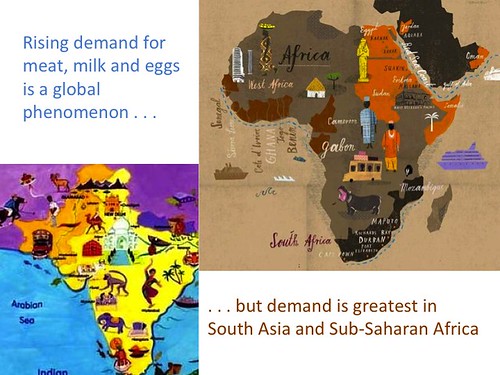
Over the coming decades, global demand for animal-source foods is predicted to rise a great deal faster than that for crops, driven primarily by and in developing countries, where human populations are increasing and rising incomes and urbanization are driving changes in diets traditionally based on grains and tubers and now switching to include more milk, meat and eggs.

ILRI keynote at AACAA: Slide 3

Africa is outstanding in this regard, with recent estimates predicting milk demand to triple and consumption of monogastric products (pork, chicken meat and eggs) to increase by up to six-fold by 2050. Such unprecedented growth presents both opportunities and challenges for…

View original post 541 more words

Posted in Uncategorized | Leave a comment

First global map of the rising use of antimicrobial drugs in farm animals published in PNAS

Susan MacMillan's avatarILRI news

Uganda chickens

A woman in Uganda lets her chickens out to forage during the day (photo on Flickr by Jennifer Wilmore/Bread for the World).

This news article was developed by Tim Robinson with the help of Delia Grace, both of ILRI.

As reported last week in a scientific paper published in the Proceedings of the National Academy of Science (PNAS), Global trends in antimicrobial use in food animals, worldwide antimicrobial consumption is expected to rise by a staggering 67% between 2010 and 2030.

Five countries—Brazil, Russia, India, China and South Africa (the so-called ‘BRICS’)—will experience a growth of 99% in antibiotic consumption.

Use of such drugs has grown as livestock systems intensify around the world to meet a growing world demand for meat, milk and eggs, particularly in developing countries.

Widespread use of these drugs to prevent disease in farm animals or to promote their growth is a growing concern. Inappropriate…

View original post 1,048 more words

Posted in Uncategorized | Leave a comment

Ways forward for food safety in countries bearing the brunt of the world’s food-borne diseases

Susan MacMillan's avatarILRI news

RoadsideMeatInNairobi_Cropped

Roadside meat for sale in Nairobi, Kenya (picture on Flickr by Andrew Chipley).

This article is written by Delia Grace

A new paper on food safety in low- and middle-income countries was published today (27 Aug 2015). The paper is based on a longer learning resource commissioned by the UK Department for International Development (DFID), which will appear shortly. Both publications reflect what the International Livestock Research Institute (ILRI) and its partners have learned over the last ten years since adopting a framework of risk analysis for assessing, managing and communicating about food safety in developing countries.

Some conclusions
The evidence indicates that low- and middle-income countries bear the brunt of food-borne disease; that developing-country consumers are concerned about food-borne diseases; that most of the known burden of food-borne disease comes from biological hazards; and that most food-borne disease results from eating contaminated perishable foods sold…

View original post 554 more words

Posted in Uncategorized | Leave a comment

Premise of progress – Building human and social capital for Africa’s agricultural success

canwefeedtheworld's avatarOne Billion Hungry: Can We Feed the World?

By Katrin Glatzel

It is not uncommon that young people don’t want to follow in their parents’ footsteps, especially if it means a low income, food insecurity and back-breaking work.

For the agriculture sector in Africa, this is a big challenge. With over half of the population working in agriculture, the average African farmer is now between 50 and 60 years old. At the same time, the need for greater agricultural production is acute. In order to feed the projected population of 2050, global food production will need to increase by around 60%.

Africa is uniquely positioned to meet this challenge. An estimated 60% of the world’s undeveloped arable land is in Africa, there is great potential for increased irrigation and crop productivity, and a rapidly increasing population of young people are ready to transform their continent.

1However, to the majority of young people, the idea of working in agriculture…

View original post 629 more words

Posted in Uncategorized | Leave a comment

Gender perceptions of resource ownership and their implications for food security among rural livestock owners

Dorine Odongo's avatarILRI policies, instititions and livelihoods program

CCAFS East  Africa Hoima, Uganda Site Visit Smallholder farmers in Uganda (photo credit: John Recha/CCAFS).

How do men and women livestock keepers understand or perceive resource ownership? What implications have these perceptions on food security in smallholder settings? These questions formed the basis of a study in three value chain countries in which the CGIAR Research Program on Livestock and Fish is working.

Resource ownership provides a means of empowerment for smallholder households and productive resources are essential to the livelihoods and food security of the world’s rural poor. Further, gender-equal ownership of resources is considered key to increasing agricultural productivity, equity and food security. For example, this brief notes that ownership of assets increases the bargaining power of women and their authority within the household and the community. However, there has not been much research about local understandings of ownership particularly in the Global South and research is also lacking on how concepts of ownership affect food…

View original post 472 more words

Posted in Uncategorized | Leave a comment

Is the empowerment of women livestock keepers the key to improved nutrition? A new study seeks to find out

Dorine Odongo's avatarILRI policies, instititions and livelihoods program

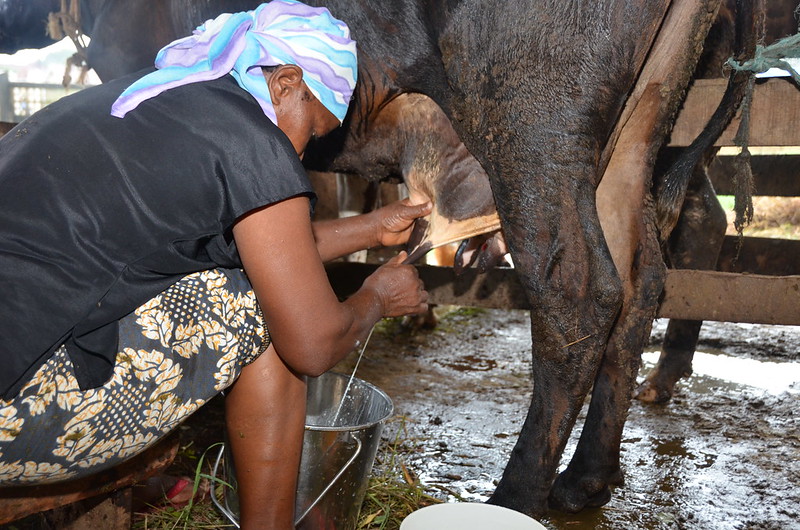
A cow is milked in Tanga, Tanzania. A woman milking a cow in Tanga, Tanzania (photo credit: ILRI/Paul Karaimu)

Written by Alessandra Galie
One of the main goals of gender research in the CGIAR research program on Livestock and Fish is improved nutrition. This is also one of the 4 pillars of the program’s gender strategy and one of the 3 system level outcomes of the CGIAR. Good nutrition in the first 1000 days of a child’s life and for lactating mothers is particularly important for the child’s cerebral and physical development. Good nutrition is therefore considered the basis to improve livelihoods and general well-being. Because higher levels of gender inequality are associated with higher levels of both acute and chronic under nutrition (FAO 2012), gender research in research program focuses on enhancing the empowerment of women livestock keepers and consumers.

Animal source foods (ASF) have been shown to offer enormous potential for nutrition in developing countries…

View original post 256 more words

Posted in Uncategorized | Leave a comment