Sustainable Food Futures (NEW BOOK)

FoodGovernance's avatarFood Governance

bok coverVoltaire once said that “no problem can withstand the assault of sustained thinking”.

In this book, we put that statement to the test. The problems plaguing food systems are well researched and well known. But how can we support transformation towards sustainable and just food systems?

One thing is clear,  the objective of future food systems can no longer be to simply maximise productivity

We are very pleased to announce that our new book, Sustainable Food Futures: Multidisciplinary Solutionshas just been published. The book includes proposals for solutions to move us toward more sustainable food futures.  The solutions, which are based on concrete cases, are organised around 4 themes:

  1. Recognizing place
  2. Enhancing participation
  3. Challenging markets
  4. Designing sustainable food futures

The solutions proposed in this book can be read as an atlas of possibilities.

There are multiple roads we can, and must, travel to bring us towards our…

View original post 410 more words

Posted in Poverty, Hunger, Malnutrition | Leave a comment

New research initiative to boost the health and productivity of farmed animals in Africa

Susan MacMillan's avatarILRI Clippings

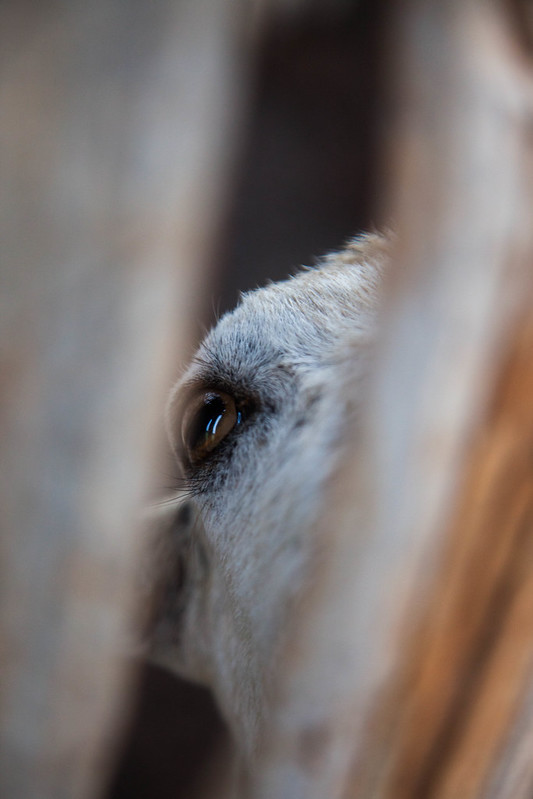
Borana goat

Goat in Borana, Ethiopia (photo credit: ILRI/Zerihun Sewunet).

The University of Edinburgh released this news today.

Vet experts are delivering a £5.5 million initiative to improve the health and productivity of farmed animals in sub-Saharan Africa.

‘The scheme aims to boost the livelihoods of livestock farmers by delivering evidence-based technologies that offer sustainable solutions to the challenges they face.

‘The Supporting Evidence Based Interventions initiative (SEBI) has received funding from the Bill & Melinda Gates Foundation.

‘Three programmes have been established to help address different challenges.

‘The first programme aims to identify evidence-based interventions to cut death rates and reproductive losses in dairy cattle in Ethiopia, Nigeria and Tanzania.

‘Sub-grants will be provided to enable research groups to investigate the causes of these losses. The first of the grants has been awarded to University of Glasgow to build a disease surveillance platform in Tanzania.

‘A second programme…

View original post 253 more words

Posted in Poverty, Hunger, Malnutrition | Leave a comment

Year-end livestock lists: Favourite presentations

Susan MacMillan's avatarILRI news

SomaliGoat

Borana goat, Ethiopia (photo credit: ILRI/Zerihun Sewunet).

Miss some presentations of the International Livestock Research Institute (ILRI) this year? Arranged by topic below are some of our favourites. What were yours? What are we missing? List them in the Comment box below, please! And remember to check ILRI’s Slideshare site for all our presentations and posters: http://www.slideshare.net/ILRI

And see you next year!

¶  LIVESTOCK

Jimmy Smith (ILRI), Nov 2014
Livestock policy paradoxes: Promulgating a crisis? Or providing a solution?
http://www.slideshare.net/ILRI/smith-aaap

Christopher Delgado (World Resources Institute), Oct 2014
The transformative role of livestock in the developing world
http://www.slideshare.net/ILRI/the-transformative-role-of-livestock-in-the-developing-world

Modibo Traoré (Food and Agriculture Organization of the United Nations), 1 Oct 2014
Why invest in livestock-based options for livelihoods, healthy lives and a sustainable environment?
http://www.slideshare.net/ILRI/traore-kenya

Jimmy Smith, Sep 2014
The interplay of knowledge and natural resources: Ensuring the health, wealth and environmental benefits of livestock
http://www.slideshare.net/ILRI/the-interplay-of-knowledge-and-natural-resources-ensuring-the-health-wealth-and-environmental-benefits-of-livestock?

Ann-Waters-Bayer (ETC Foundation), Sep…

View original post 1,371 more words

Posted in Poverty, Hunger, Malnutrition | Leave a comment

On what (and how and when) to measure when measuring impacts of agricultural research for development

Susan MacMillan's avatarILRI news

Photo by FAO/Riccardo Gangale.

The following article is written by Iain Wright, deputy director general for research at ILRI.

On 6–8 Jul 2017, I attended a conference at the World Agroforestry Centre (ICRAF) on Impacts of International Agricultural Research: Rigorous Evidence for Policy organized jointly by the CGIAR Independent Science and Partnership Council (ISPC) Standing Panel on Impact Assessment (SPIA) and the CGIAR Research Program on Policies, Institutions, and Markets (PIM). I welcomed the delegates at this meeting in Nairobi, Kenya, on behalf of ICRAF and the International Livestock Research Institute (ILRI), the two CGIAR centres headquartered in Nairobi. A modified version of my address and personal reflections on impact assessment in CGIAR follows.

Iain Wright, ILRI.

We in CGIAR have committed ourselves to tackling some of the greatest challenges that the human population has ever faced.

How do we feed a…

View original post 2,382 more words

Posted in Poverty, Hunger, Malnutrition | Leave a comment

Happy Earth Overshoot Day – Earlier Again… — Food (Policy) For Thought

Posted in Poverty, Hunger, Malnutrition | Leave a comment

Empowering small-scale producers one taste at a time

GFAiR's avatarThe GFAiR Blog

terra madre6On July 29th for the first time ever, ConviviumVelika Plana organized Terra Madre Morava, a gathering of small-scale food producers given an opportunity to showcase their products in the spirit of the SlowFood philosophy. The host of the event, Superior, a local seed company and GFAR partner, opened its doors to 17 producers from the Braničevo Podunavlje region, and more than 600 visitors from all over the Balkans. The aim was to stimulate interest in their products, while drawing attention to the challenges these producers face in today’s markets, and the potential that cross-sectoral collaboration can have to improve their positioning in those markets.

Starting in the late morning and lasting the whole afternoon, during these several hours the fields of Superior were a melting pot of agricultural and food producers, institutions, academia and consumers, where the image of fruits and vegetables, taste and stories truly evoked good, clean…

View original post 513 more words

Posted in Poverty, Hunger, Malnutrition | Leave a comment

Acting President (Vice President) Osinbajo Inaugurates 1.5 Billion USD Fertilizer Plant in Nigeria

APO's avatarDatabase of Press Releases related to Africa - APO-Source

Acting President, Prof. Yemi Osinbajo today in Port Harcourt inaugurated a giant world-class fertilizer plant, built by Indorama ([www.Indorama.com](http://www.indorama.com/)) Eleme Fertilizer and Chemicals Limited at the cost of $1.5 billion. The acting President used the opportunity to remind all Nigerians that time has come for them to grow whatever they eat and produce whatever they consume. “What… Read more on https://africa-newsroom.com/press/acting-president-vice-president-osinbajo-inaugurates-15-billion-usd-fertilizer-plant-in-nigeria?lang=en

View original post

Posted in Poverty, Hunger, Malnutrition | Leave a comment

Women Advancing Africa placing women at the centre stage of Africa’s Economic

APO's avatarDatabase of Press Releases related to Africa - APO-Source

The inaugural Women Advancing Africa (WAA) Forum is a new Pan-African flagship initiative launched by the Graça Machel Trust to acknowledge and celebrate the central role women play in shaping Africa’s development agenda and by driving social and economic transformation. The Forum will take place from 9-12 August in Dar-es-Salaam, Tanzania at the Hyatt Kilimanjaro. Mrs. Graça Machel says, “Africa… Read more on https://africa-newsroom.com/press/women-advancing-africa-placing-women-at-the-centre-stage-of-africas-economic?lang=en

View original post

Posted in Poverty, Hunger, Malnutrition | Leave a comment

Understanding Sustainable Food System Transitions: Practice, Assessment and Governance

FoodGovernance's avatarFood Governance

SoRo Sustainable Food Transitions

I am very pleased to share that a new special issue of Sociologia Ruralis edited by Damian Maye and me is now online: Understanding Sustainable Food System Transitions: Practice, Assessment and Governance.

The Special Issue provides theoretical insights and advancements into sustainability transitions through empirically grounded and informed investigations of food system practices. The papers confirm, following Hinrichs (2014, p. 143), that ‘numerous opportunities exist to forge more productive links between work on food systems change and the broad and growing sustainability transitions field’.

The Special Issue brings together 8 articles grouped together around two themes:

  1.  Examining relations between AFN practices and transition;
  2. Opening up measures and assessment practices for sustainability transitions.

Taken as a whole, the Special Issue advances discussions and thinking on alternative food practices and sustainability, opening up the debate not only on how to identify and analyse ‘alternative food practices’ in Europe, and beyond…

View original post 209 more words

Posted in Poverty, Hunger, Malnutrition | Leave a comment

Why livestock are essential for Agenda 2030—Jimmy Smith at the High-Level Forum on Sustainable Development

Susan MacMillan's avatarILRI news

Ram-bearer, Cypriot, 6th century BC,
said to be from the temple of Apollo Hylates at Kourion
(photographed at the Metropolitan Museum of Art, New York City).

United Nations High-Level Forum on Sustainable Development
Special Event:
The Role of Livestock in Achieving the SDGs

Friday, 14 July, 2017
Institute of International Education (IIE)
Kaufman Conference Room
08:30–10:00AM

Opening remarks by Jimmy Smith
director general of the International Livestock Research Institute (ILRI)

Why livestock are essential for Agenda 2030

Ending poverty
Because of livestock’s central contributions to both individual livelihoods and national development, we’re not going to end world poverty (SDG1) if we undervalue the major roles livestock play in the economies of developing countries and their peoples.

In low- and middle-income countries, up to three-quarters of a billion of the poorest people rely on small-scale livestock farming and products to make a living.

Such small-scale livestock production contributes…

View original post 825 more words

Posted in Poverty, Hunger, Malnutrition | Leave a comment

Sucking it up: Milk—cheap, energy dense, retro-cool—is becoming Asia’s weapon of choice in its war on hunger

Susan MacMillan's avatarILRI Clippings

milk_eaddjpg

Milk (via Flickr/EADD).

‘[O]nly seven out of 19 developing Asian countries are now on track to reach the UN FAO’s bold goal of “zero hunger”.

‘However, changing tastes for food means Asians are drinking more milk, traditionally absent from many Asian kitchens but which now flies off the shelves from Bangkok to Beijing.

[Milk] production has almost tripled, from about 110 million tons in 1990 to nearly 300 million tons in 2013—accounting for more than 80 percent of the world’s increase in milk supplies during that time.

Nutritious and cheap, the dairy boom has encouraged governments to bring cartons to classrooms. Studies have found Thailand’s National Milk Program, which brings milk to schools, causes students to grow taller and take in more protein and calcium. Similar programs were rolled out from India to China to the Philippines.

‘The main beneficiaries have been small farmers, who produce nearly 80 percent of…

View original post 154 more words

Posted in Poverty, Hunger, Malnutrition | Leave a comment

Grass? How an unlikely weapon can help farmers beat drought in Africa

Peter Ballantyne (ILRI)'s avatarCGIAR Research Program on Livestock and Fish

To resist the droughts that decimate rural livelihoods, researchers and farmers in Tanzania are testing different forage grass and legume species to discover which management and grass combinations can boost the quantity and quality of forages in local conditions.

They are testing different methods of planting like intercropping and contour planting, varying height and frequency of cutting, and applying different types and amounts of manure.

Producers, local governments and the private sector share tips and advice on improving livestock and milk production through “Innovation Platform” groups.

Since 2014, data from field trials monitored by TALIRI and CIAT, has been collected on forage biomass, soil nutrients and rainfall. The aim is to advise farmers which forages suit their conditions and can be integrated into their farm system in ways that don’t compromise their own food security.

Read the full story from CIAT

This research is part of the CGIAR Research…

View original post 53 more words

Posted in Poverty, Hunger, Malnutrition | Leave a comment

On the two central, and under-resourced, assets of the developing world: Women and livestock

Susan MacMillan's avatarILRI Clippings

Left to right: Thomas Cherenet (Ethiopia), Samuel Chief Ankama (Namibia), Emma Naluyima (Uganda), Amadou Diallo (FAO), Bruce Mukanda (AU-IBAR) (photo credit: ILRI/Apollo Habtamu). 

An interesting discussion took place at a news conference that followed the policy session on Thursday morning (11 May 2017), the fourth of this five-day Multi-Stakeholder Partnership Meeting of the Global Agenda for Sustainable Livestock.

A member of the audience asked the following question of the distinguished panel members, who included ministerial rank leaders of livestock development agenda in several African countries.

Question

In today’s industrialized countries, where many people are fighting obesity and the illnesses that attend it, and where most farm animals are no longer raised on farms but in ‘factories’, it may be understood why some people have an anti-livestock bias, and why cutting back on meat consumption is being advertised as good for human and environmental health as well as for animal welfare.

View original post 1,183 more words

Posted in Poverty, Hunger, Malnutrition | Leave a comment

Towards a toolkit to analyse livestock and fish value chains

Dorine Odongo's avatarCGIAR Research Program on Livestock and Fish

The CGIAR Research Program on Livestock and Fish has been operational since January 2012. It seeks to improve the diets of poor people for healthy productive lives, and sustainably increase the productivity of small and medium-scale livestock and fish producers for food secure futures.

The program has implemented several approaches across different sites in nine countries, including in-depth analysis of livestock and fish value chains. Among the approaches is use of tools designed and developed to systematically collect information from different actors at different levels in the value chains. Over the past five years, several tools for value chain assessment have been produced, covering different aspects of assessment including gender issues.

ILRI Value Chains Workshop: Note card

Livestock and Fish value chains are unique and have distinct features. For instance, the products, such as milk and meat, are of higher value and in some cases are bulky and highly perishable. Also, delivery of some inputs and services…

View original post 344 more words

Posted in Poverty, Hunger, Malnutrition | Leave a comment

Balancing research and development: Livestock and fish research and value chain insights from Tropentag workshop

Peter Ballantyne (ILRI)'s avatarCGIAR Research Program on Livestock and Fish

Participants in the synthesis ‘fishbowl’

On 19 September 2016, the CGIAR Livestock and Fish Research Program hosted a side workshop at the 2016 Tropentag conference. It brought together partners from across the Program to examine the approach it uses to accelerate agricultural research for development. Some 60 people participated.

For the past five years, Program partners have worked in a solution-driven approach to agricultural research for development that combines technical upstream interventions in animal health, animal feeding and animal genetics with interventions along value chains in 8 countries. Special attention has been given to inclusive value chain development, by and for the poor, targeting women and people facing environmental and public health issues.

This post reports on some of the discussions that took place. The session began with an introduction to the Program by Tom Randolph. Then, participants formed groups and interrogated scientists from across the Program (see topics and…

View original post 1,911 more words

Posted in Poverty, Hunger, Malnutrition | Leave a comment

Tightened rules for use of antibiotics by livestock producers go into effect in the United States

Susan MacMillan's avatarILRI Clippings

chickenpoultryhouse_osu

Mass poultry production in the USA (photo credit: Oklahoma State University).

‘A new rule that aims to safeguard essential antibiotics for humans by limiting their use in food animals is now fully in effect.

‘Under the Food and Drug Administration policy, antibiotics that have been designated “medically important”—in other words, they’re needed to treat people—cannot legally be given to healthy animals to speed their growth. The policy, three years in the making, required producers of agricultural antibiotics to change labeling on the drugs to make clear they should not be used for so-called growth promotion. All manufacturers agreed to abide by the new rule.

‘The policy also requires that from now on, food animals can only be given…

View original post 332 more words

Posted in Poverty, Hunger, Malnutrition | Leave a comment

USAID to host two-day online discussion on food safety research in developing countries

Tezira Lore's avatarAgHealth

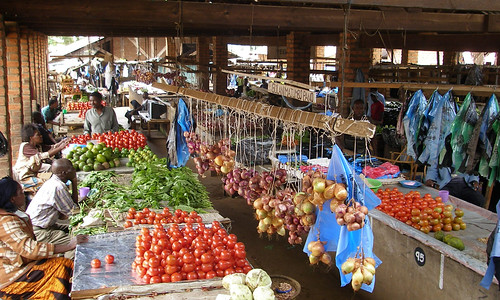
Market in Malawi Fresh produce on sale in a local market in Malawi (photo credit: IFPRI).

The United States Agency for International Development (USAID) will hold a two-day online AgExchange on food safety beginning 20 June 2017 at 1000 hours EDT (GMT – 4). The online exchange will provide a forum to discuss key constraints and research priorities in food safety and overarching food safety needs, concerns and gaps in Feed the Future countries.

By taking part in the discussion, you will assist USAID to (1) identify gaps and weaknesses in global research for food safety and (2) evaluate the existing research portfolio to assess the need for research in food safety to ensure successful implementation of the United States Government Global Food Security Strategy.

The discussion will be facilitated by USAID staff. For more information, visit the event web page or email the Agrilinks Team at agrilinks@agrilinks.org.

View original post

Posted in Poverty, Hunger, Malnutrition | Leave a comment

Delightful news from FAO and IRIN : urban gardens and food security (Willem Van Cotthem / IRIN / FAO)

Willem Van Cotthem's avatarDESERTIFICATION

For years we have been promoting family gardens (kitchen gardens) and school gardens, not to mention hospital gardens, in the debate on alleviation of hunger and poverty.  We have always insisted on the fact that development aid should concentrate on initiatives to boost food security through family gardens instead of food aid on which the recipients remain dependent. Since the nineties we have shown that community gardens in rural villages, family gardens in refugee camps and school gardens, where people and children grow their own produce, are better off than those who received food from aid organizationsat regular intervals.

Locally produced fresh vegetables and fruits play a tremendously important role in the daily diet of all those hungry people in the drylands.  Take for instance the possibility of having a daily portion of vitamins within hand reach.  Imagine the effect of fresh food on malnutrition of…

View original post 725 more words

Posted in Poverty, Hunger, Malnutrition | Leave a comment

Family farms are essential to food security, balanced diets, and biodiversity by preserving traditional food products

Willem Van Cotthem's avatarDESERTIFICATION

Photo credit: FAO

Farmers going to work in the fields of Jalal-Abad Oblast, Kyrgyzstan, in the early morning. Some 80 percent of the world’s food is produced by family farms.

FAO launches digital platform on family farming

New initiative aims to inform policy makers, continue global conversation on food security

Recognizing the contributions of family farmers to food security and poverty eradication worldwide, FAO today launched a new digital platform that aims to become a “one-stop shop” for information, data and legislation on the sector that produces some 80 percent of the world’s food.

“Family farmers feed our communities and take care of our earth — they are crucial allies in the fight against hunger and rural poverty,” FAO Director-General José Graziano da Silva said on Tuesday.

By gathering digitized information on family farming from all over the world – including public programs, national and regional legislation, up-to-date…

View original post 355 more words

Posted in Poverty, Hunger, Malnutrition | Leave a comment

80 percent of the world’s food is produced by smallholder family farmers.

Willem Van Cotthem's avatarDESERTIFICATION

Photo credit: Food Tank

The Family Farming Knowledge Platform supports family farmers around the world.
shutterstock

Family Farmers Feed the World

According to the U.N. Food and Agriculture Organization (FAO), 80 percent of the world’s food is produced by family farmers. And approximately 72 percent of farms worldwide are less than one hectare, while just 6 percent are larger than five hectares, according to the FAO.

To examine the challenges faced by these small family farmers and to celebrate FAO launched the new Family Farming Knowledge Platform (FFKP) to support better policies for family farmers and provide data for governments and organizations.

“There was a need to share knowledge on family farming—on the different kinds of policies that governments have implemented and the numerous activities of family farmers and their organizations in the field,” says Francesco Pierri, Chief of the Advocacy Unit in the FAO Office for Partnerships, Advocacy and…

View original post 50 more words

Posted in Poverty, Hunger, Malnutrition | Leave a comment

“Global Food Security Governance” at Kyoto University

FoodGovernance's avatarRural Sociology Wageningen University

By Joëlla van de Griend

lecture In-class debate on trade and food security

Kyoto University’s Graduate School of Economics, as part of the Asian Platform for Global Sustainability & Transcultural Studies (AGST), aims to contribute to sustainable development in Asia and throughout the world. Wageningen University’s Rural Sociology Group is a key partner in this platform. As a part of this partnership, Dr. Jessica Duncan has come to Kyoto University to teach a course on Global Food Security Governance.

Taking a sociological approach, the course covers a variety of angles to think about global food security governance. The course is attended by graduate students, PhD candidates and faculty members, which has contributed to rich discussions. Furthermore, amongst the participants there is a large variety of backgrounds and fields of expertise such as law, economics, development studies, business management, political science, and agricultural science with attendants coming from Asia, Europe and Africa.

View original post 512 more words

Posted in Poverty, Hunger, Malnutrition | Leave a comment

Youth Agripreneurs Project: Sowing the seed for a brighter future

GFAiR's avatarThe GFAiR Blog

Dairy 5

Hectic yet reflective! The pilot GFAR-YPARD Young Agripreneur Project is coming to an end and in these posts, the six young agri-preneurs are pondering on their professional and personal journeys over the past twelve months. In April 2016, they all gathered in Johannesburg, where they thrilled the audiences at GCARD3 with their enthusiasm, drive and energy in describing their YAP projects. Now they are looking back at what the past year has brought them, what challenges they had to deal with, and what the the mentoring, coaching and training that came along with the seed funding through YAP, has meant for them as businesspeople and as individuals. They are also wondering what the future holds for them. It is inspiring to read how motivated they are, and how a small project has made a major difference in the lives not only of these selected agri-preneurs but in the communities where they…

View original post 1,168 more words

Posted in Poverty, Hunger, Malnutrition | Leave a comment

Africa must take the lead in addressing global health challenges

Source: Africa must take the lead in addressing global health challenges

Posted in Poverty, Hunger, Malnutrition | Leave a comment

How to avoid youth getting involved in agriculture?

GFAiR's avatarThe GFAiR Blog

DSC_0875‘My name is Sandhya, I am studying Sustainable Management of Natural Resources in Suriname. I am currently doing an one year exchange program at Ughent to study agriculture courses of my choice. These fundamental courses are not available in Suriname.’

As I introduced myself at the social media bootcamp preceding the #ICYA2017 conference, I felt how my fellow students and bootcampers looked at me with question marks in their eyes: ‘What do you mean these courses were not available in your country? Is agriculture and food security not a priority in Suriname?’

And off I went on my usual tangent… Explaining, again, how on earth it was possible that in a country putting foodsecurity at the top of its agenda, only a limited choice of agricultural studies were available. And only at a graduate level.

It is an embarassing fact for many reasons:

Agriculture is one of the basic factors…

View original post 353 more words

Posted in Poverty, Hunger, Malnutrition | Leave a comment

Youth agribusiness in Africa: not just about knowledge, but action

GFAiR's avatarThe GFAiR Blog

Photo3A week ago, I was fortunate to speak at the latest Brussels Rural Development Briefings (Briefing number 49)* that took place at the ACP secretariat in Brussels, Belgium. The briefing focused on “Youth in Agribusiness: shaping the future of agriculture”. One of the key takeaways I took from the conference was that we cannot force young people to go into agriculture. We should rather provide a supporting environment for the youth tothrive in agriculture and agribusiness. Then the youth can be encouraged to make use of the numerous promising opportunities that the sector can provide especially employment in the agricultural value chain.

Presently, there are many challenges that the youth in agriculture encounter. The Food and Agriculture Organization of the United Nations (FAO) has clearly identified six principal challenges affecting youth in agriculture. These include:

  • Insufficient access to knowledge,
  • information and education,
  • limited access to land,
  • inadequate access to…

View original post 1,264 more words

Posted in Poverty, Hunger, Malnutrition | Leave a comment

Mentoring rural youth to make agriculture attractive

GFAiR's avatarThe GFAiR Blog

mentoring_1

The more I read on youth mentoring, especially YPARD’s mentoring programmes, the more I got inspired and tempted to mentor young people. My visit to Nikki Chaudhary’s dairy farm in 2016, to witness first-hand her start-up in action, as a finalist of GFAR’s Youth Agripreneurs Project (YAP), was a pivotal moment in understanding the value of these mentoring programs.

I remained restless, until I could launch myself a Rural Youth Mentoring-2017 programme at my own institute – ICAR- Indian Veterinary Research Institute – on 28th  February, 2017.

Under Mentoring Rural Youth-2017 programme, one hundred rural youth are being mentored by the Agricultural scientists of ICAR- Indian Veterinary Research Institute, Izatnagar, a Partner in GFAR; specialists of Krishi Vigyan Kendra; and by the agripreneurs trained and promoted by the ICAR-Indian Veterinary Research Institute.

The youth, aged 17 to 25 years, are currently registered with the institute…

View original post 624 more words

Posted in Poverty, Hunger, Malnutrition | Leave a comment

Sparking the Creativity of Youth at #ICYA

GFAiR's avatarThe GFAiR Blog

^D4E4178781DC98572CC677AAF571A041953033BB0604917B46^pimgpsh_fullsize_distr

The International Conference for Youth in Agriculture (ICYA) held from 27 to 30 April in Leuven Belgium was created in order to give space to young, bright and internationally active people to interact, discuss, learn and project their ideas into practical solutions that could inspire students all over the world to take action and adopt those ideas and projects in their local communities. We wanted everyone to see and experience the amazing potential of young people’s energy and passion once you give them the spark of creation.

The outcome of this conference is part and parcel of the mission of IAAS: to bring together people from different countries, with different mentalities and mindsets, different cultural/social backgrounds so as to allow for expression of multiple and unique perspectives on the same issue. When a specific problem is put “on the table” an incredibly productive and creative debate can quickly get “on…

View original post 986 more words

Posted in Poverty, Hunger, Malnutrition | Leave a comment

The multiple benefits of livestock are in focus this week as experts meet in Ethiopia

Paul Karaimu's avatarILRI news

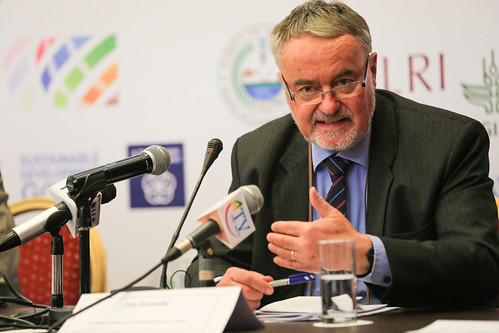
Fritz Schneider, GASL chair

Fritz Schneider, chair of the Global Agenda for Sustainable Livestock (photo credit: ILRI/Apollo Habtamu).

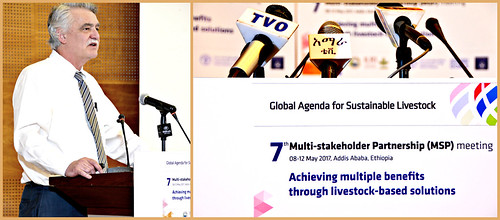
More than 250 livestock experts from over 50 countries are exploring ways of ensuring that the long-term benefits of livestock contribute to sustainable development. They’re participating in the 7th Multi-Stakeholder Partnership meeting of the Global Agenda for Sustainable Livestock (GASL), in Ethiopia, this week.

The 8–12 May 2017 meeting was officially opened by His Excellency Professor Fekadu Beyene, Ethiopia’s minister for livestock and fisheries, on Monday in the capital, Addis Ababa.

‘This meeting will enable us to share the multiple benefits we’re deriving from sustainable livestock initiatives, including those supported by the Ethiopia Livestock Master Plan (2015) and Growth and Transformation Plan Two (GTP 2)’, said Beyene.

The minister highlighted the Ethiopian government’s ambitious steps to efficiently utilize its vast livestock resources and make the sector a driver of the transformation of the country’s…

View original post 575 more words

Posted in Poverty, Hunger, Malnutrition | Leave a comment

CGIAR Portfolio 2017-2022 – Transforming global agriculture and food systems

GFAiR's avatarThe GFAiR Blog

24628970505_68023349e0_o-copy-22

CGIAR has launched its new research portfolio, comprised of 11 Research Programs and 3 Platforms, that represents the second generation of CGIAR’s multidimensional work streams.

The CGIAR Portfolio 2017-2022 aims to reducing rural poverty, improve food and nutrition security and improve natural resources and ecosystem services. It maintains momentum in selected areas while placing renewed emphasis on key issues such as: integrated agri-food systems based approaches, nutrition and health, climate change, soils and degraded land, global stewardship of genetic resources, and big data and ICT.

The overall strategic direction for the portfolio is based on the CGIAR Strategy and Results Framework and the UN’s Sustainable Development Goals (SDGs), and has been developed and informed by the former Fund Council, CGIAR System Council, Science Council, Research Centers and other stakeholders.

CGIAR’s research will focus on delivering synergy across programs, integration for achieving development impact at scale and providing scientific…

View original post 737 more words

Posted in Poverty, Hunger, Malnutrition | Leave a comment

The disruption starts now: new big data program promises to shake up agriculture

GFAiR's avatarThe GFAiR Blog

Big-Data-Platform-drone_lo2-1080x675

A new multimillion-dollar initiative plans to disrupt food production across the developing world, with the aim of making it more productive, efficient and resilient – all through the power of information.

The CGIAR Platform for Big Data in Agriculture is jointly led by the International Center for Tropical Agriculture (CIAT) and the International Food Policy Research Institute (IFPRI), with tech giants IBM and Amazon among a list of high-level partners.

It brings together thousands of experts, from crop scientists to computer programmers to collect, process and analyze vast amounts of data on crops, weather, soils and more, with the aim of producing some of the most precise and reliable recommendations for farmers, governments and policymakers in developing countries.

The USD$30 million initiative will be officially launched today at the Information and Communications Technology for Development (ICT4D) conference in Hyderabad, India.

Big-Data-Platform-mob_loBd-Platform-terrai

“It’s time for smallholder farmers to stop looking at the…

View original post 669 more words

Posted in Poverty, Hunger, Malnutrition | Leave a comment

Why is sustainability not yet second nature?

GFAiR's avatarThe GFAiR Blog

This week marks the launch of the new CGIAR research portfolio. Izabella Koziell, Program Director, lays out the ambitions of the CGIAR Research Program on Water, Land and Ecosystems (WLE).

fortifier-plant-launch-03 The first commercial co-composting plant in West Africa was launched on May 11, 2017. It produces an effective, safe fertilizer made from fecal sludge and organic waste. Photo courtesy: IWMI.

We face a familiar challenge

Global food demand is growing and is projected to, by 2050, increase by at least 60% above 2006 levels. In response to this demand, new technologies and increased inputs have contributed to farm system intensification, leading to significant yield gains and advances in food security. However, growing evidence shows that intensification is at the expense of multiple other social and environmental concerns.

Today, agriculture is a major contributor to the ongoing degradation of the environment. More than 70% of global freshwater is used for food…

View original post 1,025 more words

Posted in Poverty, Hunger, Malnutrition | Leave a comment

People, the planet, and sustainable livestock: Livestock live talk at ILRI on18 January 2013

Angeline Nekesa's avatarILRI Clippings

On Friday, 18 January 2013, Jeroen Dijkman, an internationally recognized authority on agricultural innovation systems and rural development practice and planning, will give a ‘livestock live talk’ seminar on ‘People, the planet, and sustainable livestock’, at the International Livestock Research Institute (ILRI), in Nairobi, Kenya.

View the event announcement:

He was previously the director of an Enabling Innovation Theme of the International Livestock Research Institute (ILRI), and the senior officer of the Food and Agriculture Organization of the United Nations (FAO) Pro-Poor Livestock Policy Initiative, which was credited with influencing global thinking on policy and institutional change.

Currently, Dijkman works for the Livestock Information, Sector Analysis and Policy Branch of the FAO, from where he coordinates the Learning, Innovation and Knowledge (LINK) program, which explores and manages agricultural innovation processes, programs and policies in developing countries (www.innovationstudies.org). He also coordinates the Global Agenda of Action for Sustainable Livestock Sector Development, a…

View original post 203 more words

Posted in Poverty, Hunger, Malnutrition | Leave a comment

Cooperating with the future: Towards multiplying the multiple benefits of sustainable livestock

Susan MacMillan's avatarILRI Clippings

Henning Steinfeld, of FAO, gives the keynote at GASL

Henning Steinfeld, of FAO, gave the keynote presentation at the 7th Multi-stakeholder Partnership Meeting of the Global Agenda for Sustainable Livestock, in Addis Ababa, Ethiopia, 8 May 2017, at the Hilton Hotel (photo credit: ILRI/Susan MacMillan).

Yesterday, 8 May 2017, Henning Steinfeld delivered a keynote presentation—Multiple Benefits from Sustainable Livestock—to some 300 participants on the first of a five-day 7th Multi-Stakeholder Partnership Meeting of the Global Agenda for Sustainable Livestock.

Steinfeld is an agricultural economist who did his doctoral work at the Technical University of Berlin (now Humboldt University) on the subject of livestock development in mixed farming systems. He started his career as an agricultural extension worker in northern Ghana before going on to conduct farming systems research here in Ethiopia as well as in Zimbabwe. He joined the Food and Agriculture Organization of the United Nations (FAO) as a statistician in 1990, from where he quickly…

View original post 1,822 more words

Posted in Poverty, Hunger, Malnutrition | Leave a comment

Concrete solutions underline centrality of livestock to sustainable development

James Stapleton's avatarILRI Clippings

7th Multi-stakeholder Partnership meeting of the Global Agenda for Sustainable Livestock 7th Multi-stakeholder Partnership meeting of the Global Agenda for Sustainable Livestock

Hundreds of global livestock stakeholders gather to strengthen the role of livestock in supporting livelihoods, producing safe food and protecting the environment

Today, the 7th multi-stakeholder partnership meeting of the Global Agenda for Sustainable Livestock brings together more than 250 livestock specialists from over 50 countries to demonstrate the positive contribution of livestock to the lives and wellbeing of hundreds of millions of people on the planet, and foster the sustainable development of this rapidly-growing sector.

Driven by population and economic growth, particularly in low–middle income economies, the demand for livestock products is expected to increase by about 70% in the coming 30 years. Whilst the livestock sector contributes to society in so many ways–including to food and nutrition security—it can also pose challenges to the environment and human health. This astronomical demand presents opportunities for the livestock sector…

View original post 925 more words

Posted in Poverty, Hunger, Malnutrition | Leave a comment

Give women a chance to slash global hunger with small-scale gardening (Willem Van Cotthem)

Willem Van Cotthem's avatarDESERTIFICATION

Have you read the former posting on this blog  ?

SMALLHOLDERS, RURAL PRODUCERS KEY TO SLASHING GLOBAL HUNGER AND POVERTY – BAN (UNNews)

Please pay attention to the following parts of Mr. BAN KI-MOON’s statement :

(1) Smallholders and rural producers have a vital role to play in overcoming global hunger and poverty, and new and varied partnerships are needed, with particular emphasis on the interests of women.

(2) The growing international recognition of the role of agriculture and rural development in poverty reduction is helping to build the Global Partnership for Agriculture, Food Security and Nutrition.

(3) Despite the hardships of the global recession, last year saw an upturn in investment in agriculture, along with promises from world leaders of large additional increases over the next three years.

(4) We need to continue creating diverse and innovative partnerships that can help people and communities achieve greater productivity, nutritional health…

View original post 269 more words

Posted in Poverty, Hunger, Malnutrition | Leave a comment

SMALLHOLDERS, RURAL PRODUCERS KEY TO SLASHING GLOBAL HUNGER AND POVERTY (UNNews)

Willem Van Cotthem's avatarDESERTIFICATION

Read at : UNNews

SMALLHOLDERS, RURAL PRODUCERS KEY TO SLASHING GLOBAL HUNGER AND POVERTY – BAN

New York, Feb 17 2010  1:05PM

Smallholders and rural producers have a vital role to play in overcoming global hunger and poverty, and new and varied partnerships are needed, with particular emphasis on the interests of women, Secretary-General Ban Ki-moon said today.

“With more than 1 billion people now suffering from hunger, the highest number in human history, there is simply no time to lose,” he told the International Fund for Agricultural Development (<“http://www.ifad.org/events/gc/33/panels/index.htm”>IFAD), a specialized United Nations agency dedicated to eradicating poverty in the rural areas of developing countries where 75 per cent of the world’s poorest – or some 1.05 billion people – live.

“The growing international recognition of the role of agriculture and rural development in poverty reduction is helping to build the Global Partnership for Agriculture, Food Security and Nutrition,”…

View original post 226 more words

Posted in Poverty, Hunger, Malnutrition | Leave a comment

FOOD SECURITY BY SACK GARDENING IN URBAN AND RURAL AREAS, BUT ALSO IN REFUGEE CAMPS (Willem Van Cotthem)

Willem Van Cotthem's avatarDESERTIFICATION


INTRODUCING SACKS GARDENING TO COMBAT HUNGER AND POVERTY

Smallholders and rural producers have a vital role to play in overcoming global hunger and poverty, and new and varied partnerships are needed, with particular emphasis on the interests of women, Secretary-General Ban Ki-moon said on February 17th, 2010.  He also confirmed that the growing international recognition of the role of agriculture and rural development in poverty reduction is helping to build the Global Partnership for Agriculture, Food Security and Nutrition.

Despite the hardships of the global recession, last year saw an upturn in investment in agriculture, along with promises from world leaders of large additional increases over the next three years, he said, thereby underscoring that “we need to continue creating diverse and innovative partnerships that can help people and communities achieve greater productivity, nutritional health and self-reliance. In this respect we must give pre-eminence to the interests…

View original post 596 more words

Posted in Poverty, Hunger, Malnutrition | Leave a comment

Small-scale gardening to combat desertification (Willem Van Cotthem)

Willem Van Cotthem's avatarDESERTIFICATION

Small-scale gardening to combat desertification and alleviate hunger and poverty

For years we have been promoting family gardens (kitchen gardens) and school gardens in the debate on combating desertification, alleviation of hunger and poverty.  We have always insisted on the fact that development aid should concentrate on initiatives to boost food security through small-scale family gardens instead of international food aid on which the most of the recipients remain totally dependent. Since the early nineties it was shown that developing countries with community gardens in rural villages, family gardens and school gardens, where people and children are able to grow their own produce, are better off than those who received food from aid organizations at regular intervals.

Locally produced fresh vegetables and fruits play an important role in the daily diet of all those hungry people in the drylands.  Take for instance the possibility of having a daily portion of…

View original post 798 more words

Posted in Poverty, Hunger, Malnutrition | Leave a comment

Urban farming against hunger (FAO)

Willem Van Cotthem's avatarDESERTIFICATION

Read at : FAO Newsroom

http://www.fao.org/newsroom/en/news/2007/1000484/index.html

Safe, fresh food for city dwellers

1 February 2007, Rome – The United Nations Food and Agriculture Organization has opened a new front in its battle against hunger and malnutrition – in the world’s cities where most of global population growth is set to take place over the next decades. “Urban agriculture” may seem a contradiction, but that is what FAO is supporting as one element in urban food supply systems in response to the surging size of the cities of the developing world – and to their fast-advancing slums – according to Alison Hodder, senior horticulturist with the Crop and Grassland Service. This year will be the first time in history that the world’s urban population – more than three billion people – exceeds the number of those living in rural areas. Currently, one third of city dwellers, one billion people, live in…

View original post 176 more words

Posted in Poverty, Hunger, Malnutrition | Leave a comment

Urban agriculture and food insecurity, income generation, waste disposal, gender inequality, and urban insecurity (Google / Intern. Businessx Times)

Willem Van Cotthem's avatarDESERTIFICATION

Read at : Google Alert – vertical gardening

http://ca.ibtimes.com/articles/188834/20110728/farming-the-cities-feeding-an-urban-future.htm

Farming the cities, feeding an urban future

As people move from rural to urban settings in search of economic opportunities, urban agriculture is becoming an important provider of both food and employment, according to researchers with the Worldwatch Institute. “Urban agriculture is providing food, jobs, and hope in Nairobi, Kampala, Dakar, and other cities across sub-Saharan Africa,” said Danielle Nierenberg, co-director of the Institute’s Nourishing the Planet project. “In some cases, urban farmers are providing important inputs, such as seed, to rural farmers, dispelling the myth that urban agriculture helps feed the poor and hungry only in cities.”

The United Nations projects that up to 65 percent of the world’s population will live in cities by 2050, up from around 50 percent today. The rate of urban migration is particularly high in sub-Saharan Africa and South Asia, where inadequate urban…

View original post 176 more words

Posted in Poverty, Hunger, Malnutrition | Leave a comment

Food Insecurity and Urban Growth in Africa

Willem Van Cotthem's avatarDESERTIFICATION

Photo credit: Foodtank

Food Insecurity a Pressing Issue Amidst Urban Growth in Africa

According to the United Nations Human Settlements Programme (UN-Habitat), more people are relocating to African cities from rural areas than ever before. UN-Habitat reports that “the global share of African urban dwellers is projected to rise from 11.3 percent in 2010 to 20.2 percent by 2050.” A new study by Dr. Takemore Chagomaka entitled “Food and Nutrition Insecurity Mapping (FNIRM) in Urban and Periurban Areas in West African Cities” seeks to “understand and map the dynamics of household food and nutrition insecurity in urban, periurban and rural settings.” Chagomaka, lead author of the study, conducted the research in two growing sub-Saharan African cities.

While the study draws some broad conclusions across the two localities, such as finding that households that grow crops and keep livestock tend to be more food secure than those that do not, the…

View original post 151 more words

Posted in Poverty, Hunger, Malnutrition | Leave a comment

Next Brussels Briefing 49: “Youth in agribusiness: shaping the future of agriculture”

ctabrussels's avatarBrussels Development Briefings

The next Brussels Development Briefing no. 49 on “Youth in agribusiness: shaping the future of agriculture” will take place on 18th of May 2017 from 09:00 to 13:00, at the ACP Secretariat in Brussels, Belgium. This Briefing will be co-organised by CTA, the ACP Secretariat, European Commission (DG DEVCO), Concord, PAFO and AgriCord. Click here to register for this Briefing.

**Webstream: Click here to watch the event live (available soon)**
**View the coverage on Twitter: @BruBriefings **

Almost 88% of the world’s 1.2 billion youth live in developing countries. Globally, young people account for approximately 24% of the working poor and this dynamic is particularly pronounced in Africa, where over 70% of youth subsist on US$2 per day or less. Although the world’s youth population is expected to grow, employment and entrepreneurial opportunities for young women and men remain limited – particularly for those living in economically stagnant…

View original post 545 more words

Posted in Poverty, Hunger, Malnutrition | Leave a comment

Easy Understandable But Important Features of Camel Milk

Dr Raziq Kakar's avatarNatural Health with the Camel Milk

According to a promo of Chinese Camel Milk Company of Xinjiang, the camels’ milk features are provided as following. The contents in brackets are provided by author for further details.20160518_083742[1]

  • With high nutritional value, it is an optimal supplement for nourishment of the newborn when breast milk is insufficient
  • Contains 18 kinds of amino acids which are beneficial for human body
  • Lactose contained in camel milk does not incur allergen (It has also been shown to reduce lactose intolerance, combat hepatitis and decrease kidney and liver damage due to alcohol)
  • High contents of Vitamin C (it is health vitamin, keeping you safe from infections)
  • Iron content equivalent to ten times of that of cow’s milk
  • The contents  of natural Insulin contained in each liter of milk is 52 units, which is more than 3,000 times higher than that of cow’s milk of the same amount (it’s effective…

View original post 262 more words

Posted in Poverty, Hunger, Malnutrition | Leave a comment

New Scientist reports on Nairobi study mapping out role of urbanization in zoonotic pathogen transmission

Paul Karaimu's avatarILRI Clippings

Global Agenda Visit to Ol Kalou: Dairy cow

A cow in Kenya. An on-going study in Nairobi, Kenya is investigating how zoonotic pathogens are introduced to urban populations through livestock commodity value-chains (photo credit: ILRI/Paul Karaimu).

A study by 12 Kenyan and UK institutions, including the University of Liverpool, the International Livestock Research Institute (ILRI) and the University of Nairobi, is investigating the role of urbanization in the origin and spread of zoonotic pathogens (those that spread between humans and animals) in Nairobi, Kenya.

According to an article published online and in print in the New Scientist in August 2014, the Nairobi study is investigating the effects of ‘close interactions between people and animals’ in urban settings on the spread of pathogens such as Escherichia coli, Campylobacter and Salmonella, which can infect both humans and animals.

The ‘Epidemiology, ecology and social-economics of disease emergence in Nairobi’ project is expected to reveal how pathogens are introduced into urban populations…

View original post 399 more words

Posted in Poverty, Hunger, Malnutrition | Leave a comment

Animals, not people, should serve as sentinels of infectious diseases of both–Delia Grace

Susan MacMillan's avatarILRI Clippings

Girl and chickens in household doorway in Nigeria

A girl shares the entrance to her house with a family of chickens in Oyo State, Nigeria (photo credit: ILRI/Mann).

Researchers at the International Livestock Research Institute (ILRI) argue in an opinion piece published yesterday on the Guardian‘s Poverty Matters Blog (11 February 2011) that the best way to reduce the threat of infectious diseases sweeping the world is to watch for their rise in animal populations. A remarkable 61% of all human pathogens, and 75% of new human pathogens, such as those causing bird flu and HIV/AIDS, are ‘zoonotic,’ that is, transmissible between people and animals.

‘Some of the most lethal bugs affecting humans originate in our domesticated animals,’ says Delia Grace, a veterinary and food safety scientist at ILRI. But, she warns, ‘there’s a dangerous disconnect between the agricultural and health sectors of most countries, with the former focused on increasing the production and profitability of crop…

View original post 279 more words

Posted in Poverty, Hunger, Malnutrition | Leave a comment

Draconian bans on urban livestock in developing countries ‘not the answer’–Guardian on ILRI report

Susan MacMillan's avatarILRI Clippings

Urban zoonoses and food safety: Nairobi

Customers at a milk bar in Ndumbuini in Kabete, Nairobi  (photo credit: ILRI/Paul Karaimu).

Mark Tran in the Guardian‘s Poverty Matters Blog warns us this week not to keep chickens under our beds. On the other hand, he infers, chicken bought on the street in poor countries may be safer to eat than that from the supermarket. Tran is reporting on a new in-depth study by the International Livestock Research Institute (ILRI) of livestock keeping in urban areas of Nigeria and Kenya. That study found that while living among animals in crowded urban environments does have risks for human health, ‘banning urban livestock or getting rid of markets can often do more harm than good’.

‘As more people leave the countryside for the city in the developing world, many continue to rely on agriculture for a living’, Tran reports.’ At least 800 million people in cities in poor countries…

View original post 527 more words

Posted in Poverty, Hunger, Malnutrition | Leave a comment

How the anti-meat mantra of rich countries hurts development in poor countries

Susan MacMillan's avatarILRI Clippings

ILRI Director General Jimmy Smith (photo credit: ILRI).

Rich countries making bad food choices and consuming too much meat should not force their ideas about environmental and health issues and agricultural sustainability on the world’s many hungry people who eat too little livestock-sourced nutrition says, says Dr Jimmy Smith from the International Livestock Research Institute in Africa.

‘The developing world has much to learn from rich western economies, but eating less meat is not one of those lessons.

‘Kenyan-based livestock research chief, Dr Jimmy Smith, says producing more meat and making it more available to international markets will be critical to helping the economic and nutritional health of developing countries and their small scale farmers.

While some in developed societies keenly promoted meat-reduced or meat-free lifestyles, he said it was unfair to impose such broad-brush views on countries where diets already lacked enough animal-sourced nutrition.

There was no moral equivalence between those…

View original post 529 more words

Posted in Poverty, Hunger, Malnutrition | Leave a comment

Jimmy Smith in Australia makes the case for greater investments in pro-poor livestock development

Susan MacMillan's avatarILRI Clippings

Jimmy Smith, director general of ILRI

Jimmy Smith, director general of ILRI (photo: ILRI/Paul Karaimu).

The livestock sector plays a significant role in development, but Dr. Jimmy Smith, director general of the International Livestock Research Institute, says this is not reflected in official development assistance—which contributes less than 0.25 percent to livestock.

‘[Jimmy] Smith visited Australia between April 3 and April 7, as the last leg of a global trip that included stops in the United Kingdom and United States. In each country, he pushed for greater ODA toward livestock sectors in the developing world.

‘During his stay, Smith discussed his thoughts with Devex. This interview has been edited for length and clarity.

‘Your visit to Australia is timely—we have just had the preliminary release of 2016 ODA figures from the Organisation for Economic Co-operation and Development showing Australian contribution has declined. How do you frame discussions on ODA with donor…

View original post 628 more words

Posted in Poverty, Hunger, Malnutrition | Leave a comment

2nd PENAPH Conference: Call for Course Proposals: Jan 10-12, 2018, Thailand

Jeff Mariner's avatarPENAPH

2nd PENAPH Conference, January 10-12, 2018, Thailand

Participatory Approaches in Animal Health, Public Health, One Health and Ecohealth

Call for Pre and Post Conference Courses, Proposals Due June 15, 2017

The mission of The Participatory Epidemiology Network for Animal and Public Health (PENAPH) is to promote inclusive approaches to health that promote instutional change and empower participants at all levels. Training on appropriate techniques is one of the most powerful ways to make progress towards this goal. PENAPH would like to invite course proposals for the periods before and after the conference (January 10-12):

  • Pre- conference for up to two days ( January 8-9)
  • Post-conference for up to two weeks (January 15-26)

Topics of interest include but are not limited too:

  • Participatory Epidemiology
  • Epidemiology
  • One Health – EcoHealth
  • Surveillance
  • Community Health and Animal Health

Course proposals should include:

  • Course title
  • Course facilitators (names and affliations)
  • Course learning objectives
  • Course…

View original post 67 more words

Posted in Poverty, Hunger, Malnutrition | Leave a comment

Happy Camel vs the Sad Cow

Dr Raziq Kakar's avatarNatural Health with the Camel Milk

The Scientists are agreed that the products, especially milk coming from a happy and comfortable animal are far better than the animal in distressed conditions with a sad feeling. Now it is yours’ choice, either you take milk from a happy animal or a sad animal as both types are available in the market. I’m convinced that some cow farmings are eco-friendly and green but the majority have the sad cows. If compared to camel dairying, the cow production system is much behind in quality and happiness index.  A brief view of both types of farming systems (the sad cow and the happy camel) is given in the ensuing lines.

The Happy Animal: Camel farming is very eco-friendly, natural, clean, dry & airy, shiny and completely free of any foul smell. This clean environment ensures the quality of livelihood of the camel and the absence of pathogenic microorganisms. Camel is…

View original post 347 more words

Posted in Poverty, Hunger, Malnutrition | Leave a comment

Ways Recommended to Turn Camel Again to its Future

Dr Raziq Kakar's avatarNatural Health with the Camel Milk

IMG-ae58c842e3ffd4e Members of the EC of ISOCARD, Dr. Raziq (right), Dr. Juboori (middle) and Rifat Jaseem (left)

Though the concept is changing, generally camel is considered as the animal of backward and bush. The common person’s mind quickly jumps to the desert, pastoral people, and harsh terrains as soon hear the name of the camel. In some quarters, the mindset is changing, especially among the scientists and development worker. Unfortunately, the policy makers still neglecting this untapped precious resource as they prefer fast growing animals to place in developmental policy because of many reasons; all are baseless and void of scientific arguments.

IMG-1ffc708cbc7841011390267_10153421606844559_6036169588689380506_n

Recently, a successful conference was organized under the patronage of International Society of Camelid Research and Development. The title of the conference was “4th Conference of ISOCARD “Silk road camel: the camelids, main stakes for sustainable development”

http://conference.kaznu.kz/en/conferencies/40/4th%20Conference%20of%20ISOCARD

The conference was held in Almaty, Kazakhstan (8-12 June 2015). Around…

View original post 432 more words

Posted in Poverty, Hunger, Malnutrition | Leave a comment

International Camel Society Showed Serous Concerns on Important Camel Decline

Posted in Poverty, Hunger, Malnutrition | Leave a comment

Superfood (Camel Milk) can Beat the Challenge of Superbug (Bacterial Resistance to Antibiotics)

Posted in Poverty, Hunger, Malnutrition | Leave a comment

Superfood (Camel Milk) can Beat the Challenge of Superbug (Bacterial Resistance to Antibiotics)

Posted in Poverty, Hunger, Malnutrition | Leave a comment

UN AND PARTNERS URGE RAPID RESPONSE TO FOOD CRISIS IN WEST AFRICA’S SAHEL REGION (UNNews)

Willem Van Cotthem's avatarDESERTIFICATION

New York, Feb 15 2012  2:05PM
Delegates at a meeting convened by the United Nations to draw up strategies to respond the humanitarian crisis in West Africa’s drought-prone Sahel region today called for comprehensive and rapid assistance to the millions of people affected, especially children and women.

Leaders of UN agencies, representatives from governments in the affected countries and major donors, meeting at the headquarters of the UN World Food Programme (WFP) in Rome, <“http://www.beta.undp.org/content/undp/en/home/presscenter/pressreleases/2012/02/15/joint-statement-uurgent-call-for-united-action-in-the-sahel-region-of-west-africa.html”>stressed the need for a combination of relief, early recovery and longer-term development programmes.

They resolved to work together to meet immediate food security and nutritional needs of affected people, while supporting programmes that address the root causes of problems and to strengthen the resilience of communities living in areas affected by chronic drought.

Actions will include support for short-term food security and nutrition response plans developed by national governments and regional organizations to increase access…

View original post 457 more words

Posted in Poverty, Hunger, Malnutrition | Leave a comment

HIGH LEVEL TASK FORCE ON GLOBAL FOOD SECURITY TO FOCUS ON ‘ZERO HUNGER CHALLENGE’ OBJECTIVES (UN News)

Willem Van Cotthem's avatarDESERTIFICATION

New York, Jun 27 2012  6:05PM
In the wake of the UN Conference on Sustainable Development (Rio+20), Secretary-General Ban Ki-moon’s High Level Task Force on Global Food Security will be reoriented to focus on a new initiative as part of its efforts to ensure a coherent UN system approach to the issue of food and nutrition security.

At Rio+20, in Rio de Janeiro, Brazil, last week, Mr. Ban launched an initiative known as the ‘Zero Hunger Challenge,’ which invites all countries to work for a future where every individual has adequate nutrition and where all food systems are resilient.

The Task Force will be reoriented to focus on the Challenge’s five objectives as a guide for a coherent UN system approach to food and nutrition security.

View original post 353 more words

Posted in Poverty, Hunger, Malnutrition | Leave a comment

Coordinated action to combat hunger and undernutrition among people living in protracted crises.

Willem Van Cotthem's avatarDESERTIFICATION

Photo credit: FAO

Women in rural Chad make a wind-breaking fence to protect a nearby river.

Global accord demands new approach to hunger and nutrition in protracted crises

Framework for Action seeks coherent humanitarian and development efforts

The Committee on World Food Security (CFS) has approved the world’s first global agreement involving all stakeholder groups on coordinated action to combat hunger and undernutrition among people living in protracted crises.

The Framework for Action on Food Security and Nutrition in Protracted Crises is a voluntary agreement offering guidance to address food security and nutrition needs in these challenging contexts. It also outlines how to adapt to specific challenges in areas persistently wracked by natural calamity and civil conflict.

The Framework comprises 11 principles that recognize the need for coherent and integrated humanitarian and development efforts to address both the immediate and the longer-term food security and nutrition needs of…

View original post 128 more words

Posted in Poverty, Hunger, Malnutrition | Leave a comment

Urban malnutrition has evaded policymakers and researchers for a long time since it is a unique continuous process

Willem Van Cotthem's avatarDESERTIFICATION

Photo credit: SciDevNet

Copyright: Panos

Undernutrition rampant in urban Sub-Saharan Africa

by Calvin Otieno

Speed read

  • A programme is facilitating local assessment of undernutrition
  • It provides a platform for key actors to identify and address undernutrition
  • An expert cites limited funding as a challenge to tackling urban undernutrition

A programme is helping address undernutrition — insufficient quantity and quality of food intake by a person — in Sub-Saharan Africa through creation of a local platform to assess and discuss challenges.

According to UNICEF, about 28 percent of children in Sub-Saharan Africa are underweight. But experts say existing nutrition assessment such as household economy approach face challenges such as lack of in-depth assessments and situational analyses.

To help address these challenges, Action Against Hunger (AFC), a humanitarian non-governmental organisation (NGO) based in France has developed a programme called Link Nutrition Casual Analysis (Link NCA).

“Urban malnutrition has evaded policymakers and researchers…

View original post 89 more words

Posted in Poverty, Hunger, Malnutrition | Leave a comment

Food, Agriculture and Social Change

FoodGovernance's avatarFood Governance

I am very happy to have contributed to a chapter in this exciting new book:

Feeding Paradise? Corporeal Food Citizenship in the Galapagos
Christine Franke, Jessica Duncan, and Stephen Sherwood

Don’t forget to ask your libraries to order itEveryday vitality of Latin America.jpg

View original post

Posted in Poverty, Hunger, Malnutrition | Leave a comment

New book chapter explores how trade liberalization affects nutrition and health

Tezira Lore's avatarAgHealth

Locally made beef stew sold in Bagnon market at Yopougon, Abidjan, Côte d’Ivoire Locally made beef stew sold in Bagnon market at Yopougon, Abidjan, Côte d’Ivoire. Informal food trade is less amenable to regulation and may be an important cause of foodborne disease (photo credit: ILRI/Valentin Bognan Koné).

The World Health Organization last month (August 2015) published a book on trade and health that provides useful background information for health policymakers to formulate a national response to trade and health-related issues, especially within the context of liberalization of global trade.

Trade liberalization influences the entire food supply chain. Changes along the food supply chain in turn influence the environment in which consumers make choices about the food they eat. These choices affect the diets of consumers and, therefore, the prevalence of foodborne diseases, undernutrition, and obesity and diet-related noncommunicable diseases.

There are also indirect effects of trade liberalization on human nutrition and health. These include the effects on household incomes and the inadvertent…

View original post 249 more words

Posted in Poverty, Hunger, Malnutrition | Leave a comment